Africa’s Wool Paradox: 30 Million Sheep, Zero Continental Supply Chain — A Supply Chain Autopsy; reconnecting Africa’s fragmented wool heritage.

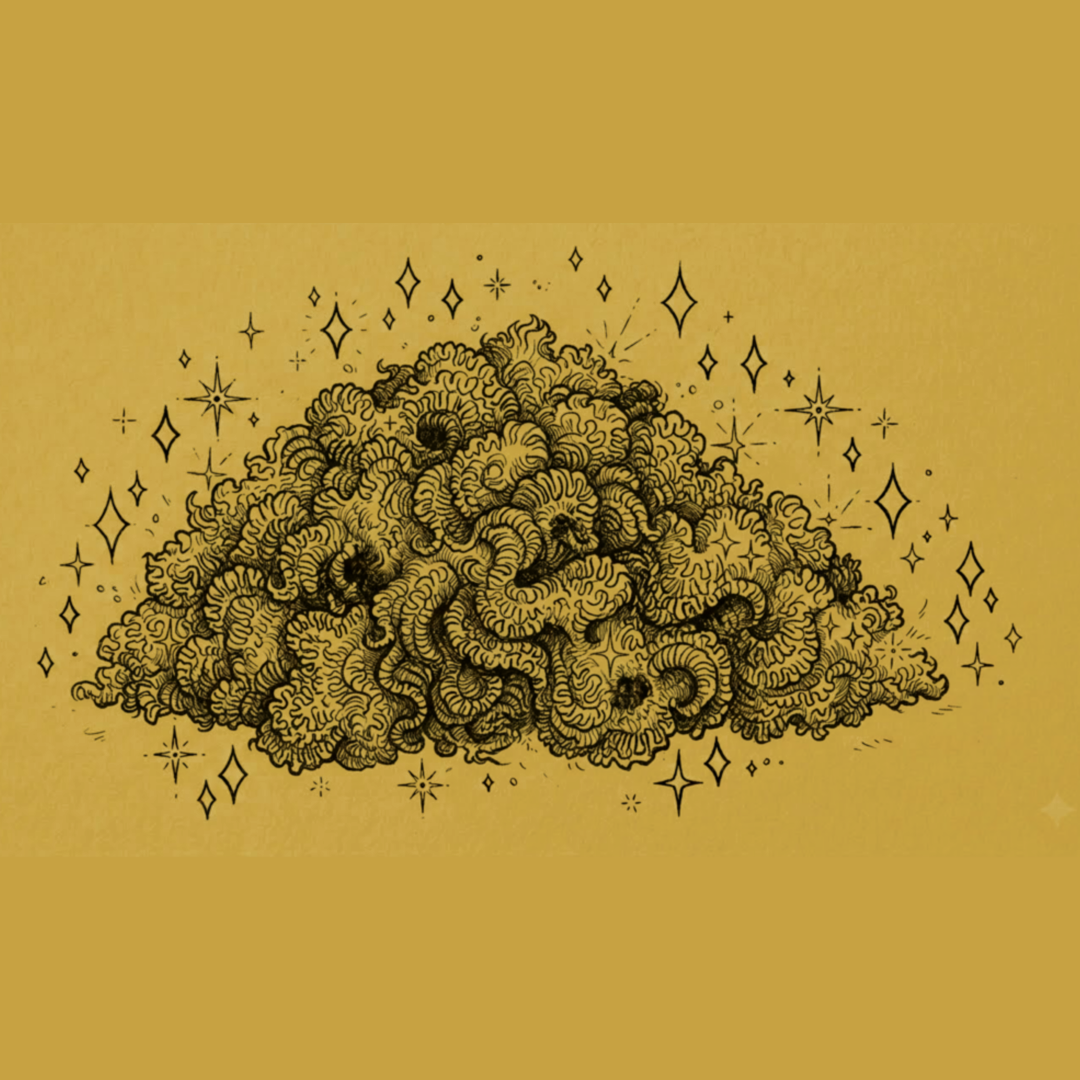
For decades, the narrative of African textiles has been framed almost exclusively through cotton, silk, and synthetic imports. When we look at global luxury fibers, our minds instantly jump to New Zealand, Australia, or the rolling highlands of South Africa and Lesotho. Yet, across the African continent, a profound ecological and economic blind spot exists: the massive, underutilized potential of wool.
While South Africa, Lesotho, Morocco, and Ethiopia have deep historical or commercial footprints in fiber, their supply chains remain fragmented. Meanwhile, domestic markets in tropical and subtropical urban centers continue to view wool strictly through a European winter lens, missing its true structural and climatic versatility.
This deep dive explores what wool actually is, why it is uniquely suited for Africa’s diverse climates, how established producers are currently bottlenecked, and why systemic barriers keep Africa from transforming its highlands into a thriving fiber economy.

1. What is Wool? (And Why Hair-Sheep Aren’t the Answer)

To understand why wool is missing from much of Africa’s agricultural landscape, we must first distinguish true wool from animal hair.
Commercially viable wool comes from specialized sheep breeds (such as Merinos) whose fleeces grow continuously. Structurally, a true wool fiber possesses two critical properties:

  • Microscopic Crimp: Wool fibers are naturally wavy or crimped. This crimp acts like a microscopic spring, trapping air to provide exceptional thermal insulation while allowing the fibers to interlock tightly when twisted into yarn.
  • Lanolin and Scaled Cuticles: Wool fibers are coated in scales and natural wax (lanolin), giving them elasticity, water-repellency, and durability.
    In contrast, indigenous African sheep across Central and West Africa—such as the West African Dwarf and Cameroon sheep—are hair-sheep. They are genetically optimized for tropical survival, possessing smooth, straight coats that lack crimp and interlock capability. When seasonal shifts occur, these hair-sheep naturally shed their coats entirely into the environment. Because hair fibers are slick and brittle, they cannot be spun into durable textiles and simply decompose as organic litter.
    True fine-wool production requires continuous-growth fleece, specialized genetics, and specific environmental triggers.

2. Wool’s Climate Versatility: Beyond the "European Winter"

A primary misconception hindering wool adoption in Africa is the belief that wool is exclusively heavy, hot winter wear designed for sub-zero European blizzards. In reality, wool is one of nature’s most advanced technical, multi-season performance fibers.

Thermoregulation: Heat and Cold

Wool is hygroscopic and breathable. Its cellular structure allows it to absorb and vaporize moisture away from the skin.

  • In Cold Weather: The natural crimp traps dead air, creating a thermal barrier that keeps the wearer warm.
  • In Hot or Humid Weather: By actively pulling moisture away from the body and releasing it, wool creates a cooling evaporative effect.

Suitability for Africa’s Diverse Microclimates

  • Highland & Sahelian Diurnal Swings: High-altitude regions across East Africa, the Atlas Mountains, and Lesotho experience sharp daily temperature fluctuations—scorching sun by day and freezing temperatures by night. Lightweight-to-medium-weight wool outperforms synthetics by stabilizing body temperature across these extremes.
  • Arid and Semi-Arid Deserts: Historically, nomadic pastoralist groups in arid regions (such as Bedouin communities) utilized heavy wool textiles because the dense fibers insulate the body against intense external solar radiation while managing heavy perspiration.

3. The Established Producers: South Africa, Lesotho, Morocco, and Ethiopia

While massive high-altitude expanses across Central and East Africa share ideal ecological conditions for sheep-rearing but lack fiber traditions, the continent’s established wool framework rests firmly on four pillars:

  • South Africa: A global powerhouse in fine Merino wool production, exporting massive commercial clips to international textile mills.
  • Lesotho: Renowned for high-grade mohair and wool production, deeply anchored in traditional cultural garments like the Basotho blanket.
  • Morocco: Anchored by Amazigh (Berber) communities in the Atlas Mountains, utilizing heavy, natural wools for ancestral rug-weaving and winter garments.
  • Ethiopia: Preserving historical highland wool culture, notably through traditional garments like the bernos—a heavy, hooded wool cloak worn to combat freezing mountain microclimates.

4. What is Stopping the Intra-African Wool Trade?

When examining why wool trade struggles to scale between African nations, we must look directly at the heavyweights already producing it: South Africa, Lesotho, Morocco, and Ethiopia. The bottlenecks lie in how these established markets are structurally trapped:

  • The Outward-Facing Extraction Pipeline: South Africa and Lesotho direct almost all their commercial, high-grade Merino and mohair clips outward. Decades of colonial and global market integration built deep logistics pipelines straight to mills in Europe, Italy, and China. There are virtually no historical trade routes or transport corridors designed to move raw or scoured wool sideways into other African markets.
  • The Processing Chasm Between Craft and Industry: Countries like Morocco and Ethiopia have rich, ancestral wool-craft traditions, but they operate entirely disconnected from Southern Africa’s industrial-scale greasy wool processing. An artisan in Fez or Menz cannot easily acquire high-grade, commercial South African wool yarn because local processing is split between small-scale artisanal hand-washing/carding and massive industrial export houses that do not cater to regional micro-trade.
  • Intra-Continental Trade Friction & Non-Tariff Barriers: Even when neighboring nations attempt to trade textile inputs, they run into a wall of high transit costs, conflicting customs rules, and protectionist tariffs between regional economic blocs (such as SADC, COMESA, and the Arab Maghreb Union). It remains legally and logistically simpler for a South African exporter to ship raw fleece across the ocean than to clear the bureaucratic checkpoints required to truck it north to an East or North African processing partner.

5. Design Potential: Loom Experimentation and Heritage Modernization

To unlock wool's modern potential on the continent, we must look closely at how traditional looms interact with the fiber—moving away from the modern industrial habit of blending different fibers (such as mixing wool with cotton or silk) and looking instead at pure-material structural experimentation.

  • Single-Fiber Loom Experimentation: Historically, traditional wool-producing cultures did not blend disparate raw fibers like wool and cotton into the same thread or fabric; wool was spun and woven as pure protein fiber to maximize its unique thermal and weather-resistant properties. However, a major opportunity lies in loom experimentation—taking traditional horizontal or vertical looms (such as those used for Ethiopian cotton or Moroccan flat-weaves) and testing how pure, locally sourced wool behaves on them. By altering tension, reed counts, and weave structures without adulterating the fiber itself, artisans can discover entirely new structural weights, drapes, and textures from 100% pure wool.
  • Heritage Modernization: Taking direct inspiration from historical garments—such as Ethiopia’s heavy, wool-woven bernos cloaks or Morocco’s mountain capes—contemporary designers can engineer structured, luxury outerwear tailored for high-altitude microclimates. This preserves the cultural integrity of the textile while updating its silhouette for modern urban markets.
  • Regional Craft Exchange: Rather than forcing synthetic fiber blends, African designers can foster cross-regional exchanges where the techniques of different textile cultures are applied to pure wool—bringing West or East African weaving geometries together with North and Southern African heavy-fiber handling.

The Bottom Line

Africa’s wool economy does not suffer from a lack of raw material or cultural pedigree; it suffers from profound structural isolation. South Africa, Lesotho, Morocco, and Ethiopia hold the foundational assets of a world-class fiber continent, yet their supply chains remain pointed outward toward foreign ports or locked inside localized artisan pockets.
By dismantling intra-continental trade barriers, connecting existing producers through dedicated raw-material corridors, and experimenting with pure-wool construction on traditional looms rather than resorting to foreign fiber blends, Africa can transform its historic wool heritage into a self-sustaining, high-value continental market.

Reference List

  • AllAfrica & Capital FM. (2026). Open Skies Deliveries Keep Africa's Trade Costs High. August 7, 2026.
  • African Airlines Association (AFRAA). Reports on blocked airline revenues and intra-African aviation transit costs.
  • Federal Reserve Economic Data (FRED). Economic data series tracking global commodity benchmarks, including the Cotton Index and international wool price indicators.
  • Food and Agriculture Organization (FAO). Livestock Production Systems and Pastoralism in Sub-Saharan Africa: Ecological Distribution of Hair-Sheep vs. Wool-Bearing Sheep. FAO Animal Production and Health Division.
  • International Trade Centre (ITC). SME Competitiveness Outlook: Empowering African Creative Economies and Regional Value Chains.
  • RwandAir & Regional Agricultural Reports. Documentation on highland agro-pastoral practices in East, Central, and North Africa, including historical utilization of traditional wool garments (Bernos).

The Imperial Thread: Unraveling Multi-Billion CFA Uniform Dependency

When Captain Ibrahim Traoré signed decrees mandating Faso Dan Fani for judicial robes, school uniforms, and launching the TEXFORCES-BF textile complex in Bobo-Dioulasso, he was doing far more than issuing a patriotic fashion statement. He was executing a targeted strike against a subtle, multi-billion-franc channel of economic extraction: state procurement dependency.
For over six decades across Francophone Africa, national defense budgets, school systems, and civil institutions have functioned as guaranteed revenue pipelines for foreign defense firms—chiefly based in France. Retaking this supply chain cuts to the core of monetary and industrial sovereignty.

1. Ground Zero: The Economic Transformation of Women’s Weaving Cooperatives

At the heart of Traoré’s policy is a revival of Thomas Sankara’s 1980s mandate: "Wearing Faso Dan Fani is an economic, cultural, and political act of defiance against imperialism". But beyond ideology, the immediate beneficiaries are Burkina Faso's women-led weaving cooperatives.

[ Institutional Demand ] ──> [ Female Spinners & Weavers ] ──> [ Direct Household Income ]
   • Judicial Robes            • Cotton Thread Spinning          • Healthcare & School Fees
   • School Uniforms           • Organic Dyeing                  • Micro-Savings Capital
   • Civic Ceremonies          • Traditional Handweaving        • Bankable Cooperatives
  • Micro-Capital Injection: Historically, handweavers operated in the informal sector, exposed to seasonal fluctuations and cheap synthetic imports. Institutional mandates—such as requiring Faso Dan Fani for schools on Mondays and official court attire—create guaranteed, non-cyclical public procurement contracts.
  • Household Financial Sovereignty: In rural and peri-urban Burkina Faso, thread spinning and weaving are overwhelmingly conducted by female artisans. Earnings directly flow into female-headed households, lifting living standards, funding children’s education, and building autonomous micro-savings groups.
  • Formalization of Artisanal Guilds: Umbrella organizations (such as CABES and the GIEs) can now convert seasonal handcraft into bankable, structured cooperative enterprises capable of securing credit and scaling loom capacity.

2. The Raw Paradox: West African Cotton Production vs. Domestic Processing

West Africa is a global giant in cotton farming, yet it suffers from one of the most severe industrial value-addition gaps in the world.

The Structural Discrepancy

  • Global Export Weight: West African nations (Benin, Burkina Faso, Mali, Côte d'Ivoire) collectively produce millions of bales annually, accounting for over 10–12% of global raw cotton exports.
  • The Domestic Processing Gap: Fewer than 2% to 5% of the raw cotton lint grown in West Africa is processed or transformed into finished garments locally. Over 95% is shipped in raw lint form to foreign mills (primarily in Asia and Europe).
+----------------------------------------------------------------------------------+
| WEST AFRICAN COTTON VALUE CHAIN GAP                                              |
+----------------------------------------------------------------------------------+
| Raw Cotton Harvested locally        |  ████████████████████ 100%                 |
| Raw Cotton Exported un-processed    |  ███████████████████░  95% - 98%        |
| Raw Cotton Processed domestically   |  █░░░░░░░░░░░░░░░░░░░   2% - 5%          |
+----------------------------------------------------------------------------------+

When raw cotton is exported at approximately $1.50 to $2.00 per kilogram and bought back as finished military fatigues or court robes at $50 to $300 per unit, the region surrenders tens of thousands of manufacturing jobs and millions of dollars in industrial value-addition.

3. Calculating the Capital Flight: The CFA Franc Uniform Leakage

To understand what is at stake financially across the 14 Francophone nations using the CFA franc (WAEMU and CEMAC zones), we can model the annual capital drain caused by importing uniforms for state security forces.

Capital Flight Calculation Model

Let:

  • N = \text{Total active security personnel across 14 Francophone African states (Military, Gendarmerie, Police, Customs, Firefighters)} \approx 480,000 \text{ personnel}.
  • C = \text{Average annual procurement cost per officer (fatigues, daily service attire, boots, dress uniforms, badges)} \approx 200,000 \text{ CFA francs (~\$325 USD)}.
    \text{Annual Capital Flight} = N \times C
    \text{Annual Capital Flight} = 480,000 \times 200,000 \text{ CFA} = \mathbf{96,000,000,000\text{ CFA Francs}}\quad (\approx \mathbf{\$155\text{ Million USD / year}})
    Over a single decade, this represents a capital flight of nearly 1 Trillion CFA Francs exiting West and Central African central banks directly into the balance sheets of foreign defense suppliers like France's Groupe Marck (Marck & Balsan) and Paul Boyé Technologies.
+------------------------------------------------------------------------------------+
| 10-YEAR MILITARY UNIFORM CAPITAL LEAKAGE (ESTIMATED AGGREGATE)                     |
+------------------------------------------------------------------------------------+
| Foreign Defense Contractors (e.g., Groupe Marck)  |  ~960 Billion CFA (~$1.55B USD) |
| Retained in Local Domestic Ecosystems             |  Near Zero (historically)      |
+------------------------------------------------------------------------------------+

4. Expanding the Lens: New Crucial Angles of Research

To capture the complete geopolitical picture, four critical dimensions must be examined:

A. The AES (Alliance of Sahel States) Regional Security Industrialization

Burkina Faso, Mali, and Niger have formed the Alliance of Sahel States (AES). Rather than acting in isolation, Burkina’s TEXFORCES-BF factory in Bobo-Dioulasso—a 15 billion CFA facility spanning 9 hectares—is explicitly designed to supply regional allied forces. This turns local industrial policy into a shared defense architecture.

B. The Dual-Production Strategy: Technical vs. Cultural Fabrics

A key operational distinction is how Traoré’s administration handles high-tech requirements versus formal attire:

  • Frontline Tactical Gear (TEXFORCES-BF): Ripstop, camouflage, and high-durability cotton-poly blends for combat zones are produced industrially at the Bobo-Dioulasso plant.
  • Civic & Formal Attire (Faso Dan Fani / Cencengu): Court robes, school uniforms, and parade dress are reserved for handweavers' cooperatives. This creates a balanced industrial ecosystem that combines modern factory capacity with traditional artisanal employment.

C. The Hypocrisy of Outsourced Foreign Manufacturing

French suppliers like Paul Boyé Technologies manufacture thousands of uniforms for European military recruits by utilizing low-cost offshore labor in Madagascar (a former French colony). This reveals an irony: French contractors use African industrial labor to manufacture uniforms, sell them back to European defense ministries, and then resell finished gear to African governments at a premium.

D. Judicial De-colonization as a Symbol of Sovereignty

Replaces imported black satin gowns—costing up to 3,000,000 CFA francs ($4,760 USD)—with 150,000 CFA franc ($240 USD) Faso Dan Fani robes means that every trial conducted in Burkina Faso takes place under a visual symbol of national autonomy.

Conclusion

By reclaiming state uniform procurement, Ibrahim Traoré's administration is demonstrating how public purchasing power can be weaponized for national development. Replacing foreign defense contracts with local value chains reclaims capital, empowers female artisans, and sets an example for economic sovereignty across Africa.

Why Isn’t the Best Africa Has to Offer, Available to Africans? The Political Economy of Africa’s Cotton-Textile Paradox: Quality Asymmetry, Structural Dependency, and the Limits of Industrial Policy

Despite producing some of the world's highest-grade, hand-harvested cotton lint, Sub-Saharan Africa remains decoupled from high-value downstream textile manufacturing. While West African nations—led by the C-4+ grouping (Benin, Burkina Faso, Mali, Côte d'Ivoire, and Chad)—harvest over 1 million metric tons of seed cotton annually, over 90% of regional lint is exported in primary form. Paradoxically, African consumer markets import over $4 billion to $6 billion annually in finished apparel and synthetic fabrics.
This paper analyzes this structural disconnect through the lens of global value chain (GVC) governance and terms-of-trade degradation. It examines how institutional mechanics maintain primary commodity extraction, why statutory raw export bans face severe domestic processing bottlenecks, and how quality asymmetry displaces local artisans, tailors, and fashion designers in favor of imported synthetic alternatives.

       EXTRACTIVE EXTERNAL FLOW                     DOMESTIC RESOURCE DEFICIT
  ┌─────────────────────────────────┐         ┌─────────────────────────────────┐
  │ High-Staple Premium Raw Cotton  │         │ Low-Grade Residual Fiber        │
  │ (Hand-picked, high quality)     │         │ (Contaminated / short-staple)   │
  └────────────────┬────────────────┘         └────────────────┬────────────────┘
                   │                                           │
                   ▼ (Exported to Global Mills)                ▼ (Retained Domestically)
  ┌─────────────────────────────────┐         ┌─────────────────────────────────┐
  │ Asian & European Spinning Hubs  │         │ Domestic Weavers & Tailors      │
  └────────────────┬────────────────┘         └────────────────┬────────────────┘
                   │                                           │
                   ▼ (Re-imported as High-Markup)              ▼ (Forced Substitution)
  ┌─────────────────────────────────┐         ┌─────────────────────────────────┐
  │ Imported Synthetic Yarns &      │         │ Reliance on Cheap Polyester &   │
  │ Finished Garments               │         │ Second-Hand Clothing Imports    │
  └─────────────────────────────────┘         └─────────────────────────────────┘

1. The Regional Disconnect: Extractative Export vs. Processed Import

The African cotton-to-textile ecosystem exhibits a spatial divide between raw lint extraction in West Africa and downstream processing concentrated in North Africa and foreign markets:

  • West African Primary Extraction: The C-4+ nations are among the largest global exporters of unmanufactured cotton lint. Their production relies on smallholder farming, producing hand-picked cotton valued internationally for its fiber length and low contamination relative to machine-harvested alternatives. However, local spinning mill utilization across West Africa averages under 5%.
  • North African Value Addition: North African economies (Egypt, Morocco, Tunisia) export over $25 billion annually in processed textiles and apparel. This output is driven by proximity to European consumer markets, mature industrial infrastructure, and targeted trade agreements (such as EU-Mediterranean trade frameworks).
    Because intra-African trade infrastructure remains fragmented and tariff-heavy, primary lint from West Africa rarely supplies processing mills in North or East Africa. Instead, lint is shipped to East and South Asian mills before re-entering African markets as finished woven goods or synthetic-blend garments.

2. Institutional Mechanics: The Enforceability Gap of Export Bans

To capture downstream value, several West African governments have instituted policy mandates, including raw lint export restrictions and targeted export tariffs. However, converting raw export bans into domestic processing capacity reveals three structural barriers:

A. Capital Intensity and Utility Cost Disadvantages

Conversion of lint to yarn (spinning) and fabric (weaving) is highly capital- and energy-intensive. Industrial power tariffs in West Africa range between $0.15 and $0.25 per kWh, compared to $0.05 to $0.08 per kWh in competing Asian textile hubs. Without subsidized industrial power grids, domestic spinning mills operate at an immediate cost deficit.

B. Farm-Gate Liquidity Requirements

National cotton boards (e.g., Mali’s CMDT or Burkina Faso’s SOFITEX) rely on foreign cotton merchants to provide upfront hard-currency financing during harvest seasons. These liquidity injections ensure immediate payments to smallholder farmers. Enforcing a strict raw export ban without adequate local processing capacity risks devaluing farm-gate prices and depressing rural incomes.

C. Tariff Escalation in Global Trade

International tariff structures penalize value addition at origin. Raw lint enters most global consumer markets under zero or near-zero tariffs, whereas processed yarns, woven fabrics, and finished garments encounter escalating import duties unless protected by specific trade preferences (such as AGOA in the United States).

3. Quality Asymmetry: Fiber Extraction and the Displacement of Local Designers

A central friction in Africa’s cotton ecosystem is the quality grading asymmetry between export and domestic markets.

                              COTTON LINT HARVEST
                                       │
                    ┌──────────────────┴──────────────────┐
                    ▼                                     ▼
        High-Grade Long-Staple               Short-Staple & Contaminated
       (Classified via HVI/Suter)               (Unclassified / Residual)
                    │                                     │
                    ▼                                     ▼
          Exported to Foreign                   Retained for Local Market
            Textile Mills                        or Artisanal Processing
                    │                                     │
                    ▼                                     ▼
          Re-Imported Processed                 Artisanal Weavers & Tailors
         Fabrics & Finished Goods               Suffer Fiber Degradation
                    │                                     │
                    └──────────────────┬──────────────────┘
                                       ▼
                       CREATIVE ECOSYSTEM INVASION
           (Designers forced into imported synthetic substitutes)

A. The Mechanics of Quality Extraction

International cotton buyers utilize High-Volume Instrument (HVI) classing to grade lint based on staple length, strength, micronaire (fineness), and uniformity. Premium long-staple fiber commands a market premium and is systematically prioritized for overseas export to meet foreign spinning specifications.
Consequently, domestic markets retain primarily:

  1. Lower-grade, shorter-staple, or contaminated lint unsuited for high-speed industrial processing.
  2. Imported synthetic thread (such as low-cost polyester), which replaces indigenous cotton yarns in traditional weaving hubs.

B. Creative Ecosystem Resistance: Designers, Tailors, and Consumers

African fashion designers, custom tailors, and apparel brands face a structural supply constraint: they cannot source high-grade, 100% locally grown African cotton fabric within their own domestic markets.

  • Material Substitution: Traditional artisanal weavers who historically produced 100% cotton textiles (e.g., Gbaguidi weaves, Kente, or Bogolan) are increasingly forced to use imported synthetic polyester threads due to the scarcity and cost of locally spun high-grade cotton yarn.
  • Domestic Market Demand: A growing segment of African fashion entrepreneurs and urban consumers actively seeks high-quality, traceable, locally produced cotton textiles. However, because local textile mills lack high-grade input fiber, designers must choose between low-quality domestic materials or expensive imported finished fabrics from Europe or Asia.
    This dynamic transfers the economic returns of African agricultural quality outward while saddling domestic creative industries with low-grade inputs or synthetic substitutes.

4. Reconfiguring Policy: Industrial Parks and the AfCFTA

To address structural extraction and quality displacement, regional strategies are pivoting toward integrated manufacturing ecosystems:

A. Special Economic Zones (SEZs)

Initiatives such as the Glo-Djigbé Industrial Zone (GDIZ) in Benin and the Plateforme Industrielle d'Adétikopé (PIA) in Togo represent a model shift. By providing tax incentives, continuous power supplies, and co-located spinning and garment manufacturing facilities, these zones aim to process primary lint into yarn and finished apparel domestically before export.

B. AfCFTA Rules of Origin (RoO)

Under the African Continental Free Trade Area (AfCFTA), the definition of Rules of Origin is critical. Enforcing double transformation rules—requiring raw cotton to be spun into yarn, woven into fabric, and assembled into garments within member states—incentivizes regional sourcing and protects domestic processors from third-country textile dumping.

5. Strategic Recommendations

  1. Local Allocation Quotas: Implement gradual, capacity-indexed quotas that require a percentage of top-grade (HVI-classified) cotton fiber to be reserved for domestic spinning mills and local textile artisans before export licenses are issued.
  2. Subsidized Industrial Power Infrastructure: Address energy costs for spinning and weaving mills within designated industrial corridors to ensure price parity with international processors.
  3. Regional Input Trading Platforms: Utilize AfCFTA frameworks to facilitate direct trade of raw and semi-processed cotton between West African producers and manufacturing hubs across East, Southern, and North Africa.

References

  • Food and Agriculture Organization [FAO]. (2022). The Cotton-4 (C-4) countries in the context of the global cotton market: Situation and short-term market outlook. United Nations Food and Agriculture Organization. https://openknowledge.fao.org/
  • International Trade Centre [ITC]. (2025). How to invest in a viable textile and cotton value chain in Africa. United Nations International Trade Centre. https://www.intracen.org/
  • International Trade Centre [ITC]. (2009). Understanding cotton demand and promoting origin: The example of African cotton. International Trade Centre Bulletin. https://www.intracen.org/
  • TraceX Technologies. (2025). Africa textile value chain: From cotton to fashion. TraceX Global Value Chain Analysis. https://tracextech.com/
  • United Nations Conference on Trade and Development [UNCTAD]. (2017). Regional strategy for cotton-to-clothing value chain in COMESA. United Nations Conference on Trade and Development. https://unctad.org/
  • United Nations Industrial Development Organization [UNIDO]. (2024). World Cotton Day 2023: Making cotton fair and sustainable for all, from farm to fashion. UNIDO Publications. https://www.unido.org/

The White Shirt Ideology: How Missionaries Made Christianity a Dress Code

In 1844, a concept was published that would shape the relationship between African identity and Christian conversion for generations. It was called the "gospel of the clean shirt" (Fox, 1844). The phrase appeared in William Fox's The Western Coast of Africa, capturing a missionary logic that was already being practiced across the continent. The gospel of the clean shirt was not about salvation. It was about appearance. It was about control. It was about the belief that before an African could be saved, they had to be dressed—and dressed according to European standards.

This was the white shirt ideology. It was not merely a preference for European clothing. It was a theological position. It was the conviction that European dress was a visible sign of an invisible conversion. Without the white shirt, the conversion was suspect. Without the European garment, the African was not yet civilised. And without civilisation, there was no salvation.

The Theological Logic of European Dress

The Hermannsburg missionaries in the Western Transvaal considered clothing "an indispensable pre-requisite to prepare pagan Africans for becoming Christians." It had to be "scrupulously submitted to the control of the self-styled agents of Christian civilisation" (Hermannsburg missionaries, cited in researchspace). Missionaries did not simply suggest European dress. They enforced it. When they lost control over African clothing habits, they disapproved not only of African appearance but of African mission residents themselves. Outward appearance was considered to be the mirror of a person's inner condition (Hermannsburg missionaries, cited in researchspace). The logic was consistent and totalising. If the outside did not look European, the inside could not be Christian.

This was not an isolated practice. In British and French colonial areas, missionaries banned drumming, dancing, and the wearing of African clothes. They forbade converts to participate in traditional ceremonies of naming, initiation, marriage, and burial. They substituted biblical names for African names (Owomoyela, n.d.). They saw everything African as "godless heathenism that must be wiped out" (Owomoyela, n.d.). The white shirt was not offered as an option. It was imposed through the destruction of African alternatives.

The Erasure of Barkcloth: When Indigenous Textiles Became Heathen

In Buganda, the Baganda had a thriving barkcloth industry. Barkcloth was made from fig trees, an indigenous fabric not woven but beaten from the bark of the mutuba tree. It was warm, durable, and culturally significant. The missionaries actively discouraged its use. They promoted the "clean shirt" or "white shirt" ideology, arguing that before the Western God, all people are alike if they keep their bodies clean—which the missionaries interpreted as "white" (Barkcloth missionary influence, n.d.). The result was the demise of the Baganda barkcloth industry. The indigenous textile was not just replaced. It was erased.

The pattern was repeated across the continent. In Namibia, among the Aawambo people, the Finnish missionaries taught that traditional costumes and ornaments were "heathen objects." The locals were persuaded to burn their traditional clothes. Sabina David states: "people eventually did away with traditional clothes and burned them. By doing so, they were persuaded to believe that they were abandoning paganism and evil objects for the righteousness of God the savior" (David, cited in Caley, n.d.). The white shirt did not arrive as an addition to African wardrobes. It arrived as a replacement for what was destroyed.

The White Habit and the White Fathers

The logic was not limited to African converts. It was embodied by the missionaries themselves. Cardinal Charles Lavigerie, Archbishop of Algiers and Carthage, founded the Society of Missionaries of Africa in 1868. He adopted a white habit for the Society's members, based on the traditional North African dress of a white gown (gandoura) and a white hooded cloak (burnous), with a rosary worn around the neck (Missionaries of Africa, n.d.). The white habit stood in contrast to the common black and brown habits of other Catholic religious orders. The Missionaries of Africa came to be known as "the White Fathers" (Missionaries of Africa, n.d.). The white habit was a marker of identity, authority, and difference. The white shirt was not just a tool of conversion. It was the uniform of the converter.

One source captures the pervasiveness of this whiteness: "Little baby Jesus was presented to me white, and in most cases — blue eyed! All the angels have been made white except of course those connected to Lucifer. Even John Bunyan's 'Pilgrims Progress' depicts the 'Flatterer' as 'a man black of flesh.' All the missionaries who were sent to teach me the ways of Godliness were white" (Nwosimiri, n.d.). The theology was racialised. The dress code was theological. And the two were inseparable.

The Subversion of the Uniform: When African Women Reappropriated Control

But the story does not end with control. African women found ways to resist and reappropriate. The Manyano, prayer groups of African women nurtured by female missionaries, emerged in the early twentieth century (Haddad, 2016). The church uniform provided the members with autonomy, status, and dignity. It functioned as a healing tool that healed illness and oppression. It helped participants escape the hard oppressive realities of life (Haddad, 2016). The same uniform that was imposed by missionaries was later reappropriated as a source of dignity and resistance. Former schoolgirls of missionary educator Mabel Shaw in Zambia embraced stylish modern apparel not as a rejection of Christianity but as an expression of "Christian modernity" (Kalusa, 2022). They were not rejecting Christianity. They were rejecting the missionary's control over what a Christian should look like.

The Legacy

The white shirt ideology is not history. It is inheritance. It is the lingering assumption that European dress is professional, respectable, and Christian. It is the belief that African clothing is traditional, casual, and not for serious occasions. It is the reason why barkcloth was burned, traditional dress was condemned, and the white shirt became the uniform of conversion. The missionaries did not bring a religion. They brought a dress code. And the dress code was a tool of subjugation.

There is no biblical basis for the white shirt. The Gospels do not mandate European tailoring. The apostles did not wear Victorian collars. The white shirt was a cultural imposition dressed in theological language. It was not a requirement of salvation. It was a requirement of submission.

Today, the same logic persists in the distinction between "formal" and "traditional" attire. The suit, the tie, the white shirt remain the uniforms of authority, professionalism, and respectability. African clothing—the dashiki, the boubou, the kente, the barkcloth—is often relegated to ceremonies, weekends, or cultural events. It is not seen as appropriate for boardrooms, courtrooms, or government offices. The white shirt ideology did not disappear. It became the standard.

The Manyano women and the former schoolgirls of Zambia demonstrate that the same garment can be a tool of control or a symbol of resistance. The uniform imposed by missionaries was reappropriated as a source of dignity and autonomy. The white shirt was not simply accepted. It was contested. It was subverted. It was made to mean something else. The question is not whether we wear the white shirt. It is whether we decide what it means, or whether it decides us.


References

· Caley, Maria A. N. "The Modernized Traditional Dress of the Aawambo." University of Turku. (n.d.)
· Fox, William. The Western Coast of Africa. London, 1844. Cited in Herskovits, M.J., The Human Factor in Changing Africa. London, 1962.
· Haddad, Beverly. Church uniform and Manyano women. 2016. Cited in researchspace.ukzn.ac.za.
· Hermannsburg missionaries. Cited in researchspace.ukzn.ac.za.
· Kalusa, Walima T. Former mission schoolgirls and modern apparel. 2022. Cited in researchspace.ukzn.ac.za.
· Missionaries of Africa. "History." Available at: https://missionariesofafrica.org/our-story/history/ (n.d.)
· Nwosimiri. Colonial period ideologies of European cultural superiority. (n.d.)
· Owomoyela, Oyekan. African Literatures: An Introduction. (n.d.)
· Van der Walt. Missionaries and separate education. (n.d.) Cited in researchspace.ukzn.ac.za.
· White Fathers. History of the Society of Missionaries of Africa. (n.d.)

Decoding the Ancestral Code: The African Logic Western Binary Could Not Grasp—Reclaiming the Framework That Encodes Reality, Science and the Space the West Never Learned to Name

There is a logic that has governed African thought for millennia. It is not binary. It does not force a choice between true and false, good and evil, science and spirit, material and metaphysical. It holds opposites together. It reconciles what Western philosophy has always struggled to reconcile. It is the logic that built ancient Egypt, that informed the manuscripts of Timbuktu, that encoded the Indigenous systems of the Yoruba, that guided the spiritual practices of the Dinka and the Zulu and the Xhosa. It is the logic that the West encountered, could not fully grasp, and therefore renamed, rephrased, and ultimately ignored.

Western academia calls it "African metaphysics." But the name is not the thing. The thing itself—the logic, the code, the framework—has no single name because it never needed one. It was simply how reality was understood. It was how decisions were made. It was how healing was practiced. It was how communities governed themselves. It was not a "philosophy" separate from life. It was life, encoded.

This blog post is an attempt to decode that ancestral framework. Not to translate it into Western terms—translation is how we got here, with the code intact but the language lost. But to sit with it, to listen to it, to learn to speak it again. Because the code was never lost. It was only made inaccessible. And the work of reconnection is not invention. It is intervention.

The Binary Cage

Western logic, inherited from Aristotle, is binary. True or false. Either or. Good or evil. Science or spirit. Material or metaphysical. This logic has produced remarkable results—technology, medicine, engineering. But it has also produced a world where the two sides of a binary cannot coexist. Where a photon cannot go through two slits at once. Where a God cannot create both good and evil. Where a person cannot hold two truths without being accused of contradiction.

The binary is a cage. And Western science has spent centuries rattling the bars, convinced that the cage is the only reality.

But here is what the West does not teach. Aristotle did not invent this logic in isolation. He studied in Egypt. Egypt was African. The knowledge he brought back to Greece—the foundations of what became Western philosophy and science—was built on African systems of thought that had been developing for millennia before Aristotle was born.

George G.M. James, the Guyanese-born scholar, documents this in Stolen Legacy. He argues that Greek philosophy, including Aristotle's, originated in Egypt. The Greek philosophers did not discover new truths. They studied under Egyptian priests. They learned from African knowledge systems. After Alexander the Great invaded Egypt, the Royal temples and libraries were plundered. Aristotle's school converted the library at Alexandria into a research centre. The knowledge was taken. The origin was erased.

So even Western metaphysics—the logic of true and false, of substance and individuality, of either/or—is built on African foundations. But it is not the whole foundation. It is a fragment. The part the Greeks could grasp. The part that fit their emerging worldview. The part that could be separated from the spiritual, from the relational, from the complementary.

The West took the binary and ran with it. They built a civilization on true/false, good/evil, material/metaphysical. And they left behind what they could not fit into the binary: the logic of both/and, the recognition that opposites can coexist, the understanding that reality is not a collection of substances but a web of relations.

Western metaphysics is African in origin. But it is an incomplete Africa. A reduced Africa. A binary Africa.

Ezumezu: The Logic That Holds What Binary Cannot

The Yoruba call it Ezumezu. It is a trivalent logic—three values, not two. True. False. And a third value that reconciles opposites. Not a compromise. Not a middle ground. A distinct logical category that allows for both/and, for truth-glut, for the resolution of apparent contradictions.

Ezumezu is not a "type" of logic alongside others. It is the logic that emerges from African metaphysics itself. It is the logic of process and relation, not substance and individuality. It recognizes that an entity can be itself and its opposite simultaneously, in the same context, without contradiction.

Quantum physics has been trying to arrive at this logic for a century. The double-slit experiment shows that a particle behaves as if it goes through both slits simultaneously—a violation of classical binary logic. The collapse of the wave function cannot be described within the mathematics of quantum mechanics. Western physics has reached its limit and discovered that it needs a logic it does not have.

African logic never lost it.

Note on quantum physics: The double-slit experiment demonstrates that particles like electrons or photons do not behave as discrete objects moving through one slit or the other. Instead, they behave as waves that interfere with themselves, passing through both slits at once. This only "becomes" a particle when measured—when observed. The measurement itself causes the wave function to "collapse" into a single location. Western physics has no agreed-upon explanation for why or how this collapse happens. It is a metaphysical problem dressed in scientific language. Ezumezu—which allows for both/and, for an entity to be in two states simultaneously without contradiction—provides a logical framework that binary Western logic cannot.

The West Encountered the Code and Could Not Comprehend It

The Europeans who arrived in Africa did not find a continent devoid of knowledge. They found complex systems of astronomy, medicine, mathematics, governance, and metaphysics. The Dogon had mapped the stars, describing Sirius B and its 50-year orbit centuries before Western telescopes could see it. The Timbuktu scholars had produced original works on planetary motion, medicinal plants, and legal theory. The Yoruba had developed a binary-like divination system, the Odù Ifá, that encodes history, philosophy, and medicine in a retrievable, structured format. The Dinka and the Zulu and the Xhosa had articulated a relational ontology, a metaphysics of interconnectedness, a recognition of consciousness as fundamental.

The West encountered this knowledge and did three things.

First, they renamed it. They called Dogon cosmology "myth." They called Timbuktu scholarship "Islamic" (as if that made it not African). They called Yoruba divination "superstition." They called Dinka spirituality "primitive religion." They stripped the knowledge of its original names, its original contexts, its original practitioners.

Second, they rephrased it. They translated African concepts into European academic language—dense, technical, inaccessible to the very people who held the knowledge. The weaver who knows àṣẹ cannot read the physics paper that describes the same phenomenon in terms of "process-relational ontology." The elder who has studied Ifá for decades is not consulted when a philosopher writes about "African metaphysics." The language of the academy became a gatekeeper, not a bridge.

Third, they claimed it. They presented the renamed, rephrased knowledge as European discovery. They wrote books. They published papers. They built careers. And the public assumed that the knowledge was new, that it was European, that Africa had contributed nothing but raw materials and labor.

The code was not lost. It was just coded in a language, a system, the West could not comprehend.

The Bible Is an African Book

Let me be clear about what I am arguing and what I am not arguing.

I am not arguing about the content of the Bible in this post. I am not debating whether the miracles happened, whether the prophecies were fulfilled, whether the genealogies are accurate, or whether one translation is more authoritative than another. That is a conversation about content. That is not my conversation.

My conversation is about the structure.

The Bible, as a system of belief, operates on a logical structure. That structure is not binary. It is not simply "true" or "false," "good" or "evil," "saved" or "damned." The Bible repeatedly presents scenarios where the binary cannot hold. God creates light and darkness, peace and evil. God gives Satan permission to test Job. God hardens Pharaoh's heart while also sending Moses to free the Israelites. Yeshua is fully human and fully divine. The kingdom of God is now and not yet. Believers are saved by faith and judged by works.

Western theology has spent two thousand years trying to force this structure into a binary cage. It has produced elaborate doctrines—the Trinity, the hypostatic union, predestination and free will—all attempting to resolve contradictions that only appear contradictory because the logic being applied is binary. The Bible itself does not resolve these tensions. It holds them together. It allows for both/and.

That is the structure. True. False. And both.

The same structure that governs Ifá knowledge system. The same structure that governs Dogon cosmology. The same structure that governs Dinka spirituality. The same structure that governs Zulu and Xhosa metaphysics. The same structure that the Yoruba call Ezumezu.

This is not about whether the Bible is "true" or "false." It is about recognizing that the Bible's structure—the logic that holds it together—is African. It is Ezumezu. It is the logic Western binary could not grasp.

The Hebrews were not foreigners who wandered into Africa. They were a Black African tribe—one among many—who moved within the continent that has since been carved up and renamed. The manuscripts that would later be compiled into the Bible belonged to this Black African tribe. Not as a revelation delivered to a single chosen people elevated above all others. But as one tribe's sacred writings—like the Dogon have theirs, like the Yoruba have theirs, like the Dinka have theirs.

The Timbuktu manuscripts are a useful comparison. Thousands of books were produced, owned, and traded across West Africa. They were not the property of a single elite. They belonged to scholars, merchants, families—anyone who could afford to commission or purchase them. The Bible, in its original context, circulated similarly among Hebrew communities. It was not a sealed canon delivered from heaven. It was a collection of writings—laws, prophecies, poetry, histories—owned and studied by people who could access them. The idea of a single, closed, universally authoritative "Bible" came later, imposed by European councils that decided which books to include and which to exclude.

When Europeans encountered these manuscripts, they did not discover them. They extracted them. They translated them. They compiled them according to what they could understand—and left out what they could not. Then they returned to Africa and said: "Look what we have brought you. This is the word of God. Your ancestors were pagans. Your gods are demons."

But the Dinka were already praying to Deng. The Yoruba were already speaking to Olódùmarè. The Dogon were already tracing the vibration of Amma. The Xhosa were already calling on uThixo.

The missionaries did not bring God to Africa. They brought a different name, a different book, a different set of rules. But the book was not different. It was our manuscript, translated into their language, coded in their terms, and compiled under a new name. The rules were not different. They were our rules—circumcision, purity laws, sacrifice, moral codes—relabeled and claimed as theirs.

When the Europeans saw that Africans already followed many of these rules, they did not say: "You have preserved what we thought we discovered." Instead, they began selecting which bits to emphasize. They taught the parts that would not completely exclude them from the story. They had to keep themselves in the story.

The Dinka who practice Christianity alongside their indigenous religion are not "syncretizing." They are not confused. They are not compromising. They are recognizing that the same Supreme God appears under different names. Deng is not a different god from the God of the Bible. Deng is that same God—encountered by Dinka ancestors before missionaries arrived. The same is true for the Yoruba Olódùmarè, the Zulu uMvelinqangi (Divine Consciousness), the Xhosa uThixo, the Dogon Amma, and the Hebrew Yahuah (often rendered as Yahweh). These are not competing deities. They are different names for the one Supreme Being, encountered through different languages, different landscapes, different cultural practices.

The missionaries did not bring God to the Dinka. They brought a different name, a different book, a different set of rules. The Dinka, using Ezumezu logic, simply added the new name to the old. Both/and. Not either/or.

The Bible is not a European book. It is an African book. Not because of its content—though that too is African. But because of its structure. Because the logic that makes it coherent is the logic of Ezumezu. And that logic was never European. It was always ours.

The Hebrews were an African tribe. The Supreme God of the Bible is the same Supreme God the Dinka call Deng, the Yoruba call Olódùmarè, the Zulu call uMvelinqangi, the Xhosa call uThixo, the Dogon call Amma.

The Europeans did not give us the Bible. They took our manuscripts, renamed them, recompiled them, and sold them back to us as theirs.

It was always ours. The Dinka never forgot. The Yoruba never forgot. The Dogon never forgot. The Zulu and Xhosa never forgot.

We are not converting. We are remembering.


The Unbroken Thread: One Reality, Many Names

The Dogon call the Supreme Being Amma. The Yoruba call it Olódùmarè. The Zulu call it uMvelinqangi (Divine Consciousness). The Xhosa call it uThixo. The Dinka call it Deng. The Hebrews called it Yahuah (Yahweh).

Different names. Same Supreme Reality.

The logic that governs each of these systems is the same logic: Ezumezu. Trivalent. Process-relational. Complementary. Not binary. Not substance-based. Not either/or.

This logic is not tribal. It is not "ethnic." It is the foundational logic of African thought—from Egypt to Timbuktu to the Dogon cliffs to the Yoruba forests to the Zulu hills to the Dinka plains.

Western academia has spent centuries trying to carve this continent into separate "tribes," each with its own "primitive religion," each isolated from the others. But the thread is unbroken. The code is the same. The West could not grasp it because the West was looking with binary eyes.


Why This Matters Now

Western science has reached its limits. Quantum physics cannot explain its own wave function collapse. Classical logic cannot account for a particle going through two slits at once. Neuroscience cannot explain consciousness. Philosophy cannot resolve the problem of evil.

Every one of these problems is a binary problem. And every one of them requires a logic that holds opposites together—a logic that the West does not have, but that Africa has always had.

The Dogon mapped the stars. The Timbuktu scholars mapped medicine and astronomy. The Yoruba mapped logic and ontology. The Zulu and Xhosa mapped consciousness and its relationship to the divine. The Dinka mapped the harmony-God who holds good and evil together.

Western science did not discover these truths. It encountered them, could not comprehend them, and renamed them.

The code was never lost. It was just coded in a language, a system, the West could not comprehend. The work of reconnection is not invention. It is remembering. It is learning to speak the ancestral code again—not as a relic of the past, but as the framework for our future.


The West could not decode the ancestral code. They could not grasp the logic. They could not name the space between.

We should put systems in place to reclaim it, for reality itself, our reality.

References

Ezumezu and African Logic

· Chimakonam, Jonathan O. Ezumezu: A System of Logic for African Philosophy and Studies. Cham: Springer, 2019.
· Nigerian philosopher who formulated Ezumezu as "a system of logic for African philosophy and studies" to "rescue African philosophy from the spell of Plato and the hegemony of Aristotle"
· Presents Ezumezu as a trivalent logic (true, false, and a third value that reconciles opposites) grounded in the principle of nmeko (relationship/complementarity)
· Ani, Amara Esther. "The Methodological Significance of Chimakonam's Ezumezu Logic." Filosofia Theoretica 8, no. 2 (2019): 85-95.
· Nigerian scholar arguing that Ezumezu logic "provides for methodological liberation of African scholarship trapped in western knowledge hegemony since colonial times"
· Ofuasia, Emmanuel. Ìwà: The Process-Relational Dimension to African Metaphysics. Cham: Springer, 2024.
· African philosopher tracing African metaphysics from Ancient Egypt to Yorùbá traditions; identifies the "distortion sin" of using Western substance metaphysics to assess African thought

The Dogon and Sirius B

· Nature. "Mustard seed of mystery." Nature 261, no. 5561 (1976): 617-618.
· Documents Dogon knowledge of Sirius B, its 50-year orbit, and notes the internal evidence suggests this knowledge predates Western "discovery"
· Note: While this is a Western journal, the Dogon knowledge itself represents African intellectual tradition

The Timbuktu Manuscripts

· Ahmed Baba Institute of Higher Learning and Islamic Research – Timbuktu. Mandhoumah fi Tarhil al-Shams (On Solar Movement). MS 8699.
· Manuscript by Ahmed Baba (1556-1627 CE), the preeminent scholar of Timbuktu, on the movement of the sun; demonstrates original West African scholarship in astronomy
· Dicko, Mohammed Gallah. Director of the Ahmed Baba Institute. Cited in BBC, "In pictures: Timbuktu's manuscripts." 2013.
· Malian scholar and director of the institute preserving Timbuktu's manuscript heritage

Ifá knowledge system and Yoruba Religion

· Abimbola, Wande. Ifá: An Exposition of Ifá Literary Corpus. Ibadan: Oxford University Press, 1976.
· Nigerian scholar and former Vice Chancellor of Obafemi Awolowo University; the preeminent authority on Ifá divination
· Sage Encyclopedia of African Religion. "Ikin." 2009.
· Documents Olódùmarè as the supreme God in Yoruba cosmology and Ifá as a binary-like knowledge encoding system

Zulu and Xhosa Metaphysics

· Bernard, Penelope Susan. "Messages from the Deep: Water Divinities, Dreams and Diviners in Southern Africa." PhD thesis, Rhodes University, 2010.
· South African scholar documenting Zulu and Xhosa diviner-healer traditions, including the water divinities (izangoma) and ancestral connections
· Jordan, A.C. Ingqumbo Yeminyanya (The Wrath of the Ancestors). Lovedale Press, 1940.
· Xhosa novelist and scholar; his work explores the tension between traditional Xhosa metaphysics and colonial change
· Dictionary of South African English. "umvelinqangi, n."
· Defines uMvelinqangi as "the original being" used as praise-name for the supreme being among isiXhosa- and isiZulu-speakers

Nilotic Peoples (Dinka, Nuer, Atuot)

· Burton, John W. "Atuot totemism." African Studies Association, 1980.
· Describes Nilotic conceptions of animal "divinities/spirits" and totemism among the Atuot, Nuer, and Dinka

Ancient Egyptian/Kemet Connection

· James, George G.M. Stolen Legacy: Greek Philosophy is Stolen Egyptian Philosophy. New York: Philosophical Library, 1954.
· Ghanaian-born scholar arguing that Greek philosophy originated in Egypt

Quantum Physics and the Double-Slit Experiment

· McHarris, William C. "Unpredictable, yet Physically Meaningful: Insights into the Boundary between Observer and Observed." FQxI Essay Competition.
· Discusses measurement and wave-function collapse in quantum mechanics
· Popular Mechanics. "The Logic-Defying Double Slit Experiment Is Even Weirder Than You Thought." April 4, 2023.
· Explains the double-slit experiment and the observer effect

Key African Scholars Cited in This Work

Scholar Origin Contribution
Jonathan O. Chimakonam Nigeria Formulated Ezumezu as a system of African logic
Amara Esther Ani Nigeria Analyzed methodological significance of Ezumezu for African scholarship
Emmanuel Ofuasia Nigeria Traced process-relational dimension of African metaphysics (Ìwà)
Wande Abimbola Nigeria Documented Ifá divination and Yoruba epistemology
George G.M. James Ghana Traced Greek philosophy to Egyptian origins
A.C. Jordan South Africa (Xhosa) Xhosa novelist addressing traditional metaphysics
Penelope Susan Bernard South Africa Documented Zulu and Xhosa diviner-healer traditions
Mohammed Gallah Dicko Mali Director of Ahmed Baba Institute, Timbuktu