The Imperial Thread: Unraveling Multi-Billion CFA Uniform Dependency

When Captain Ibrahim Traoré signed decrees mandating Faso Dan Fani for judicial robes, school uniforms, and launching the TEXFORCES-BF textile complex in Bobo-Dioulasso, he was doing far more than issuing a patriotic fashion statement. He was executing a targeted strike against a subtle, multi-billion-franc channel of economic extraction: state procurement dependency.
For over six decades across Francophone Africa, national defense budgets, school systems, and civil institutions have functioned as guaranteed revenue pipelines for foreign defense firms—chiefly based in France. Retaking this supply chain cuts to the core of monetary and industrial sovereignty.

1. Ground Zero: The Economic Transformation of Women’s Weaving Cooperatives

At the heart of Traoré’s policy is a revival of Thomas Sankara’s 1980s mandate: "Wearing Faso Dan Fani is an economic, cultural, and political act of defiance against imperialism". But beyond ideology, the immediate beneficiaries are Burkina Faso's women-led weaving cooperatives.

[ Institutional Demand ] ──> [ Female Spinners & Weavers ] ──> [ Direct Household Income ]
   • Judicial Robes            • Cotton Thread Spinning          • Healthcare & School Fees
   • School Uniforms           • Organic Dyeing                  • Micro-Savings Capital
   • Civic Ceremonies          • Traditional Handweaving        • Bankable Cooperatives
  • Micro-Capital Injection: Historically, handweavers operated in the informal sector, exposed to seasonal fluctuations and cheap synthetic imports. Institutional mandates—such as requiring Faso Dan Fani for schools on Mondays and official court attire—create guaranteed, non-cyclical public procurement contracts.
  • Household Financial Sovereignty: In rural and peri-urban Burkina Faso, thread spinning and weaving are overwhelmingly conducted by female artisans. Earnings directly flow into female-headed households, lifting living standards, funding children’s education, and building autonomous micro-savings groups.
  • Formalization of Artisanal Guilds: Umbrella organizations (such as CABES and the GIEs) can now convert seasonal handcraft into bankable, structured cooperative enterprises capable of securing credit and scaling loom capacity.

2. The Raw Paradox: West African Cotton Production vs. Domestic Processing

West Africa is a global giant in cotton farming, yet it suffers from one of the most severe industrial value-addition gaps in the world.

The Structural Discrepancy

  • Global Export Weight: West African nations (Benin, Burkina Faso, Mali, Côte d'Ivoire) collectively produce millions of bales annually, accounting for over 10–12% of global raw cotton exports.
  • The Domestic Processing Gap: Fewer than 2% to 5% of the raw cotton lint grown in West Africa is processed or transformed into finished garments locally. Over 95% is shipped in raw lint form to foreign mills (primarily in Asia and Europe).
+----------------------------------------------------------------------------------+
| WEST AFRICAN COTTON VALUE CHAIN GAP                                              |
+----------------------------------------------------------------------------------+
| Raw Cotton Harvested locally        |  ████████████████████ 100%                 |
| Raw Cotton Exported un-processed    |  ███████████████████░  95% - 98%        |
| Raw Cotton Processed domestically   |  █░░░░░░░░░░░░░░░░░░░   2% - 5%          |
+----------------------------------------------------------------------------------+

When raw cotton is exported at approximately $1.50 to $2.00 per kilogram and bought back as finished military fatigues or court robes at $50 to $300 per unit, the region surrenders tens of thousands of manufacturing jobs and millions of dollars in industrial value-addition.

3. Calculating the Capital Flight: The CFA Franc Uniform Leakage

To understand what is at stake financially across the 14 Francophone nations using the CFA franc (WAEMU and CEMAC zones), we can model the annual capital drain caused by importing uniforms for state security forces.

Capital Flight Calculation Model

Let:

  • N = \text{Total active security personnel across 14 Francophone African states (Military, Gendarmerie, Police, Customs, Firefighters)} \approx 480,000 \text{ personnel}.
  • C = \text{Average annual procurement cost per officer (fatigues, daily service attire, boots, dress uniforms, badges)} \approx 200,000 \text{ CFA francs (~\$325 USD)}.
    \text{Annual Capital Flight} = N \times C
    \text{Annual Capital Flight} = 480,000 \times 200,000 \text{ CFA} = \mathbf{96,000,000,000\text{ CFA Francs}}\quad (\approx \mathbf{\$155\text{ Million USD / year}})
    Over a single decade, this represents a capital flight of nearly 1 Trillion CFA Francs exiting West and Central African central banks directly into the balance sheets of foreign defense suppliers like France's Groupe Marck (Marck & Balsan) and Paul Boyé Technologies.
+------------------------------------------------------------------------------------+
| 10-YEAR MILITARY UNIFORM CAPITAL LEAKAGE (ESTIMATED AGGREGATE)                     |
+------------------------------------------------------------------------------------+
| Foreign Defense Contractors (e.g., Groupe Marck)  |  ~960 Billion CFA (~$1.55B USD) |
| Retained in Local Domestic Ecosystems             |  Near Zero (historically)      |
+------------------------------------------------------------------------------------+

4. Expanding the Lens: New Crucial Angles of Research

To capture the complete geopolitical picture, four critical dimensions must be examined:

A. The AES (Alliance of Sahel States) Regional Security Industrialization

Burkina Faso, Mali, and Niger have formed the Alliance of Sahel States (AES). Rather than acting in isolation, Burkina’s TEXFORCES-BF factory in Bobo-Dioulasso—a 15 billion CFA facility spanning 9 hectares—is explicitly designed to supply regional allied forces. This turns local industrial policy into a shared defense architecture.

B. The Dual-Production Strategy: Technical vs. Cultural Fabrics

A key operational distinction is how Traoré’s administration handles high-tech requirements versus formal attire:

  • Frontline Tactical Gear (TEXFORCES-BF): Ripstop, camouflage, and high-durability cotton-poly blends for combat zones are produced industrially at the Bobo-Dioulasso plant.
  • Civic & Formal Attire (Faso Dan Fani / Cencengu): Court robes, school uniforms, and parade dress are reserved for handweavers' cooperatives. This creates a balanced industrial ecosystem that combines modern factory capacity with traditional artisanal employment.

C. The Hypocrisy of Outsourced Foreign Manufacturing

French suppliers like Paul Boyé Technologies manufacture thousands of uniforms for European military recruits by utilizing low-cost offshore labor in Madagascar (a former French colony). This reveals an irony: French contractors use African industrial labor to manufacture uniforms, sell them back to European defense ministries, and then resell finished gear to African governments at a premium.

D. Judicial De-colonization as a Symbol of Sovereignty

Replaces imported black satin gowns—costing up to 3,000,000 CFA francs ($4,760 USD)—with 150,000 CFA franc ($240 USD) Faso Dan Fani robes means that every trial conducted in Burkina Faso takes place under a visual symbol of national autonomy.

Conclusion

By reclaiming state uniform procurement, Ibrahim Traoré's administration is demonstrating how public purchasing power can be weaponized for national development. Replacing foreign defense contracts with local value chains reclaims capital, empowers female artisans, and sets an example for economic sovereignty across Africa.
From Mali, Burkina Faso to Republic of Congo: Textiles crossing borders.

During the years 2021/ 22, I was able to take a life changing journey through 11 African countries. I was able to make valuable observations that would enable me to formulate methodologies, methods and research directions altering the ways the traditional textile designs and practitioners are being affected throughout the African continent.

The Traditional textiles and the people making them are not a very visible part of the contemporary textile industry.  You have to ask the right persons (Find the right people to ask).

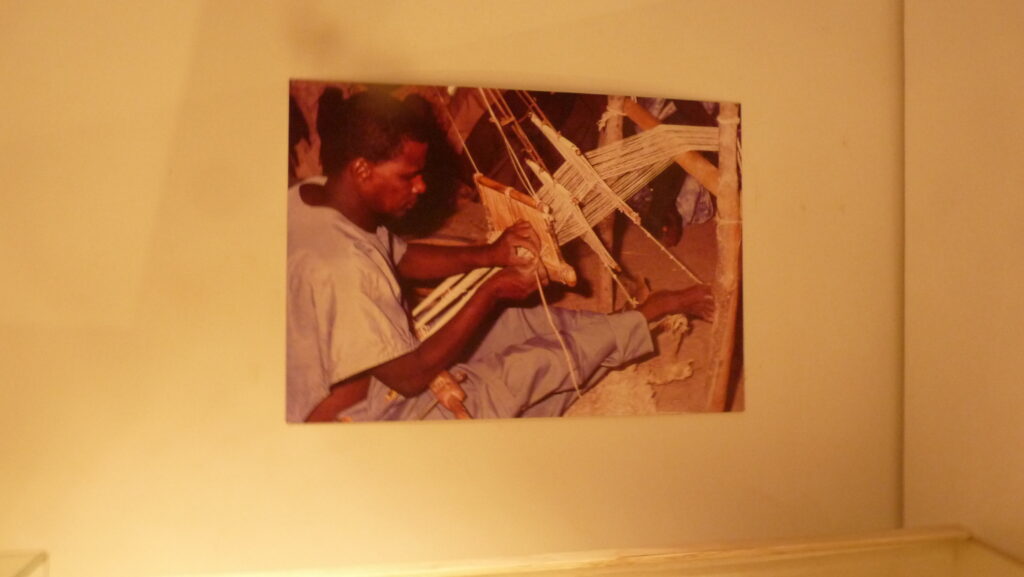
You might then be able to be brought to remote places where a person might still be practicing the textile craft on the traditional loom.

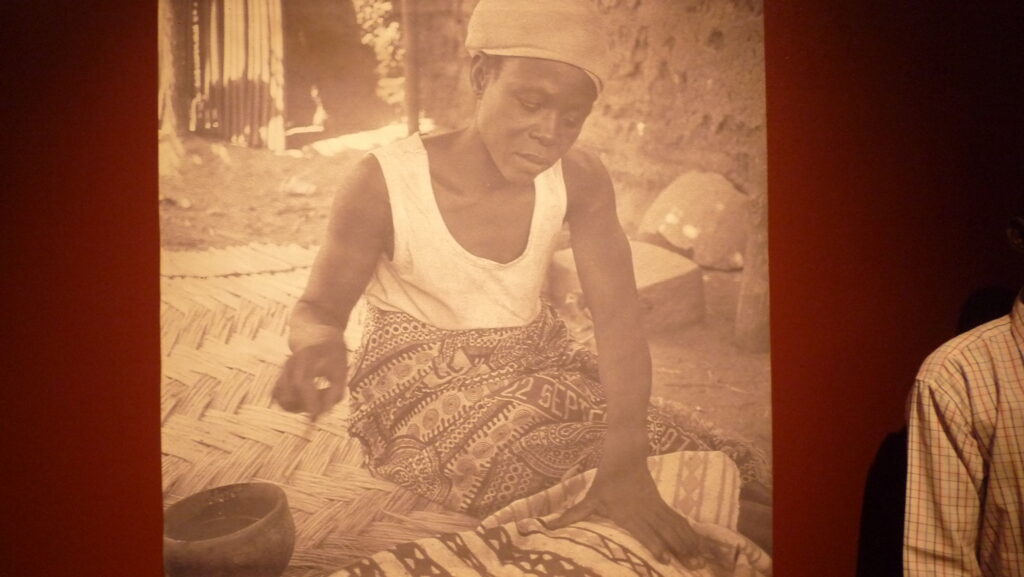
Image copyright Museum of Mali, Bamako 2025

During my drive I observed a mixed crowd wearing both European style clothing and Wax printed fabrics. It was rare, ver rare if ever I observed the traditional local textiles.

The roads in Africa are great, where there are patches of bad road, consorted efforts are being made to improve these. Large trucks drive throughout the continent taking goods from country to country, city to city.

Mali and Burkina Faso are countries very strong in their cultures. People there are very proud of their cultures and they incorporate traditions in contemporary settings.

Artisans have their shops throughout the cities of the country. In Burkina Faso for example I was able to visit a business centre where people from various African countries came to display their products.

On this particular day products from Morroco were the dominant products on display, as Morroco invest in Moroccan businesses to push their products on the continent. I would like to see more African nations promoting their local products in eachothers countries. There was no textiles from any country here.

My journey took me further through Togo, Benin, Nigeria, Niger, Tchad, Cameroon, CAR and eventually Republic of Congo.

As I was waiting for my Visa in Brazaville, I decided to explore the traditional Congolese textiles. During my visit to the cities large market of Poto Poto, I came across a Malian ran textile shop among the many Indian ran shops on the high street.

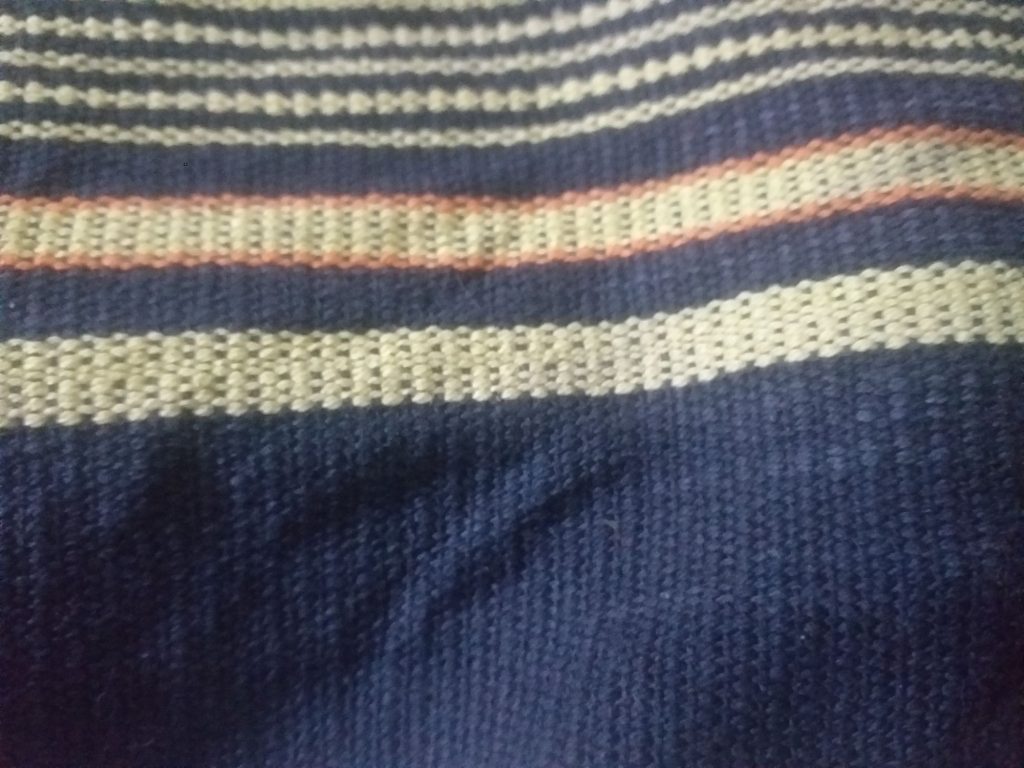
As I was asking for for the Congolese traditional headwraps, my eyes were drawn  to a striped heavy cotton quality worn 20-25 cm stripe cloth. I knew immediately I stroke gold.

Before this, I was contemplating the lack of intercontinental trade, which would greatly boost the textile sector if these could be exported among the African countries.

My beautiful Burkinabe made textile, was 10x more expensive than the average textiles in that store. The shop owner explained to me that transportation, from Mali to Congo, was a large part for the high cost of the cloth. Employing a tailor, with experience in pattern cutting with strip fabrics was also a challenge.  There is definitely space for specialised  knowledge creation in design and pattern cutting using traditional textiles.

My fabric from Mali purchased in Congo

The cloth was beautifully hand woven, striking colour combinations allowing me to create a beautiful long dress.

I knew, based on the weaving patterns, that the artisan used years of passed on knowledge to construct this cloth.

Design analysis

The warp colours of this textile are yellow, black and orange.  The weft is all black. The pattern sequence is constructed with a variety thicknesses of vertical lines of black, yellow and orange sitting perfectly on the weft.

The length of the textile is about 100cm, and the width was 15 inch. This would be in keeping with the use of the traditional handloom. This does not mean that larger looms looms are not also part of an older traditions of weavers in this region. This however not been investigated as of yet. But what is certain is that the yarn used in this piece are not hand spun yarn but mechanically produced yarn.

I can not state for sure that the yarn would of been imported into Mali, as Mali is a large  cotton producer and has been making consorted efforts in rebuilding all parts of its textile industry while preserving its traditional artisan textile sector.

Having had the opportunity to speak to the seller/ owner at length, I was informed that these textiles are very much loved but for the prices. The cheap imports place a role, but also the transportation and import duties make the selling prices 10x higher.

Nevertheless there is still a niche market for these fabrics and in time, with further developments of trade among the African nations, in combination with effective government policies, the prices might eventually come down.

Narratives of the culture dress: The resurgence of identity, local livelihood and the future: Reviving the African Textile industry

In 2015, surfaced the first signs out of the African continent that the governments are starting to make and implement the necessary policies in order to safeguard not only the livelihoods of local textile practitioners, but also the preservation of local designs and aesthetics alongside the weaving skills.

While there has been numerous African scholarly attention on own decline of the local textile industry, it has taken over 20 years to arrive at a point where local governments are active in the sector.

Each of the 54 countries in Africa, can boast of a rich ancient tradition of cloth making, dating far back in the BC's. Some textile designs have risen more in popularity than others, and some has been more researched and documented then others.

In 2019, the Rwanda president took a brave and bold step in halting second-hand clothing shipping containers that were arriving from America and Europe. These second-hand clothing (and cheap Chinese knock-off  prints) were decimating the remaining textile practitioners chances of making some type of livelihood for them and their families.

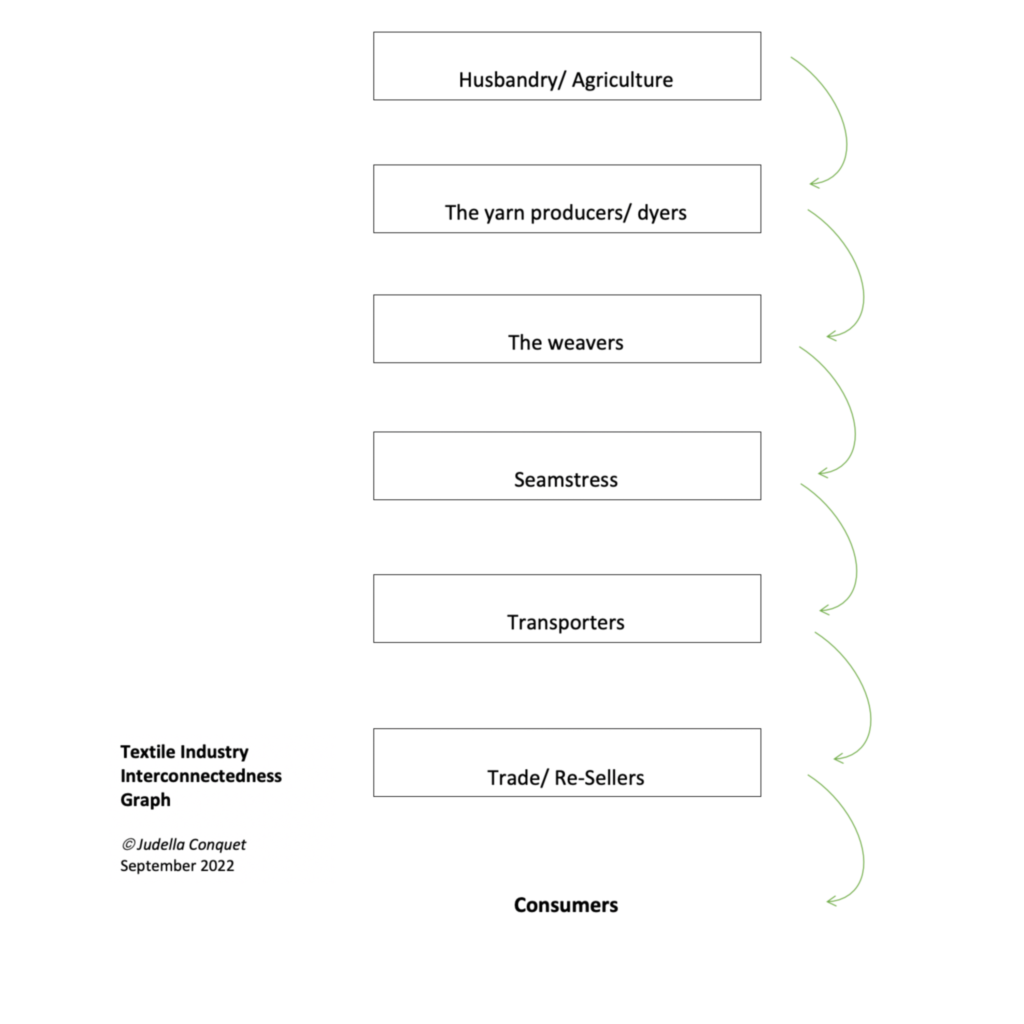
These imports do not just affect one  of people, but many segments and supporting Textile industry practitioners as illustrated in the graph.

With the Rwandan government interventions they were able to start the arduous task of rebuilding a prosperous industry,  manufacturing industry in the Pearl of Africa.

In 2022, the Kenyan government started taking steps to protect the local textile industry from second-hand clothing imports and cheap Chinese faux prints fabrics.

Along side these policies, concerted efforts are being made by locally run NGO's to reintroduce weaving and other textile making skills back into the workforce.

Ghana in 2021 mandated that the school uniforms should have traditional Ghanaian designs. This policy does not only imparts identity back into the populous, but it also help boost the local manufacturing mills that will now be producing and selling throughout the country, regaining portions of the local market segments.

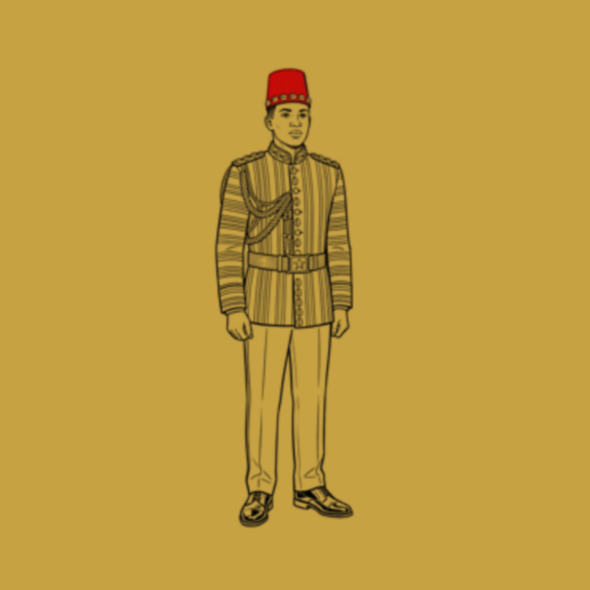
With the new governing system in Burkina Faso, the government, as one of their first policies, also made the school uniforms to be changed into local traditional designs. These policy changes strongly boost the Burkinabe identity and increase jobs locally.

The textile industry in Burkina Faso has long been suffering,  but was able to still continue to exist with small export opportunities in Central Africa.

Ethiopia has long maintained its textile industry despite other African countries struggles. The famous white cotton woven fabric with beautiful colourful surface needle work has been exported worldwide as Ethiopians promote their cultures worldwide.

Ethiopians themselves are large consumers of their own cloth in so sharing in the continuity of textile practitioners livelihood and its technical making skills.

In Nigeria, the Yoruba, Ibos, Hausa and other groups, still largely wear their traditional textiles not only for special occasions, but also as part of daily life.

During my visit in 2022 to Port Harcourt in Nigeria, the fridays were used to allow hotel staff to wear traditional attire. The hotel itself had beautiful local textile artworks throughout,  evidencing how the Nigerian people actively find ways to incorporate their traditional identity into a contemporary setting.

Unlike the western concepts of museaums in America and Europe,  African traditions are lived, are very much alive and touches peoples life on a daily basis. Traditions interact with it's people, allowing it to be part of the peoples consciousness.