African Knowledge System of Engineered Textiles from the Niger Bend

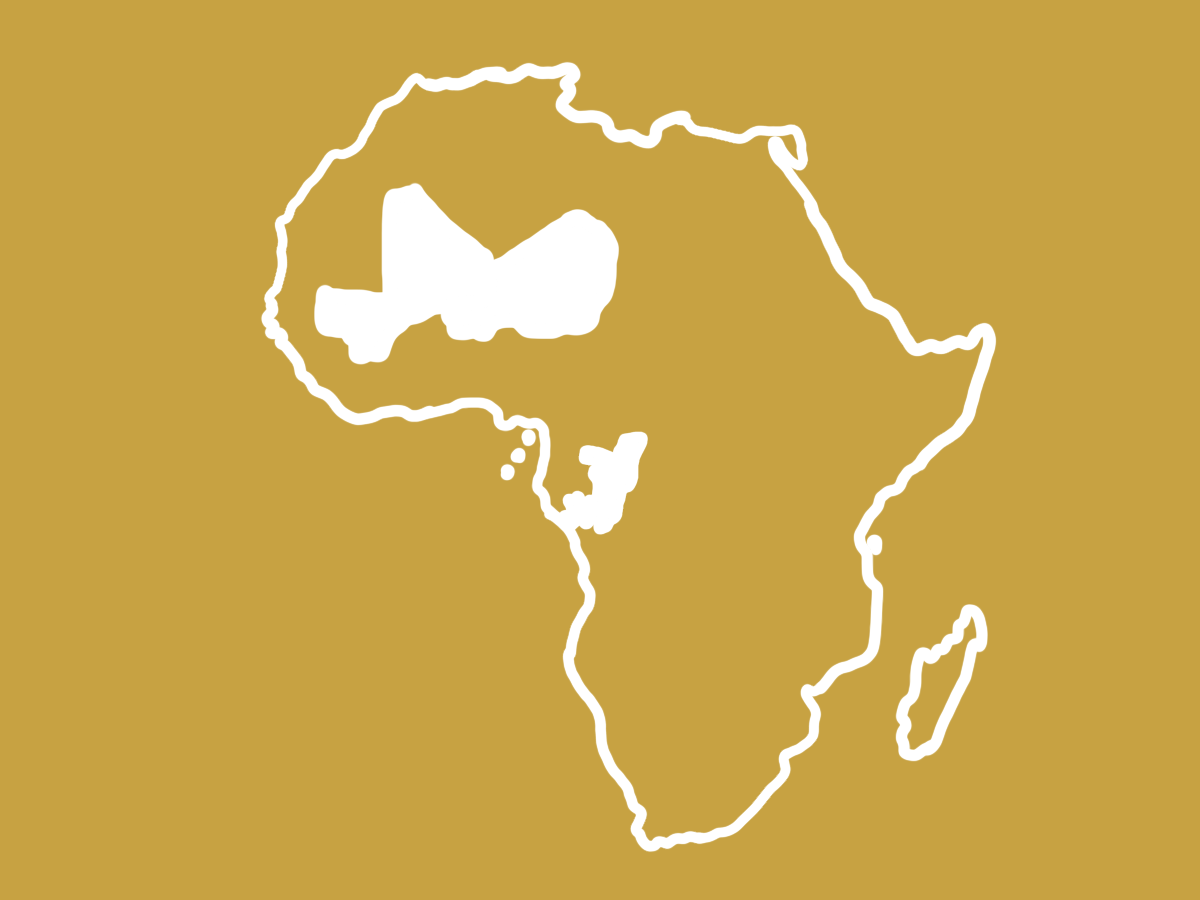
In the arc of the Niger River, where the desert meets the inland delta, a distinctive wool textile tradition developed that stands as one of West Africa's most sophisticated material technologies. The Niger Bend region—spanning what is now Mali and Niger—was historically a crossroads where Saharan camel caravans transferred goods to boats navigating the river. It also became, according to textile scholars Bernhard Gardi and Michelle Gilbert, "the foremost center of technical and visual diversity in West African treadle-loom weaving traditions."

What makes this tradition remarkable is not just its beauty but its engineering. The weavers of the Niger Bend produced wool textiles using two advanced techniques: extra-weft patterning and tapestry weave. These are not simple weaving methods. Extra-weft patterning involves adding non-structural threads that float across the surface to create complex, raised designs. Tapestry weave requires the weaver to manage multiple colored weft threads simultaneously, creating distinct blocks of pattern that form geometric compositions.

The wool itself comes from Massina sheep, raised in the Inland Delta of Mali—the only area in Sub-Saharan Africa where wool is traditionally produced. This is not incidental. The textile system is intimately linked to the social system of the Fulani people who own the sheep. The knowledge is encoded in animal husbandry, material practice, and visual language simultaneously.


The Algorithmic Pattern System

The patterns on these textiles are not random. They follow a rule-based logic that textile researchers have only recently begun to decode. The foundational element is a motif called bitshirgal—an "onset" pattern that serves as the generative seed for all other designs. All other motifs are recombinations of the different elements of the bitshirgal.

This is algorithmic generation. A finite set of elements produces an indefinite number of variations. Not in theory. Woven by hand.

The checkerboard pattern, achieved on the narrow-strip loom by alternating sections of light and dark weft threads, is mathematically systematic. The Smithsonian Institution notes that this pattern is related to "magic squares" that feature precise mathematical progressions.

The Niger Bend weavers did not write code. They encoded logic in thread.


Two Major Textile Types

The tradition produced two distinct categories of wool textiles, each with its own purpose and design logic.

Kaasa were heavy covers that changed significantly in appearance over the 20th century. A mid-20th century kaasa blanket in the Smithsonian collection demonstrates the checkerboard pattern achieved by "rapidly tossing his shuttle" as the weaver alternated light and dark weft threads.
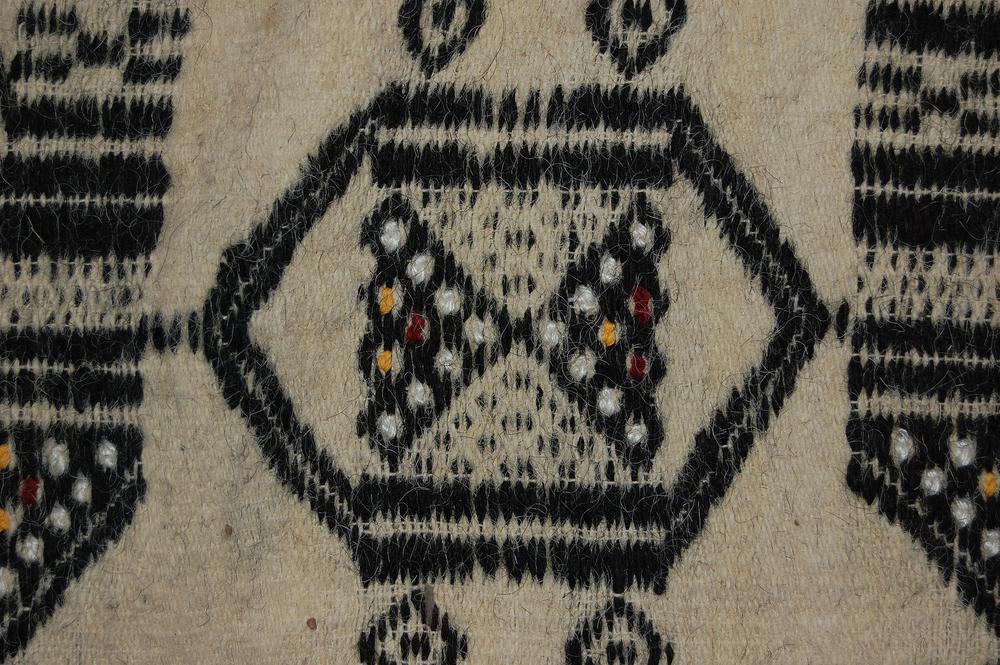
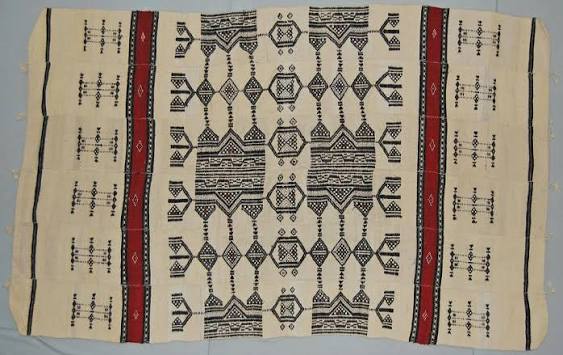
Arkilla (also called arkilla jenngo) were ceremonial marriage covers that maintained the same design language for centuries. The Textile Museum describes a 1940s arkilla as a "beautiful and complex woven panel" designed to hang inside or outside Tuareg tents. The word arkilla means "mosquito net"—the panel offered protection against the harsh mosquito-laden environment of the Niger Bend.

The construction is sophisticated. A typical arkilla is composed of fourteen narrow strips sewn together. A Fulbe weaver would create "an arrangement of triangles, chevrons and other motifs that has meaning in the Tuareg culture," often spending up to four months completing a single commission.


The Third Category: Wool Ornamentation on Cotton Ground

A third category featured wool ornamentation on a cotton ground, woven in the northeastern part of Burkina Faso, particularly around the town of Dori. These textiles were made by weavers of the Djerma (or Zarma) people, rather than the specialized Fulani maabuuɓe who produced the full-wool textiles.

The British Museum holds a striking example of this category, acquired in 1937. The cloth is constructed from eleven hand-woven cotton strips sewn together, with the pattern formed from bands of lines in continuous supplementary weft thread and discontinuous motifs including camels. The warp ends are twisted into tassels. Such cloths are called 'suban' and were used as marriage gifts.

The distinction in social status between weavers is significant. While the kaasa and arkilla were made by the specialized maabuuɓe caste, these wool-cotton covers "were made by weavers of lower status." The 1905 French abolition of slavery in their West African territories profoundly transformed the weaving landscape. A generation or more later, "formerly enslaved weavers versed in traditional techniques started their own weaving businesses supported by women who bought industrial threads." This shift helped diffuse extra-weft patterns and tapestry weave eastward, influencing Zarma weaving in Niger and Hausa weaving in Nigeria.


The Weavers: Maabuuɓe

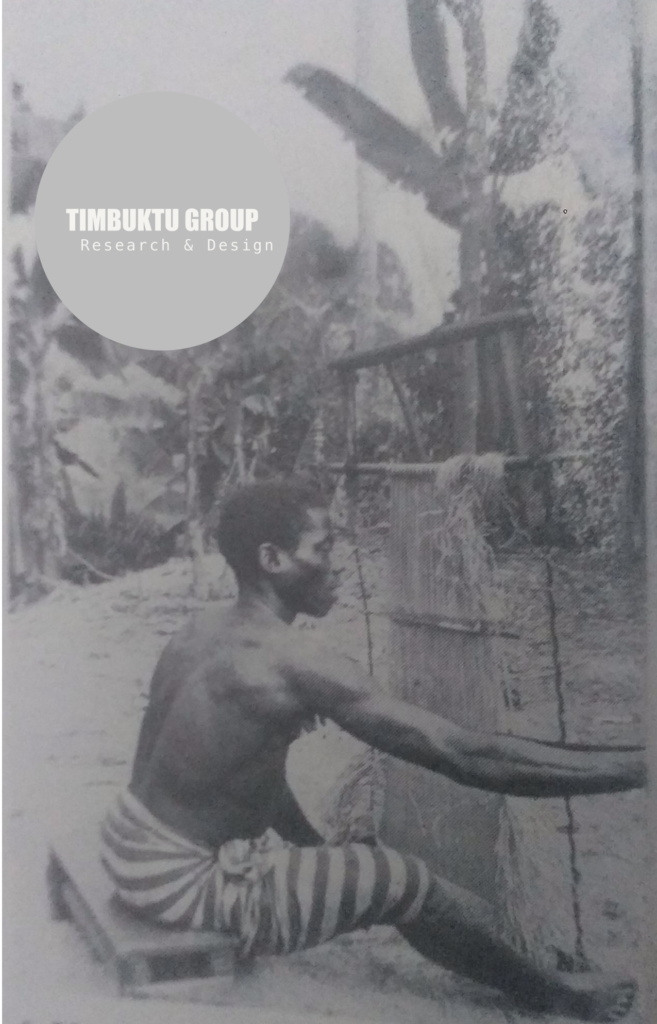
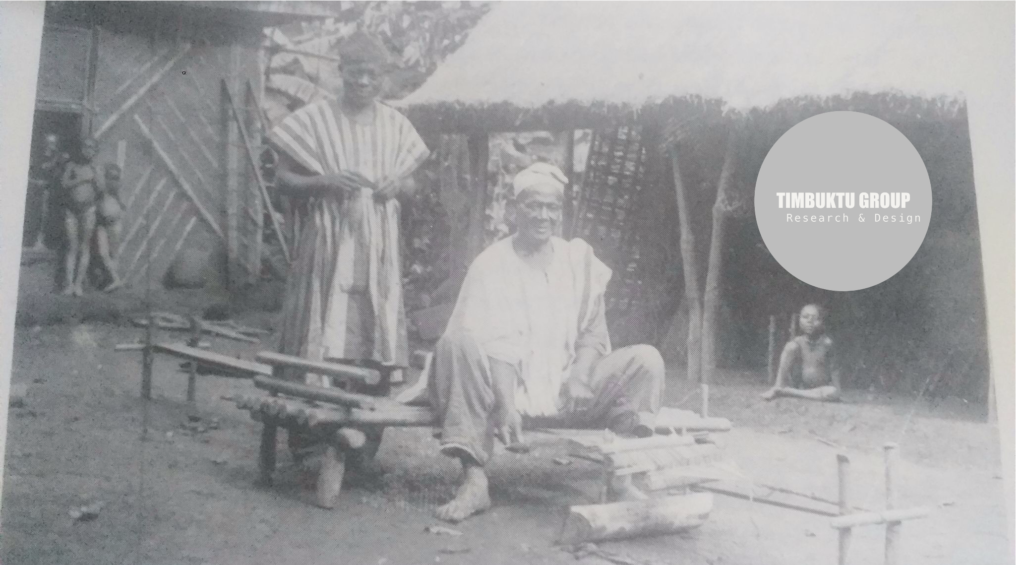
The people who made the full-wool textiles were highly specialized male weavers called maabuuɓe (singular: maabo). They formed a distinct social group, a kind of specialized knowledge caste whose expertise was passed through generations. This was not casual craft. It was hereditary, technical knowledge.

The textiles were commissioned by Tuareg patrons, nomadic pastoralists who did not weave themselves but who valued the wool covers for their tents and ceremonies. A Fulbe weaver might travel to the Tuareg camp with his assistant and a simple pedal loom, spending months completing the project.


The French Colonial Attempts to Industrialize the Massina Sheep

The Massina sheep—the source of the wool—attracted the attention of French colonial administrators who saw an opportunity to supply the French textile industry. Between the 1920s and 1940s, they launched a series of interventions to "upgrade" the indigenous sheep for industrial wool production.

Georges Hugaud, a French veterinary student, submitted a 1934 thesis titled "Le mouton du Macina, son amélioration en vue de la production lainière" (The Macina Sheep, Its Improvement for Wool Production). The thesis proposed methods for increasing wool yield, specifically through cross-breeding local Macina sheep with European Merinos—the premier wool breed of Europe.

R.T. Wilson's 1981 analysis documents the "causes of the failure" of these colonial attempts. The Merino, bred for European climates and intensive management, could not tolerate the environmental conditions of the Inland Delta—seasonal flooding, arid periods, disease pressure. The Fulani traditional system of pastoral management did not conform to the industrial model the French attempted to impose.

The colonial intervention sought to replace an indigenous knowledge system with a European framework. It failed. The indigenous system did not need saving. It needed to be recognized for what it was: a sustainable, locally-adapted technology for producing wool.


The Reach of the Niger Bend Textiles

The influence of these engineered textiles was not contained to the Niger Bend. The wool covers were traded 1,000 kilometers south to the Akan kingdoms of Ghana and Côte d'Ivoire, where they were called nsaa and attained great ritual significance.

The technical influence also moved eastward. Extra-weft patterns and tapestry weave slowly diffused to the region stretching to Lake Chad. This is how, as Gardi and Gilbert document, "the rich Zarma weaving of the Republic of Niger came into being and Hausa weavers in Nigeria 'discovered' tapestry weaving." A much older line of influence went straight into Ewe weaving of Togo and Ghana.

One tradition, many offshoots. The Niger Bend was not isolated. It was a center of technical innovation that shaped weaving across West Africa.


The Absence of Protection

None of this was ever patented. Not because it lacked value. Because the patent system was not built for collective, oral, embodied knowledge.

The Niger Bend weavers—the maabuuɓe—did not file patents. They passed knowledge through caste, through family, through apprenticeship. The system worked for them. It did not fit the Western intellectual property framework.

But the knowledge is still there. The patterns are still there. The logic is still there. The Massina sheep still produce wool in the Inland Delta. The rule-based design system still generates new variations from the old motifs.


Engineering as Integration

What makes the Niger Bend wool textiles an "engineered" system is not any single feature. It is the integration.

Western Framework Niger Bend Reality
Separate categories (engineering, art, agriculture, social structure) All integrated into one system
Written documentation required Knowledge transmitted through caste, family, apprenticeship
Patent system for individual inventors Collective, multi-generational knowledge production
Raw material extraction Animal husbandry linked to social system of Fulani people
Product designed for market Commissioned for specific cultural and ceremonial use

The West would separate these into different disciplines—textile engineering, art history, animal science, sociology. The Niger Bend knowledge system never made those separations. The weaver knew the sheep, the loom, the pattern logic, the client, the ceremony, and the trade route as one interconnected field of knowledge.

This knowledge is real. It is. We will finally recognize it—not as heritage, not as craft, not as tradition—but as engineering. As technology. As an African knowledge system that deserves protection, development, and its place in the story of global innovation.


References

· Gardi, Bernhard and Gilbert, Michelle. "Arkilla, Kaasa, and Nsaa: The Many Influences of Wool Textiles from the Niger Bend in West Africa." The Textile Museum Journal, Volume 48, 2021, pp. 24-53.
· Wilson, R.T. "Livestock production in central Mali: Attempts to produce raw materials of animal origin for the French textile industry during the colonial period." Textile History, Volume 12, 1981, pp. 104-117.
· Wilson, R.T. "The Macina wool sheep of the Niger inundation zone." Tropical Animal Health and Production, Volume 15, 1983, pp. 189-196.
· Hugaud, Georges. Le mouton du Macina, son amélioration en vue de la production lainière. Veterinary thesis, École nationale vétérinaire d'Alfort, 1934.
· Gillow, John. African Textiles. San Francisco: Chronicle Books, 2003.
· The Textile Museum, George Washington University. Collection object 1977.23.2 (Arkilla jenngo, Mali, 1940s).
· Smithsonian National Museum of African Art. Collection object 75-9-1 (Kaasa blanket, Mali, mid-20th century).
· British Museum. Collection object 2018,2036.361 (Kaasa njokwaaka, woolen blanket, Mali, c. 1940-1980).
· British Museum. Collection object Af1937,1002.4 (Wool ornamentation on cotton ground, Dori, Burkina Faso, acquired 1937).
· Schaeder, Karl-Ferdinand. "Le Tissage en Afrique au sud du Sahara", Pantena Verlag, Munich, 1987.
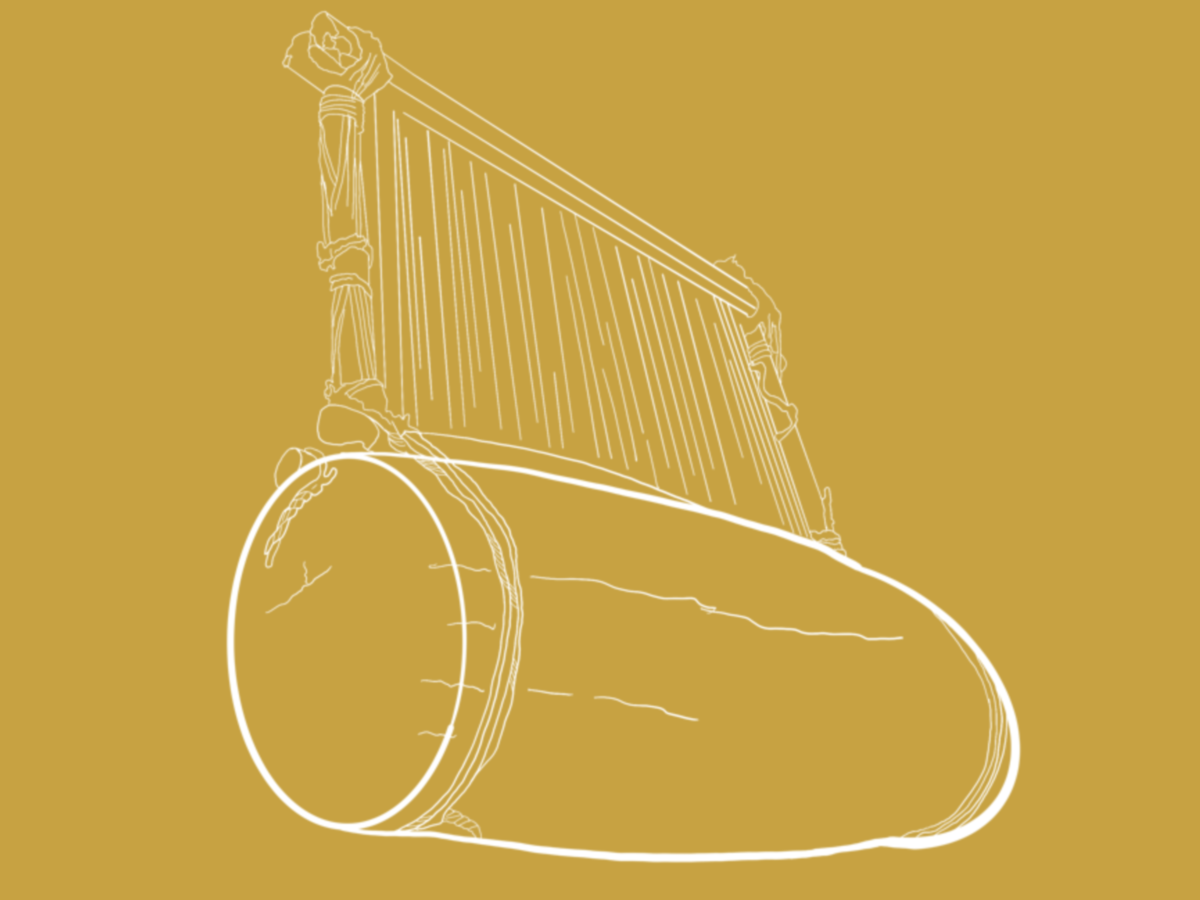
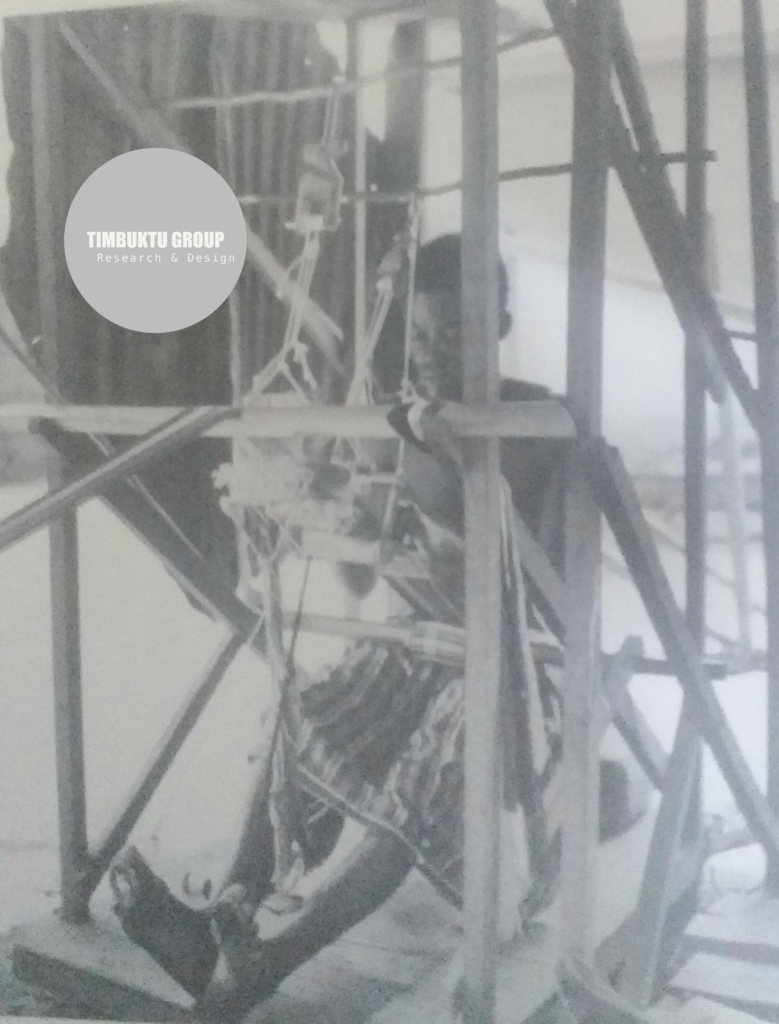
The Tellem series: Reconstruction of the Tellem Loom

The Tellem legacy textiles are a rare collection of over 500 fragments of fabrics found in the caves of Bandiagara, a place in the Republic of Mali, south of the river of Niger.

These fragmens consisted of clothes, blankets and some accessories such as belts and head wears.

While no looms were found in these burial caves, we can re-construct these looms based on the fabrics found, the known regional weaving looms and the culture continuation practices of the region.

Fabrics analysis for the reconstruction of the loom

The fabrics consised of fragments made from wool and cotton. The samples that were examined were not complete loom width.

A sample was 65 cm with the selvage only on one side. This leads to the conslusion that the loom used to weave this piece was larger than 65 cm. In West-Africa the 15-inch loom was made famous, the larger looms are not associated with ancient African weaving tradition but they should.

The sampled fragments were made using both coarse yarn as well as finer structured yarn. They were plain weave, wet-faced plain weave and warp-faced plain weave. The lenght of the warp varied anywhere between 6 meters to 17 meters long.

Technical informations published in the book, Tellem Textiles, based the width of the textiles as being the width of the loom. I strongly disagree with this. It is possible to work all types of width on a wider loom. A loom can have a width of 80 cm, yet textiles of 40, 50, 65 cm can be woven on such loom.

Because a fabric fragment is 15 cm wide does not mean the loom is 15 cm, it could mean that a loom of 70 cm was threaded to produce a piece of 15 cm. It is also known that the looms that produced the Tellem fabrics must of gotten a reed. This conclusion is based on the end result of the designs:

  • With a reed weaving one under and one over will produce a textile in warp-faced plain weave, warp threads would be more visible.
  • with a reed weaving one under and one over, you can easily produce textiles in plain weave, warp and weft threads can be shown equally.
  • Or weft-faced plain weave, making weft threads more visible.

Known regional looms

The West-African region, which largely consist of 2 great empires of Africa; The mali Empire and the Songhai Empire, is known for intricate woven fabrics on single shaft weaving looms. Weavers developed different looms to weave different textile products. They also demonstrated preferences in loom design in relation to the yarn/ fibre type they were using (Rafia, cotton and wool).

An Asante Loom, Ghana, former Mali Empire

Our master weavers also developed looms that were specifically designed to be used by a specific gender, they developed looms for males to weave on and looms for females to weave on.

  • The upright weaving loom

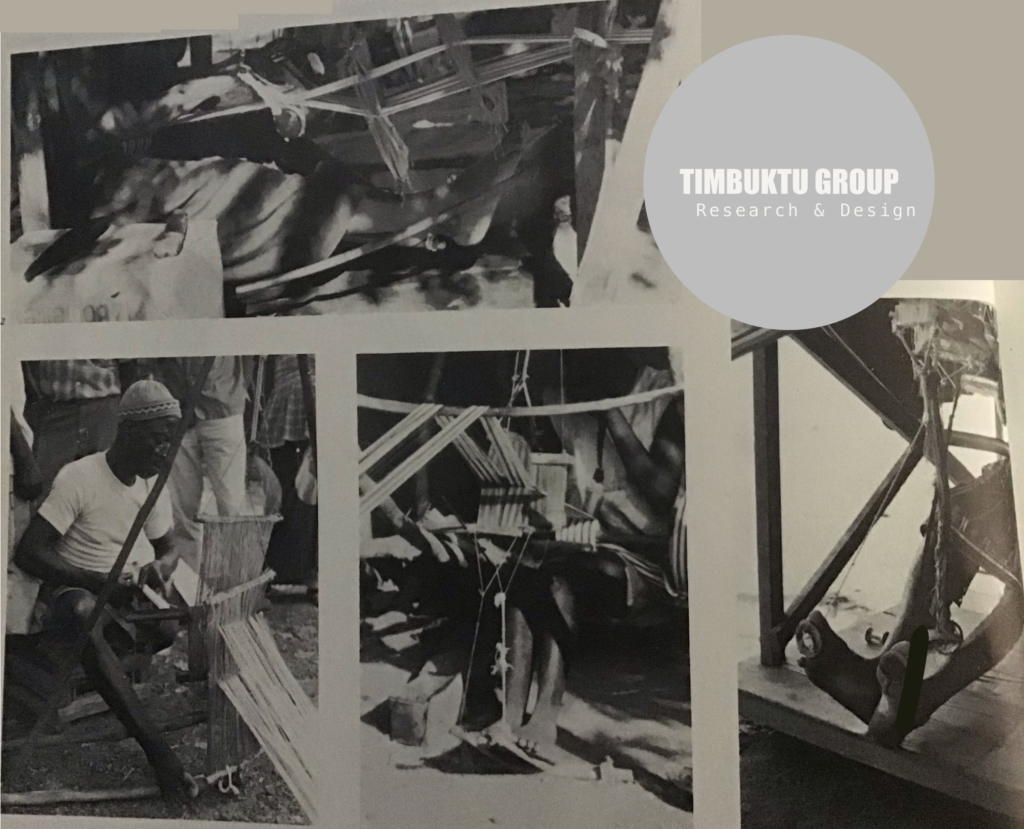
The upright weavin loom is a loom that is setup up-right in a vertical position. This loom was/ is used to weave smaller finished projects using courser materials such as Rafia and course wool. They would produce mats, rugs and blankets on these looms.  

  • The Horizontal men treadle loom

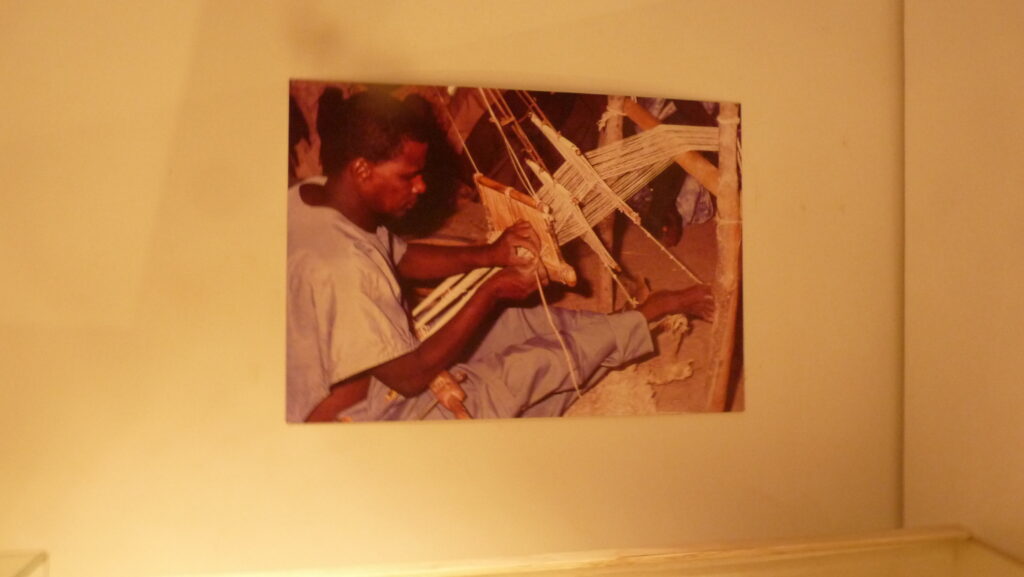
These horizontal looms were in most cases exclusively used by men. Perhaps due to the physical excersion required in using these types of looms. They were used in the creation of wider cloths.

A West African horizontal men's treadle loom

The West-African region had many more designs of weaving looms, it was numerous yet the only one that has been accosiated with the African traditions of weaving were those that were made accesible for the missionaries that were reporting on this, were able to observe. Perhaps because during this time in Europpe, they did not know this type of loom or they were amazed the type of creativity African weavers derived from this simple loom. These looms were used to weave 15-20 inch stripes of fabrics that were then sold on the market. Buyers would then be able to purchase a variety of stripe patterns and when combinning have a multitute of designed cloth with unique paterns. The original pattern makers!

Upright Rafia Loom

Looms were further developed by its user over the centuries and these looms were very valuable and passed on. Perhaps this is the reason why no remains of looms were found in the Tellem caves. Each type of loom had many variations throughout the regions.

Cultural practices today

While there was industrialisation in the African textile sectors, the industry at large was desimated by colonization and unfair business strategies, yet the region of the ancient Songhai Empire continued their weaving practises on the local looms. Some of the looms today might have been replaced with a stronger structure and is heavier making the place of work less mobile. The reeds, previously made from thin shavings of wood and strong yarn, are now mosty metal and incase of preference nylon thread. Some weavers still opt to weave on these exact ancestoral designs , many of these looms, because of the quality of wood used, enjoys a long existance .

There were no looms found in the burial caves, while the people buried were buried with the posession they had or practiced prior to dead. This could mean that the looms were considered a valuable posession, that was to be passed on and not taken to the grave.

During this time fabrics were  highly valuable items and used as currency. So the technology to produce currency was of equal value. As many different looms were developed to produce cloth, the Tellem Textiles were very unique among all the heritage textiles of this region because the patterns they designed was not only highly mathematical in nature (creation of a mathematical formula) but their system of work/ of designing the patterns resulted in the perfect infinity pattern creation that was automated already in the 10th century (perhaps even earlier).

What loom would they have designed to be able to construct such patterns?

The few researchers that looked at the heritage textiles found next to these patterns also other designs/ weaving styles that they wanted to attribute to other regions. While this is possible, I would argue of the ingenuity of the Tellem weavers to be able to produce a variety of weaving styles. You have to incorporate legacy practices of the African people today. Culture, Identity and heritage have always been very strong among the African Nations. These strong traditions were passed on from generations to generations and while innovations took place along the way, you could always pin-point the origin.

Raised ground loom, Cameroun

Why would African weavers not be able to produce a variety of design styles? People moved around the place and nations interacted with eachother.

The Tellem weavers worked on a variety of looms. They would develop, next to the 15-20 inch loom, also wider looms, different versions of the Horizontal treddle loom or more specialised looms for their designs.

The Dogon nation, that currently live in the region, use a version of the horizontal treddle loom. It could be that the Dogon came with this loom to this region, or found this loom there.

The origin of the Tellem people themselves is also a mystery. Could it be that the Tellem people have a habit of moving away when not feeling secure? If they have the habit of moving away where were they prior to moving to the caves, and what made them seek refuge in that area?

Throughout the African continent there are a variety of looms developed for local needs. The Tellem looms needs further research in oder to provide a more accurate quess. For now their textiles gives us tangible proof of limited technical information that could be furter build on only if we find the descendants of the Tellem today.

Visit our Afrikan Loom project.

From Mali, Burkina Faso to Republic of Congo: Textiles crossing borders.

During the years 2021/ 22, I was able to take a life changing journey through 11 African countries. I was able to make valuable observations that would enable me to formulate methodologies, methods and research directions altering the ways the traditional textile designs and practitioners are being affected throughout the African continent.

The Traditional textiles and the people making them are not a very visible part of the contemporary textile industry.  You have to ask the right persons (Find the right people to ask).

You might then be able to be brought to remote places where a person might still be practicing the textile craft on the traditional loom.

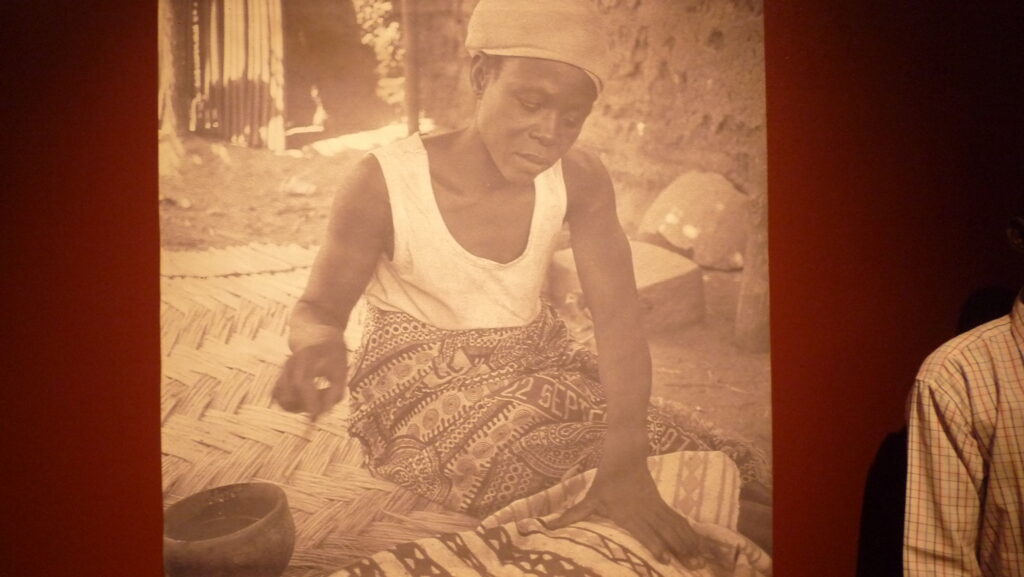
Image copyright Museum of Mali, Bamako 2025

During my drive I observed a mixed crowd wearing both European style clothing and Wax printed fabrics. It was rare, ver rare if ever I observed the traditional local textiles.

The roads in Africa are great, where there are patches of bad road, consorted efforts are being made to improve these. Large trucks drive throughout the continent taking goods from country to country, city to city.

Mali and Burkina Faso are countries very strong in their cultures. People there are very proud of their cultures and they incorporate traditions in contemporary settings.

Artisans have their shops throughout the cities of the country. In Burkina Faso for example I was able to visit a business centre where people from various African countries came to display their products.

On this particular day products from Morroco were the dominant products on display, as Morroco invest in Moroccan businesses to push their products on the continent. I would like to see more African nations promoting their local products in eachothers countries. There was no textiles from any country here.

My journey took me further through Togo, Benin, Nigeria, Niger, Tchad, Cameroon, CAR and eventually Republic of Congo.

As I was waiting for my Visa in Brazaville, I decided to explore the traditional Congolese textiles. During my visit to the cities large market of Poto Poto, I came across a Malian ran textile shop among the many Indian ran shops on the high street.

As I was asking for for the Congolese traditional headwraps, my eyes were drawn  to a striped heavy cotton quality worn 20-25 cm stripe cloth. I knew immediately I stroke gold.

Before this, I was contemplating the lack of intercontinental trade, which would greatly boost the textile sector if these could be exported among the African countries.

My beautiful Burkinabe made textile, was 10x more expensive than the average textiles in that store. The shop owner explained to me that transportation, from Mali to Congo, was a large part for the high cost of the cloth. Employing a tailor, with experience in pattern cutting with strip fabrics was also a challenge.  There is definitely space for specialised  knowledge creation in design and pattern cutting using traditional textiles.

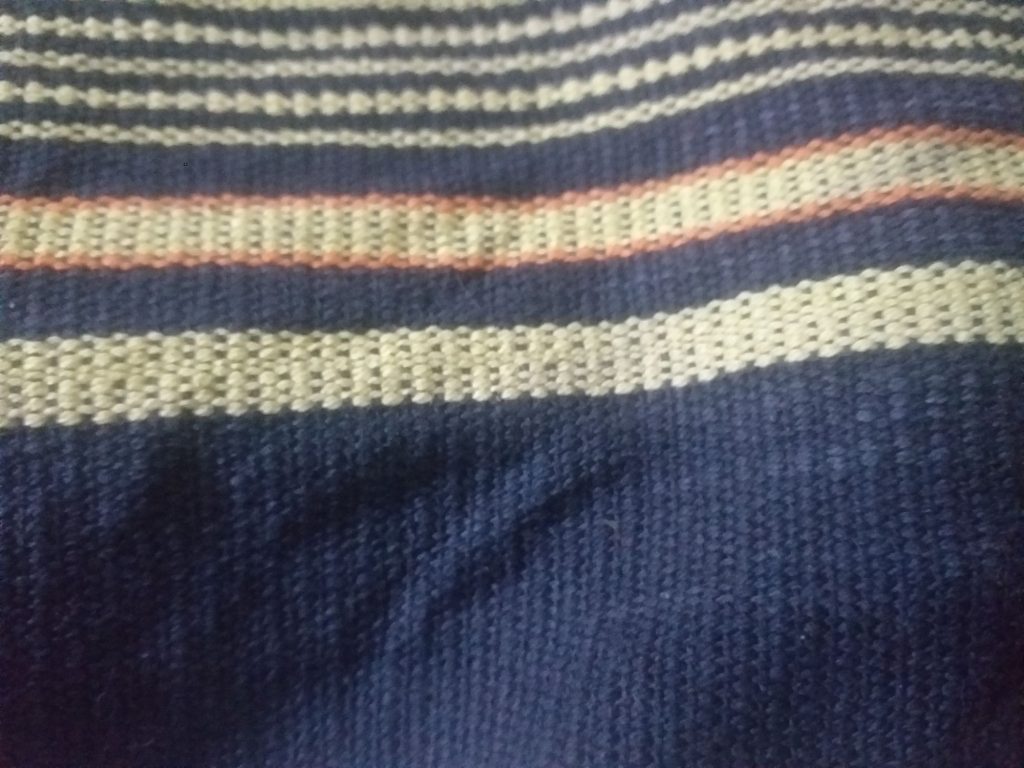
My fabric from Mali purchased in Congo

The cloth was beautifully hand woven, striking colour combinations allowing me to create a beautiful long dress.

I knew, based on the weaving patterns, that the artisan used years of passed on knowledge to construct this cloth.

Design analysis

The warp colours of this textile are yellow, black and orange.  The weft is all black. The pattern sequence is constructed with a variety thicknesses of vertical lines of black, yellow and orange sitting perfectly on the weft.

The length of the textile is about 100cm, and the width was 15 inch. This would be in keeping with the use of the traditional handloom. This does not mean that larger looms looms are not also part of an older traditions of weavers in this region. This however not been investigated as of yet. But what is certain is that the yarn used in this piece are not hand spun yarn but mechanically produced yarn.

I can not state for sure that the yarn would of been imported into Mali, as Mali is a large  cotton producer and has been making consorted efforts in rebuilding all parts of its textile industry while preserving its traditional artisan textile sector.

Having had the opportunity to speak to the seller/ owner at length, I was informed that these textiles are very much loved but for the prices. The cheap imports place a role, but also the transportation and import duties make the selling prices 10x higher.

Nevertheless there is still a niche market for these fabrics and in time, with further developments of trade among the African nations, in combination with effective government policies, the prices might eventually come down.