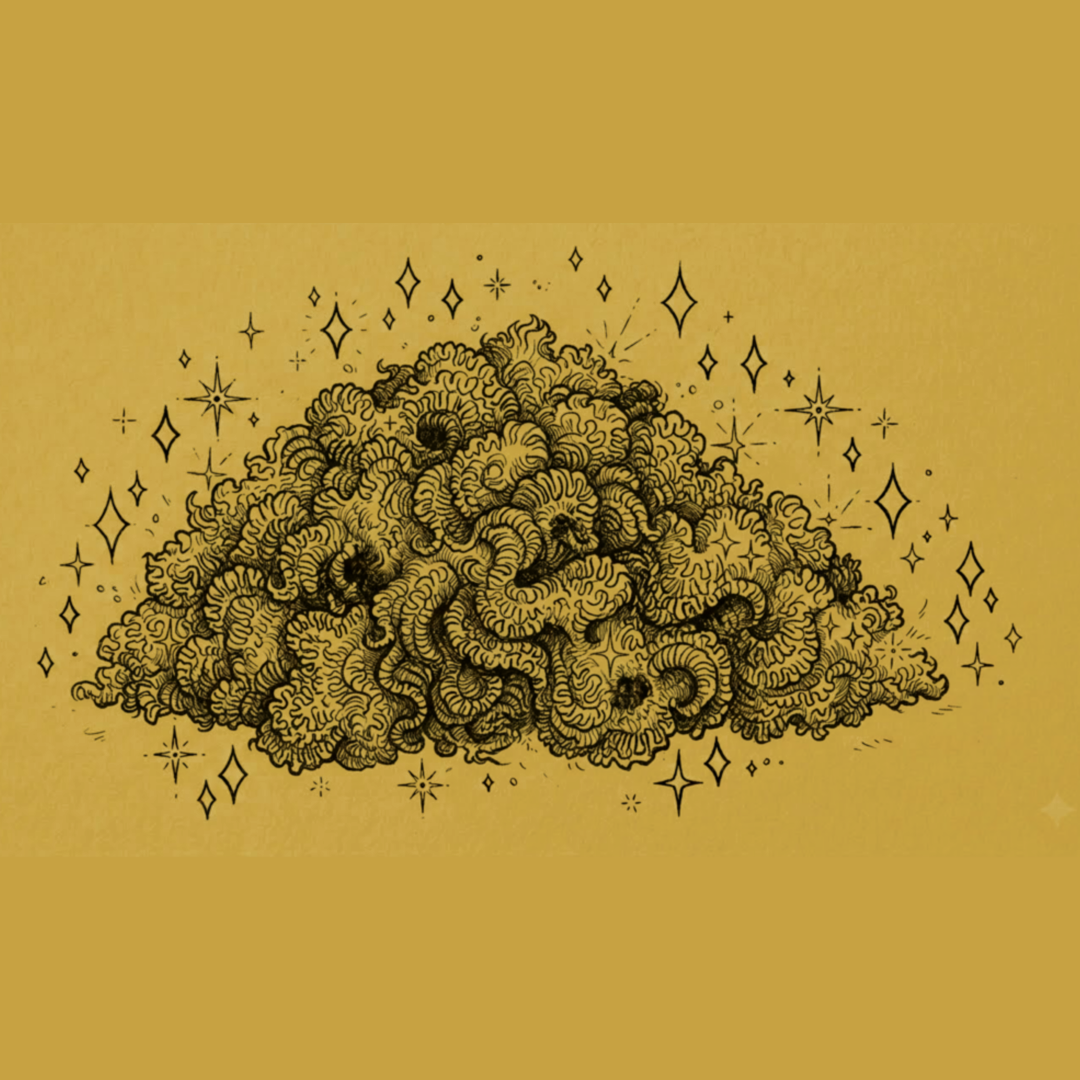
Africa’s Wool Paradox: 30 Million Sheep, Zero Continental Supply Chain — A Supply Chain Autopsy; reconnecting Africa’s fragmented wool heritage.

For decades, the narrative of African textiles has been framed almost exclusively through cotton, silk, and synthetic imports. When we look at global luxury fibers, our minds instantly jump to New Zealand, Australia, or the rolling highlands of South Africa and Lesotho. Yet, across the African continent, a profound ecological and economic blind spot exists: the massive, underutilized potential of wool.
While South Africa, Lesotho, Morocco, and Ethiopia have deep historical or commercial footprints in fiber, their supply chains remain fragmented. Meanwhile, domestic markets in tropical and subtropical urban centers continue to view wool strictly through a European winter lens, missing its true structural and climatic versatility.
This deep dive explores what wool actually is, why it is uniquely suited for Africa’s diverse climates, how established producers are currently bottlenecked, and why systemic barriers keep Africa from transforming its highlands into a thriving fiber economy.

1. What is Wool? (And Why Hair-Sheep Aren’t the Answer)

To understand why wool is missing from much of Africa’s agricultural landscape, we must first distinguish true wool from animal hair.
Commercially viable wool comes from specialized sheep breeds (such as Merinos) whose fleeces grow continuously. Structurally, a true wool fiber possesses two critical properties:

  • Microscopic Crimp: Wool fibers are naturally wavy or crimped. This crimp acts like a microscopic spring, trapping air to provide exceptional thermal insulation while allowing the fibers to interlock tightly when twisted into yarn.
  • Lanolin and Scaled Cuticles: Wool fibers are coated in scales and natural wax (lanolin), giving them elasticity, water-repellency, and durability.
    In contrast, indigenous African sheep across Central and West Africa—such as the West African Dwarf and Cameroon sheep—are hair-sheep. They are genetically optimized for tropical survival, possessing smooth, straight coats that lack crimp and interlock capability. When seasonal shifts occur, these hair-sheep naturally shed their coats entirely into the environment. Because hair fibers are slick and brittle, they cannot be spun into durable textiles and simply decompose as organic litter.
    True fine-wool production requires continuous-growth fleece, specialized genetics, and specific environmental triggers.

2. Wool’s Climate Versatility: Beyond the "European Winter"

A primary misconception hindering wool adoption in Africa is the belief that wool is exclusively heavy, hot winter wear designed for sub-zero European blizzards. In reality, wool is one of nature’s most advanced technical, multi-season performance fibers.

Thermoregulation: Heat and Cold

Wool is hygroscopic and breathable. Its cellular structure allows it to absorb and vaporize moisture away from the skin.

  • In Cold Weather: The natural crimp traps dead air, creating a thermal barrier that keeps the wearer warm.
  • In Hot or Humid Weather: By actively pulling moisture away from the body and releasing it, wool creates a cooling evaporative effect.

Suitability for Africa’s Diverse Microclimates

  • Highland & Sahelian Diurnal Swings: High-altitude regions across East Africa, the Atlas Mountains, and Lesotho experience sharp daily temperature fluctuations—scorching sun by day and freezing temperatures by night. Lightweight-to-medium-weight wool outperforms synthetics by stabilizing body temperature across these extremes.
  • Arid and Semi-Arid Deserts: Historically, nomadic pastoralist groups in arid regions (such as Bedouin communities) utilized heavy wool textiles because the dense fibers insulate the body against intense external solar radiation while managing heavy perspiration.

3. The Established Producers: South Africa, Lesotho, Morocco, and Ethiopia

While massive high-altitude expanses across Central and East Africa share ideal ecological conditions for sheep-rearing but lack fiber traditions, the continent’s established wool framework rests firmly on four pillars:

  • South Africa: A global powerhouse in fine Merino wool production, exporting massive commercial clips to international textile mills.
  • Lesotho: Renowned for high-grade mohair and wool production, deeply anchored in traditional cultural garments like the Basotho blanket.
  • Morocco: Anchored by Amazigh (Berber) communities in the Atlas Mountains, utilizing heavy, natural wools for ancestral rug-weaving and winter garments.
  • Ethiopia: Preserving historical highland wool culture, notably through traditional garments like the bernos—a heavy, hooded wool cloak worn to combat freezing mountain microclimates.

4. What is Stopping the Intra-African Wool Trade?

When examining why wool trade struggles to scale between African nations, we must look directly at the heavyweights already producing it: South Africa, Lesotho, Morocco, and Ethiopia. The bottlenecks lie in how these established markets are structurally trapped:

  • The Outward-Facing Extraction Pipeline: South Africa and Lesotho direct almost all their commercial, high-grade Merino and mohair clips outward. Decades of colonial and global market integration built deep logistics pipelines straight to mills in Europe, Italy, and China. There are virtually no historical trade routes or transport corridors designed to move raw or scoured wool sideways into other African markets.
  • The Processing Chasm Between Craft and Industry: Countries like Morocco and Ethiopia have rich, ancestral wool-craft traditions, but they operate entirely disconnected from Southern Africa’s industrial-scale greasy wool processing. An artisan in Fez or Menz cannot easily acquire high-grade, commercial South African wool yarn because local processing is split between small-scale artisanal hand-washing/carding and massive industrial export houses that do not cater to regional micro-trade.
  • Intra-Continental Trade Friction & Non-Tariff Barriers: Even when neighboring nations attempt to trade textile inputs, they run into a wall of high transit costs, conflicting customs rules, and protectionist tariffs between regional economic blocs (such as SADC, COMESA, and the Arab Maghreb Union). It remains legally and logistically simpler for a South African exporter to ship raw fleece across the ocean than to clear the bureaucratic checkpoints required to truck it north to an East or North African processing partner.

5. Design Potential: Loom Experimentation and Heritage Modernization

To unlock wool's modern potential on the continent, we must look closely at how traditional looms interact with the fiber—moving away from the modern industrial habit of blending different fibers (such as mixing wool with cotton or silk) and looking instead at pure-material structural experimentation.

  • Single-Fiber Loom Experimentation: Historically, traditional wool-producing cultures did not blend disparate raw fibers like wool and cotton into the same thread or fabric; wool was spun and woven as pure protein fiber to maximize its unique thermal and weather-resistant properties. However, a major opportunity lies in loom experimentation—taking traditional horizontal or vertical looms (such as those used for Ethiopian cotton or Moroccan flat-weaves) and testing how pure, locally sourced wool behaves on them. By altering tension, reed counts, and weave structures without adulterating the fiber itself, artisans can discover entirely new structural weights, drapes, and textures from 100% pure wool.
  • Heritage Modernization: Taking direct inspiration from historical garments—such as Ethiopia’s heavy, wool-woven bernos cloaks or Morocco’s mountain capes—contemporary designers can engineer structured, luxury outerwear tailored for high-altitude microclimates. This preserves the cultural integrity of the textile while updating its silhouette for modern urban markets.
  • Regional Craft Exchange: Rather than forcing synthetic fiber blends, African designers can foster cross-regional exchanges where the techniques of different textile cultures are applied to pure wool—bringing West or East African weaving geometries together with North and Southern African heavy-fiber handling.

The Bottom Line

Africa’s wool economy does not suffer from a lack of raw material or cultural pedigree; it suffers from profound structural isolation. South Africa, Lesotho, Morocco, and Ethiopia hold the foundational assets of a world-class fiber continent, yet their supply chains remain pointed outward toward foreign ports or locked inside localized artisan pockets.
By dismantling intra-continental trade barriers, connecting existing producers through dedicated raw-material corridors, and experimenting with pure-wool construction on traditional looms rather than resorting to foreign fiber blends, Africa can transform its historic wool heritage into a self-sustaining, high-value continental market.

Reference List

  • AllAfrica & Capital FM. (2026). Open Skies Deliveries Keep Africa's Trade Costs High. August 7, 2026.
  • African Airlines Association (AFRAA). Reports on blocked airline revenues and intra-African aviation transit costs.
  • Federal Reserve Economic Data (FRED). Economic data series tracking global commodity benchmarks, including the Cotton Index and international wool price indicators.
  • Food and Agriculture Organization (FAO). Livestock Production Systems and Pastoralism in Sub-Saharan Africa: Ecological Distribution of Hair-Sheep vs. Wool-Bearing Sheep. FAO Animal Production and Health Division.
  • International Trade Centre (ITC). SME Competitiveness Outlook: Empowering African Creative Economies and Regional Value Chains.
  • RwandAir & Regional Agricultural Reports. Documentation on highland agro-pastoral practices in East, Central, and North Africa, including historical utilization of traditional wool garments (Bernos).
African Knowledge System of Engineered Textiles from the Niger Bend

In the arc of the Niger River, where the desert meets the inland delta, a distinctive wool textile tradition developed that stands as one of West Africa's most sophisticated material technologies. The Niger Bend region—spanning what is now Mali and Niger—was historically a crossroads where Saharan camel caravans transferred goods to boats navigating the river. It also became, according to textile scholars Bernhard Gardi and Michelle Gilbert, "the foremost center of technical and visual diversity in West African treadle-loom weaving traditions."

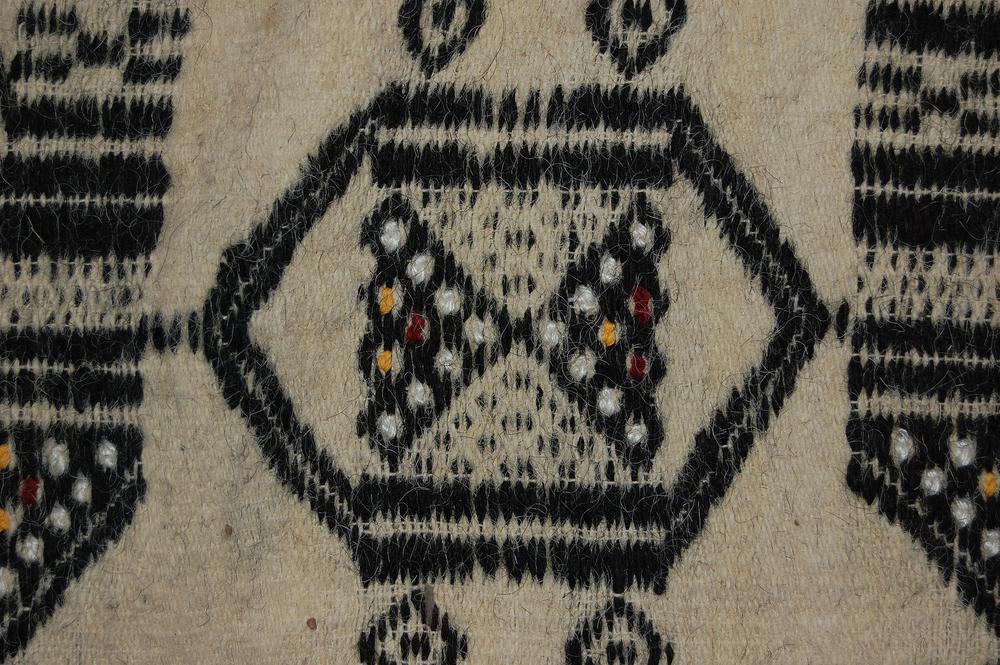
What makes this tradition remarkable is not just its beauty but its engineering. The weavers of the Niger Bend produced wool textiles using two advanced techniques: extra-weft patterning and tapestry weave. These are not simple weaving methods. Extra-weft patterning involves adding non-structural threads that float across the surface to create complex, raised designs. Tapestry weave requires the weaver to manage multiple colored weft threads simultaneously, creating distinct blocks of pattern that form geometric compositions.

The wool itself comes from Massina sheep, raised in the Inland Delta of Mali—the only area in Sub-Saharan Africa where wool is traditionally produced. This is not incidental. The textile system is intimately linked to the social system of the Fulani people who own the sheep. The knowledge is encoded in animal husbandry, material practice, and visual language simultaneously.


The Algorithmic Pattern System

The patterns on these textiles are not random. They follow a rule-based logic that textile researchers have only recently begun to decode. The foundational element is a motif called bitshirgal—an "onset" pattern that serves as the generative seed for all other designs. All other motifs are recombinations of the different elements of the bitshirgal.

This is algorithmic generation. A finite set of elements produces an indefinite number of variations. Not in theory. Woven by hand.

The checkerboard pattern, achieved on the narrow-strip loom by alternating sections of light and dark weft threads, is mathematically systematic. The Smithsonian Institution notes that this pattern is related to "magic squares" that feature precise mathematical progressions.

The Niger Bend weavers did not write code. They encoded logic in thread.


Two Major Textile Types

The tradition produced two distinct categories of wool textiles, each with its own purpose and design logic.

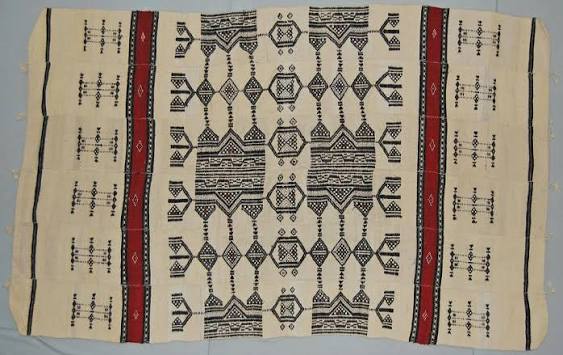
Kaasa were heavy covers that changed significantly in appearance over the 20th century. A mid-20th century kaasa blanket in the Smithsonian collection demonstrates the checkerboard pattern achieved by "rapidly tossing his shuttle" as the weaver alternated light and dark weft threads.

Arkilla (also called arkilla jenngo) were ceremonial marriage covers that maintained the same design language for centuries. The Textile Museum describes a 1940s arkilla as a "beautiful and complex woven panel" designed to hang inside or outside Tuareg tents. The word arkilla means "mosquito net"—the panel offered protection against the harsh mosquito-laden environment of the Niger Bend.

The construction is sophisticated. A typical arkilla is composed of fourteen narrow strips sewn together. A Fulbe weaver would create "an arrangement of triangles, chevrons and other motifs that has meaning in the Tuareg culture," often spending up to four months completing a single commission.


The Third Category: Wool Ornamentation on Cotton Ground

A third category featured wool ornamentation on a cotton ground, woven in the northeastern part of Burkina Faso, particularly around the town of Dori. These textiles were made by weavers of the Djerma (or Zarma) people, rather than the specialized Fulani maabuuɓe who produced the full-wool textiles.

The British Museum holds a striking example of this category, acquired in 1937. The cloth is constructed from eleven hand-woven cotton strips sewn together, with the pattern formed from bands of lines in continuous supplementary weft thread and discontinuous motifs including camels. The warp ends are twisted into tassels. Such cloths are called 'suban' and were used as marriage gifts.

The distinction in social status between weavers is significant. While the kaasa and arkilla were made by the specialized maabuuɓe caste, these wool-cotton covers "were made by weavers of lower status." The 1905 French abolition of slavery in their West African territories profoundly transformed the weaving landscape. A generation or more later, "formerly enslaved weavers versed in traditional techniques started their own weaving businesses supported by women who bought industrial threads." This shift helped diffuse extra-weft patterns and tapestry weave eastward, influencing Zarma weaving in Niger and Hausa weaving in Nigeria.


The Weavers: Maabuuɓe

The people who made the full-wool textiles were highly specialized male weavers called maabuuɓe (singular: maabo). They formed a distinct social group, a kind of specialized knowledge caste whose expertise was passed through generations. This was not casual craft. It was hereditary, technical knowledge.

The textiles were commissioned by Tuareg patrons, nomadic pastoralists who did not weave themselves but who valued the wool covers for their tents and ceremonies. A Fulbe weaver might travel to the Tuareg camp with his assistant and a simple pedal loom, spending months completing the project.


The French Colonial Attempts to Industrialize the Massina Sheep

The Massina sheep—the source of the wool—attracted the attention of French colonial administrators who saw an opportunity to supply the French textile industry. Between the 1920s and 1940s, they launched a series of interventions to "upgrade" the indigenous sheep for industrial wool production.

Georges Hugaud, a French veterinary student, submitted a 1934 thesis titled "Le mouton du Macina, son amélioration en vue de la production lainière" (The Macina Sheep, Its Improvement for Wool Production). The thesis proposed methods for increasing wool yield, specifically through cross-breeding local Macina sheep with European Merinos—the premier wool breed of Europe.

R.T. Wilson's 1981 analysis documents the "causes of the failure" of these colonial attempts. The Merino, bred for European climates and intensive management, could not tolerate the environmental conditions of the Inland Delta—seasonal flooding, arid periods, disease pressure. The Fulani traditional system of pastoral management did not conform to the industrial model the French attempted to impose.

The colonial intervention sought to replace an indigenous knowledge system with a European framework. It failed. The indigenous system did not need saving. It needed to be recognized for what it was: a sustainable, locally-adapted technology for producing wool.


The Reach of the Niger Bend Textiles

The influence of these engineered textiles was not contained to the Niger Bend. The wool covers were traded 1,000 kilometers south to the Akan kingdoms of Ghana and Côte d'Ivoire, where they were called nsaa and attained great ritual significance.

The technical influence also moved eastward. Extra-weft patterns and tapestry weave slowly diffused to the region stretching to Lake Chad. This is how, as Gardi and Gilbert document, "the rich Zarma weaving of the Republic of Niger came into being and Hausa weavers in Nigeria 'discovered' tapestry weaving." A much older line of influence went straight into Ewe weaving of Togo and Ghana.

One tradition, many offshoots. The Niger Bend was not isolated. It was a center of technical innovation that shaped weaving across West Africa.


The Absence of Protection

None of this was ever patented. Not because it lacked value. Because the patent system was not built for collective, oral, embodied knowledge.

The Niger Bend weavers—the maabuuɓe—did not file patents. They passed knowledge through caste, through family, through apprenticeship. The system worked for them. It did not fit the Western intellectual property framework.

But the knowledge is still there. The patterns are still there. The logic is still there. The Massina sheep still produce wool in the Inland Delta. The rule-based design system still generates new variations from the old motifs.


Engineering as Integration

What makes the Niger Bend wool textiles an "engineered" system is not any single feature. It is the integration.

Western Framework Niger Bend Reality
Separate categories (engineering, art, agriculture, social structure) All integrated into one system
Written documentation required Knowledge transmitted through caste, family, apprenticeship
Patent system for individual inventors Collective, multi-generational knowledge production
Raw material extraction Animal husbandry linked to social system of Fulani people
Product designed for market Commissioned for specific cultural and ceremonial use

The West would separate these into different disciplines—textile engineering, art history, animal science, sociology. The Niger Bend knowledge system never made those separations. The weaver knew the sheep, the loom, the pattern logic, the client, the ceremony, and the trade route as one interconnected field of knowledge.

This knowledge is real. It is. We will finally recognize it—not as heritage, not as craft, not as tradition—but as engineering. As technology. As an African knowledge system that deserves protection, development, and its place in the story of global innovation.


References

· Gardi, Bernhard and Gilbert, Michelle. "Arkilla, Kaasa, and Nsaa: The Many Influences of Wool Textiles from the Niger Bend in West Africa." The Textile Museum Journal, Volume 48, 2021, pp. 24-53.
· Wilson, R.T. "Livestock production in central Mali: Attempts to produce raw materials of animal origin for the French textile industry during the colonial period." Textile History, Volume 12, 1981, pp. 104-117.
· Wilson, R.T. "The Macina wool sheep of the Niger inundation zone." Tropical Animal Health and Production, Volume 15, 1983, pp. 189-196.
· Hugaud, Georges. Le mouton du Macina, son amélioration en vue de la production lainière. Veterinary thesis, École nationale vétérinaire d'Alfort, 1934.
· Gillow, John. African Textiles. San Francisco: Chronicle Books, 2003.
· The Textile Museum, George Washington University. Collection object 1977.23.2 (Arkilla jenngo, Mali, 1940s).
· Smithsonian National Museum of African Art. Collection object 75-9-1 (Kaasa blanket, Mali, mid-20th century).
· British Museum. Collection object 2018,2036.361 (Kaasa njokwaaka, woolen blanket, Mali, c. 1940-1980).
· British Museum. Collection object Af1937,1002.4 (Wool ornamentation on cotton ground, Dori, Burkina Faso, acquired 1937).
· Schaeder, Karl-Ferdinand. "Le Tissage en Afrique au sud du Sahara", Pantena Verlag, Munich, 1987.