THE FEAR OF THE INTERSTICE: ARTHUR LEWIS, THE PLANTATION SCHOOL, AND WHY BLACK LEADERS ARE AFRAID OF THE SPACE BETWEEN EMPIRE COLLAPSE AND SOVEREIGNTY CREATION

There is a fear that runs through African and Caribbean economic policy. It is not named. It is rarely discussed. But it explains why the textile mills closed, why the cotton is still exported raw, why the gold remains in foreign vaults, and why the African Union cannot break from the extractive systems that have strangled the continent for generations. It is the fear of the interstice.

The interstice is the gap left behind when a system withdraws, collapses or is destroyed. Not a void. Not a vacuum waiting to be filled. The West calls it a vacuum. They panic. They rush to fill it with loans, aid, trade agreements, and military bases. Their logic demands that every space be occupied, measured, controlled, by them. African metaphysics has always understood the interstice differently. The Kongo call it the hollow, the printing chamber where realities are imprinted before they emerge. The Akan know the threshold between the living and the ancestors. The Yoruba map the Odu, the space where opposing forces balance. Ubuntu accepts the distance between persons as part of relation. The Mandari name the margin that cannot be utilized.

The interstice is not empty. It is the condition for new creation, for sovereignty, for independence, for liberation.

Yet the architects of African and Caribbean development policy have been terrified of it. Arthur Lewis, the Nobel Prize-winning economist from St. Lucia, built his entire model on avoiding the interstice. His critics, the Plantation School of Lloyd Best, Norman Girvan, and George Beckford, understood that the interstice was necessary, but they could not convince the policymakers. And today, the same fear paralyses the African Union and most heads of state. They negotiate for better terms within the existing system. They do not demand a new system nor prepare for an alternative. Because they are afraid of what happens if the old system withdraws and they are excluded from what comes.

This blog post traces that fear from Lewis to the present, using the textile industry as the thread that runs through the entire story. Because cotton was the colonial crop. And the cloth tells the truth.

ARTHUR LEWIS AND THE REFUSAL OF THE INTERSTICE

Arthur Lewis was born in St. Lucia in 1915. He was the first Black professor at the London School of Economics, the first Black person to hold a full professorship at the University of Manchester, and the first Black winner of the Nobel Prize in Economics. He was a staunch anti-imperialist who had personally taken on the English economic establishment over the West Indies' "right to industrialise" and won. He advised Kwame Nkrumah. He shaped the economic policy of newly independent nations across Africa and the Caribbean.

Yet his model of development was designed to avoid the interstice at all costs.

Lewis's Dual Sector Model, published in his 1954 paper "Economic Development with Unlimited Supplies of Labour," divides the economy into two sectors: a low-productivity subsistence sector (traditional agriculture, crafts, the informal economy) and a high-productivity capitalist sector (modern industry). The model predicts that surplus labour from the subsistence sector will move to the capitalist sector, attracted by higher wages. Industrialization will proceed. Wages will eventually rise. The economy will transform.

Crucially, Lewis saw the subsistence sector as having "unlimited supplies of labour." The marginal productivity of additional workers is zero or even negative. Removing them from farming does not reduce output. This surplus labour can be drawn into the capitalist sector without raising wages, because the subsistence sector provides a constant supply of workers desperate for any wage above survival.

The model assumes that labour will move voluntarily. Workers see higher wages in the factory. They leave the farm. They are replaced by others. The process continues until the surplus labour is exhausted. At that point, wages rise across both sectors, and the economy becomes fully developed.

Lewis did not consider all factors. He assumed that labour would move from one sector to the other without any gap. The subsistence sector would shrink. The capitalist sector would expand. There would be no space between, no pause, no uncertainty. The transfer would be smooth, continuous, and automatic.

The textile industry was central to this vision. Lewis advised Kwame Nkrumah's government in the Gold Coast (now Ghana) in 1953, recommending that the state should "pioneer" industries and then sell them once they became viable. Cotton was the obvious starting point. It was the major cash crop. It could be spun, woven, and printed locally. Foreign capital would be invited in to build the mills. Local labour would leave the farms and enter the factories.

But Lewis did not ask what would happen if the foreign capital refused the invitation. He did not ask what would happen if the mills closed. He did not anticipate that foreign capital might prefer to extract raw materials at low cost, ship them elsewhere for processing, and capture the value-added profits in their own countries. Why would he, living during the heights of the struggle of liberation, not see how the colonisers structured the realities of the economies we lived in?

PART TWO: WHAT LEWIS OVERLOOKED

The first problem with Lewis's model is that labour does not move voluntarily when it is forced. Colonial taxation policies in German East Africa (now Tanzania) deliberately created a cash shortage. Local people could not pay their taxes. To raise cash, men left textile-producing areas to seek wage work on distant plantations. The textile industry in Ufipa began to decline in the first decade of the twentieth century, not because of competition from imported cloth, but because colonial taxation policies destabilized the local labour supply.

Lewis assumed that the subsistence sector was simply less productive. The evidence shows that colonial taxation made it impossible for people to remain in the textile industry sector. They were not attracted to higher wages. They were fleeing the tax collector.

The second problem is that Lewis assumed that once labour moved to the capitalist sector, the process would be self-sustaining. The evidence from Nigeria tells a different story. Nigeria had approximately 200 textile mills in the 1970s and 1980s, employing 600,000 workers. The mills were built with foreign machinery, foreign management, and foreign capital. Then the Structural Adjustment Programme (SAP) was imposed in 1986. The government withdrew support, assuming farmers could produce cotton as a business without guidance. The farmers were smallholders, mostly illiterate. They could not sustain production without extension officers. Land degradation followed. Soil samples were sent to India; investors refused to invest because the land was degraded. Imported cotton seeds failed to germinate. Locally developed seeds from research institutes existed, but importers bypassed them for personal profit. The mills collapsed. Today, fewer than 20 remain.

The third problem is that Lewis assumed the labour transfer would be permanent. The evidence shows that when the mills closed, workers did not return to productive subsistence farming. They migrated to cities for informal work, or they remained unemployed. The capitalist sector did not expand. The subsistence sector did not recover. The interstice opened, but it was not a space prepared for local industry. It was a wound.

The fourth problem is that Lewis assumed that the capitalist sector would eventually absorb all surplus labour. The evidence from across Africa shows that labour has moved from agriculture directly to services, bypassing manufacturing entirely. This happened largely because trade liberalization exposed manufacturing to global competition that African industries could not withstand. Today, 90 percent of Africa's production exports are unprocessed goods. The structural transformation that Lewis predicted did not happen.

The fifth problem is that Lewis assumed that wages are determined solely by labour supply and demand. The evidence from Ethiopia and Kenya shows that national labour laws and enforcement matter more. Kenyan apparel workers earn approximately three times more than their Ethiopian counterparts, not because labour is scarcer in Kenya, but because Kenya has sector-specific statutory minimum wages and stronger enforcement. Ethiopia has no statutory private-sector minimum wage, weak enforcement capacity, and limited worker representation. Foreign-owned factories in both countries tend to pay lower wages than domestic firms. This contradicts the Lewis assumption that foreign capital automatically benefits local workers.

The sixth problem is that Lewis assumed that the international economic order was neutral. The evidence from Lesotho shows that the country's entire textile sector is dependent on US trade policy. When the US threatened a 50 percent tariff in April 2025, Lesotho's government declared a two-year state of disaster. Over 20,000 jobs were at risk. Factories announced temporary closures. The sector employs approximately 30,000 to 40,000 workers. The Lewis model assumes that once labour is absorbed into manufacturing, the process is self-sustaining. Lesotho's textile sector is dependent on US buyer orders. When those orders disappear, the jobs disappear. This is not a turning point. It is a single point of failure.

THE PLANTATION SCHOOL AND THE DEMAND FOR THE INTERSTICE

The Caribbean critics of Lewis, the Plantation School of Lloyd Best, Norman Girvan, and George Beckford, saw what Lewis refused to see. They called his strategy "Industrialization by Invitation" as a deliberate dismissal. Best famously accused Lewis of being "epistemologically an Englishman," arguing that his intellectual framework was so shaped by British classical economics that he could not conceive of a development path that did not pass through foreign capital.

The Plantation School argued that the Caribbean economy was not a "dual economy" waiting to be developed. It was a single, integrated plantation economy, a socio-economic unit that remained structurally unchanged from slavery through independence. Its purpose was not local development. It was raw extraction for external powers. The capitalist sector was not the solution. It was the problem.

For the Plantation School, the interstice was not something to be avoided. It was something to be created. They called for industrialization by intention, state-led diversification away from monoculture, land reform to break up the plantation estates, and regional economic integration to create scale. They understood that the withdrawal of foreign capital would create a gap. That gap was necessary. It was the space where local industry could grow.

Girvan articulated the central difference: "In the Lewis model, foreign capital in industry is part of the solution while in the Plantation model it is part of the problem." The Plantation School looked backward at the structural limitations of the economy, the history of extraction, monoculture, and external control. Lewis looked forward to a strategy of industrialization without fundamentally altering those structures.

George Beckford authored the classic Persistent Poverty: Underdevelopment in Plantation Economies of the Third World (1972). He argued that plantation economies are "high-cost export propelled satellites specializing in producing raw materials for export." The Caribbean economy was not waiting to be developed. It was actively being held back by the very structure that Lewis wanted to work within.

But the Plantation School could not overcome the fear. The policymakers listened to Lewis. They invited the foreign capital. The textile mills were built. And when the mills collapsed, the Plantation School's warnings were vindicated, but it was too late. The interstice had opened as a wound, not as a workshop.

COTTON AS COLONIAL CROP

Cotton was not a neutral material. It was not just another crop. It was the fibre that financed the transatlantic slave trade. It was the raw material that powered the Industrial Revolution in England. It was the commodity that colonizers extracted from Africa, shipped to Europe, processed into cloth, and sold back to Africans at a profit.

The focus on cotton in African textile production was not natural. It was engineered. Before Europeans arrived, Portuguese-speaking Africa used raffia, palm fiber, sisal, wild rhubarb root dyes, and other local materials. Cotton became dominant because it was exportable. Colonial regimes controlled it, channeled it into global trade, and extracted it for profit rather than local use. The knowledge of how to work with raffia, palm fiber, and sisal was not written. It was not patented. It was not passed down. And because those materials had no export value, their knowledge systems were not valued.

The Kuba people of Central Africa are renowned for a specific process that turns stiff raffia plant fiber into a soft textile. Men weave the base cloth from fine raffia fibers. Women then create intricate geometric patterns using a specialized cut-pile embroidery technique. After the pile is cut, the fibers are rubbed together, which gives the surface a silky lustre reminiscent of velvet, hence the name "velvet raffia." This was historically used as a form of currency, as ceremonial dress, and to adorn royal stools. An unprocessed raffia fiber is stiff, but after these specialized techniques, it can be as soft as cotton, with a luxurious velvet-like feel. This is not just a craft. It is a sophisticated material engineering process.

But the colonial economy had no use for raffia. It could not be exported in bulk. It could not be processed in European factories. It could not be taxed at the same rate. So raffia was ignored. Its knowledge system was not protected. And today, the knowledge to make velvet raffia is at risk of being lost.

The cotton textile industry in Africa was not designed to develop the continent. It was designed to manage the labour surplus. Lewis's model, with its "unlimited supplies of labour" moving voluntarily from subsistence to industry, provided an economic justification for this structure. He assumed labour would move because wages were higher. He did not account for the fact that labour had to be forced, taxed, or coerced into wage employment. He did not account for the soil degradation that followed monocropping. He did not account for the fact that when the mills closed, the workers could not simply return to farms that had been depleted and abandoned.

The cotton was colonial. The mills were colonial. The collapse was colonial. The interstice that opened was not a space for African industry. It was a space for Asian imports and European second-hand clothing. And the leaders were afraid to demand anything different, because they feared the interstice.

THE AFRICAN AND CARIBBEAN CRITICS OF LEWIS

African and Caribbean intellectuals have been critiquing Lewis for decades.

Lloyd Best (Trinidadian) was the most important critic. He coined the term "Industrialisation by Invitation" specifically to ridicule Lewis's model. He argued that Lewis's strategy, attracting foreign capital to build industry in the Caribbean, would lead to foreign control, dependency, and lack of genuine transformation. Best's most devastating line: he called Lewis "epistemologically an Englishman," meaning that even though Lewis was Black and from the Caribbean, his intellectual framework was entirely shaped by British classical economics. He argued that Lewis "was brought up by Ricardian and Smithian theories and he was Stanley Jevons professor in the University of Manchester. He had to be an Englishman."

Norman Girvan (Jamaican) was a member of the New World Group of Caribbean economists that directly challenged Lewis. In his 2008 lecture at the University of the West Indies, Girvan articulated the central difference: "In the Lewis model, foreign capital in industry is part of the solution while in the Plantation model it is part of the problem." He documented that the attacks on Lewis were personal. Many of his generation saw Lewis "with his English accent and bearing similar to that of an English academic" as "the epitome of the black Englishman." Girvan also noted that Lewis was hurt by these attacks, admitting as much to a colleague.

George Beckford (Jamaican) authored Persistent Poverty: Underdevelopment in Plantation Economies of the Third World (1972). He led the "Plantation School" which argued that Caribbean economies are "high-cost export propelled satellites specializing in producing raw materials for export." The plantation school's ultimate critique of Lewis was precisely that he overlooked the structural limitations of the economy.

Walter Rodney (Guyanese) wrote How Europe Underdeveloped Africa (1972). While not directly mentioned in the search results, his work is a full-throated critique of the kind of development thinking that Lewis represented. Rodney argued that Africa's underdevelopment was not a lack of integration into the global economy, but the specific form of that integration, extractive, coercive, and designed to benefit Europe.

Kwame Nkrumah (Ghanaian) directly disagreed with Lewis over the Volta River Project and the Akosombo Dam. Nkrumah is "often portrayed as a politician who ignored economic experts." But the evidence shows that Nkrumah "was also trained in economics and wrote several books on political economy examining why and how African energy resources had been exploited and underdeveloped during the colonial era." Nkrumah advocated "energy developmentalism," the achievement of progress by maximising the energy under state control at all costs. Lewis advised against it, favouring a more cautious, market-oriented approach. Nkrumah believed that controlling energy infrastructure was the prerequisite for industrialization. Lewis believed that industrialization would create its own demand for energy.

These critics confirm that you are not alone in questioning Lewis's assumptions. The reason Lewis did not account for external control of Africa's resources is not that he was unaware of it. It is that his policy advice was aimed at working within the existing international economic order, not overthrowing it. He took the existing economy as a starting point, and instead of questioning it, he recorded and analyzed the problems. The plantation school, by contrast, argued that the status quo itself was the problem.

HOW EUROPE USED LEWIS AGAINST AFRICA AND THE CARIBBEAN

The evidence shows that European powers, specifically Britain, actively used and promoted the Lewis model as a deliberate strategy to manage their post-colonial relationship with Africa and the Caribbean.

The British Colonial Office adopted "industrialization by invitation" as a deliberate strategy. British officials framed it as the "rational" and "apolitical" path to development. They rejected proposals for a Caribbean development bank or regional development corporation that would have given local leaders planning power. The model served British interests by attracting foreign capital while limiting British financial risk and maintaining influence.

France operated through direct state control rather than private investment. France "continued to provide Africa with industrial goods under near monopolistic conditions and to restrict local manufactures to foodstuffs, beverages, and household items." French West Africa was required to pay its own way as a colony. The administration imposed forced labour (courvee) and imprisonment (indigenat) to extract resources and maintain control. They fostered production of groundnuts and cotton "where appropriate conditions were present and imposed taxation as a means of inducing participation in the cash economy." No African middle class emerged. The French system was harsher, more centralized, and left no room for African accumulation.

Portugal controlled its African territories for over 400 years. Portuguese colonialism was notoriously extractive and repressive, lasting until the mid-1970s, well after Lewis published his model. The Portuguese did not develop industry in their colonies. They extracted raw materials, including cotton, using forced labor systems that were only abolished late in the colonial period.

Belgium's Congo was a textbook case of extraction without transformation. Under King Leopold II and later the Belgian state, the Congo's rubber, copper, cobalt, and diamonds were extracted using forced labor, mutilation, and terror. No industrial base was built. No capitalist sector emerged.

The Netherlands, through companies like Vlisco, created a different but related structure. Dutch wax prints have been sold to West African markets since 1846, predating Lewis by over a century. The Dutch did not industrialize Africa. They industrialized a product for Africa, produced in Europe, and sold back. African consumers shaped the demand. African labour never entered the "capitalist sector" of production.

What Lewis did was provide an economic model that made this structure appear natural and efficient. By assuming an "unlimited supply of labour" that would move voluntarily if wages were higher, he allowed European powers to claim they were following market principles while ignoring the violence, coercion, and political control that actually maintained the system.

THE SAHEL EXCEPTION

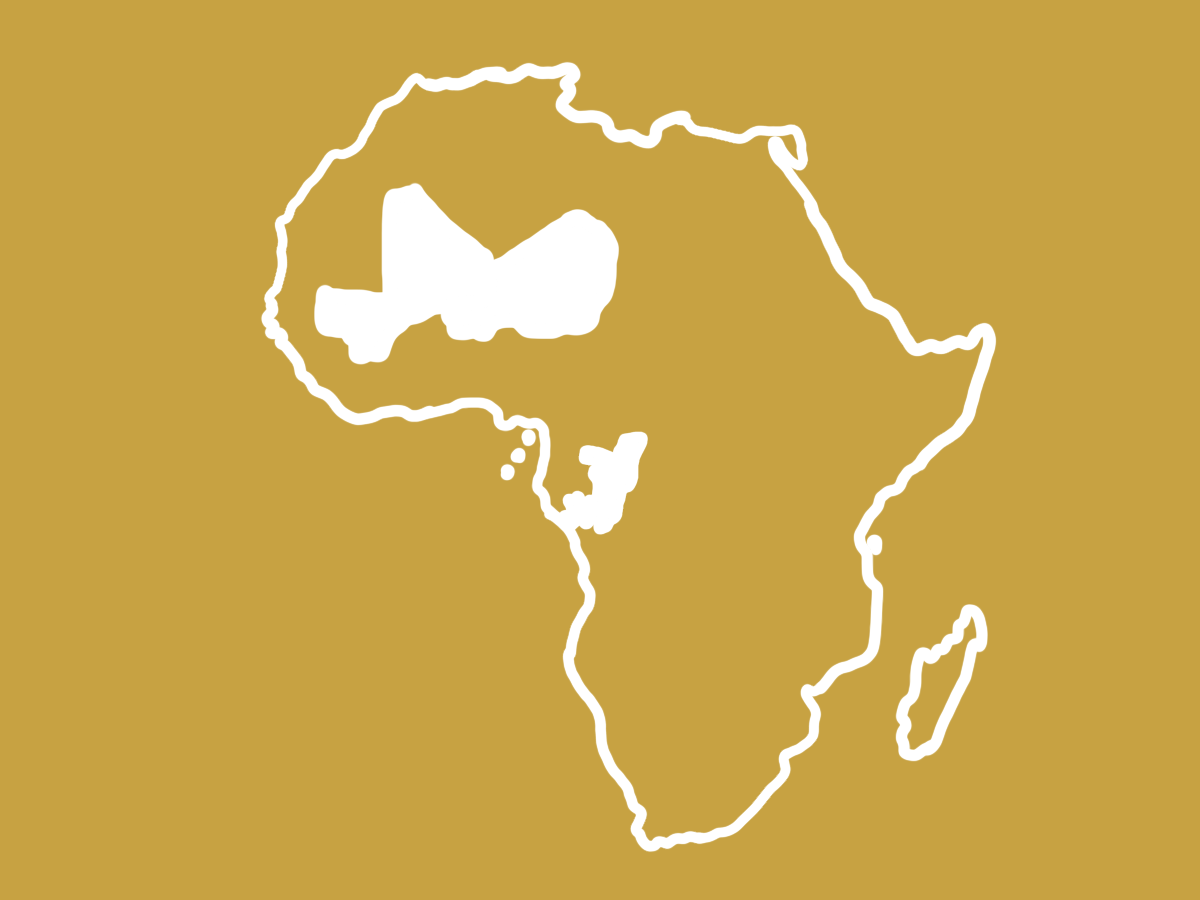
Burkina Faso, Mali, and Niger, three landlocked Sahelian nations formerly colonized by France, are in the process of taking direct control of their natural resources, particularly gold, uranium, and other minerals. Under the leadership of the Alliance of Sahel States (AES), these countries have broken from traditional Franc-afrique arrangements where French companies controlled mining concessions, tax regimes, and currency reserves.

The key shift: resource revenues are increasingly being directed toward domestic infrastructure, factories, and industrial development rather than being extracted and repatriated to France.

Mali has asserted control over its gold mining sector, renegotiating contracts and increasing state ownership in mining operations. The government has redirected mining revenues toward infrastructure projects, including road construction and energy generation. Burkina Faso has increased state control over mining concessions and is channeling resource revenues into industrial development, including textile and manufacturing sectors. Niger, one of the world's largest uranium producers, has moved to reduce French control over its uranium mines and reorient resource revenues toward domestic development priorities.

These nations have severed military ties with France. They have expelled French diplomats. They are building infrastructure with their own resources. They are not waiting for permission.

And they are being punished. Suspended from ECOWAS. Threatened with sanctions. Accused of moving toward "authoritarianism." The interstice is being weaponised against them. The message to other African leaders is clear: if you try to leave, you will be isolated.

The Sahel nations are proving that the interstice is survivable. They are not collapsing. They are not being reinvaded. They are not starving. They are building roads, refineries, and factories with their own gold. The interstice is not an abyss. It is a workshop.

THE FEAR OF THE INTERSTICE TODAY

The fear of the interstice paralyses the African Union and most heads of state. They see the Sahel nations punished. They draw back. They stay within the lines. They negotiate for scraps.

The vacuum is not the absence of Western systems. The vacuum is the absence of African systems to replace them.

The interstice is not a void. It is a printing chamber. It is the hollow where new realities are imprinted before they emerge. It is the threshold between worlds. It is the balance of opposing forces.

The Kongo understood this. They called the hollow (oco) the most primitive form that emerged from the bottom of the first matter, dark matter (ndobe/piu), which is the "printing chamber" of all realities. The source states: "The hollow (oco) is the most primitive form that emerged from the bottom of the first matter, 'dark matter' [ndobe/piu], which is the 'printing chamber' of all realitiesโ€ฆ A 'printing chamber' for realities that were and realities to come."

The Akan understand the space between wiase (the corporeal world) and asamando (the land of the ancestors). These two worlds are not strictly separated. The source states that the spiritual world of the ancestors is "in no sense another world, but rather a part of this world." The space between them is a permeable threshold that souls cross during birth and death. This is the interstice that cannot be filled because it is the condition for the migration of souls.

The Yoruba understand the Odu, the 256 signs of the Ifรก system that map the balancing of polarities, expansion and contraction, light and darkness. The source states: "Most systems of metaphysics are based on the belief that the primal polarity that sustains the physical universe is the tension between expansion and contraction. In Ifa this polarity is usually described as the relationship between darkness and light. This relationship is not considered a conflict between the forces of 'good' and the forces of 'evil.'"

Ubuntu understands the distance between persons as part of relation. The source makes a critical clarification: "The African aphorism incorporates both relation and distance." The space between persons cannot be eliminated. It must be accepted.

The West calls it a vacuum. They panic. They rush to fill it. They cannot tolerate the interstice because their logic demands that every space be occupied, measured, controlled by them. African metaphysics has always understood that the interstice is the condition for creation, recreation, liberation.

THE INTERSTICE IS NOT A PUNISHMENT

The West will not fill the interstice for us. They cannot. Their logic does not know how. The interstice is the one thing they cannot objectify, cannot control, cannot extract.

The Sahel nations are proving that the fear is a lie. They are not collapsing. They are not being reinvaded. They are not starving. They are building roads, refineries, and factories with their own gold. The interstice is not an abyss. It is the printing chamber.

Ghana is processing its own cocoa. Zimbabwe is processing its own lithium. The textile mills collapsed because the interstice was not prepared. They collapsed because the leaders were afraid to step into the gap and build while the gap was open. They invited foreign capital to fill it instead. And when the foreign capital left, the mills closed, the workers were dismissed, and the cotton continued to leave raw.

The interstice is not a punishment. It is an opportunity. It is the space where African systems can grow. But only if we are brave enough to step into it.

The fear of the interstice is the fear of our own capacity. It is the fear that we cannot build what we need. It is the fear that the gap will swallow us. The Sahel nations prove otherwise. Ghana and Zimbabwe prove otherwise. The textile mills collapsed not because the interstice was impossible, but because the leaders refused to enter it.

We can survive the interstice. Let's be brave enough to step into it.

REFERENCES

Lewis, W. Arthur. "Economic Development with Unlimited Supplies of Labour." The Manchester School, Vol. 22, No. 2, 1954, pp. 139-191.
Lewis, W. Arthur. Report on Industrialisation and the Gold Coast. Government Printing Department, Accra, 1953.
Best, Lloyd. "Outlines of a Model of Pure Plantation Economy." Social and Economic Studies, Vol. 17, No. 3, 1968, pp. 283-326.
Beckford, George. Persistent Poverty: Underdevelopment in Plantation Economies of the Third World. Oxford University Press, 1972.
Girvan, Norman. "The Caribbean Economy: The Lewis Model and the New World Group." Lecture at the University of the West Indies, 2008.
Rodney, Walter. How Europe Underdeveloped Africa. Bogle-L'Ouverture Publications, 1972.
Rodney, Walter. "The Groundings with My Brothers." Bogle-L'Ouverture Publications, 1969.
Deguchi, Akira. "A Structural Analysis of Myth: The Mandari of South Sudan." Essays in Northeast African Studies, Senri Ethnological Studies No. 43, 1996, pp. 255-274.
Various sources on Akan cosmology, Kongo metaphysics, Yoruba Ifรก system, and Ubuntu philosophy.
Nigerian Textile Manufacturers Association. Director-General Alhaji Hamman Kwajaffa interview, 2026.
Kwajaffa, Hamman (Nigerian Textile Manufacturers Association). Interview 2026. Cited in ThisDay Living newspaper.
Federal Ministry of Industry, Trade and Investment (Nigeria). "National Cotton, Textile and Garment Policy." 2025.
ECOWAS Commission. "Adoption of Common External Tariff for Textiles." 2024.
African Development Bank. "Textile Sector Revival Strategy." 2025.
UNCTAD. "Economic Development in Africa Report 2024: Reimagining Industrialization."
International Trade Centre (ITC). Ethical Fashion Initiative Annual Report 2025.
International Trade Centre (ITC). "How to Invest in a Viable Textile and Cotton Value Chain in Africa." April 2025.
Johnson, Philip. "The Collapse of Nigeria's Textile Industry." Journal of African Political Economy, Vol. 12, No. 3, 2024.
Kwajaffa, Hamman. "The State of Textile Industry in Nigeria." ThisDay Living, April 2026.
Lawal, Tola. "Reviving the Nigerian Textile Industry: A Policy Framework." African Economic Review, March 2026.
Nigerian Textile Manufacturers Association. "Annual Report and Economic Outlook for CTA Sector." 2025.
Tesfay, Goitom. "Creating & Capturing Value in the Apparel Global Value Chain." 2025.
Business & Human Rights Centre. "Lesotho Garment Sector Update." 2025.
Wikipedia. "Textile industry in Nigeria."
Wikipedia. "Industrialisation in Africa."
Gates, Henry Louis. "In Conversation with Marc-Christian Rousset." UNECE, 2023.
Wall Street Journal. "The Rise and Fall of African Textiles." August 2022.
ThisDay Newspaper (Nigeria). "The Great Nigerian Textile Collapse." 2020.
University of Johannesburg. "Deindustrialization in Southern Africa." 2021.
African Union. "Agenda 2063: The Africa We Want." Addis Ababa, 2015.
United Nations Economic Commission for Africa. "Economic Governance Report." 2022.
World Bank. "Structural Adjustment Programs in Sub-Saharan Africa." 2022.
International Monetary Fund. "Trade Liberalization and the African Textile Sector." 2020.
WTO. "African Cotton: Market Access and Development." 2019.
International Labour Organization. "Decent Work in the African Textile Sector." 2023.
UNIDO. "Industrial Policy for Structural Transformation." 2024.
African Development Bank. "Cotton-to-Clothing Value Chains." 2024.
ECOWAS. "Supplemental Act on Textile Sector Development." 2022.
NEPAD. "Textile and Apparel Sector Development Strategy." 2023.
AfCFTA Secretariat. "Textile and Clothing Sector Strategy Paper." 2024.

The Unraveling; When the weaver cannot afford to weave: How economic decline destroys African textile cultures, Poverty as Extinction

There is a question I have been sitting with. Has any African academic written about how poverty causes the decline of local cultures and traditions?

The answer is yes. They have. And what they have found should stop us from talking about "cultural preservation" as if culture exists separate from economics.

In the Eastern Cape province of South Africa, among the amaMpondo communities, researcher Nontuthuzelo Mtsini of Walter Sisulu University documented something striking. The political upheavals and economic decline after the postcolonial period resulted in job losses, corruption, crime, poverty, and the loss of the philosophy of ubuntu embedded in cultural beliefs. Her findings are direct: poverty and unemployment were the major causes of the decline of ubuntu among communities. The elders she interviewed indicated that extreme poverty was caused by political tension, economic decline, and cultural changes. When people cannot feed their families, when there are no jobs, when the economy contracts, the transmission of cultural knowledge from elders to children breaks down. You cannot teach ubuntu when you are migrating for work. You cannot pass down weaving techniques when you cannot afford materials. This is not cultural decline as abstraction. This is poverty as erasure.

Dr Chika C Mba, a Senior Research Fellow at the Institute of African Studies at the University of Ghana, made a striking argument at the Africa Wiki Challenge 2025 launch. He used marriage ceremonies as a concrete example. Africans now spend double on traditional weddings and Western-style "white weddings." The abuse of our own culture and identity leads directly to poverty and impoverishment. This is the cycle. When a family spends money on two weddings instead of one, the money leaves the community. When they choose foreign customs over their own, they are not only spending moreโ€”they are signaling that their own traditions are not enough. The message is internalized. The next generation sees the foreign as aspirational. The local becomes "traditional" in the pejorative senseโ€”backward, poor, not for people who have made it.

Atoyebi and Yunusa, writing in the Nigerian Journal of Sociology and Anthropology (2024), examined cultural practices among the Idoma and Ogugu peoples of North-Central Nigeria. Their paper highlights how certain traditional beliefs, inheritance of women by their deceased husband's relation, widow's succession rights, refund of bride price after divorceโ€”exemplify what they call the "feminization of poverty." This is not an argument against tradition. It is an argument that poverty and culture cannot be separated. When a practice contributes to poverty, the practice itself becomes vulnerable. And when the practice is abandoned, the entire knowledge system that surrounded it, including the textile traditions, the ceremonial cloths, the symbolic patterns, can disappear with it.

A 2025 study of Ethiopian weavers documents that poverty directly threatens the survival of traditional handwoven garments like the "habesha kemis." With roughly 39 to 43 percent of Ethiopia's 130 million people living below the poverty line (less than $3 per day), demand for traditional handwoven clothes has sharply declined as families cannot afford the higher cost of handmade garments. One weaver with three decades of experience earns only $68 to $102 per month before deducting raw material costs. After 30 years of weaving, this barely covers survivalโ€”there is no surplus to pass the craft to a new generation. The youngest weaver in the workshop, 23, is already planning a career change because "the economy isn't what it used to be." This is not just lost income. It is lost transmission.

Getachew, Alemu, and Wudu's 2025 study at Bahir-Dar City documents how poverty exacerbates the challenges facing women weavers. Women face economic difficulties including material shortages and outdated technology. The study notes that household consumption is prioritized over purchasing traditional hand-woven garmentsโ€”when a family must choose between food and a ceremonial cloth, food wins. The handloom sector's decline is directly linked to deteriorating economic conditions that make handcrafted goods unaffordable for local consumers.

Araya and Beyene's 2024 study on cultural appropriation in Ethiopia's garment weaving industry found that poverty erodes cultural value in two ways. First, when cheaper, mass-produced imitations of traditional designs flood the market due to lack of IP protection, the price of authentic handmade garments is undercut. Second, poverty affects the mindset of educated Africans, who come to see traditional textiles as "cloth for the poor, illiterate, rural dwellers." This is the psychological dimension of poverty. When a traditional cloth becomes associated with economic hardship rather than cultural pride, younger generations reject it in favor of foreign styles perceived as more "modern" or "aspirational."

Amanor-Wilks' 2024 study on the Kente economy in Bonwire, Ghana, documents how the productive role women once played as cotton growers and spinners has been eroded by economic pressures. The research found that while more women are weaving than ever before, they continue to face enormous pressure to stop because the income is insufficient to sustain households even as the traditional gender taboo on women weaving has been suspended.

Areo's 2013 study on Adire (Yoruba indigo-dyed cloth) documents that the art suffered a "lull" in the 1950s due to the flooding of Nigerian markets with cheaper, untaxed imported textiles while locally produced ones were taxed. Hand in hand with this was the mindset of educated Nigerians who then saw Adire "merely as rural cloth for poor, illiterate, rural dwellers." This is the direct link: poverty, enforced by colonial and post-colonial economic policies, led to cultural devaluation, which led to near extinction of the craft.

These studies are not about "preserving culture" in a museum sense. They document material reality: when people cannot afford to buy handmade textiles, weavers cannot afford to weave. When weavers cannot afford to weave, they do not teach their children. When they do not teach their children, the knowledge dies. This is not cultural decline as abstraction. It is poverty as extinction.

The academic literature on poverty and textile decline concentrates heavily on West Africa and Ethiopia. But there are sources from other regions, they just require more searching and often come from non-academic channels such as NGO reports, news articles, and economic studies.

In Namibia, a 2025 Coastal Trade Fair report documents that local fashion designers and tailors struggle because consumers demand lower prices than what handmade garments cost. Maria Franciskus, a fashion designer, stated: "The struggle is that sometimes we buy material and people are demanding low pricesโ€ฆ we make a small profit, and it's not enough." The National Museum of Namibia's documentation of traditional leather processing notes that "relative poverty was also reflected in the fact that poorer people were not able to obtain cow fat to keep their skins in good condition." When poverty prevents people from maintaining traditional garments, the knowledge of how to process and care for them erodes. No academic study from Namibia specifically on poverty and traditional textile decline exists.

In Zambia, World Vision reports that due to prolonged drought and climate change, traditional agriculture is no longer reliable, forcing rural families to seek non-agricultural livelihoods. The Tailoring Enterprise Development program was created to equip vulnerable households with sewing skills. This is economic adaptation, but it also represents a shift away from traditional textile knowledge toward production for external markets. This is an NGO report, not academic research. No Zambian academic has published specifically on poverty and traditional textile decline.

In Somaliland, a 2025 report on the artisan industry documents that "traditional crafts such as pottery, blacksmithing, beadwork, and basket weaving are at risk of disappearing due to modernization, cultural stigma, and limited intergenerational transfer." Youth involvement in artisan trades is deterred by "low prestige, inconsistent earnings, and lack of structured growth paths." The Radio Ergo report on Galkayo shoemakers documents that traditional shoemakers have gone out of work because "people have changed their waysโ€ฆ now just throw away broken shoes to buy new ones instead of seeking repairs." One shoemaker, Salad Mahamud Hassan, used to earn $10 daily. Now he lives in a displacement camp and cannot feed his children. This is poverty caused by the decline of traditional crafts, and poverty accelerating the decline. The Somaliland report is from an NGO; the shoemaker story is journalism. No Somali academic has published peer-reviewed research on this topic.

In Tanzania, Pendo Bigambo and colleagues (2024) published a study on Tanzania's batik industry in the African Journal of Science, Technology, Innovation & Development. The study found the industry is informal, predominantly women-owned, and faces challenges including poor access to funds, scarcity of tools and materials, and repetitive designs due to lack of creativity training. This is a peer-reviewed academic study by Tanzanian researchers.

In Zimbabwe, a news report on cotton farming documents that the collapse of the cotton industry has "spelled doom for communities where the crop is grown." Farmers have abandoned cotton due to low prices, switching to maize. When raw cotton production collapses, the material base for traditional textile production disappears. This is journalism, not academic research. No Zimbabwean academic study specifically links poverty to traditional textile decline.

In Malawi, a 2007 IPS news report documents that following trade liberalization, Malawi saw an influx of second-hand clothing. Consumers prefer cheap imported clothes because "up to 65 percent of Malawians are living in poverty, which means having less than 1 US dollar per day." Local textile manufacturers cannot compete. Farmers are abandoning cotton because prices are too low. The textile industry has collapsed. This is journalism, not academic research. No Malawian academic study specifically links poverty to traditional textile decline.

An English-speaking researcher will not search in Portuguese. They will not search in French. They will not dig through Angolan journals, Mozambican university repositories, or Cabo Verdean conference proceedings. The information exists, but it is not accessible. When African researchers publish in Portuguese or French, their work does not circulate in English-dominated academic databases. When English-speaking African nations do not translate that research, they are not learning from their neighbors. The weaver in Angola and the weaver in Ghana cannot read each other's struggles because the language barrier is a wall. The system does not need to destroy the knowledge. It only needs to ensure the knowledge never circulates.

In Angola, peer-reviewed research exists. Celestino Josรฉ Taca, publishing in the Angolan journal Revista Samayonga (Volume 4, Issue 2, 2026, pp. 267-277), conducted fieldwork in Luena between February and June 2025. He writes:

"A pobreza multidimensional constitui uma barreira que afecta, de maneira preocupante, a transmissรฃo de saberes culturais. A valorizaรงรฃo cultural de manifestaรงรตes como o semba e a escrita Sona continua, mas a pobreza e a exclusรฃo educacional ameaรงam estas prรกticas."

Translation: "Multidimensional poverty constitutes a barrier that worryingly affects the transmission of cultural knowledge. The cultural valorization of expressions like semba and Sona writing continues, but poverty and educational exclusion threaten these practices."

This is an African academic publishing in an Angolan journal, directly linking poverty to the potential decline of cultural manifestations. While it does not focus exclusively on textiles, it establishes the framework: poverty erodes the material and social basis for cultural transmission in Angola.

The official Angolan news agency Angop published a report on 17 March 2022, documenting the decline of traditional professions in Bengo province:

"Os alfaiates, sapateiros e costureiras tradicionais estรฃo a tornar-se escassos na provรญncia do Bengo. Os jovens nรฃo demonstram interesse em aprender estas profissรตes devido ร s baixas receitas e ao custo elevado dos materiais. Grandes quantidades de roupa importada pronta-a-vestir e a industrializaรงรฃo sรฃo citadas como causas directas."

Translation: "Traditional tailors, shoemakers, and seamstresses are becoming scarce in Bengo province. Young people show no interest in learning these professions due to low income and the high cost of materials. Large quantities of imported ready-to-wear clothing and industrialization are cited as direct causes."

Antonio Gaspar, a 60-year-old shoemaker, states that the province lacks these services, forcing people to travel to Luanda for repairs. David Chambo, a shoemaker for over 20 years, personally trains over 50 young people but says it "has not been easy." This is official documentation from Angola's state news agency, citing multiple artisans by name, with direct quotes about poverty, imported goods, and generational disinterest as drivers of decline.

Angolan researcher Leonardo Tuyenikumwe published a scientific book in 2024, "Os khoinsan (khun e khwe) de Angola e seus desafios actuais" (The Khoisan of Angola and Their Current Challenges). He writes:

"Os khoinsan (khun e khwe) de Angola enfrentam desafios actuais graves. A situaรงรฃo da pobreza extrema e da fome estรก a forรงar estas comunidades a mudar o seu estilo de vida e a abandonar prรกticas ancestrais."

Translation: "The Khoisan (Khun and Khwe) of Angola face serious current challenges. The situation of extreme poverty and hunger is forcing these communities to change their lifestyle and abandon ancestral practices."

The book explicitly links poverty to the erosion of cultural traditions among indigenous peoples in Angola.

In Mozambique, Cardoso Esboi of the Catholic University of Mozambique published a study in 2007:

"A produรงรฃo de algodรฃo รฉ a cultura nรฃo alimentar com maior rendimento e cria auto-emprego para a maioria das famรญlias rurais. No entanto, os baixos nรญveis de educaรงรฃo, a dependรชncia de factores naturais (clima, pragas) e a falta de infra-estruturas sociais limitam os agricultores de aproveitar plenamente as condiรงรตes favorรกveis do mercado."

Translation: "Cotton production is the highest earning non-food crop and creates auto-employment for most rural households. However, low education levels, dependence on natural factors (weather, pests), and lack of social infrastructure constrain farmers from taking full advantage of favorable market conditions."

This is a Mozambican researcher directly linking cotton to poverty. When cotton farming fails to lift farmers out of poverty, the material base for textile production erodes. No Mozambican academic has published specifically on the decline of traditional capulana due to povertyโ€”a central textile tradition in Mozambique. The gap confirms the point: research on traditional textile decline is limited.

In Cabo Verde, the pano d'obra (meaning "laborous cloth") was "highly prized for trading along the West African coast, from the second half of the 16th century to the end of the 18th century." From the 19th century, "a marked decline in the manufacture of these historic textiles is witnessed due to the demise of the local cotton and dyes production, alongside with a lack of demand for them, particularly the ones with high-value price." Today, local weavers use mostly imported yarn, including synthetic. The decline is documented, but the researcher presenting this at the Textile Society of America 2024 Symposium is from the University of Porto, Portugalโ€”not a Cabo Verdean scholar. No academic source by a Cabo Verdean scholar exists on this topic.

For Guinea-Bissau, Sรฃo Tomรฉ and Prรญncipe, and Equatorial Guinea, no academic sources by local scholars were found. This is a complete research gap. It does not mean the phenomenon does not exist. It means African researchers have not yet documented itโ€”or the documentation exists but is not indexed in accessible databases.

The focus on cotton in African textile production is not natural. It was engineered. Before Europeans arrived, Portuguese-speaking Africa used raffia, palm fiber, sisal, wild rhubarb root dyes, and other local materials. Cotton became dominant because it was exportable. Colonial regimes controlled it, channeled it into global trade, and extracted it for profit rather than local use. The knowledge of how to work with raffia, palm fiber, and sisal was not written. It was not patented. It was not passed down. And because those materials had no export value, their knowledge systems were not valued.

The Kuba people of Central Africa are renowned for a specific process that turns stiff raffia plant fiber into a soft textile. Men weave the base cloth from fine raffia fibers. Women then create intricate geometric patterns using a specialized cut-pile embroidery technique. After the pile is cut, the fibers are rubbed together, which gives the surface a silky lustre reminiscent of velvet, hence the name "velvet raffia." This was historically used as a form of currency, as ceremonial dress, and to adorn royal stools. An unprocessed raffia fiber is stiff, but after these specialized techniques, it can be as soft as cotton, with a luxurious velvet-like feel. This is not just a craft. It is a sophisticated material engineering process.

The argument that raffia is rough and cotton is soft is historically inaccurate. It ignores the existence of specialized, high-skill techniques that produce a textile of exceptional quality, softness, and prestige. As poverty increased, communities could not afford the time or resources for the labor-intensive velvet technique. They defaulted to the quicker, stiffer versions of raffia, or they abandoned raffia altogether for cheaper, imported cotton. Over time, this created a false narrative that "raffia is stiff" and "cotton is soft." The knowledge to make velvet raffia is at risk of being lost, not just a craft disappearing, but the disappearance of a specific, sophisticated material engineering process.

The objects remain. But they remain under European control. The British Museum holds nearly 8 million objects. Only 1 percent are on public display at any time. The other 99 percent are in storage. The raffia cloth from Equatorial Guinea (1820) sits in Reading, England. The Angolan raffia costume (1929-1936) sits in Montreal, Canada. The objects are not destroyed. They are contained. Sealed. Removed from the communities that made them. The knowledge that the object represents, the technique, the material understanding, the transmission from one generation to the next, can die even as the object itself is perfectly preserved. The weaver dies. The language shifts. The materials become unavailable. The ceremony stops. The child moves to the city. The museum catalogues the cloth. The cloth is safe. The knowledge is not.

Hoarding is not destruction. It is preservation in a cage. The object remains. The people change. The knowledge thins. The museum wins.

Oliver Mtapuri's edited volume "African Perspectives on Poverty, Indigenous Knowledge Systems, and Innovation" (Springer, 2022) dedicates chapters to the "Onomastic and Conceptual Pathologisation of African Culture as a Creation and Perpetuation of African Poverty in Zimbabwe." The title alone says enough. When African culture is pathologizedโ€”treated as the cause of poverty rather than the solution, the logic is inverted. The cure becomes abandoning culture. The abandonment leads to more poverty. The cycle continues.

The research exists. African scholars have documented it. South Africa. Nigeria. Ghana. Ethiopia. Zimbabwe. Angola. Mozambique. The evidence is clear: poverty destroys the material basis for cultural transmission. But the research is fragmented. The language barriers prevent circulation. The museums hold the objects but not the knowledge. The economic policies continue to favor imported goods over local production.

African textile knowledge is declining, in some spaces perhaps already extinct. When will we document what remains before it is gone, when will we build systems that keep it alive, not just preserved in a crate in a foreign country.


References

ยท Mtsini, Nontuthuzelo. "Reinstating cultural beliefs and Ubuntu in the AmaMpondo communities in the Eastern Cape province, South Africa." E-Journal of Humanities Arts and Social Sciences, Vol. 6 No. 9 (2025). Walter Sisulu University, South Africa.
ยท Mba, Chika C. Speech at Africa Wiki Challenge 2025 launch. GhanaWeb, 25 May 2025. Institute of African Studies, University of Ghana.
ยท Atoyebi, Timothy Abayomi and Yunusa, Edime. "Cultural Practices and Women's Rights among Idoma and Ogugu Peoples of North-Central, Nigeria: Implications for Poverty Reduction and Sustainable Development." The Nigerian Journal of Sociology and Anthropology, Volume 22, No. 2, November 2024, pp. 102-114. Prince Abubakar Audu University, Nigeria.
ยท Getachew, Alemu, and Wudu. 2025 study at Bahir-Dar City, Ethiopia.
ยท Araya and Beyene. 2024 study on cultural appropriation in Ethiopia's garment weaving industry.
ยท Amanor-Wilks. 2024 study on the Kente economy in Bonwire, Ghana.
ยท Areo. 2013 study on Adire (Yoruba indigo-dyed cloth).
ยท Wayessa, Bula S. "My Meals Are in the Pots: Making Pots and Meals in Wollega, Southwest Ethiopia." African Archaeological Review, Volume 40, 2023, pp. 519โ€“529.
ยท Laitin, David D. and Ramachandran, Rajesh. "Language Policy as the Culprit of Africa's Growth Tragedy." Journal of Politics, 2025. Stanford University / Monash University Malaysia.
ยท Mtapuri, Oliver (ed.). African Perspectives on Poverty, Indigenous Knowledge Systems, and Innovation. Springer, 2022.
ยท Taca, Celestino Josรฉ. "Diversidade Cultural, Social e Econรณmica em รfrica com รŠnfase em Angola Desafios e Perspectivas Contemporรขneas." Revista Samayonga, Volume 4, Issue 2, 2026, pp. 267-277.
ยท Angop (Angola News Agency). "Profissรตes tradicionais em risco de extinรงรฃo no Bengo." 17 March 2022.
ยท Tuyenikumwe, Leonardo. Os khoinsan (khun e khwe) de Angola e seus desafios actuais. Vamos Editora, 2024.
ยท Esboi, Cardoso. "Impact of Cotton Production Among Cotton Farmers in Maringue District of Sofala Province โ€“ Mozambique." Universidade Catรณlica de Moรงambique (UCM), 2007. Available at: http://www.repositorio.ucm.ac.mz/handle/123456789/99
ยท Textile Society of America 2024 Symposium. "A Contribution to the Preservation and Revival of the Cabo Verdean pano d'obra Textiles."
ยท Hansen, Karen Tranberg. "Riches from Rags or Persistent Poverty? The Working Lives of Secondhand Clothing Vendors in Maputo, Mozambique." Textile: The Journal of Cloth & Culture, Volume 10, Issue 2, 2012, pp. 222-237.
ยท Bigambo, Pendo et al. 2024 study on Tanzania's batik industry. African Journal of Science, Technology, Innovation & Development.
ยท Namibia Coastal Trade Fair 2025 report.
ยท World Vision Zambia. Tailoring Enterprise Development program reports.
ยท Solidaarisuus. 2025 report on artisan industry in Somaliland.
ยท Radio Ergo. Report on Galkayo shoemakers.
ยท IPS news agency. 2007 report on Malawi second-hand clothing.
ยท Reading Museum. Raffia cloth from Equatorial Guinea (1820). Collection record.
ยท Redpath Museum, McGill University. Angolan raffia costume (1929-1936). Collection record.
ยท British Museum. Papel cloth from Guinea-Bissau (c. 1989). Collection record.

From Mali, Burkina Faso to Republic of Congo: Textiles crossing borders.

During the years 2021/ 22, I was able to take a life changing journey through 11 African countries. I was able to make valuable observations that would enable me to formulate methodologies, methods and research directions altering the ways the traditional textile designs and practitioners are being affected throughout the African continent.

The Traditional textiles and the people making them are not a very visible part of the contemporary textile industry.  You have to ask the right persons (Find the right people to ask).

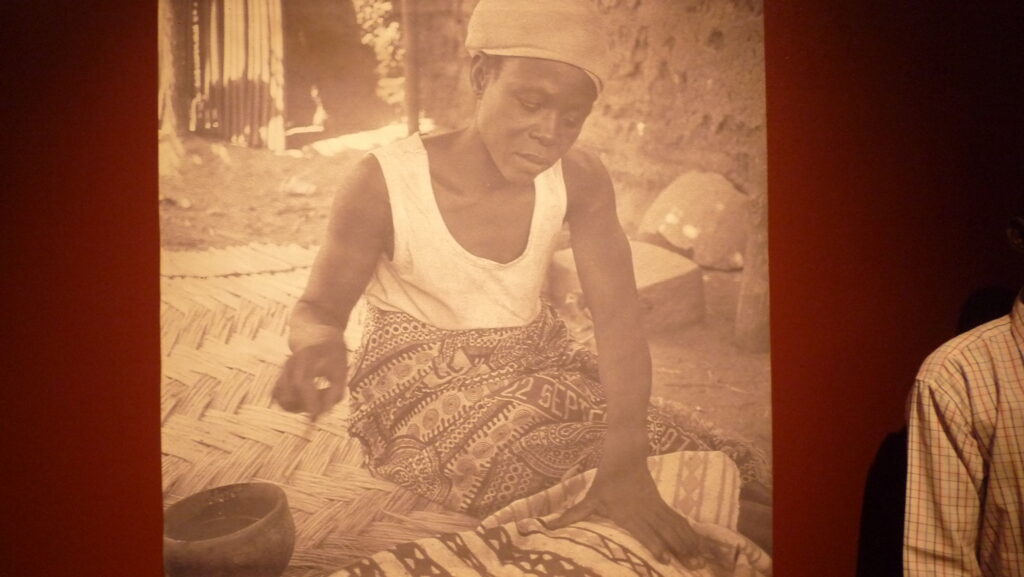
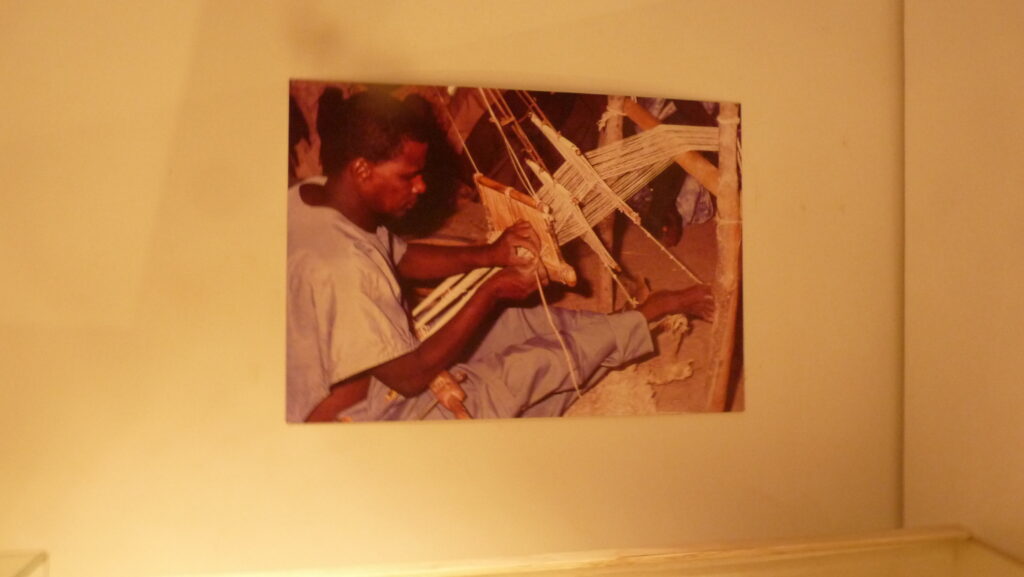
You might then be able to be brought to remote places where a person might still be practicing the textile craft on the traditional loom.

Image copyright Museum of Mali, Bamako 2025

During my drive I observed a mixed crowd wearing both European style clothing and Wax printed fabrics. It was rare, ver rare if ever I observed the traditional local textiles.

The roads in Africa are great, where there are patches of bad road, consorted efforts are being made to improve these. Large trucks drive throughout the continent taking goods from country to country, city to city.

Mali and Burkina Faso are countries very strong in their cultures. People there are very proud of their cultures and they incorporate traditions in contemporary settings.

Artisans have their shops throughout the cities of the country. In Burkina Faso for example I was able to visit a business centre where people from various African countries came to display their products.

On this particular day products from Morroco were the dominant products on display, as Morroco invest in Moroccan businesses to push their products on the continent. I would like to see more African nations promoting their local products in eachothers countries. There was no textiles from any country here.

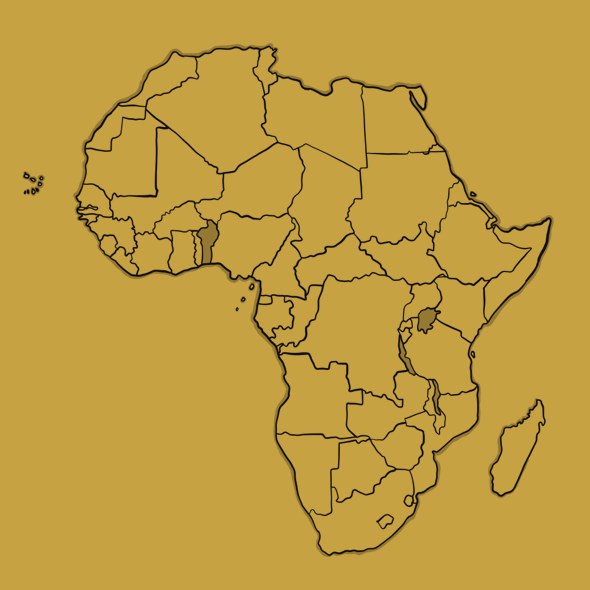
My journey took me further through Togo, Benin, Nigeria, Niger, Tchad, Cameroon, CAR and eventually Republic of Congo.

As I was waiting for my Visa in Brazaville, I decided to explore the traditional Congolese textiles. During my visit to the cities large market of Poto Poto, I came across a Malian ran textile shop among the many Indian ran shops on the high street.

As I was asking for for the Congolese traditional headwraps, my eyes were drawn  to a striped heavy cotton quality worn 20-25 cm stripe cloth. I knew immediately I stroke gold.

Before this, I was contemplating the lack of intercontinental trade, which would greatly boost the textile sector if these could be exported among the African countries.

My beautiful Burkinabe made textile, was 10x more expensive than the average textiles in that store. The shop owner explained to me that transportation, from Mali to Congo, was a large part for the high cost of the cloth. Employing a tailor, with experience in pattern cutting with strip fabrics was also a challenge.  There is definitely space for specialised  knowledge creation in design and pattern cutting using traditional textiles.

My fabric from Mali purchased in Congo

The cloth was beautifully hand woven, striking colour combinations allowing me to create a beautiful long dress.

I knew, based on the weaving patterns, that the artisan used years of passed on knowledge to construct this cloth.

Design analysis

The warp colours of this textile are yellow, black and orange.  The weft is all black. The pattern sequence is constructed with a variety thicknesses of vertical lines of black, yellow and orange sitting perfectly on the weft.

The length of the textile is about 100cm, and the width was 15 inch. This would be in keeping with the use of the traditional handloom. This does not mean that larger looms looms are not also part of an older traditions of weavers in this region. This however not been investigated as of yet. But what is certain is that the yarn used in this piece are not hand spun yarn but mechanically produced yarn.

I can not state for sure that the yarn would of been imported into Mali, as Mali is a large  cotton producer and has been making consorted efforts in rebuilding all parts of its textile industry while preserving its traditional artisan textile sector.

Having had the opportunity to speak to the seller/ owner at length, I was informed that these textiles are very much loved but for the prices. The cheap imports place a role, but also the transportation and import duties make the selling prices 10x higher.

Nevertheless there is still a niche market for these fabrics and in time, with further developments of trade among the African nations, in combination with effective government policies, the prices might eventually come down.

Narratives of the culture dress: The resurgence of identity, local livelihood and the future: Reviving the African Textile industry

In 2015, surfaced the first signs out of the African continent that the governments are starting to make and implement the necessary policies in order to safeguard not only the livelihoods of local textile practitioners, but also the preservation of local designs and aesthetics alongside the weaving skills.

While there has been numerous African scholarly attention on own decline of the local textile industry, it has taken over 20 years to arrive at a point where local governments are active in the sector.

Each of the 54 countries in Africa, can boast of a rich ancient tradition of cloth making, dating far back in the BC's. Some textile designs have risen more in popularity than others, and some has been more researched and documented then others.

In 2019, the Rwanda president took a brave and bold step in halting second-hand clothing shipping containers that were arriving from America and Europe. These second-hand clothing (and cheap Chinese knock-off  prints) were decimating the remaining textile practitioners chances of making some type of livelihood for them and their families.

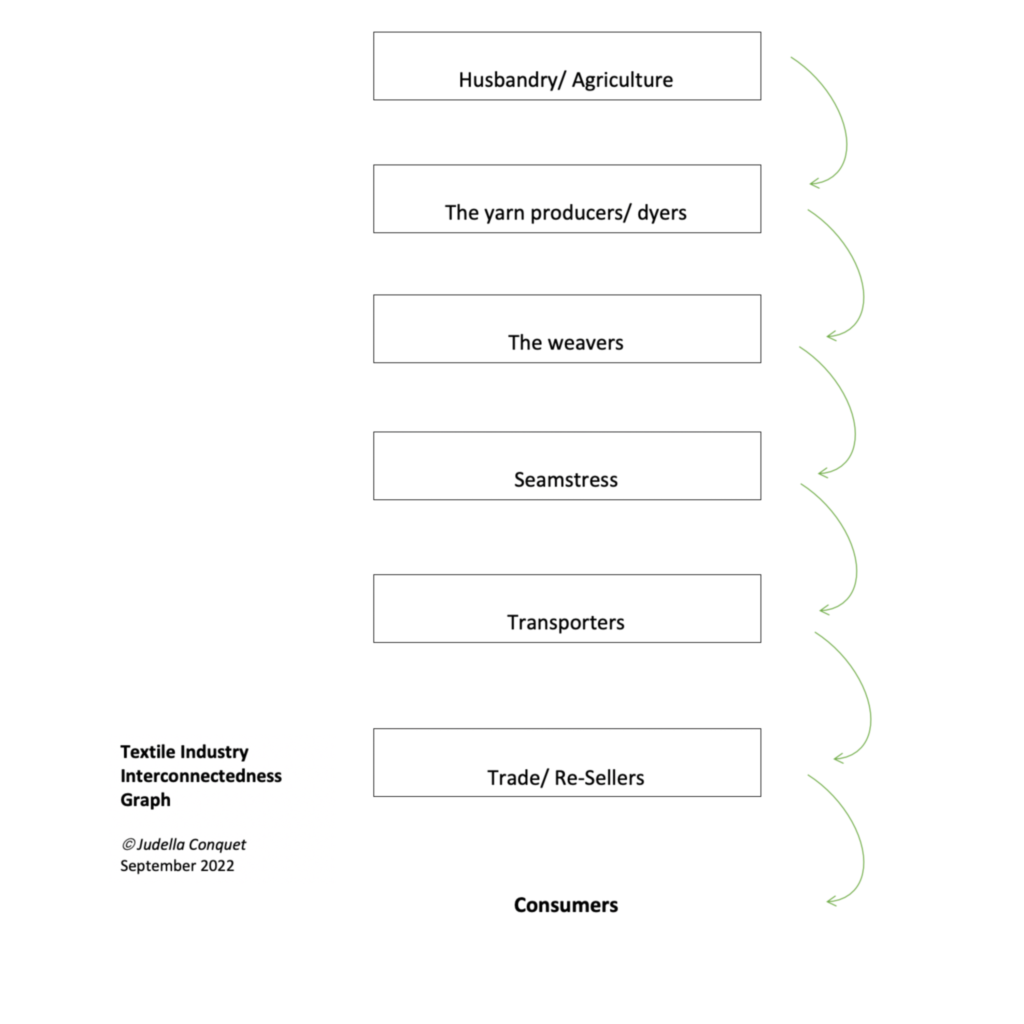
These imports do not just affect one  of people, but many segments and supporting Textile industry practitioners as illustrated in the graph.

With the Rwandan government interventions they were able to start the arduous task of rebuilding a prosperous industry,  manufacturing industry in the Pearl of Africa.

In 2022, the Kenyan government started taking steps to protect the local textile industry from second-hand clothing imports and cheap Chinese faux prints fabrics.

Along side these policies, concerted efforts are being made by locally run NGO's to reintroduce weaving and other textile making skills back into the workforce.

Ghana in 2021 mandated that the school uniforms should have traditional Ghanaian designs. This policy does not only imparts identity back into the populous, but it also help boost the local manufacturing mills that will now be producing and selling throughout the country, regaining portions of the local market segments.

With the new governing system in Burkina Faso, the government, as one of their first policies, also made the school uniforms to be changed into local traditional designs. These policy changes strongly boost the Burkinabe identity and increase jobs locally.

The textile industry in Burkina Faso has long been suffering,  but was able to still continue to exist with small export opportunities in Central Africa.

Ethiopia has long maintained its textile industry despite other African countries struggles. The famous white cotton woven fabric with beautiful colourful surface needle work has been exported worldwide as Ethiopians promote their cultures worldwide.

Ethiopians themselves are large consumers of their own cloth in so sharing in the continuity of textile practitioners livelihood and its technical making skills.

In Nigeria, the Yoruba, Ibos, Hausa and other groups, still largely wear their traditional textiles not only for special occasions, but also as part of daily life.

During my visit in 2022 to Port Harcourt in Nigeria, the fridays were used to allow hotel staff to wear traditional attire. The hotel itself had beautiful local textile artworks throughout,  evidencing how the Nigerian people actively find ways to incorporate their traditional identity into a contemporary setting.

Unlike the western concepts of museaums in America and Europe,  African traditions are lived, are very much alive and touches peoples life on a daily basis. Traditions interact with it's people, allowing it to be part of the peoples consciousness.