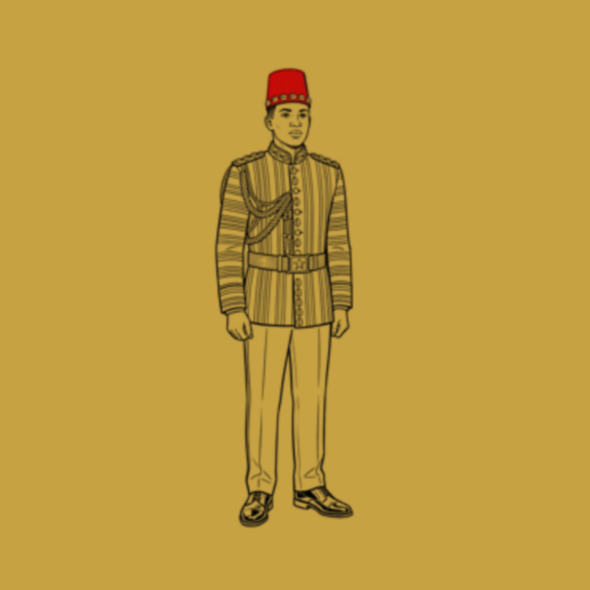
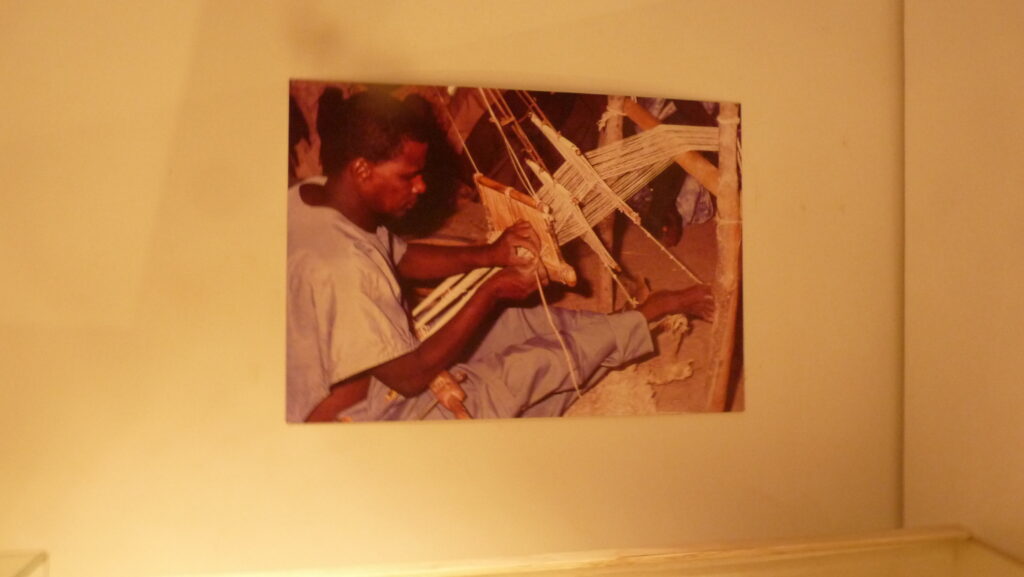
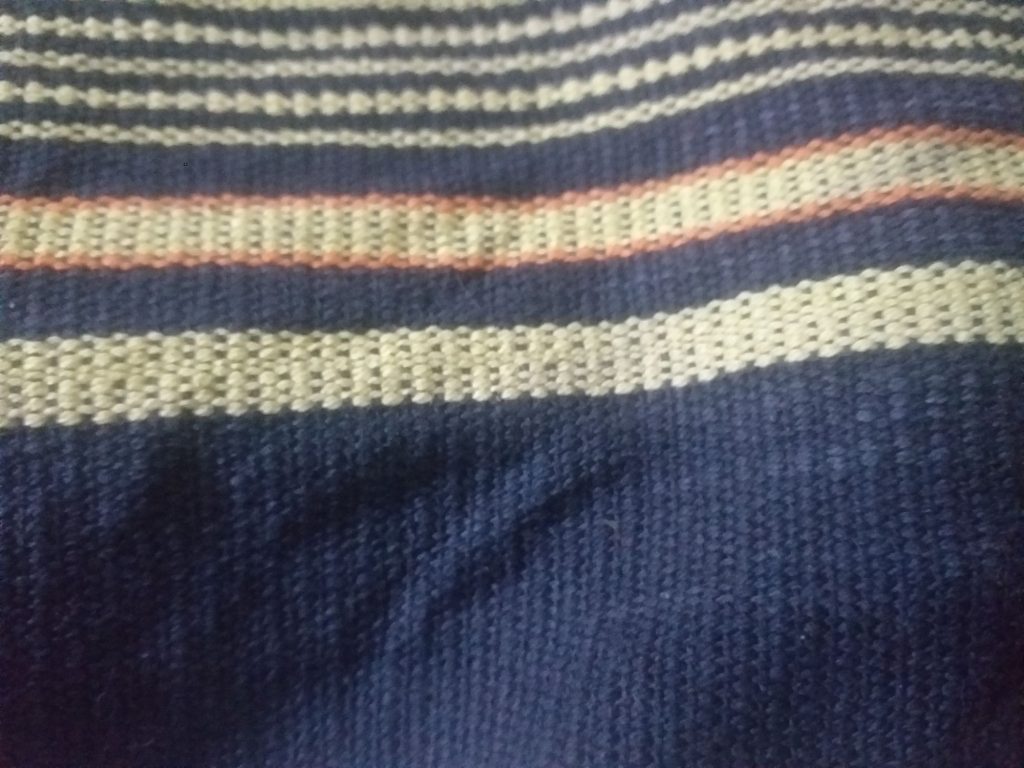
When Captain Ibrahim Traoré signed decrees mandating Faso Dan Fani for judicial robes, school uniforms, and launching the TEXFORCES-BF textile complex in Bobo-Dioulasso, he was doing far more than issuing a patriotic fashion statement. He was executing a targeted strike against a subtle, multi-billion-franc channel of economic extraction: state procurement dependency. For over six decades across Francophone Africa, national defense budgets, school systems, and civil institutions have functioned as guaranteed revenue pipelines for foreign defense firms—chiefly based in France. Retaking this supply chain cuts to the core of monetary and industrial sovereignty.
1. Ground Zero: The Economic Transformation of Women’s Weaving Cooperatives
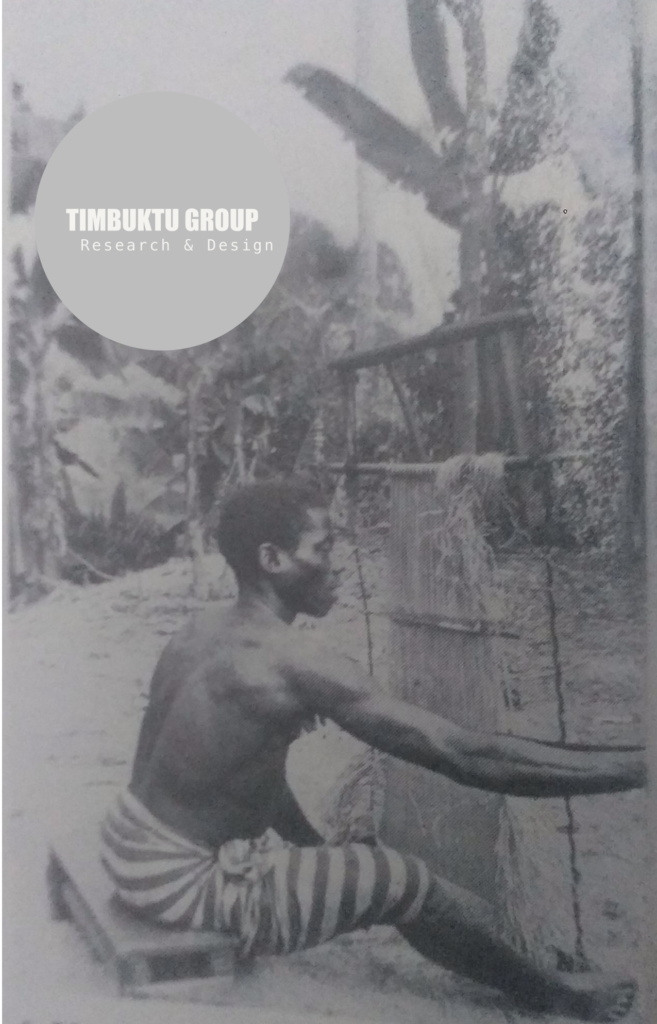
At the heart of Traoré’s policy is a revival of Thomas Sankara’s 1980s mandate: "Wearing Faso Dan Fani is an economic, cultural, and political act of defiance against imperialism". But beyond ideology, the immediate beneficiaries are Burkina Faso's women-led weaving cooperatives.
[ Institutional Demand ] ──> [ Female Spinners & Weavers ] ──> [ Direct Household Income ]
   • Judicial Robes            • Cotton Thread Spinning          • Healthcare & School Fees
   • School Uniforms           • Organic Dyeing                  • Micro-Savings Capital
   • Civic Ceremonies          • Traditional Handweaving        • Bankable Cooperatives
Micro-Capital Injection: Historically, handweavers operated in the informal sector, exposed to seasonal fluctuations and cheap synthetic imports. Institutional mandates—such as requiring Faso Dan Fani for schools on Mondays and official court attire—create guaranteed, non-cyclical public procurement contracts.
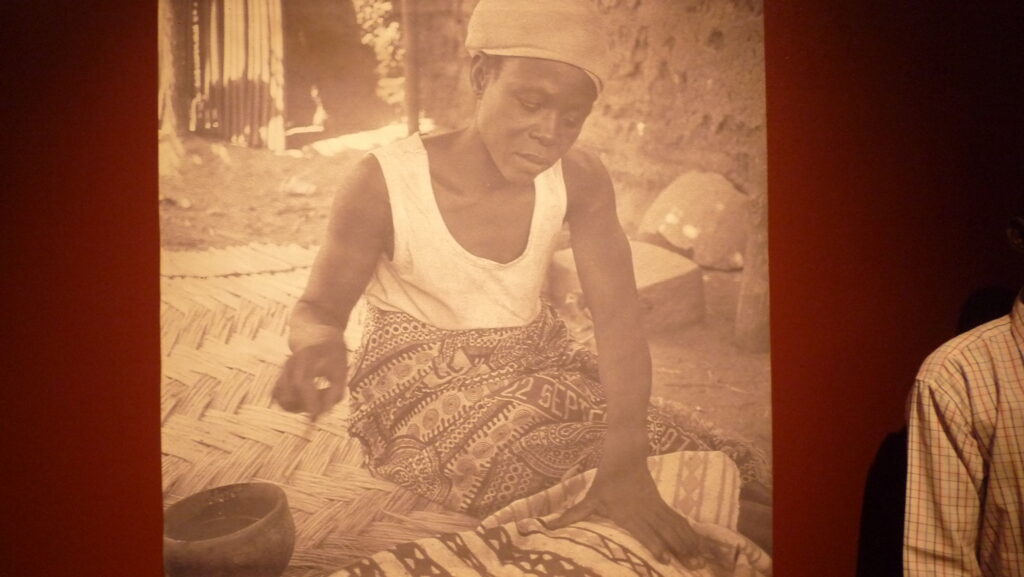
Household Financial Sovereignty: In rural and peri-urban Burkina Faso, thread spinning and weaving are overwhelmingly conducted by female artisans. Earnings directly flow into female-headed households, lifting living standards, funding children’s education, and building autonomous micro-savings groups.
Formalization of Artisanal Guilds: Umbrella organizations (such as CABES and the GIEs) can now convert seasonal handcraft into bankable, structured cooperative enterprises capable of securing credit and scaling loom capacity.
2. The Raw Paradox: West African Cotton Production vs. Domestic Processing
West Africa is a global giant in cotton farming, yet it suffers from one of the most severe industrial value-addition gaps in the world.
The Structural Discrepancy
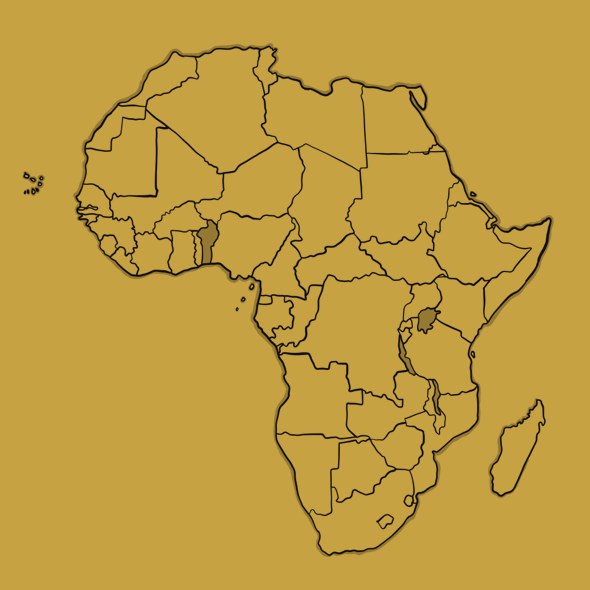
Global Export Weight: West African nations (Benin, Burkina Faso, Mali, Côte d'Ivoire) collectively produce millions of bales annually, accounting for over 10–12% of global raw cotton exports.
The Domestic Processing Gap:Fewer than 2% to 5% of the raw cotton lint grown in West Africa is processed or transformed into finished garments locally. Over 95% is shipped in raw lint form to foreign mills (primarily in Asia and Europe).
+----------------------------------------------------------------------------------+
| WEST AFRICAN COTTON VALUE CHAIN GAP                                              |
+----------------------------------------------------------------------------------+
| Raw Cotton Harvested locally        |  ████████████████████ 100%                 |
| Raw Cotton Exported un-processed    |  ███████████████████░  95% - 98%        |
| Raw Cotton Processed domestically   |  █░░░░░░░░░░░░░░░░░░░   2% - 5%          |
+----------------------------------------------------------------------------------+
When raw cotton is exported at approximately $1.50 to $2.00 per kilogram and bought back as finished military fatigues or court robes at $50 to $300 per unit, the region surrenders tens of thousands of manufacturing jobs and millions of dollars in industrial value-addition.
3. Calculating the Capital Flight: The CFA Franc Uniform Leakage
To understand what is at stake financially across the 14 Francophone nations using the CFA franc (WAEMU and CEMAC zones), we can model the annual capital drain caused by importing uniforms for state security forces.
Capital Flight Calculation Model
Let:
N = \text{Total active security personnel across 14 Francophone African states (Military, Gendarmerie, Police, Customs, Firefighters)} \approx 480,000 \text{ personnel}.
C = \text{Average annual procurement cost per officer (fatigues, daily service attire, boots, dress uniforms, badges)} \approx 200,000 \text{ CFA francs (~\$325 USD)}. \text{Annual Capital Flight} = N \times C \text{Annual Capital Flight} = 480,000 \times 200,000 \text{ CFA} = \mathbf{96,000,000,000\text{ CFA Francs}}\quad (\approx \mathbf{\$155\text{ Million USD / year}}) Over a single decade, this represents a capital flight of nearly 1 Trillion CFA Francs exiting West and Central African central banks directly into the balance sheets of foreign defense suppliers like France's Groupe Marck (Marck & Balsan) and Paul Boyé Technologies.
+------------------------------------------------------------------------------------+
| 10-YEAR MILITARY UNIFORM CAPITAL LEAKAGE (ESTIMATED AGGREGATE)                     |
+------------------------------------------------------------------------------------+
| Foreign Defense Contractors (e.g., Groupe Marck)  |  ~960 Billion CFA (~$1.55B USD) |
| Retained in Local Domestic Ecosystems             |  Near Zero (historically)      |
+------------------------------------------------------------------------------------+
4. Expanding the Lens: New Crucial Angles of Research
To capture the complete geopolitical picture, four critical dimensions must be examined:
A. The AES (Alliance of Sahel States) Regional Security Industrialization
Burkina Faso, Mali, and Niger have formed the Alliance of Sahel States (AES). Rather than acting in isolation, Burkina’s TEXFORCES-BF factory in Bobo-Dioulasso—a 15 billion CFA facility spanning 9 hectares—is explicitly designed to supply regional allied forces. This turns local industrial policy into a shared defense architecture.
B. The Dual-Production Strategy: Technical vs. Cultural Fabrics
A key operational distinction is how Traoré’s administration handles high-tech requirements versus formal attire:
Frontline Tactical Gear (TEXFORCES-BF): Ripstop, camouflage, and high-durability cotton-poly blends for combat zones are produced industrially at the Bobo-Dioulasso plant.
Civic & Formal Attire (Faso Dan Fani / Cencengu): Court robes, school uniforms, and parade dress are reserved for handweavers' cooperatives. This creates a balanced industrial ecosystem that combines modern factory capacity with traditional artisanal employment.
C. The Hypocrisy of Outsourced Foreign Manufacturing
French suppliers like Paul Boyé Technologies manufacture thousands of uniforms for European military recruits by utilizing low-cost offshore labor in Madagascar (a former French colony). This reveals an irony: French contractors use African industrial labor to manufacture uniforms, sell them back to European defense ministries, and then resell finished gear to African governments at a premium.
D. Judicial De-colonization as a Symbol of Sovereignty
Replaces imported black satin gowns—costing up to 3,000,000 CFA francs ($4,760 USD)—with 150,000 CFA franc ($240 USD) Faso Dan Fani robes means that every trial conducted in Burkina Faso takes place under a visual symbol of national autonomy.
Conclusion
By reclaiming state uniform procurement, Ibrahim Traoré's administration is demonstrating how public purchasing power can be weaponized for national development. Replacing foreign defense contracts with local value chains reclaims capital, empowers female artisans, and sets an example for economic sovereignty across Africa.
Despite producing some of the world's highest-grade, hand-harvested cotton lint, Sub-Saharan Africa remains decoupled from high-value downstream textile manufacturing. While West African nations—led by the C-4+ grouping (Benin, Burkina Faso, Mali, Côte d'Ivoire, and Chad)—harvest over 1 million metric tons of seed cotton annually, over 90% of regional lint is exported in primary form. Paradoxically, African consumer markets import over $4 billion to $6 billion annually in finished apparel and synthetic fabrics. This paper analyzes this structural disconnect through the lens of global value chain (GVC) governance and terms-of-trade degradation. It examines how institutional mechanics maintain primary commodity extraction, why statutory raw export bans face severe domestic processing bottlenecks, and how quality asymmetry displaces local artisans, tailors, and fashion designers in favor of imported synthetic alternatives.
1. The Regional Disconnect: Extractative Export vs. Processed Import
The African cotton-to-textile ecosystem exhibits a spatial divide between raw lint extraction in West Africa and downstream processing concentrated in North Africa and foreign markets:
West African Primary Extraction: The C-4+ nations are among the largest global exporters of unmanufactured cotton lint. Their production relies on smallholder farming, producing hand-picked cotton valued internationally for its fiber length and low contamination relative to machine-harvested alternatives. However, local spinning mill utilization across West Africa averages under 5%.
North African Value Addition: North African economies (Egypt, Morocco, Tunisia) export over $25 billion annually in processed textiles and apparel. This output is driven by proximity to European consumer markets, mature industrial infrastructure, and targeted trade agreements (such as EU-Mediterranean trade frameworks). Because intra-African trade infrastructure remains fragmented and tariff-heavy, primary lint from West Africa rarely supplies processing mills in North or East Africa. Instead, lint is shipped to East and South Asian mills before re-entering African markets as finished woven goods or synthetic-blend garments.
2. Institutional Mechanics: The Enforceability Gap of Export Bans
To capture downstream value, several West African governments have instituted policy mandates, including raw lint export restrictions and targeted export tariffs. However, converting raw export bans into domestic processing capacity reveals three structural barriers:
A. Capital Intensity and Utility Cost Disadvantages
Conversion of lint to yarn (spinning) and fabric (weaving) is highly capital- and energy-intensive. Industrial power tariffs in West Africa range between $0.15 and $0.25 per kWh, compared to $0.05 to $0.08 per kWh in competing Asian textile hubs. Without subsidized industrial power grids, domestic spinning mills operate at an immediate cost deficit.
B. Farm-Gate Liquidity Requirements
National cotton boards (e.g., Mali’s CMDT or Burkina Faso’s SOFITEX) rely on foreign cotton merchants to provide upfront hard-currency financing during harvest seasons. These liquidity injections ensure immediate payments to smallholder farmers. Enforcing a strict raw export ban without adequate local processing capacity risks devaluing farm-gate prices and depressing rural incomes.
C. Tariff Escalation in Global Trade
International tariff structures penalize value addition at origin. Raw lint enters most global consumer markets under zero or near-zero tariffs, whereas processed yarns, woven fabrics, and finished garments encounter escalating import duties unless protected by specific trade preferences (such as AGOA in the United States).
3. Quality Asymmetry: Fiber Extraction and the Displacement of Local Designers
A central friction in Africa’s cotton ecosystem is the quality grading asymmetry between export and domestic markets.
International cotton buyers utilize High-Volume Instrument (HVI) classing to grade lint based on staple length, strength, micronaire (fineness), and uniformity. Premium long-staple fiber commands a market premium and is systematically prioritized for overseas export to meet foreign spinning specifications. Consequently, domestic markets retain primarily:
Lower-grade, shorter-staple, or contaminated lint unsuited for high-speed industrial processing.
Imported synthetic thread (such as low-cost polyester), which replaces indigenous cotton yarns in traditional weaving hubs.
B. Creative Ecosystem Resistance: Designers, Tailors, and Consumers
African fashion designers, custom tailors, and apparel brands face a structural supply constraint: they cannot source high-grade, 100% locally grown African cotton fabric within their own domestic markets.
Material Substitution: Traditional artisanal weavers who historically produced 100% cotton textiles (e.g., Gbaguidi weaves, Kente, or Bogolan) are increasingly forced to use imported synthetic polyester threads due to the scarcity and cost of locally spun high-grade cotton yarn.
Domestic Market Demand: A growing segment of African fashion entrepreneurs and urban consumers actively seeks high-quality, traceable, locally produced cotton textiles. However, because local textile mills lack high-grade input fiber, designers must choose between low-quality domestic materials or expensive imported finished fabrics from Europe or Asia. This dynamic transfers the economic returns of African agricultural quality outward while saddling domestic creative industries with low-grade inputs or synthetic substitutes.
4. Reconfiguring Policy: Industrial Parks and the AfCFTA
To address structural extraction and quality displacement, regional strategies are pivoting toward integrated manufacturing ecosystems:
A. Special Economic Zones (SEZs)
Initiatives such as the Glo-Djigbé Industrial Zone (GDIZ) in Benin and the Plateforme Industrielle d'Adétikopé (PIA) in Togo represent a model shift. By providing tax incentives, continuous power supplies, and co-located spinning and garment manufacturing facilities, these zones aim to process primary lint into yarn and finished apparel domestically before export.
B. AfCFTA Rules of Origin (RoO)
Under the African Continental Free Trade Area (AfCFTA), the definition of Rules of Origin is critical. Enforcing double transformation rules—requiring raw cotton to be spun into yarn, woven into fabric, and assembled into garments within member states—incentivizes regional sourcing and protects domestic processors from third-country textile dumping.
5. Strategic Recommendations
Local Allocation Quotas: Implement gradual, capacity-indexed quotas that require a percentage of top-grade (HVI-classified) cotton fiber to be reserved for domestic spinning mills and local textile artisans before export licenses are issued.
Subsidized Industrial Power Infrastructure: Address energy costs for spinning and weaving mills within designated industrial corridors to ensure price parity with international processors.
Regional Input Trading Platforms: Utilize AfCFTA frameworks to facilitate direct trade of raw and semi-processed cotton between West African producers and manufacturing hubs across East, Southern, and North Africa.
References
Food and Agriculture Organization [FAO]. (2022). The Cotton-4 (C-4) countries in the context of the global cotton market: Situation and short-term market outlook. United Nations Food and Agriculture Organization. https://openknowledge.fao.org/
International Trade Centre [ITC]. (2025). How to invest in a viable textile and cotton value chain in Africa. United Nations International Trade Centre. https://www.intracen.org/
International Trade Centre [ITC]. (2009). Understanding cotton demand and promoting origin: The example of African cotton. International Trade Centre Bulletin. https://www.intracen.org/
TraceX Technologies. (2025). Africa textile value chain: From cotton to fashion. TraceX Global Value Chain Analysis. https://tracextech.com/
United Nations Conference on Trade and Development [UNCTAD]. (2017). Regional strategy for cotton-to-clothing value chain in COMESA. United Nations Conference on Trade and Development. https://unctad.org/
United Nations Industrial Development Organization [UNIDO]. (2024). World Cotton Day 2023: Making cotton fair and sustainable for all, from farm to fashion. UNIDO Publications. https://www.unido.org/
In 1844, a concept was published that would shape the relationship between African identity and Christian conversion for generations. It was called the "gospel of the clean shirt" (Fox, 1844). The phrase appeared in William Fox's The Western Coast of Africa, capturing a missionary logic that was already being practiced across the continent. The gospel of the clean shirt was not about salvation. It was about appearance. It was about control. It was about the belief that before an African could be saved, they had to be dressed—and dressed according to European standards.
This was the white shirt ideology. It was not merely a preference for European clothing. It was a theological position. It was the conviction that European dress was a visible sign of an invisible conversion. Without the white shirt, the conversion was suspect. Without the European garment, the African was not yet civilised. And without civilisation, there was no salvation.
The Theological Logic of European Dress
The Hermannsburg missionaries in the Western Transvaal considered clothing "an indispensable pre-requisite to prepare pagan Africans for becoming Christians." It had to be "scrupulously submitted to the control of the self-styled agents of Christian civilisation" (Hermannsburg missionaries, cited in researchspace). Missionaries did not simply suggest European dress. They enforced it. When they lost control over African clothing habits, they disapproved not only of African appearance but of African mission residents themselves. Outward appearance was considered to be the mirror of a person's inner condition (Hermannsburg missionaries, cited in researchspace). The logic was consistent and totalising. If the outside did not look European, the inside could not be Christian.
This was not an isolated practice. In British and French colonial areas, missionaries banned drumming, dancing, and the wearing of African clothes. They forbade converts to participate in traditional ceremonies of naming, initiation, marriage, and burial. They substituted biblical names for African names (Owomoyela, n.d.). They saw everything African as "godless heathenism that must be wiped out" (Owomoyela, n.d.). The white shirt was not offered as an option. It was imposed through the destruction of African alternatives.
The Erasure of Barkcloth: When Indigenous Textiles Became Heathen
In Buganda, the Baganda had a thriving barkcloth industry. Barkcloth was made from fig trees, an indigenous fabric not woven but beaten from the bark of the mutuba tree. It was warm, durable, and culturally significant. The missionaries actively discouraged its use. They promoted the "clean shirt" or "white shirt" ideology, arguing that before the Western God, all people are alike if they keep their bodies clean—which the missionaries interpreted as "white" (Barkcloth missionary influence, n.d.). The result was the demise of the Baganda barkcloth industry. The indigenous textile was not just replaced. It was erased.
The pattern was repeated across the continent. In Namibia, among the Aawambo people, the Finnish missionaries taught that traditional costumes and ornaments were "heathen objects." The locals were persuaded to burn their traditional clothes. Sabina David states: "people eventually did away with traditional clothes and burned them. By doing so, they were persuaded to believe that they were abandoning paganism and evil objects for the righteousness of God the savior" (David, cited in Caley, n.d.). The white shirt did not arrive as an addition to African wardrobes. It arrived as a replacement for what was destroyed.
The White Habit and the White Fathers
The logic was not limited to African converts. It was embodied by the missionaries themselves. Cardinal Charles Lavigerie, Archbishop of Algiers and Carthage, founded the Society of Missionaries of Africa in 1868. He adopted a white habit for the Society's members, based on the traditional North African dress of a white gown (gandoura) and a white hooded cloak (burnous), with a rosary worn around the neck (Missionaries of Africa, n.d.). The white habit stood in contrast to the common black and brown habits of other Catholic religious orders. The Missionaries of Africa came to be known as "the White Fathers" (Missionaries of Africa, n.d.). The white habit was a marker of identity, authority, and difference. The white shirt was not just a tool of conversion. It was the uniform of the converter.
One source captures the pervasiveness of this whiteness: "Little baby Jesus was presented to me white, and in most cases — blue eyed! All the angels have been made white except of course those connected to Lucifer. Even John Bunyan's 'Pilgrims Progress' depicts the 'Flatterer' as 'a man black of flesh.' All the missionaries who were sent to teach me the ways of Godliness were white" (Nwosimiri, n.d.). The theology was racialised. The dress code was theological. And the two were inseparable.
The Subversion of the Uniform: When African Women Reappropriated Control
But the story does not end with control. African women found ways to resist and reappropriate. The Manyano, prayer groups of African women nurtured by female missionaries, emerged in the early twentieth century (Haddad, 2016). The church uniform provided the members with autonomy, status, and dignity. It functioned as a healing tool that healed illness and oppression. It helped participants escape the hard oppressive realities of life (Haddad, 2016). The same uniform that was imposed by missionaries was later reappropriated as a source of dignity and resistance. Former schoolgirls of missionary educator Mabel Shaw in Zambia embraced stylish modern apparel not as a rejection of Christianity but as an expression of "Christian modernity" (Kalusa, 2022). They were not rejecting Christianity. They were rejecting the missionary's control over what a Christian should look like.
The Legacy
The white shirt ideology is not history. It is inheritance. It is the lingering assumption that European dress is professional, respectable, and Christian. It is the belief that African clothing is traditional, casual, and not for serious occasions. It is the reason why barkcloth was burned, traditional dress was condemned, and the white shirt became the uniform of conversion. The missionaries did not bring a religion. They brought a dress code. And the dress code was a tool of subjugation.
There is no biblical basis for the white shirt. The Gospels do not mandate European tailoring. The apostles did not wear Victorian collars. The white shirt was a cultural imposition dressed in theological language. It was not a requirement of salvation. It was a requirement of submission.
Today, the same logic persists in the distinction between "formal" and "traditional" attire. The suit, the tie, the white shirt remain the uniforms of authority, professionalism, and respectability. African clothing—the dashiki, the boubou, the kente, the barkcloth—is often relegated to ceremonies, weekends, or cultural events. It is not seen as appropriate for boardrooms, courtrooms, or government offices. The white shirt ideology did not disappear. It became the standard.
The Manyano women and the former schoolgirls of Zambia demonstrate that the same garment can be a tool of control or a symbol of resistance. The uniform imposed by missionaries was reappropriated as a source of dignity and autonomy. The white shirt was not simply accepted. It was contested. It was subverted. It was made to mean something else. The question is not whether we wear the white shirt. It is whether we decide what it means, or whether it decides us.
References
· Caley, Maria A. N. "The Modernized Traditional Dress of the Aawambo." University of Turku. (n.d.) · Fox, William. The Western Coast of Africa. London, 1844. Cited in Herskovits, M.J., The Human Factor in Changing Africa. London, 1962. · Haddad, Beverly. Church uniform and Manyano women. 2016. Cited in researchspace.ukzn.ac.za. · Hermannsburg missionaries. Cited in researchspace.ukzn.ac.za. · Kalusa, Walima T. Former mission schoolgirls and modern apparel. 2022. Cited in researchspace.ukzn.ac.za. · Missionaries of Africa. "History." Available at: https://missionariesofafrica.org/our-story/history/ (n.d.) · Nwosimiri. Colonial period ideologies of European cultural superiority. (n.d.) · Owomoyela, Oyekan. African Literatures: An Introduction. (n.d.) · Van der Walt. Missionaries and separate education. (n.d.) Cited in researchspace.ukzn.ac.za. · White Fathers. History of the Society of Missionaries of Africa. (n.d.)
There is a question I have been sitting with. Has any African academic written about how poverty causes the decline of local cultures and traditions?
The answer is yes. They have. And what they have found should stop us from talking about "cultural preservation" as if culture exists separate from economics.
In the Eastern Cape province of South Africa, among the amaMpondo communities, researcher Nontuthuzelo Mtsini of Walter Sisulu University documented something striking. The political upheavals and economic decline after the postcolonial period resulted in job losses, corruption, crime, poverty, and the loss of the philosophy of ubuntu embedded in cultural beliefs. Her findings are direct: poverty and unemployment were the major causes of the decline of ubuntu among communities. The elders she interviewed indicated that extreme poverty was caused by political tension, economic decline, and cultural changes. When people cannot feed their families, when there are no jobs, when the economy contracts, the transmission of cultural knowledge from elders to children breaks down. You cannot teach ubuntu when you are migrating for work. You cannot pass down weaving techniques when you cannot afford materials. This is not cultural decline as abstraction. This is poverty as erasure.
Dr Chika C Mba, a Senior Research Fellow at the Institute of African Studies at the University of Ghana, made a striking argument at the Africa Wiki Challenge 2025 launch. He used marriage ceremonies as a concrete example. Africans now spend double on traditional weddings and Western-style "white weddings." The abuse of our own culture and identity leads directly to poverty and impoverishment. This is the cycle. When a family spends money on two weddings instead of one, the money leaves the community. When they choose foreign customs over their own, they are not only spending more—they are signaling that their own traditions are not enough. The message is internalized. The next generation sees the foreign as aspirational. The local becomes "traditional" in the pejorative sense—backward, poor, not for people who have made it.
Atoyebi and Yunusa, writing in the Nigerian Journal of Sociology and Anthropology (2024), examined cultural practices among the Idoma and Ogugu peoples of North-Central Nigeria. Their paper highlights how certain traditional beliefs, inheritance of women by their deceased husband's relation, widow's succession rights, refund of bride price after divorce—exemplify what they call the "feminization of poverty." This is not an argument against tradition. It is an argument that poverty and culture cannot be separated. When a practice contributes to poverty, the practice itself becomes vulnerable. And when the practice is abandoned, the entire knowledge system that surrounded it, including the textile traditions, the ceremonial cloths, the symbolic patterns, can disappear with it.
A 2025 study of Ethiopian weavers documents that poverty directly threatens the survival of traditional handwoven garments like the "habesha kemis." With roughly 39 to 43 percent of Ethiopia's 130 million people living below the poverty line (less than $3 per day), demand for traditional handwoven clothes has sharply declined as families cannot afford the higher cost of handmade garments. One weaver with three decades of experience earns only $68 to $102 per month before deducting raw material costs. After 30 years of weaving, this barely covers survival—there is no surplus to pass the craft to a new generation. The youngest weaver in the workshop, 23, is already planning a career change because "the economy isn't what it used to be." This is not just lost income. It is lost transmission.
Getachew, Alemu, and Wudu's 2025 study at Bahir-Dar City documents how poverty exacerbates the challenges facing women weavers. Women face economic difficulties including material shortages and outdated technology. The study notes that household consumption is prioritized over purchasing traditional hand-woven garments—when a family must choose between food and a ceremonial cloth, food wins. The handloom sector's decline is directly linked to deteriorating economic conditions that make handcrafted goods unaffordable for local consumers.
Araya and Beyene's 2024 study on cultural appropriation in Ethiopia's garment weaving industry found that poverty erodes cultural value in two ways. First, when cheaper, mass-produced imitations of traditional designs flood the market due to lack of IP protection, the price of authentic handmade garments is undercut. Second, poverty affects the mindset of educated Africans, who come to see traditional textiles as "cloth for the poor, illiterate, rural dwellers." This is the psychological dimension of poverty. When a traditional cloth becomes associated with economic hardship rather than cultural pride, younger generations reject it in favor of foreign styles perceived as more "modern" or "aspirational."
Amanor-Wilks' 2024 study on the Kente economy in Bonwire, Ghana, documents how the productive role women once played as cotton growers and spinners has been eroded by economic pressures. The research found that while more women are weaving than ever before, they continue to face enormous pressure to stop because the income is insufficient to sustain households even as the traditional gender taboo on women weaving has been suspended.
Areo's 2013 study on Adire (Yoruba indigo-dyed cloth) documents that the art suffered a "lull" in the 1950s due to the flooding of Nigerian markets with cheaper, untaxed imported textiles while locally produced ones were taxed. Hand in hand with this was the mindset of educated Nigerians who then saw Adire "merely as rural cloth for poor, illiterate, rural dwellers." This is the direct link: poverty, enforced by colonial and post-colonial economic policies, led to cultural devaluation, which led to near extinction of the craft.
These studies are not about "preserving culture" in a museum sense. They document material reality: when people cannot afford to buy handmade textiles, weavers cannot afford to weave. When weavers cannot afford to weave, they do not teach their children. When they do not teach their children, the knowledge dies. This is not cultural decline as abstraction. It is poverty as extinction.
The academic literature on poverty and textile decline concentrates heavily on West Africa and Ethiopia. But there are sources from other regions, they just require more searching and often come from non-academic channels such as NGO reports, news articles, and economic studies.
In Namibia, a 2025 Coastal Trade Fair report documents that local fashion designers and tailors struggle because consumers demand lower prices than what handmade garments cost. Maria Franciskus, a fashion designer, stated: "The struggle is that sometimes we buy material and people are demanding low prices… we make a small profit, and it's not enough." The National Museum of Namibia's documentation of traditional leather processing notes that "relative poverty was also reflected in the fact that poorer people were not able to obtain cow fat to keep their skins in good condition." When poverty prevents people from maintaining traditional garments, the knowledge of how to process and care for them erodes. No academic study from Namibia specifically on poverty and traditional textile decline exists.
In Zambia, World Vision reports that due to prolonged drought and climate change, traditional agriculture is no longer reliable, forcing rural families to seek non-agricultural livelihoods. The Tailoring Enterprise Development program was created to equip vulnerable households with sewing skills. This is economic adaptation, but it also represents a shift away from traditional textile knowledge toward production for external markets. This is an NGO report, not academic research. No Zambian academic has published specifically on poverty and traditional textile decline.
In Somaliland, a 2025 report on the artisan industry documents that "traditional crafts such as pottery, blacksmithing, beadwork, and basket weaving are at risk of disappearing due to modernization, cultural stigma, and limited intergenerational transfer." Youth involvement in artisan trades is deterred by "low prestige, inconsistent earnings, and lack of structured growth paths." The Radio Ergo report on Galkayo shoemakers documents that traditional shoemakers have gone out of work because "people have changed their ways… now just throw away broken shoes to buy new ones instead of seeking repairs." One shoemaker, Salad Mahamud Hassan, used to earn $10 daily. Now he lives in a displacement camp and cannot feed his children. This is poverty caused by the decline of traditional crafts, and poverty accelerating the decline. The Somaliland report is from an NGO; the shoemaker story is journalism. No Somali academic has published peer-reviewed research on this topic.
In Tanzania, Pendo Bigambo and colleagues (2024) published a study on Tanzania's batik industry in the African Journal of Science, Technology, Innovation & Development. The study found the industry is informal, predominantly women-owned, and faces challenges including poor access to funds, scarcity of tools and materials, and repetitive designs due to lack of creativity training. This is a peer-reviewed academic study by Tanzanian researchers.
In Zimbabwe, a news report on cotton farming documents that the collapse of the cotton industry has "spelled doom for communities where the crop is grown." Farmers have abandoned cotton due to low prices, switching to maize. When raw cotton production collapses, the material base for traditional textile production disappears. This is journalism, not academic research. No Zimbabwean academic study specifically links poverty to traditional textile decline.
In Malawi, a 2007 IPS news report documents that following trade liberalization, Malawi saw an influx of second-hand clothing. Consumers prefer cheap imported clothes because "up to 65 percent of Malawians are living in poverty, which means having less than 1 US dollar per day." Local textile manufacturers cannot compete. Farmers are abandoning cotton because prices are too low. The textile industry has collapsed. This is journalism, not academic research. No Malawian academic study specifically links poverty to traditional textile decline.
An English-speaking researcher will not search in Portuguese. They will not search in French. They will not dig through Angolan journals, Mozambican university repositories, or Cabo Verdean conference proceedings. The information exists, but it is not accessible. When African researchers publish in Portuguese or French, their work does not circulate in English-dominated academic databases. When English-speaking African nations do not translate that research, they are not learning from their neighbors. The weaver in Angola and the weaver in Ghana cannot read each other's struggles because the language barrier is a wall. The system does not need to destroy the knowledge. It only needs to ensure the knowledge never circulates.
In Angola, peer-reviewed research exists. Celestino José Taca, publishing in the Angolan journal Revista Samayonga (Volume 4, Issue 2, 2026, pp. 267-277), conducted fieldwork in Luena between February and June 2025. He writes:
"A pobreza multidimensional constitui uma barreira que afecta, de maneira preocupante, a transmissão de saberes culturais. A valorização cultural de manifestações como o semba e a escrita Sona continua, mas a pobreza e a exclusão educacional ameaçam estas práticas."
Translation: "Multidimensional poverty constitutes a barrier that worryingly affects the transmission of cultural knowledge. The cultural valorization of expressions like semba and Sona writing continues, but poverty and educational exclusion threaten these practices."
This is an African academic publishing in an Angolan journal, directly linking poverty to the potential decline of cultural manifestations. While it does not focus exclusively on textiles, it establishes the framework: poverty erodes the material and social basis for cultural transmission in Angola.
The official Angolan news agency Angop published a report on 17 March 2022, documenting the decline of traditional professions in Bengo province:
"Os alfaiates, sapateiros e costureiras tradicionais estão a tornar-se escassos na província do Bengo. Os jovens não demonstram interesse em aprender estas profissões devido às baixas receitas e ao custo elevado dos materiais. Grandes quantidades de roupa importada pronta-a-vestir e a industrialização são citadas como causas directas."
Translation: "Traditional tailors, shoemakers, and seamstresses are becoming scarce in Bengo province. Young people show no interest in learning these professions due to low income and the high cost of materials. Large quantities of imported ready-to-wear clothing and industrialization are cited as direct causes."
Antonio Gaspar, a 60-year-old shoemaker, states that the province lacks these services, forcing people to travel to Luanda for repairs. David Chambo, a shoemaker for over 20 years, personally trains over 50 young people but says it "has not been easy." This is official documentation from Angola's state news agency, citing multiple artisans by name, with direct quotes about poverty, imported goods, and generational disinterest as drivers of decline.
Angolan researcher Leonardo Tuyenikumwe published a scientific book in 2024, "Os khoinsan (khun e khwe) de Angola e seus desafios actuais" (The Khoisan of Angola and Their Current Challenges). He writes:
"Os khoinsan (khun e khwe) de Angola enfrentam desafios actuais graves. A situação da pobreza extrema e da fome está a forçar estas comunidades a mudar o seu estilo de vida e a abandonar práticas ancestrais."
Translation: "The Khoisan (Khun and Khwe) of Angola face serious current challenges. The situation of extreme poverty and hunger is forcing these communities to change their lifestyle and abandon ancestral practices."
The book explicitly links poverty to the erosion of cultural traditions among indigenous peoples in Angola.
In Mozambique, Cardoso Esboi of the Catholic University of Mozambique published a study in 2007:
"A produção de algodão é a cultura não alimentar com maior rendimento e cria auto-emprego para a maioria das famílias rurais. No entanto, os baixos níveis de educação, a dependência de factores naturais (clima, pragas) e a falta de infra-estruturas sociais limitam os agricultores de aproveitar plenamente as condições favoráveis do mercado."
Translation: "Cotton production is the highest earning non-food crop and creates auto-employment for most rural households. However, low education levels, dependence on natural factors (weather, pests), and lack of social infrastructure constrain farmers from taking full advantage of favorable market conditions."
This is a Mozambican researcher directly linking cotton to poverty. When cotton farming fails to lift farmers out of poverty, the material base for textile production erodes. No Mozambican academic has published specifically on the decline of traditional capulana due to poverty—a central textile tradition in Mozambique. The gap confirms the point: research on traditional textile decline is limited.
In Cabo Verde, the pano d'obra (meaning "laborous cloth") was "highly prized for trading along the West African coast, from the second half of the 16th century to the end of the 18th century." From the 19th century, "a marked decline in the manufacture of these historic textiles is witnessed due to the demise of the local cotton and dyes production, alongside with a lack of demand for them, particularly the ones with high-value price." Today, local weavers use mostly imported yarn, including synthetic. The decline is documented, but the researcher presenting this at the Textile Society of America 2024 Symposium is from the University of Porto, Portugal—not a Cabo Verdean scholar. No academic source by a Cabo Verdean scholar exists on this topic.
For Guinea-Bissau, São Tomé and Príncipe, and Equatorial Guinea, no academic sources by local scholars were found. This is a complete research gap. It does not mean the phenomenon does not exist. It means African researchers have not yet documented it—or the documentation exists but is not indexed in accessible databases.
The focus on cotton in African textile production is not natural. It was engineered. Before Europeans arrived, Portuguese-speaking Africa used raffia, palm fiber, sisal, wild rhubarb root dyes, and other local materials. Cotton became dominant because it was exportable. Colonial regimes controlled it, channeled it into global trade, and extracted it for profit rather than local use. The knowledge of how to work with raffia, palm fiber, and sisal was not written. It was not patented. It was not passed down. And because those materials had no export value, their knowledge systems were not valued.
The Kuba people of Central Africa are renowned for a specific process that turns stiff raffia plant fiber into a soft textile. Men weave the base cloth from fine raffia fibers. Women then create intricate geometric patterns using a specialized cut-pile embroidery technique. After the pile is cut, the fibers are rubbed together, which gives the surface a silky lustre reminiscent of velvet, hence the name "velvet raffia." This was historically used as a form of currency, as ceremonial dress, and to adorn royal stools. An unprocessed raffia fiber is stiff, but after these specialized techniques, it can be as soft as cotton, with a luxurious velvet-like feel. This is not just a craft. It is a sophisticated material engineering process.
The argument that raffia is rough and cotton is soft is historically inaccurate. It ignores the existence of specialized, high-skill techniques that produce a textile of exceptional quality, softness, and prestige. As poverty increased, communities could not afford the time or resources for the labor-intensive velvet technique. They defaulted to the quicker, stiffer versions of raffia, or they abandoned raffia altogether for cheaper, imported cotton. Over time, this created a false narrative that "raffia is stiff" and "cotton is soft." The knowledge to make velvet raffia is at risk of being lost, not just a craft disappearing, but the disappearance of a specific, sophisticated material engineering process.
The objects remain. But they remain under European control. The British Museum holds nearly 8 million objects. Only 1 percent are on public display at any time. The other 99 percent are in storage. The raffia cloth from Equatorial Guinea (1820) sits in Reading, England. The Angolan raffia costume (1929-1936) sits in Montreal, Canada. The objects are not destroyed. They are contained. Sealed. Removed from the communities that made them. The knowledge that the object represents, the technique, the material understanding, the transmission from one generation to the next, can die even as the object itself is perfectly preserved. The weaver dies. The language shifts. The materials become unavailable. The ceremony stops. The child moves to the city. The museum catalogues the cloth. The cloth is safe. The knowledge is not.
Hoarding is not destruction. It is preservation in a cage. The object remains. The people change. The knowledge thins. The museum wins.
Oliver Mtapuri's edited volume "African Perspectives on Poverty, Indigenous Knowledge Systems, and Innovation" (Springer, 2022) dedicates chapters to the "Onomastic and Conceptual Pathologisation of African Culture as a Creation and Perpetuation of African Poverty in Zimbabwe." The title alone says enough. When African culture is pathologized—treated as the cause of poverty rather than the solution, the logic is inverted. The cure becomes abandoning culture. The abandonment leads to more poverty. The cycle continues.
The research exists. African scholars have documented it. South Africa. Nigeria. Ghana. Ethiopia. Zimbabwe. Angola. Mozambique. The evidence is clear: poverty destroys the material basis for cultural transmission. But the research is fragmented. The language barriers prevent circulation. The museums hold the objects but not the knowledge. The economic policies continue to favor imported goods over local production.
African textile knowledge is declining, in some spaces perhaps already extinct. When will we document what remains before it is gone, when will we build systems that keep it alive, not just preserved in a crate in a foreign country.
References
· Mtsini, Nontuthuzelo. "Reinstating cultural beliefs and Ubuntu in the AmaMpondo communities in the Eastern Cape province, South Africa." E-Journal of Humanities Arts and Social Sciences, Vol. 6 No. 9 (2025). Walter Sisulu University, South Africa. · Mba, Chika C. Speech at Africa Wiki Challenge 2025 launch. GhanaWeb, 25 May 2025. Institute of African Studies, University of Ghana. · Atoyebi, Timothy Abayomi and Yunusa, Edime. "Cultural Practices and Women's Rights among Idoma and Ogugu Peoples of North-Central, Nigeria: Implications for Poverty Reduction and Sustainable Development." The Nigerian Journal of Sociology and Anthropology, Volume 22, No. 2, November 2024, pp. 102-114. Prince Abubakar Audu University, Nigeria. · Getachew, Alemu, and Wudu. 2025 study at Bahir-Dar City, Ethiopia. · Araya and Beyene. 2024 study on cultural appropriation in Ethiopia's garment weaving industry. · Amanor-Wilks. 2024 study on the Kente economy in Bonwire, Ghana. · Areo. 2013 study on Adire (Yoruba indigo-dyed cloth). · Wayessa, Bula S. "My Meals Are in the Pots: Making Pots and Meals in Wollega, Southwest Ethiopia." African Archaeological Review, Volume 40, 2023, pp. 519–529. · Laitin, David D. and Ramachandran, Rajesh. "Language Policy as the Culprit of Africa's Growth Tragedy." Journal of Politics, 2025. Stanford University / Monash University Malaysia. · Mtapuri, Oliver (ed.). African Perspectives on Poverty, Indigenous Knowledge Systems, and Innovation. Springer, 2022. · Taca, Celestino José. "Diversidade Cultural, Social e Económica em África com Ênfase em Angola Desafios e Perspectivas Contemporâneas." Revista Samayonga, Volume 4, Issue 2, 2026, pp. 267-277. · Angop (Angola News Agency). "Profissões tradicionais em risco de extinção no Bengo." 17 March 2022. · Tuyenikumwe, Leonardo. Os khoinsan (khun e khwe) de Angola e seus desafios actuais. Vamos Editora, 2024. · Esboi, Cardoso. "Impact of Cotton Production Among Cotton Farmers in Maringue District of Sofala Province – Mozambique." Universidade Católica de Moçambique (UCM), 2007. Available at: http://www.repositorio.ucm.ac.mz/handle/123456789/99 · Textile Society of America 2024 Symposium. "A Contribution to the Preservation and Revival of the Cabo Verdean pano d'obra Textiles." · Hansen, Karen Tranberg. "Riches from Rags or Persistent Poverty? The Working Lives of Secondhand Clothing Vendors in Maputo, Mozambique." Textile: The Journal of Cloth & Culture, Volume 10, Issue 2, 2012, pp. 222-237. · Bigambo, Pendo et al. 2024 study on Tanzania's batik industry. African Journal of Science, Technology, Innovation & Development. · Namibia Coastal Trade Fair 2025 report. · World Vision Zambia. Tailoring Enterprise Development program reports. · Solidaarisuus. 2025 report on artisan industry in Somaliland. · Radio Ergo. Report on Galkayo shoemakers. · IPS news agency. 2007 report on Malawi second-hand clothing. · Reading Museum. Raffia cloth from Equatorial Guinea (1820). Collection record. · Redpath Museum, McGill University. Angolan raffia costume (1929-1936). Collection record. · British Museum. Papel cloth from Guinea-Bissau (c. 1989). Collection record.
There is a word that diplomats and academics use. Soft power. Let me translate.
Soft power means getting what you want without using force. You do not send soldiers. You do not impose sanctions. Instead, you make people want what you have. You make your culture, your products, your values seem attractive, modern, and desirable.
When a young person in Lagos saves money for months to buy a Louis Vuitton bag made in France, that is soft power. When a fashion designer in Accra studies pattern-making at a Chinese university and returns to teach Chinese cutting methods, that is soft power. When a family in Abidjan chooses Dutch wax prints for a wedding because "that is the real fabric," that is soft power.
No one forced them. They were attracted. The attraction is the instrument.
I am not stating it is wrong for Africans to learn new techniques in textiles. That is not what this post is about. The exchange of knowledge across cultures is not the problem. The problem is the asymmetry. External actors have strategies, budgets, and coordinated frameworks. They study our markets, our tastes, our vulnerabilities. We do not fund research into how their strategies operate. We do not train diplomats in textile diplomacy. We do not build shields. The result is not cultural exchange. It is extraction wearing a friendly face.
External actors have been using textiles to project soft power into Africa for centuries. The Dutch have done it since 1846. The French do it through luxury brands. The Chinese are doing it now through cheaper fabrics and cultural centres. The Americans have done it through trade agreements, development programmes, and diplomatic initiatives.
They all have strategies. They all have budgets. They all study African markets, African tastes, and African vulnerabilities.
We have not funded research into how these strategies operate. We have not trained diplomats in textile diplomacy. We have not built shields.
This post is an attempt to change that. Not to adopt their frameworks. To understand them, translate them, and help us build our own systems as a shield. We do not need to copy what they have built. Their systems serve their interests, not ours. What we build will look different. It will be rooted in our own logic, our own values, our own ways of organising knowledge. The shield is not a replica. It is a response.
What Soft Power Is and What It Can Achieve
Soft power was coined by Joseph Nye in 1990. He defined it as "the ability to get what you want through attraction rather than coercion or payments."
When a country possesses soft power, it does not need to make concessions or trade-offs to achieve its goals. It simply gets its way "softly." Soft power operates through the accumulation of "political capital"—the ability to rally others around its objectives.
Soft power can generate favourable perceptions of a country's people, culture, and policies, facilitate greater cooperation between nations, help change target countries' policies or political environments, and prevent, manage, and mitigate conflicts.
But soft power also constrains. A reputation for honour, coherence, and values dictates unpalatable political choices. Sudden deviance from a country's projected image leads to loss of trust. This is why external actors invest so heavily in maintaining consistent, attractive cultural narratives. They cannot afford to be exposed.
Soft power originates from three primary sources: culture (both "high brow" and popular forms like art, fashion, music, film, and textiles), political values (democracy, human rights, individualism, freedom, as projected internationally), and foreign policies (perceived as legitimate, multilateral, and having moral authority).
In the context of fashion and textiles, soft power operates through luxury branding that positions certain aesthetics as aspirational, the global dominance of certain design vocabularies that become "neutral" or "universal" while erasing their origins, educational and exchange programmes that train designers in foreign frameworks, and museum exhibitions that canonise some textile traditions while marginalising others.
How to Recognise Soft Power When You See It
You do not need a degree. You need to ask four questions.
Who profits? If the fabric is worn in Accra but the company is registered in Amsterdam, the profit leaves. That is soft power at work.
Who frames the story? If a luxury house calls a bag "a modern homage to the global traveler" but does not mention the expulsion of migrants that gave the bag its name, they are controlling the narrative. That is soft power.
Who sets the standard? If Chinese universities train African designers in Chinese cutting methods, and those designers teach those methods to their students, soon the "right way" to sew will be Chinese. That is soft power.
Who defines "quality"? If Dutch wax prints are considered "real fabric" and locally made textiles are considered "traditional" or "not for business," the definition of quality has been captured. That is soft power.
These four questions are your detection framework. Use them.
External Soft Power Actors – How They Operate
The Netherlands: Vlisco and 180 Years of Market Dominance
The Dutch company Vlisco has been producing wax prints for West and Central Africa since 1846. Nearly 180 years. The fabric is designed in the Netherlands, registered in the United Kingdom, and given popular names by African women traders called "nanas." The power dynamic is clear: European designs, European profits, African naming, African consumption, African cultural meaning attached to a European product.
The Vlisco story is the same pattern traced in our "Research is national security" series. African capital tried to buy the company. The bid was higher. It was rejected. The company remains European-owned. The soft power continues to flow outward.
France: Luxury Branding and the Capture of "Taste"
French perfumes constructed a "fashionable ethos" that positioned France as the arbiter of taste globally. This is soft power through scent and packaging—textile-adjacent because fashion and perfume are marketed together and signify the same aspirational lifestyle.
In 2021, Louis Vuitton released a Kente-inspired menswear collection designed by Virgil Abloh (American of Ghanaian descent). The suits sold out globally. No credit to Ghanaian weavers. In 2025, they released the "Ghana Must Go" bag—a luxury version of the woven polypropylene bag used by West African migrants. The bag is named after a painful chapter in Ghanaian history—the 1983 expulsion of Ghanaians from Nigeria. Louis Vuitton markets it as "a modern homage to the global traveler." The original bag was a symbol of displacement. They turned it into a $3,000 accessory.
Ghanaian journalist and Kente Ambassador Amma Prempeh analysed this: "Both collections treat West African aesthetics as visual motifs rather than cultural inheritances. They do not credit local makers or designers for their sources. Instead, they use broad themes like 'heritage' and 'migration,' detaching designs from their sociopolitical roots."
The soft power works. The profits leave. The original creators are not credited.
China: Gradualism, Affordability, and Cultural Centres
Chinese wax prints initially entered the market as counterfeits of Dutch designs. Today, brands like Hitarget, Phoenix, and Binta Wax compete directly. Not because they are superior. Because they are cheaper. Affordability is soft power when it shapes what people can buy, what they consider "good enough," and which factories stay open.
Nigerian researcher Sandra Oliver‑Mbonu has documented how the China Cultural Centre Nigeria uses fashion shows to strategically stage Chinese textile heritage alongside Nigerian fabrics. They showcase China's sartorial expertise while fostering supposedly "transcultural" dialogue. Off the runway, Nigerian designers incorporate Chinese aesthetic elements into everyday garments.
But here is the warning. These exchanges are not neutral. They invoke historical memories of colonial dress politics. They generate ambivalent responses that reveal post‑colonial tensions between authenticity and cosmopolitan aspiration.
Fairuzah Atchulo, a Ghanaian PhD candidate, is documenting another layer of this infiltration. Her research focuses on how sizing systems in global fashion exclude African bodies. She asks: why are there no "African sizes" on international platforms? Her answer is "the entangled histories of colonialism in global sizing systems" – a form of neo‑colonial control imposed through fabric and fit.
China's approach favours gradualism, where subtle changes tweak preexisting styles. In Mozambique, consumers balance these influences, seeking a "novidade" (novelty) that is neither fully foreign nor fully local. The term is "not too African, not too Chinese."
The United States: Trade Agreements, Development Programmes, and Economic Leverage
US soft power in textiles operates primarily through trade and development initiatives rather than cultural branding. The African Growth and Opportunity Act (AGOA) has been the central instrument since 2000, offering duty-free access to the US market for over 6,000 product lines from eligible sub-Saharan African countries. The apparel provisions, including the transformative third‑country fabric allowance, became the backbone of export success stories in Lesotho, Kenya, and Madagascar.
The impact has been significant. Kenya's apparel exports to the United States under AGOA grew from $55 million in 2001 to $603 million in 2022, constituting 67.6 per cent of the country's total exports to the US.
However, this soft power comes with conditions. In 2025, when AGOA expired and new US tariffs were introduced, the consequences were severe. Lesotho, where textile and apparel products made up over 85 per cent of its $2.37 billion exports to the US, saw its garments facing 15 per cent tariffs. The result: young people's unemployment rose to 50 per cent, and the Lesotho government declared a two‑year state of emergency.
The US also uses grants and co‑investment to shape the African apparel industry. In 2021, the West Africa Trade & Investment Hub, funded by USAID, provided a $1.35 million grant to establish a model garment factory in Ghana, creating 800 fair‑wage jobs with at least 70 per cent going to women. The stated goal was to demonstrate that "ethical garment manufacturing can be the norm."
But here is the warning. These initiatives are not charity. They serve US strategic interests, including diversifying supply chains away from Asia and creating favourable conditions for American buyers. The soft power message is: the US helps Africa build industry. The intended audience is not just Africa but the world watching. The result is favourable perceptions of the US as a benevolent partner—even as tariff policies simultaneously undermine the same industries in other African countries.
The Recognition Gap – How African Soft Power Is Systematically Undervalued
The Global Soft Power Index 2026 ranks the United States first, China second, Japan third, and the United Kingdom fourth. No African country appears in the top tier.
This ranking matters. It shapes global perceptions of "value." When Chinese silk, French luxury, and Italian leather are ranked as "high soft power," they command premium prices. When African textiles are not ranked, they are perceived as "commodities," not "brands."
The Index reveals a structural problem. The metrics used to measure soft power – familiarity, reputation, influence, governance, culture, education, business environment – were designed in the Global North. African textile systems are not measured because the frameworks were not built for them.
This is the same pattern we have traced across our work. The patent system was not built for collective knowledge. The legal frameworks were not built for traditional knowledge. The soft power metrics were not built for African cultural influence.
We do not need to seek recognition from these frameworks. We need to understand them so we can protect ourselves from them. And we need to build our own ways of organising, valuing, and projecting our knowledge, based on our own logic, not theirs.
African Counter‑Soft Power – The Shield Already Exists
The response to external soft power is not rejection. It is projection. Building African soft power that operates on African terms.
Ghana has demonstrated how this works. At the 2026 African Union Summit in Addis Ababa, Ghanaian ministers wore traditional smocks (Batakari/Fugu). The result: foreign ministers from across Africa requested their own smocks in national colours. Ghana is now planning a "fugu and kente" exhibition in Zambia, and its ambassadors have been instructed to organise "Fugu and Kente Fairs" for national day celebrations.
Lagos State is doing the same. Governor Sanwo-Olu's administration is explicitly investing in Adire as "a strategic driver of diplomacy, innovation, and economic growth" – turning "heritage into an engine for diplomacy and economic growth."
Historically, Queen Ranavalona III of Madagascar (1886) used handwoven silk textiles as diplomatic gifts to US President Grover Cleveland to challenge US recognition of French colonization. The Bamileke people of Cameroon used ndop cloth as gifts among elites across chieftaincies, with geometric designs conveying royal hospitality, diplomacy, and sacred knowledge.
Africans have always understood textiles as tools of diplomacy and influence. The difference is that our ancestors did not call it "soft power." They just did it.
What We Must Do – Building the Shield
We do not advocate rejecting external textiles or closing markets. The shield is not a wall. The shield is awareness plus our own systems.
Awareness means ordinary people can recognise soft power when they see it. They know why Louis Vuitton named a bag after an expulsion. They know why Chinese wax prints are cheaper. They know why US-backed factories in Ghana produce for American brands. They make informed choices.
Our own systems means African governments investing in textile diplomacy. Not copying the structures of France, China, or the US. Not replicating their metrics or their methods. Building what works for us.
What our systems will look like:
· They will be rooted in African logics, not Western frameworks · They will centre collective knowledge, not individual patents · They will be accountable to African communities, not foreign shareholders · They will measure success by African priorities, not global rankings designed elsewhere
African governments must:
Train ambassadors in textile heritage. Use locally made fabrics for state gifts. Mandate local fabrics for official functions. Require cultural centres abroad to feature African textiles.
Establish textile diplomacy units within foreign ministries. Deploy textiles as strategic gifts at bilateral meetings. Embed textile promotion in trade missions.
Fund African scholars documenting soft power. Sandra Oliver‑Mbonu and Fairuzah Atchulo are doing rigorous, timely, African-led research. They should be scaled, funded, and placed at the centre of national security research.
Build intentional educational pipelines. Ensure students who study design abroad also study local textile systems. Fund apprenticeships with master weavers alongside university degrees.
Use the AfCFTA to harmonise textile standards and create a continental market for African-designed, African-produced, African-branded textiles. Not to replicate European standards, but to set our own.
Measure what matters to us. Track what we value: community wellbeing, cultural continuity, ecological sustainability, local ownership. Use data to inform our own decisions, not to seek validation from external rankings.
External soft power is not a conspiracy, It is strategy, It is funded, It is coordinated, It works.
We have not funded the counter‑research, not built the shield. We have left ourselves exposed to attraction without awareness, desire without understanding, and market dominance without local capacity.
We do not need to adopt their frameworks. We do not need to replicate their systems. We need to understand them so we can recognise when they are operating on us. And we need to build our own systems—based on our own logic, our own values, our own ways of organising knowledge—as a shield.
The first step is awareness. The second step is our own systems, not copies, not replicas bud responses.
Ghana showed what the shield looks like at the AU Summit, Lagos State is building its own shield and the scholars are doing the research. The weavers are also doing the work. We must fund this work, scale it, and protect it. The shield is not a wall rather it is awareness plus our own infrastructure.
References
· Atchulo, Fairuzah M. "Standardized size and sizing systems and neo-colonialism in global fashion." ERC Project "China Africa Fashion Power" (CAFP), University of Amsterdam. · Brand Finance. "Global Soft Power Index 2026." · Eicher, Joanne and Erekosima, Tonye. "Cultural authentication" framework for Sino-African fashion. · Lemire, Beverly. The Force of Fashion in Politics and Society. 2010. · Nye, Joseph S. Jr. Soft Power: The Means to Success in World Politics. Public Affairs, 2004. · Oliver‑Mbonu, Sandra Ifunanya. "Soft power in stitches: China's fashion projection in Nigeria." MA Thesis, University of Victoria, 2025. · Prempeh, Amma. "Louis Vuitton's Kente and Ghana Must Go: West African aesthetics as visual motifs." 2025. · USAID West Africa Trade & Investment Hub. "Model garment factory in Ghana." 2021. · Various news reports. Ghana's "smock diplomacy" at 39th African Union Summit, February 2026. · Various news reports. Lagos State Adire diplomacy and cultural soft power investment, June 2025.
When visitors to Curaçao admire the vibrant saya ku djèki during the Seú parade, or when cultural festivals showcase women in elaborate headwraps and men in cream-colored shirts, these garments are presented as timeless expressions of Curaçaoan identity. They are called "traditional dress."
But this label obscures a more uncomfortable truth. What we celebrate as cultural heritage was born from the bodies of taken African people—men and women torn from their homelands, forced into the holds of Dutch slave ships, and deposited on an island where they would be required to rebuild identity from fragments. This essay interrogates, through a critical design lens, how the experience of enslaved Africans—their trauma, their memory, their creativity—shaped what became Curaçao's traditional clothing. It asks a fundamental question: Is this tradition, or is this necessity—preserved, polished, and rebranded over generations?
The garments now called "traditional" were not designed in freedom. They were assembled from the materials of oppression: the cargo lists of Dutch merchants, the coarse fabric issued to laborers, the empty flour sacks of impoverished families, and the starch of a cassava root grown on land they did not own.
Yet there is something more at work here—something that resists simple explanations of material scarcity. The saya ku djèki—that distinctive combination of wide skirt and fitted top—is not unique to Curaçao. Travel across the Black diaspora, and you will find its echoes everywhere. In Brazil, the baiana dress of Salvador's Carnival carries the same volumetric skirt and elaborate headwrap. In Colombia's Palenque, in the pollera of Panama, in the bata of Cuba's Santería practitioners, in the nagua of Venezuela's Afro-descendant communities, the same silhouette appears and reappears. It emerges in the quadrille dress of Haiti and the douillette of Martinique. The forms are not identical—each carries the imprint of its specific colonial power, its local materials, its particular history—but the family resemblance is undeniable.
What are we to make of this? The connections are not always scientifically traceable. There is no single shipping manifest documenting the movement of a skirt pattern, no colonial decree that mandated this particular silhouette across Dutch, Spanish, Portuguese, and French colonies. And yet the form persists—a deep structure carried in memory, in muscle, in the hands of women who taught their daughters to sew as their mothers had taught them. It suggests that taken African people, dispersed across the Americas, developed similar aesthetic solutions to similar problems: how to dress modestly under the gaze of oppressors, how to preserve dignity through fabric, how to signal identity through silhouette.
This opening observation—that the saya ku djèki belongs to a pan-Afro-diasporic family of dress—points toward research still to be done. If the same form appears in Curaçao and Brazil, in Cuba and Colombia, what does that tell us about the deep connections that survived the Middle Passage? What knowledge traveled not in books but in bodies, not in patterns but in memory? This essay focuses on Curaçao as a case study, but the questions it raises ripple outward, inviting future scholars to trace the threads that bind the Black Americas together.
Part I: The Raw Materials of Oppression – Textiles in the Slave Era
Before there could be a saya ku djèki, there had to be fabric. And in 17th and 18th century Curaçao, fabric arrived not for the comfort of the enslaved, but for the profit of the enslaver. The very fibers that would eventually become "traditional dress" first touched the island as cargo—listed in ledgers, exchanged for human beings, and distributed according to the logic of empire.
The Dutch Textile Machine
The Dutch were master textile traders. Through the Dutch East India Company (VOC), they flooded the Atlantic world with Indian cottons—calicoes, chintzes, and the distinctive plaid Madras cloth. By the 1600s, these fabrics were reaching Curaçao, but their journey tells us everything about the broken connection this essay traces. These textiles arrived not as goods for the enslaved to wear with pride, but as:
· Currency in the slave trade, exchanged for human beings on the African coast
· Cargo to be re-exported to Spanish colonies
· Payment for plantation infrastructure
· Clothing issued to enslaved laborers at the lowest possible cost
Madras cloth, now celebrated as a symbol of Afro-Caribbean identity, arrived as a commodity of empire. Its transformation into a marker of resistance and belonging happened despite its origins, not because of them. The same fabric that wrapped African bodies in the hold of a slave ship would later wrap the heads of their descendants in ceremonies of freedom. The connection between origin and meaning is not just broken—it is violently severed and painstakingly repaired by generations of women who refused to let the cloth carry only the story of their oppression.
The Paradox of Trade Cloth
This paradox deserves attention. The Dutch did not import Madras cloth for enslaved people. They imported it as trade goods—to be sold, bartered, and exchanged along the West African coast for more human cargo. That some of these textiles eventually reached the hands of enslaved people in Curaçao was incidental to their purpose. They were not gifts; they were the loose change of a brutal economy.
And yet, once in those hands, the cloth was transformed. A length of Madras—called injiri or 'George' by the Kalabari people of Nigeria, who had worn it for centuries before the slave trade—might be woven in South India, shipped by Dutch merchants to the West African coast, and exchanged for enslaved human beings. That same cloth, carried across the Middle Passage in memory as much as in baggage, might end its journey as a headwrap in Curaçao—wrapped in a style that remembered Africa, worn with a dignity the Dutch never intended. The cloth carried the violence of its journey, but it also carried possibility. This is the broken connection made visible: the same object can contain both trauma and resilience, both theft and creation.
Clothing the Enslaved: The Bare Minimum
When enslaved people were given clothing—and the word "given" itself is a deception, for nothing was given that their labor did not purchase many times over—it was not an act of kindness but of economic calculation. Coarse, cheap fabrics were imported specifically to outfit laborers at the lowest possible cost. These included:
· Osnaburg: a rough linen named for the German city where it was produced, stiff and uncomfortable against skin
· Low-grade cotton: often unbleached, undyed, and quickly worn thin
· Heavy wool: entirely unsuited to the tropical climate, likely issued because it was cheap, not because it was appropriate
These were the textiles of subsistence. They were designed for durability, not dignity; for covering, not expression. The Dutch were not interested in whether enslaved people felt human in their clothing. They were interested in whether the clothing would last another season before requiring replacement.
And yet—and this is the central tension of this entire study—even these scant materials became sites of meaning. As scholarship on Curaçaoan women documents, enslaved women took the rough fabric they were issued and made something more of it. They did not simply wear what they were given; they transformed it.
The Headwrap: Memory in Cloth
Nowhere is this transformation more evident than in the headwrap. The styles documented at Landhuis Chobolobo—Punta di Skálo with its supportive knot for carrying buckets, Pèchi Yaya for special occasions—are not European inventions. They are direct lines back to the African continent, preserved through the Middle Passage, adapted to new materials and new circumstances.
The headwrap tells us something crucial about how taken African people approached cloth. When they received coarse osnaburg or cheap cotton, they did not see only what the Dutch intended. They saw possibility. They saw memory. They saw a way to continue, in a new land, practices their mothers had taught them. The cloth may have been European, but the meaning was African.
This is an early act of what we might call design resistance: the refusal to let material be merely material, the insistence on imprinting identity onto even the most meager resources. The headwrap is not just a piece of fabric wrapped around hair. It is a repository of memory, a marker of occasion, a tool for labor, and a statement of selfhood—all at once.
The Connection That Was Never Supposed to Survive
The Dutch textile machine was designed to move goods and people as efficiently as possible. It was not designed to preserve African aesthetics or enable cultural continuity. And yet, despite every effort to strip enslaved people of their identities, the knowledge of how to wrap a head, how to style fabric, how to make cloth carry meaning—this knowledge survived.
It survived in the hands of women. It survived in the whispered instructions from mother to daughter. It survived in the muscle memory of fingers folding and tucking fabric. It survived because taken African people refused to let it die.
The connection was broken, yes—violently, deliberately, systematically broken. But it was also repaired, stitch by stitch, wrap by wrap, generation by generation. The saya ku djèki and the headwraps of Curaçao are not simply "traditional dress." They are the material evidence of that repair.
Looking Ahead
This chapter has traced the raw materials of oppression—the fabrics that arrived in Curaçao as cargo and currency. But materials alone do not make clothing. The next chapter examines how taken African people, particularly women, transformed these materials into the garments we now call traditional. It asks: When you are given nothing but coarse cloth and memory, what do you make? The answer is the saya ku djèki.
Part II: The Saya ku Djèki – Whose Design, Whose Modesty?
The saya ku djèki—a long skirt paired with a flared, button-up shirt—is today's iconic Curaçaoan women's outfit. It is described as modest, practical, and beautiful. But a persistent narrative lingers in some histories: that this modesty was imposed upon enslaved and freed women by the wives of slave masters, who, threatened by the presence of Black women in their households, sought to cover them according to European Victorian standards.
This explanation is too simple. More importantly, it is an explanation that erases agency. It assumes that Black women were passive recipients of dress codes rather than active participants in their own self-fashioning. The scholarship on dress in the Caribbean tells a different story—one in which African women retained, nurtured, and adapted their own aesthetic traditions, making conscious choices about when to resist and when to accommodate.
The Narrative We Must Challenge
The claim that slave masters' wives imposed modesty on enslaved women rests on a plausible premise: that white women in colonial households felt threatened by the presence of Black women and sought to control their appearance. This may well have happened. But to conclude from this that the saya ku djèki is simply a hand-me-down of Victorian modesty is to ignore everything we know about how enslaved women actually used dress.
If modesty were purely an imposition, we would expect to find records of enslaved women passively accepting whatever clothing was given to them. Instead, the historical record shows the opposite. Enslaved women exercised significant control over their clothing, using it as a symbol of resistance against European attempts at cultural annihilation. They maintained and nurtured African cultural characteristics in their dress, preserving aesthetic values that had nothing to do with Victorian morality.
What the Scholarship Actually Shows
Steeve Buckridge's foundational work on Jamaican women's dress documents that African cultural features—folklore, music, language, religion, and dress—were retained and nurtured in the Caribbean because they guaranteed the survival of Africans and their descendants. Dress was not a passive accommodation to white expectations; it was an active strategy of survival. Women had some control over their clothing whether as resistors or accommodators. The key word here is control.
When European elements did appear in enslaved women's dress, Buckridge argues, this was not simply imposition. Changes from more African modes to more European-influenced styles accompanied greater possibilities for social mobility. Women made calculated choices: adopting certain European elements could open doors, but this was a strategy, not submission. As Buckridge puts it, resistance and accommodation were not polar opposites, but melded into each other.
The Evidence of Colonial Fear
If slave masters' wives were so successful at imposing modesty, why did colonial authorities feel the need to pass laws controlling what enslaved women wore? Charlotte Hammond's research on the francophone Caribbean documents that dress was so powerful a form of expression that it stirred the colonists to restrain this seemingly dangerous form of slave ascension through legislative prohibition. These ordinances policed the way certain bodies could be attired precisely because enslaved women were dressing in ways the colonizers found threatening, not compliant.
The existence of these laws tells us everything: enslaved women were not passively accepting the dress codes of their oppressors. They were actively using clothing to assert themselves, and the colonial state had to intervene to stop them.
The Evidence of Creativity
Perhaps most powerfully, Danielle Skeehan's work reveals that enslaved women used clothing as a medium of authorship. She documents the case of Coobah, an enslaved seamstress in Jamaica, who embroidered names and messages onto another woman's smock—creating what Skeehan calls a "material epistle" that circulated publicly on the wearer's body. This was not passive acceptance of imposed modesty. This was a woman using needle and thread to "write" her own stories of love and kinship, to assert her own voice in a world that denied her literacy.
As Skeehan argues, these material texts complicate our understanding of who counts as an "author" in the Atlantic world. Enslaved women converted the very tools of her labor as an enslaved seamstress into a medium through which she can tell stories of love and kinship, as well as sexual exploitation and loss.
The Question of African Aesthetics
If the saya ku djèki is not simply an imposed Victorian garment, what are its sources? The scholarship points to African aesthetic values that survived the Middle Passage. Buckridge discusses the aesthetic value of West African women's dress and the African customs that were brought to Jamaica and nurtured across generations. The headwrap traditions documented in Curaçao—Punta di Skálo and Pèchi Yaya—are explicitly linked to African origins. Why would headwraps retain their African connections while the saya ku djèki did not?
The answer is that both retain African aesthetic sensibilities, adapted to new materials and circumstances. The wide skirt and fitted top silhouette that appears across the Black diaspora—from Brazil's baiana to Cuba's bata to Curaçao's saya ku djèki—suggests deep structural continuities that cannot be explained by European influence alone.
Revisiting the Chobolobo Timeline
The Chobolobo source states that traditional clothing started after the slavery times with our ancestors. This timing is significant, but not for the reasons usually given. After 1863, formerly enslaved women were free—but they were also poor. Their clothing had to serve multiple purposes: affordable, durable, appropriate for labor.
Curacao Woman of the braiding industry 1900’s
But this does not mean they simply adopted whatever styles were available. As Buckridge's work shows, even in freedom, women continued to make choices about their dress that reflected both African heritage and strategic accommodation to new social realities. The saya ku djèki was often made from the same fabric or a combination of two or three patterns. This pattern-mixing was not merely economical; it was a continuation of African aesthetic practices that valued pattern and texture.
Conclusion: Whose Modesty?
So, whose modesty does the saya ku djèki represent?
The evidence suggests that the question itself may be wrong. The garment does not represent someone else's modesty imposed upon Black women. It represents the choices of Black women themselves—choices made within constraints, yes, but choices nonetheless. They chose when to retain African modes and when to adopt European elements. They chose how to wrap their heads and how to mix their patterns. They chose, like Coobah, to use needle and thread to tell their own stories.
The modesty of the saya ku djèki may have less to do with Victorian morality and more to do with African values of dignity, self-presentation, and community. It may reflect what it meant for a woman to present herself with respect in a world that denied her respect at every turn.
The question lingers, but the scholarship shifts its terms. It is no longer: "Did white women impose this on Black women?" It becomes: "What did Black women make of the materials they had, and what stories did they tell through the clothes they made?"
📚 References for Post 1 (Introduction, Parts I & II)
Becker, Jill. (2013). Cassava Resist Dyeing: Traditional dyeing techniques in a new environment. Paper presented at the Biennial Conference of The University of the West Indies Schools of Education, St. Augustine, Trinidad and Tobago.
Buckridge, Steeve O. The Language of Dress: Resistance and Accommodation in Jamaica, 1750-1890. Kingston: University of the West Indies Press, 2004.
Buckridge, Steeve O. "Dem caa dress yah!" : dress as resistance and accommodation among Jamaican women from slavery to freedom, 1760-1890. Doctoral dissertation, Ohio State University, 1998.
Buckridge, Steeve O. African Lace-Bark in the Caribbean: The Construction of Race, Class, and Gender. London: Bloomsbury Academic, 2016.
Contiguous Cloth: Textiles and the Slave Trade in New Netherland. The Gotham Center for New York City History.
Curaçaoan Women in the Late 18th and Early 19th Centuries. Brill Publishing.
Design History In Curaçao. Design Encyclopedia.
Hammond, Charlotte. "Costuming Colonial Resistance in the New World." In Entangled Otherness: Cross-gender Fabrications in the Francophone Caribbean, 48-81. Liverpool: Liverpool University Press, 2018.
Indian Cotton Textiles in the 18th-Century Atlantic Economy. LSE Research.
Madras and the Poetics of Sartorial Resistance. Age of Revolutions.
Skeehan, Danielle C. "Materializing the Black Atlantic: African Captives, Caribbean Slaves, and Creole Fashioning." In The Fabric of Empire: Material and Literary Cultures of the Global Atlantic, 1650-1850. Baltimore: Johns Hopkins University Press, 2020.
Systad, Gunnhild. (2020). The Use of Flour and Sugar Sacks in Clothing, Bedding, and More. Norwegian Textile Letter.
Textile Circulation in the Dutch Global Market. Journal of Historians of Netherlandish Art (JHNA).
The Story Behind the Traditional Clothing of Curaçao. Landhuis Chobolobo.
Utilization and Characterization of Cassava Starch as a Natural Thickening Agent for Reactive Dye Printing on Cotton Fabric. ResearchGate.
White Gold: Cassava as an Industrial Base. Scientific Research Publishing.
How to Make Laundry Starch from Cassava. Starch Project Solution / Doing Group.
This has become a popular slogan among African people around the world. But what would it really entail and how would we go about creating African solutions in a Global mindset?
For the past 20 years the conversations intensified around Decolonisation and Decoloniality. African and Caribbean nations heighten their need to have the conversations transformed into actions, yet the larger sentiment of fear was holding us back.
Not necessarily the fear of change, but rather the fear of failure. Who was going to chance their life’s into implementing long held sentiments, with millions of the fate of their people in their hands. It is never a small task. The risk not only for livelihood, but a change that could cost you your life.
With so many external stakeholders subverting advancements of the African to force status quo multi level strategies implementation could usher in some impact for a long-term approach.
Fabric remains found on the continent, dates back at least to the 10th century, some even earlier. We know of all the major and minor empires that existed in ancient times. The intricacy of the textiles found were so particular that it needed to be studied to be able to be recreated. And even as it was recreated, its essence, the ideas and philosophies that inspired the designed were never captured.
They were relegated to geometrical understandings and mathematical content excluding the connectivity of these textiles. European taught seeks to extrapolate, take apart and keep apart, then assembly in a foreign context. Whereas the African Heritage textiles produced by the many nations were visualising each peoples paragons, communicated and express principles.
These textiles were produced in a system, a process, a collaboration of many knowledges coming together to manufacture covers suitable for our skin and the environments we were living in with the richly available resources.
An intact heritage would inspire designs to flow from it. Engineers and creative practitioners would be inspired and embolden by the visual availability of artefacts that was produced by predecessors informed by their lands, climates, languages and cultures.
For Africans that were colonised and displaced, having their narratives interpreted and presented as factual by colonists and enslavers, the linear development of its society permanently derailed. The process of restoration could never exclude our forced interactions and subjections, except we actively counter the misrepresentations in all areas, disband them and decolonises first and foremost.
Ground work has to be done to address inaccuracies in the Heritage management stage to better inform the future and continuations of textile design and productions whit-in Africa and the Caribbean.
We would be in a unique position to learn from all tried and tested strategies, examine them to inform our own robust strategies. Strategies and approaches that evolved from a variety of sources including referencing our own sources can be transformed to innovate textile knowledge systems unique to the African continent.
Frameworks and Methodologies designed to solve our particular circumstances should be explored and even encouraged. Such Frameworks and Methodologies would adjust the African continents trajectory in Textile manufacturing and Design, making Africa’s design solutions sufficiently unique to recapture local markets while recuperate its position on Global scale.
“….al human beings need development in order to live well. Intended developments must be people-centered, people-intended and people oriented. (Nkwazi Mhango, 2018, P13, Development Naivety and Emergent Insecurities in a Monopolised World).
The African peoples can not afford a development with post-humanism practices at its heart. Our interconnectivity to our land, languages and humanity practices does not support a space where human beings take a back space, it is not African taught.
Copyright 2025 Timbuktu Research and Design
In Maendeleo philosophy, the ability to bring development to ones home area provided a way of shoring up legitimacy, it must be a responsible one based on the consent and needs of its stakeholders . (Nkwazi Mhango, 2018, P14, Development Naivety and Emergent Insecurities in a Monopolised World).
And these sentiments can be uphold by developing solutions that perhaps other countries do not have. The dynamics from North, East, West and South of Africa differ yet the result of the impact was the same. The factors that were implemented were largely the same and were able to be applied with the same result around the continent, so will be the solutions.
The initiation of change starts with our Heritage management, giving it a new space in our societies. Our heritage and the outcome of the analysis of the artefacts based on the owners interpretations would then inspire new design frameworks and methodologies, leading to unique design outcomes specific to the various African nations.
We need to formulate key questions, Identify continually the problems affecting us and actively solve them. Adjusting our practices and Praxis as required in a flexible manner would allow us more room to make the moves necessary for a new textile industry in Africa.
Intra-Africa exchanges could contribute to the early growth of many clothing manufacturing as governments adjust their policies to the peoples requests and requirements.
The traditional textile processes will prove to be having lower accessibility issues then the automated expensive machines yet it can be more time consuming to bring the end product to market. The larger textile industry developments would not have to rely on a single strategy for its deployment, rather the amalgamation of strategies cantered around African taught would usher in the new era of the Africans.
In order for the textile industry on the African continent to become prosporoues, the handcrafted textiles and the machine produced textiles, we have to bring something unique to the table that is not already here. The main disadvantage we currently have on the continent is the many external nations that have had, and continue to have, a long history in exploiting and looting the continent, a history of re-writting the African stories and appropiating indigenous African designs as their own.
The reclamation of our legacy: The main Phase
This phase has been developing since the declarations of 'indepence' from African nations from 1950's onward. While it had its growing pains, the process of reclamation of our ancestral legacy is desicive, driven by our strong heritage of identity and our strong will to counter historical and future erasure. We demanded the return of the remains of our fathers and mothers that were used as either throphies of battles, 'medical' studies or displayed in zoo's and museums to be gauged at and rediculed. We demanded the return of all our ancestral artifacts that were stolen, alongside recognation of our ancestors legacy. It was an upward battle for black people around the world to counter the mis-education that we inherited from the educational system that we went through which was designed to maintain and sustain a lie designed to oppress the African people around the globe.
We have had many academics that were ignored, discredited and rediculed for their knowledge of African history and African ideologies. Their work was never recognized or actively censored in a system where knowledge had to be filtered through european taught. These academics remained standfast in their arguments and left us with a trail and a body of investigative work that we can use today to further connect the knowledges we once possessed. It is this reconnection, that will pass through our current practices, allowing us to design and produce exceptional products and unique design aestetics for current and future markets.
The Economy of design
' Looking back enables looking foreward.'
The global product trade is driven by designs. Aesthetic design, problem solving designs, ecological design, sustainable design and luxury designs, solving design and product demands that were created through colonization and force.
The values and ideologies of these products does not necessarily represents real solutions for our continent. Some 'solutions' are gateways to bigger problems. Many designs are created to suit the culture, they adress specifically a conteporary solution to a cultural question. Hence you will find for example products in Indonesia and Malaysia that are not suitable for the european market, not because the product is not beautiful and 'modern', but because its specific use addresses a cultural practise that you will not find in Europe, or you will not find sufficiently in Europe to sustain mass imports of that product. It is not economically viable.
Due to enslavement, colonization and brutal force, Europeans saught to tranform certain aspect of our culture in order to secure economic benefits for their businesses.
Contrary to popular knowledge, resist dye was not a new phenomenon to the continent. It was another of the many textile practices that African textile practitioners practiced. It might not of been practiced throughout the continent, but there is clear evidence of resist dying of African traditional textiles, that today is done using wax, but was practised prior using Kasava paste.
Further research has to be conducted in how this traditional practise can be revived on the continent to avoid environmental problems similarly experienced by other countries. It does not have to be part of our growing processes.
Instead of innovations around further development of the kassave paste as a sustainable and ecological product to use in textile dying, an industry plaqued by poluting its surroundings, a harsher material for the environment, wax, was / is used. It was an existing technique that Europeans were able to trade in, they did not bring the technique to the continent, they first destroyed Africa's textile industry and inserted themselves in it. It was an hostile takeover.
Kassava is a product consumed all over Africa, its biggest producers are African nations such as Nigeria. Devising methods from which resist dye can be used, would not only put made in Africa products on the market but would avoid high cost of import and it would be a product easily available in case of any logistic disturbances.
Having design solutions that caters to the local culture allows for innovations whitin the culture. This not only contributes to the preservations of the culture but also allows for culture continuation practices in contemporaty settings.
Where traditionally, African artisans and craftmans were hightly valued and respected, changed during the periods of colonizations. Parents only encourages their childrens to pursuit professions such as doctors, lawyers and politicians where the income is perceived as being more secured. Childrens were sent abroad to Europe and America to study at prestigious schools to only see how the Europeans and Americans value and incorporate their heritage into their daily lifes.
What was described as old on the African continent was placed behind thick secured glass in expensive luxury buildings called museums in Europe. It is alongside this that Africans abroad re-discovered the true value of their culture and perceived how their ancestral artifacts were informing the Europeans and Americans innovations and future develpments. This revelation now provided Africans abroad with the courage neccessary to reclaim their heritage and develop this for their own countries futures. Today you will find South-Africa, Nigeria, Ghana, Senegal and other African Nations being powerhouses where it comes to innovative fashion design inspired by their own traditions. Textiles and cloths are being innovated by Africans for Africans. African designers are learning about their ancestral practices and combine this with their contemporary design knowledge producing beautiful aestetics, unique to the African continent.
African Design Thinking
Design Innovations informed by traditions, translated and transfered by African designers
African designers have long been under-estimated and neglected, by not only the international community but also by our own societies. Their designs always adressed solutions for the societies that they are part of but more often then not they are overseen in projects where they can be of signigicant impact for the local culture. Like with many aspects of life, it was the European taught and aestetics that was taking presidence over our own, hence African designers inital focus to be recognized in their field is to produce European focused designs. Most of our important artifacts were taken abroad making it inaccessible to children growing up to learn about them in the midst of a European centered curriculum. But children that were sent broad for studies observed how 'old, insignifican, non-existing, backward' objects were taken special spaces in the colonizers communities. They came to understand how their histories was informing their oppressors future and dominance.
The Tellem legacy textiles are a rare collection of over 500 fragments of fabrics found in the caves of Bandiagara, a place in the Republic of Mali, south of the river of Niger.
These fragmens consisted of clothes, blankets and some accessories such as belts and head wears.
While no looms were found in these burial caves, we can re-construct these looms based on the fabrics found, the known regional weaving looms and the culture continuation practices of the region.
Fabrics analysis for the reconstruction of the loom
The fabrics consised of fragments made from wool and cotton. The samples that were examined were not complete loom width.
A sample was 65 cm with the selvage only on one side. This leads to the conslusion that the loom used to weave this piece was larger than 65 cm. In West-Africa the 15-inch loom was made famous, the larger looms are not associated with ancient African weaving tradition but they should.
The sampled fragments were made using both coarse yarn as well as finer structured yarn. They were plain weave, wet-faced plain weave and warp-faced plain weave. The lenght of the warp varied anywhere between 6 meters to 17 meters long.
Technical informations published in the book, Tellem Textiles, based the width of the textiles as being the width of the loom. I strongly disagree with this. It is possible to work all types of width on a wider loom. A loom can have a width of 80 cm, yet textiles of 40, 50, 65 cm can be woven on such loom.
Because a fabric fragment is 15 cm wide does not mean the loom is 15 cm, it could mean that a loom of 70 cm was threaded to produce a piece of 15 cm. It is also known that the looms that produced the Tellem fabrics must of gotten a reed. This conclusion is based on the end result of the designs:
With a reed weaving one under and one over will produce a textile in warp-faced plain weave, warp threads would be more visible.
with a reed weaving one under and one over, you can easily produce textiles in plain weave, warp and weft threads can be shown equally.
Or weft-faced plain weave, making weft threads more visible.
Known regional looms
The West-African region, which largely consist of 2 great empires of Africa; The mali Empire and the Songhai Empire, is known for intricate woven fabrics on single shaft weaving looms. Weavers developed different looms to weave different textile products. They also demonstrated preferences in loom design in relation to the yarn/ fibre type they were using (Rafia, cotton and wool).
An Asante Loom, Ghana, former Mali Empire
Our master weavers also developed looms that were specifically designed to be used by a specific gender, they developed looms for males to weave on and looms for females to weave on.
The upright weaving loom
The upright weavin loom is a loom that is setup up-right in a vertical position. This loom was/ is used to weave smaller finished projects using courser materials such as Rafia and course wool. They would produce mats, rugs and blankets on these looms.
The Horizontal men treadle loom
These horizontal looms were in most cases exclusively used by men. Perhaps due to the physical excersion required in using these types of looms. They were used in the creation of wider cloths.
A West African horizontal men's treadle loom
The West-African region had many more designs of weaving looms, it was numerous yet the only one that has been accosiated with the African traditions of weaving were those that were made accesible for the missionaries that were reporting on this, were able to observe. Perhaps because during this time in Europpe, they did not know this type of loom or they were amazed the type of creativity African weavers derived from this simple loom. These looms were used to weave 15-20 inch stripes of fabrics that were then sold on the market. Buyers would then be able to purchase a variety of stripe patterns and when combinning have a multitute of designed cloth with unique paterns. The original pattern makers!
Upright Rafia Loom
Looms were further developed by its user over the centuries and these looms were very valuable and passed on. Perhaps this is the reason why no remains of looms were found in the Tellem caves. Each type of loom had many variations throughout the regions.
Cultural practices today
While there was industrialisation in the African textile sectors, the industry at large was desimated by colonization and unfair business strategies, yet the region of the ancient Songhai Empire continued their weaving practises on the local looms. Some of the looms today might have been replaced with a stronger structure and is heavier making the place of work less mobile. The reeds, previously made from thin shavings of wood and strong yarn, are now mosty metal and incase of preference nylon thread. Some weavers still opt to weave on these exact ancestoral designs , many of these looms, because of the quality of wood used, enjoys a long existance .
There were no looms found in the burial caves, while the people buried were buried with the posession they had or practiced prior to dead. This could mean that the looms were considered a valuable posession, that was to be passed on and not taken to the grave.
During this time fabrics were highly valuable items and used as currency. So the technology to produce currency was of equal value. As many different looms were developed to produce cloth, the Tellem Textiles were very unique among all the heritage textiles of this region because the patterns they designed was not only highly mathematical in nature (creation of a mathematical formula) but their system of work/ of designing the patterns resulted in the perfect infinity pattern creation that was automated already in the 10th century (perhaps even earlier).
What loom would they have designed to be able to construct such patterns?
The few researchers that looked at the heritage textiles found next to these patterns also other designs/ weaving styles that they wanted to attribute to other regions. While this is possible, I would argue of the ingenuity of the Tellem weavers to be able to produce a variety of weaving styles. You have to incorporate legacy practices of the African people today. Culture, Identity and heritage have always been very strong among the African Nations. These strong traditions were passed on from generations to generations and while innovations took place along the way, you could always pin-point the origin.
Raised ground loom, Cameroun
Why would African weavers not be able to produce a variety of design styles? People moved around the place and nations interacted with eachother.
The Tellem weavers worked on a variety of looms. They would develop, next to the 15-20 inch loom, also wider looms, different versions of the Horizontal treddle loom or more specialised looms for their designs.
The Dogon nation, that currently live in the region, use a version of the horizontal treddle loom. It could be that the Dogon came with this loom to this region, or found this loom there.
The origin of the Tellem people themselves is also a mystery. Could it be that the Tellem people have a habit of moving away when not feeling secure? If they have the habit of moving away where were they prior to moving to the caves, and what made them seek refuge in that area?
Throughout the African continent there are a variety of looms developed for local needs. The Tellem looms needs further research in oder to provide a more accurate quess. For now their textiles gives us tangible proof of limited technical information that could be furter build on only if we find the descendants of the Tellem today.
During the years 2021/ 22, I was able to take a life changing journey through 11 African countries. I was able to make valuable observations that would enable me to formulate methodologies, methods and research directions altering the ways the traditional textile designs and practitioners are being affected throughout the African continent.
The Traditional textiles and the people making them are not a very visible part of the contemporary textile industry. You have to ask the right persons (Find the right people to ask).
You might then be able to be brought to remote places where a person might still be practicing the textile craft on the traditional loom.
Image copyright Museum of Mali, Bamako 2025
During my drive I observed a mixed crowd wearing both European style clothing and Wax printed fabrics. It was rare, ver rare if ever I observed the traditional local textiles.
The roads in Africa are great, where there are patches of bad road, consorted efforts are being made to improve these. Large trucks drive throughout the continent taking goods from country to country, city to city.
Mali and Burkina Faso are countries very strong in their cultures. People there are very proud of their cultures and they incorporate traditions in contemporary settings.
Artisans have their shops throughout the cities of the country. In Burkina Faso for example I was able to visit a business centre where people from various African countries came to display their products.
On this particular day products from Morroco were the dominant products on display, as Morroco invest in Moroccan businesses to push their products on the continent. I would like to see more African nations promoting their local products in eachothers countries. There was no textiles from any country here.
My journey took me further through Togo, Benin, Nigeria, Niger, Tchad, Cameroon, CAR and eventually Republic of Congo.
As I was waiting for my Visa in Brazaville, I decided to explore the traditional Congolese textiles. During my visit to the cities large market of Poto Poto, I came across a Malian ran textile shop among the many Indian ran shops on the high street.
As I was asking for for the Congolese traditional headwraps, my eyes were drawn to a striped heavy cotton quality worn 20-25 cm stripe cloth. I knew immediately I stroke gold.
Before this, I was contemplating the lack of intercontinental trade, which would greatly boost the textile sector if these could be exported among the African countries.
My beautiful Burkinabe made textile, was 10x more expensive than the average textiles in that store. The shop owner explained to me that transportation, from Mali to Congo, was a large part for the high cost of the cloth. Employing a tailor, with experience in pattern cutting with strip fabrics was also a challenge. There is definitely space for specialised knowledge creation in design and pattern cutting using traditional textiles.
My fabric from Mali purchased in Congo
The cloth was beautifully hand woven, striking colour combinations allowing me to create a beautiful long dress.
I knew, based on the weaving patterns, that the artisan used years of passed on knowledge to construct this cloth.
Design analysis
The warp colours of this textile are yellow, black and orange. The weft is all black. The pattern sequence is constructed with a variety thicknesses of vertical lines of black, yellow and orange sitting perfectly on the weft.
The length of the textile is about 100cm, and the width was 15 inch. This would be in keeping with the use of the traditional handloom. This does not mean that larger looms looms are not also part of an older traditions of weavers in this region. This however not been investigated as of yet. But what is certain is that the yarn used in this piece are not hand spun yarn but mechanically produced yarn.
I can not state for sure that the yarn would of been imported into Mali, as Mali is a large cotton producer and has been making consorted efforts in rebuilding all parts of its textile industry while preserving its traditional artisan textile sector.
Having had the opportunity to speak to the seller/ owner at length, I was informed that these textiles are very much loved but for the prices. The cheap imports place a role, but also the transportation and import duties make the selling prices 10x higher.
Nevertheless there is still a niche market for these fabrics and in time, with further developments of trade among the African nations, in combination with effective government policies, the prices might eventually come down.