When Captain Ibrahim Traoré signed decrees mandating Faso Dan Fani for judicial robes, school uniforms, and launching the TEXFORCES-BF textile complex in Bobo-Dioulasso, he was doing far more than issuing a patriotic fashion statement. He was executing a targeted strike against a subtle, multi-billion-franc channel of economic extraction: state procurement dependency. For over six decades across Francophone Africa, national defense budgets, school systems, and civil institutions have functioned as guaranteed revenue pipelines for foreign defense firms—chiefly based in France. Retaking this supply chain cuts to the core of monetary and industrial sovereignty.
1. Ground Zero: The Economic Transformation of Women’s Weaving Cooperatives
At the heart of Traoré’s policy is a revival of Thomas Sankara’s 1980s mandate: "Wearing Faso Dan Fani is an economic, cultural, and political act of defiance against imperialism". But beyond ideology, the immediate beneficiaries are Burkina Faso's women-led weaving cooperatives.
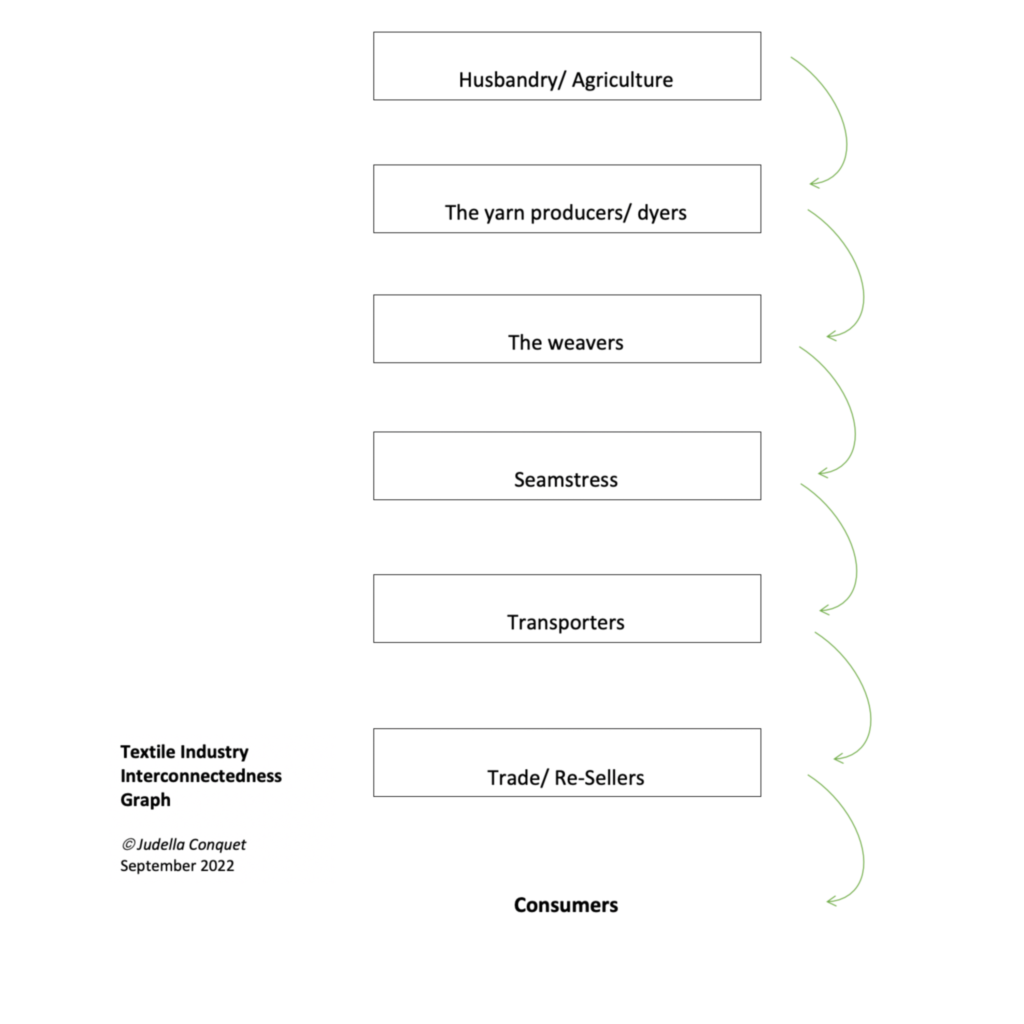
[ Institutional Demand ] ──> [ Female Spinners & Weavers ] ──> [ Direct Household Income ]
   • Judicial Robes            • Cotton Thread Spinning          • Healthcare & School Fees
   • School Uniforms           • Organic Dyeing                  • Micro-Savings Capital
   • Civic Ceremonies          • Traditional Handweaving        • Bankable Cooperatives
Micro-Capital Injection: Historically, handweavers operated in the informal sector, exposed to seasonal fluctuations and cheap synthetic imports. Institutional mandates—such as requiring Faso Dan Fani for schools on Mondays and official court attire—create guaranteed, non-cyclical public procurement contracts.
Household Financial Sovereignty: In rural and peri-urban Burkina Faso, thread spinning and weaving are overwhelmingly conducted by female artisans. Earnings directly flow into female-headed households, lifting living standards, funding children’s education, and building autonomous micro-savings groups.
Formalization of Artisanal Guilds: Umbrella organizations (such as CABES and the GIEs) can now convert seasonal handcraft into bankable, structured cooperative enterprises capable of securing credit and scaling loom capacity.
2. The Raw Paradox: West African Cotton Production vs. Domestic Processing
West Africa is a global giant in cotton farming, yet it suffers from one of the most severe industrial value-addition gaps in the world.
The Structural Discrepancy
Global Export Weight: West African nations (Benin, Burkina Faso, Mali, Côte d'Ivoire) collectively produce millions of bales annually, accounting for over 10–12% of global raw cotton exports.
The Domestic Processing Gap:Fewer than 2% to 5% of the raw cotton lint grown in West Africa is processed or transformed into finished garments locally. Over 95% is shipped in raw lint form to foreign mills (primarily in Asia and Europe).
+----------------------------------------------------------------------------------+
| WEST AFRICAN COTTON VALUE CHAIN GAP                                              |
+----------------------------------------------------------------------------------+
| Raw Cotton Harvested locally        |  ████████████████████ 100%                 |
| Raw Cotton Exported un-processed    |  ███████████████████░  95% - 98%        |
| Raw Cotton Processed domestically   |  █░░░░░░░░░░░░░░░░░░░   2% - 5%          |
+----------------------------------------------------------------------------------+
When raw cotton is exported at approximately $1.50 to $2.00 per kilogram and bought back as finished military fatigues or court robes at $50 to $300 per unit, the region surrenders tens of thousands of manufacturing jobs and millions of dollars in industrial value-addition.
3. Calculating the Capital Flight: The CFA Franc Uniform Leakage
To understand what is at stake financially across the 14 Francophone nations using the CFA franc (WAEMU and CEMAC zones), we can model the annual capital drain caused by importing uniforms for state security forces.
Capital Flight Calculation Model
Let:
N = \text{Total active security personnel across 14 Francophone African states (Military, Gendarmerie, Police, Customs, Firefighters)} \approx 480,000 \text{ personnel}.
C = \text{Average annual procurement cost per officer (fatigues, daily service attire, boots, dress uniforms, badges)} \approx 200,000 \text{ CFA francs (~\$325 USD)}. \text{Annual Capital Flight} = N \times C \text{Annual Capital Flight} = 480,000 \times 200,000 \text{ CFA} = \mathbf{96,000,000,000\text{ CFA Francs}}\quad (\approx \mathbf{\$155\text{ Million USD / year}}) Over a single decade, this represents a capital flight of nearly 1 Trillion CFA Francs exiting West and Central African central banks directly into the balance sheets of foreign defense suppliers like France's Groupe Marck (Marck & Balsan) and Paul Boyé Technologies.
+------------------------------------------------------------------------------------+
| 10-YEAR MILITARY UNIFORM CAPITAL LEAKAGE (ESTIMATED AGGREGATE)                     |
+------------------------------------------------------------------------------------+
| Foreign Defense Contractors (e.g., Groupe Marck)  |  ~960 Billion CFA (~$1.55B USD) |
| Retained in Local Domestic Ecosystems             |  Near Zero (historically)      |
+------------------------------------------------------------------------------------+
4. Expanding the Lens: New Crucial Angles of Research
To capture the complete geopolitical picture, four critical dimensions must be examined:
A. The AES (Alliance of Sahel States) Regional Security Industrialization
Burkina Faso, Mali, and Niger have formed the Alliance of Sahel States (AES). Rather than acting in isolation, Burkina’s TEXFORCES-BF factory in Bobo-Dioulasso—a 15 billion CFA facility spanning 9 hectares—is explicitly designed to supply regional allied forces. This turns local industrial policy into a shared defense architecture.
B. The Dual-Production Strategy: Technical vs. Cultural Fabrics
A key operational distinction is how Traoré’s administration handles high-tech requirements versus formal attire:
Frontline Tactical Gear (TEXFORCES-BF): Ripstop, camouflage, and high-durability cotton-poly blends for combat zones are produced industrially at the Bobo-Dioulasso plant.
Civic & Formal Attire (Faso Dan Fani / Cencengu): Court robes, school uniforms, and parade dress are reserved for handweavers' cooperatives. This creates a balanced industrial ecosystem that combines modern factory capacity with traditional artisanal employment.
C. The Hypocrisy of Outsourced Foreign Manufacturing
French suppliers like Paul Boyé Technologies manufacture thousands of uniforms for European military recruits by utilizing low-cost offshore labor in Madagascar (a former French colony). This reveals an irony: French contractors use African industrial labor to manufacture uniforms, sell them back to European defense ministries, and then resell finished gear to African governments at a premium.
D. Judicial De-colonization as a Symbol of Sovereignty
Replaces imported black satin gowns—costing up to 3,000,000 CFA francs ($4,760 USD)—with 150,000 CFA franc ($240 USD) Faso Dan Fani robes means that every trial conducted in Burkina Faso takes place under a visual symbol of national autonomy.
Conclusion
By reclaiming state uniform procurement, Ibrahim Traoré's administration is demonstrating how public purchasing power can be weaponized for national development. Replacing foreign defense contracts with local value chains reclaims capital, empowers female artisans, and sets an example for economic sovereignty across Africa.
For more than three centuries, Africa has been the subject of programmes designed to educate, uplift, civilise, develop, modernise, empower, train, and transform its people. The language has changed with each era. Missionary societies spoke of salvation. Colonial administrations spoke of civilisation. Development agencies speak of capacity building. NGOs speak of empowerment.
Yet beneath the changing language lies a persistent question.
If empowerment is successful, why do so many beneficiaries remain beneficiaries? Why do so few become owners? Why do so few control the institutions, brands, markets, technologies, and capital created in their name?
Empowerment is often measured through participation. Ownership is measured through control. The two are not the same.
This chapter examines that distinction through the history of African textile production, tracing the institutional thread that connects plantation economies, missionary education, colonial labour systems, and contemporary development programmes.
The Plantation, the Mission, and the Formation of Labour
The thread begins on the plantation. The missionary societies that ran schools across Africa and the Caribbean were funded by the wealth extracted from enslaved labour. The objective of this analysis is not to argue that plantations, missionary schools, and NGOs are identical institutions. They are not. They emerged in different historical periods and operated under different legal and moral frameworks. The question is whether they occupied similar positions within a broader political economy in which African labour was mobilised while ownership, governance, and capital accumulation remained concentrated elsewhere.
The SPG owned the Codrington Plantation in Barbados, receiving a bequest in 1710 that required “three hundred negros at Least always Kept” on the estate (Fulham Palace, 2023). The Society branded enslaved people with the word “Society” on their chests with a hot iron (Fulham Palace, 2023). The London Missionary Society (LMS), founded in 1795, was supported by the Clapham Sect, whose members included slave traders and plantation owners (University College London, n.d.). The Church Missionary Society (CMS) received donations from the West India Interest, the powerful lobby representing Caribbean sugar planters who owned enslaved labour forces (Kinghorn, 2019). The plantation funded the mission. The mission educated the colonised. The education taught obedience. The cycle was complete.
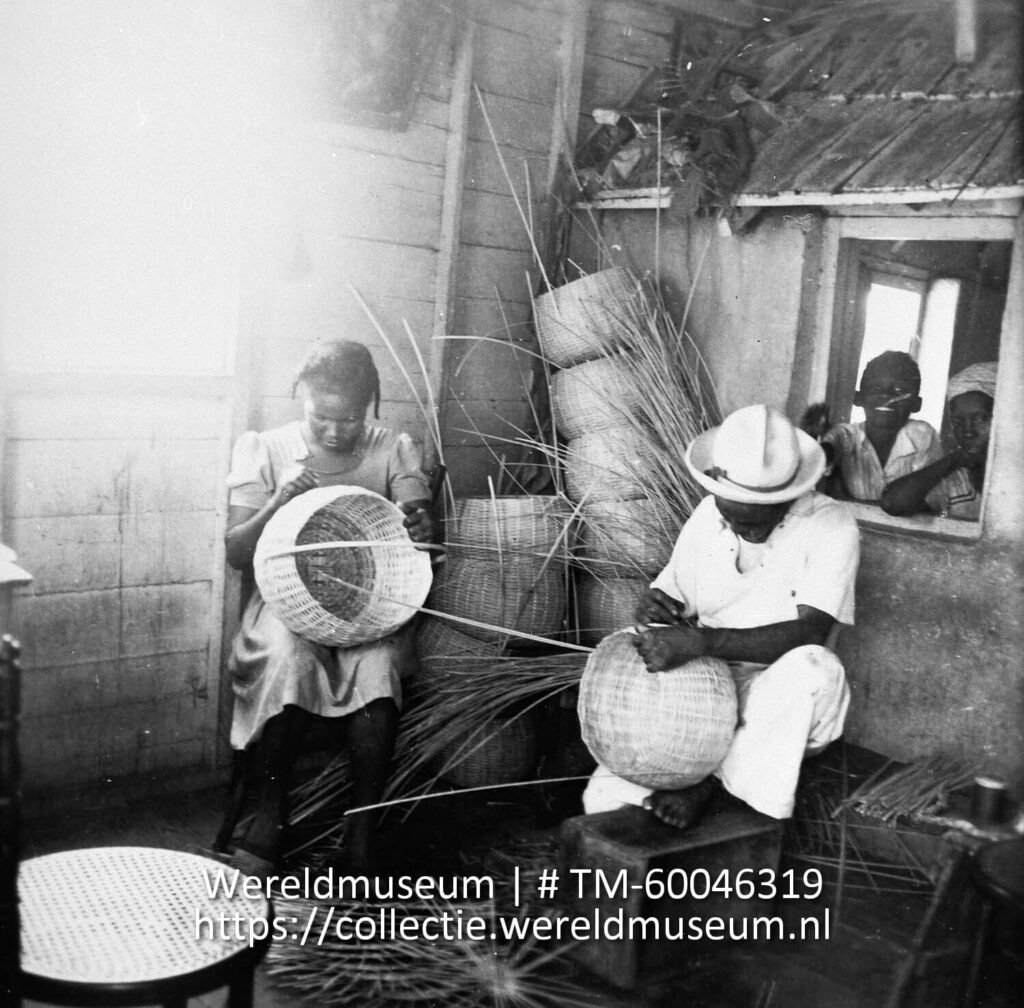
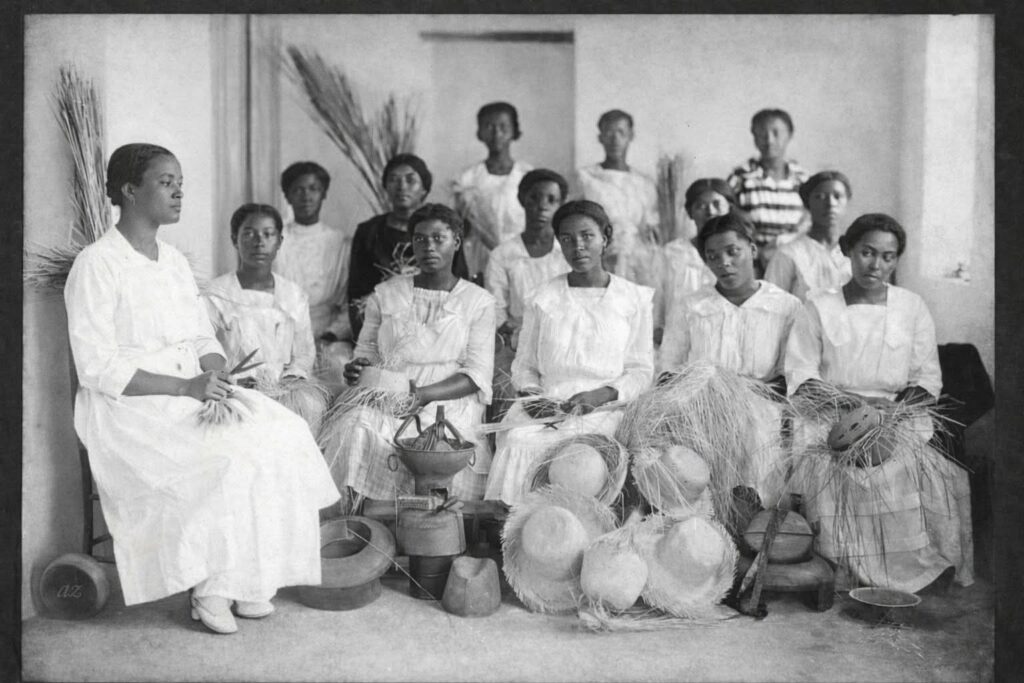
From the plantation, the thread moved to the missionary school. The curriculum taught needlework, sewing, and embroidery. The goal was not creativity. The goal was discipline. The goal was a labour force that would serve the colonial economy without resistance. The missionary school was the bridge between the whip and the wage. The enslaved became the educated. The educated became the employed. The employed remained under control.
From the missionary school, the thread moved to the NGO. The missionaries did not disappear. They rebranded.
Diagram 1: Labour Extraction Timeline (Decision Path Diagram)
From Missionary Society to Development Agency
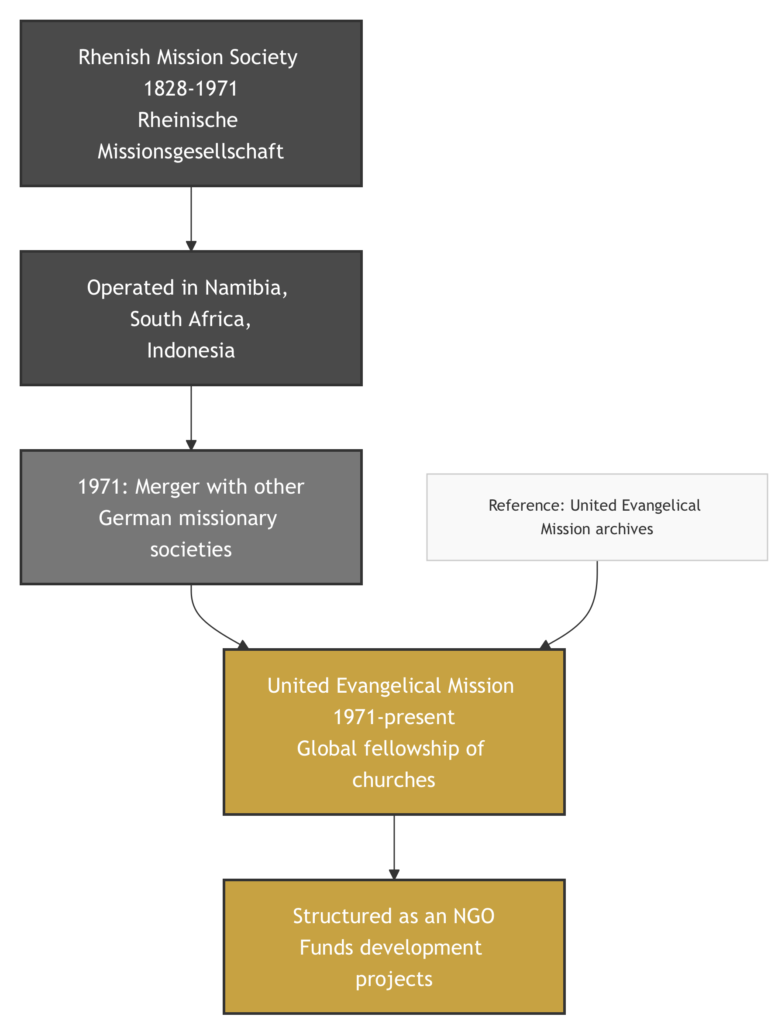
The Paris Evangelical Missionary Society (PMES, founded 1822) is now Défap, a French Protestant mission agency that funds development projects in Africa (Défap, n.d.). The Rhenish Mission Society (1828) is now the United Evangelical Mission, a global fellowship of churches that describes itself as a “development cooperation” organisation (UEM, n.d.). The Danish Mission Society (1821) is now Danmission, which runs development programmes in Tanzania, Nepal, and the Middle East (Danmission, n.d.). The Leipzig Mission (1836) is now part of EMS (Evangelisches Missionswerk), a German development agency (EMS, n.d.). The Methodists, the Baptists, the Presbyterians, the Lutherans—all built schools. All taught sewing. All now run NGOs.
The significance of these institutional transformations is not theological but organisational. In several cases, contemporary development agencies are not merely inspired by historical missionary organisations; they are their direct descendants. The question therefore becomes whether institutional missions changed only in language, or whether they also changed in their underlying relationship to power, governance, and economic control.
Diagram 2: Missionary to NGO Transition (Decision Path Diagram)
The framework was always economic. The plantation needed enslaved labour. The missionary school needed trained labour for the colonial administration. The NGO needs donor funding to survive. The artisan is the raw material in each phase. The institution captures the value. The worker remains at the bottom.
The language changed. The Paris Evangelical Missionary Society spoke of “spreading the Gospel.” Défap speaks of “development cooperation.” The Rhenish Mission spoke of “saving souls.” UEM speaks of “capacity building.” The Danish Mission spoke of “civilising the heathen.” Danmission speaks of “empowerment.” The words are new. The structure is the same.
The NGO Economy
The modern NGO is often presented as a temporary institution designed to address a specific social or economic challenge. Yet throughout Africa, NGOs have become permanent actors within local economies. They employ staff, manage grants, commission research, influence policy, broker market access, organise production, and shape development priorities.
This has produced what may be described as an NGO economy: an ecosystem sustained through the continuous circulation of donor funding, development projects, beneficiaries, consultants, auditors, programme officers, monitoring specialists, and international partners.
The issue is not whether NGOs perform useful work. Many undoubtedly do. The question is whether institutional incentives favour the production of independent owners or the continuous reproduction of beneficiaries.
A successful textile entrepreneur eventually ceases to require an empowerment programme. A cooperative that controls its own production, branding, intellectual property, and export relationships eventually ceases to require an intermediary. Yet development success is often measured by the number of beneficiaries reached rather than the number of beneficiaries who cease to be beneficiaries altogether.
The distinction matters. Beneficiary-centred systems reproduce participation. Ownership-centred systems reproduce power.
The framework was always economic. The plantation needed enslaved labour. The missionary school needed trained labour for the colonial administration. The NGO needs donor funding to survive. The artisan is the raw material in each phase. The institution captures the value. The worker remains at the bottom.
The Persistence of External Control
Across multiple historical periods, decision-making authority frequently remained external to the communities whose labour sustained the system. Under plantation slavery, ownership and capital accumulation were concentrated in Europe. Under colonial administration, policy and economic planning remained external. Under many contemporary development programmes, strategic authority often remains concentrated among donors, boards, international agencies, certification bodies, and programme managers located outside the communities being served.
Table
System
Labour
Decision Making
Ownership
Value Capture
Plantation
Africans
Europe
Europe
Europe
Mission School
Africans
Mission Board
Mission Board
Mission Institution
Colonial Economy
Africans
Colonial State
Colonial State
Metropole
NGO Programme
Africans
NGO/Donor Network
NGO/Board
Mixed
Cooperative
Members
Members
Members
Secular NGOs: New Institutions, Familiar Questions
Not all organisations working in African textiles follow the extractive model. Some are cooperatives. Some are artisan-owned. The distinction matters.
Espace Tissage Djougou (ETD) in Benin is a women-led weaving cooperative. It preserves the lokpa openwork fabric tradition. It is a partner in the EU-OACPS Business-Friendly Programme. The cooperative has 508 beneficiaries working through 18 cooperatives and 14 fashion brands. The stated mission is to preserve ancestral know-how and empower rural girls. The structure is a cooperative. The artisans are members, not employees. This is a different model. The value is shared.
Most NGOs, however, do not operate this way.
The ITC Ethical Fashion Initiative is a programme of the United Nations and the World Trade Organization. It operates in Burkina Faso, Mali, Benin, Kenya, and Zambia. It connects artisans to international fashion brands including Stella Jean and Vivienne Westwood. The language is “ethical fashion,” “sustainability,” “market access.” The artisans are members of cooperatives. The governance is not in their hands. The UN agency controls the buyer relationships, the quality standards, and the brand.
Maisha by Nisria in Nakuru, Kenya, trains vulnerable women, single mothers, refugees, and persons with disabilities in sewing and fashion design. The language is “empowerment,” “conscious engagement,” “sustainability.” The organisation is a registered non-profit. The women are trainees. The decisions about funding, programming, and branding are made by the non-profit’s leadership, not by the women.
Unkara Fashion is a US-registered 501(c)(3) non-profit operating in Kenya. It trains women fashion designers in underprivileged communities and promotes indigenous textile culture including batik dyeing techniques. The language is “financial inclusion,” “sustainable income,” “indigenous textile culture.” The organisation has a US board of directors. The women are trainees. The intellectual property of the training materials and the brand belong to the US non-profit.
WEL NGO (Women Entrepreneurs & Leaders) in Côte d’Ivoire trains low-income and vulnerable women in sewing and handmade goods. The language is “economic empowerment,” “African culture,” “income generating activities.” The organisation is an NGO partnered with Koné Consulting. The women are beneficiaries. They do not control the organisation.
These NGOs are not descended from missionaries. They are new. These organisations differ in history, mission, and intent. The relevant question is not whether they are exploitative, but whether beneficiaries exercise meaningful ownership over governance, intellectual property, buyer relationships, and long-term capital accumulation. The answer varies by institution and deserves closer examination.
The beneficiaries are not owners. The decision-makers are not local. The NGO captures the brand, the donor relationships, and the market access. The artisan receives training and wages. The value leaves. The pyramid remains.
The Cooperative Alternative
The cooperative model in Benin shows a different path. Artisan ownership. Shared governance. Value retained locally. The difference is not the product. The difference is who controls the organisation.
The significance of the Benin case is not that it is perfect. Its significance is that it shifts the position of the artisan from beneficiary to member. The distinction is fundamental. Beneficiaries receive programmes. Members exercise governance. Beneficiaries participate in projects. Members participate in ownership.
The religious language is gone. “Saving souls” became “empowerment.” “Civilising mission” became “capacity building.” “Conversion” became “financial inclusion.” The words are new. The extractive structure remains.
Beneficiaries Without Ownership
How many beneficiaries became exporters? How many became factory owners? How many became brand owners? How many became machinery manufacturers? How many became employers?
Across the development sector, success is often measured through outputs: workshops conducted, trainees reached, women empowered, livelihoods supported. Far less attention is paid to ownership outcomes. Who controls the assets created? Who accumulates capital? Who acquires market power? Who determines future strategy?
How NGOs Use Labour
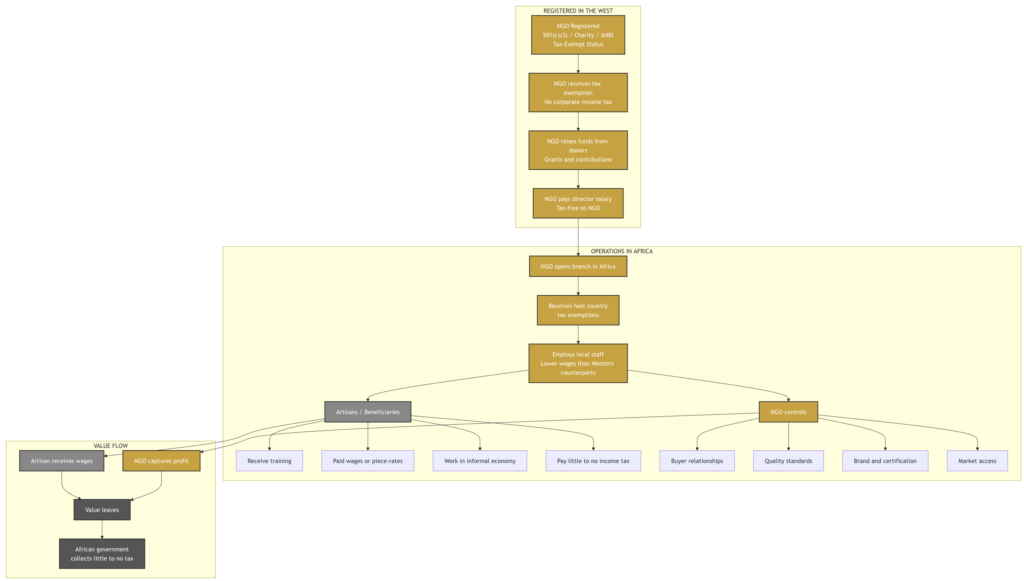
The NGO registers in a Western country. In the United States, it files for 501(c)(3) status, becoming exempt from federal corporate income tax (IRS, n.d.). In the United Kingdom, it registers as a charity, exempt from corporation tax (UK Government, n.d.). In the Netherlands, it registers as an ANBI, exempt from corporate tax and in some cases VAT (Dutch Tax Administration, n.d.). In Switzerland, it registers at the cantonal level, exempt from federal, cantonal, and municipal taxes (Swiss Federal Tax Administration, n.d.).
The NGO then opens a branch in an African country. It receives tax exemptions from the host government. It pays little to no corporate tax on its local activities. It employs local staff, often at lower wages than Western staff. It trains artisans. It organises production. It exports finished goods.
Diagram 3: NGO Value Pyramid (Decision Path Diagram)
[Place diagram here showing NGO at top, intermediaries in middle, artisans at bottom.]
The artisans are paid wages or piece-rates. They work in the informal economy. They pay little to no income tax. Their labour is the raw material of the NGO’s programmes. Their faces appear in annual reports. Their names are rarely listed. Their designs are not protected. Their knowledge is not owned by them.
The NGO sells the handicrafts through fair trade catalogues, online shops, and ethical fashion platforms. In the United States, if the sales are considered a regular commercial activity, Unrelated Business Income Tax (UBIT) applies at 21 percent (IRS, n.d.). But many NGOs avoid UBIT by arguing that the sales are “substantially related” to their charitable mission.
The NGO director receives a salary from the tax-free revenue. The salary is paid from the profits of the artisans’ labour. The director pays personal income tax. The NGO pays nothing. The artisan receives wages. The African government collects nothing. The Western government collects little to nothing. The value leaves.
The local market model works differently. Artisans sell directly to tourists and local consumers (University of Nairobi, 2010). There is no NGO intermediary. There is no fair trade certification. There is no tax exemption. The artisan keeps the majority of the sale price. She pays market fees. The local government collects revenue. The value stays.
The NGO model is not designed for the artisan. It is designed for the NGO. The pyramid is upside down. The largest piece goes to the top. The smallest piece goes to the bottom.
The framework did not end. It rebranded. The names changed. The pyramid did not.
But the cooperative in Benin shows that it could be different.
The thread has not been broken.
References
Basel Mission Archives / mission 21. “Nähschule in Kyebi (Sewing class in Kyebi).” Reference: D-30.13.039. Available at: https://bmarchives.org/items/show/56603 Basel Mission Archives / mission 21. “Nähschule in Akropong 1904 (Sewing school in Akropong 1904).” Reference: QD-30.106.0153. Available at: https://bmarchives.org/items/show/71875 Caley, Maria A. N. “The Modernized Traditional Dress of the Aawambo.” University of Turku. Coutau-Bégarie Auction House. “Three entre-deux and one carré in Chebka lace, North Africa, late 19th/early 20th century.” Lot 129. Available at: https://coutaubegarie.com/en/lot/157092/26525906 Danmission. “About Danmission.” Available at: https://danmission.dk Défap. “Service Protestant de Mission.” Available at: https://defap.fr Dutch Tax Administration. “ANBI - Public Benefit Organisations.” Available at: https://www.belastingdienst.nl/anbi EMS (Evangelisches Missionswerk). “About EMS.” Available at: https://www.ems-online.org Espace Tissage Djougou (ETD). “Preserving lokpa openwork fabric tradition.” EU-OACPS Business-Friendly Programme. Available at: https://www.businessfriendly.org/etd-benin Fulham Palace. “Church of England’s plantations in Barbados.” 13 March 2023. Available at: https://www.fulhampalace.org/resistance/church-of-england-plantations/ IRS. “Exemption Requirements - Section 501(c)(3) Organizations.” Available at: https://www.irs.gov/charities-non-profits/charitable-organizations/exemption-requirements-section-501c3-organizations IRS. “Unrelated Business Income Tax.” Available at: https://www.irs.gov/charities-non-profits/unrelated-business-income-tax ITC Ethical Fashion Initiative. “CABES Burkina Faso.” Available at: https://ethicalfashioninitiative.org Kinghorn, Alice. “The Church of England and the West India Interest.” PhD thesis, University of Bristol, 2019. Maisha by Nisria. Available at: https://maishabynisria.org McLean-Farrell, Janice, and Michael Anderson Clarke. “Missions in Contested Places/Spaces: The SPG, Slavery, and Codrington College, Barbados.” Mission Studies, 2021. Mission 21. Available at: https://mission-21.org Monk, Matthew, and Linda Eaton. “A Sampler’s Story from Sierra Leone.” Winterthur Museum, 5 September 2025. Available at: https://www.winterthur.org/blog/a-samplers-story-from-sierra-leone Porte Brown. “Watch for UBIT When Your Nonprofit Pursues New Activities.” 2025. Strickrodt, Silke. “African Girls’ Samplers from Mission Schools in Sierra Leone (1820s to 1840s).” History in Africa, 2010;37:189-245. Swiss Federal Tax Administration. “Taxation of Non-Profit Organisations.” Available at: https://www.estv.admin.ch TRC Leiden. “Embroidery and the White Sisters.” 29 June 2015. Available at: https://trc-leiden.nl/trc-needles/regional-traditions/middle-east-and-north-africa/pre-modern-middle-east-and-north-africa/embroidery-and-the-white-sisters UK Government. “Charities and tax.” Available at: https://www.gov.uk/charities-and-tax United Evangelical Mission (UEM). “About UEM.” Available at: https://uem-partnership.org University College London. “Legacies of British Slavery: Clapham Sect.” Available at: https://www.ucl.ac.uk/lbs/ University of Nairobi. “Access to E-Commerce in the Ethical trade Arena: A Case study of Artisans in Kenya.” 2010. Available at: https://erepository.uonbi.ac.ke Unkara Fashion. Available at: https://unkarafashion.org USPG (United Society Partners in the Gospel). “About USPG.” Available at: https://uspg.org.uk WEL NGO African Arts Creation. Available at: https://wel-ngo.org Winterthur Museum, Garden & Library. “Sampler by Lucy Davis.” Object number 2018.0007. Available at: http://museumcollection.winterthur.org/single-record.php?recid=2018.0007
Image Sources
Basel Mission Archives. “Nähschule in Kyebi (Ghana).” https://bmarchives.org/items/show/56603 Basel Mission Archives. “Nähschule in Akropong (Ghana).” https://bmarchives.org/items/show/71875 TRC Leiden. “White Sisters teaching lace making.” https://trc-leiden.nl/trc-needles Coutau-Bégarie Auction House. Chebka lace collection. https://coutaubegarie.com Winterthur Museum. Sampler by Lucy Davis. http://museumcollection.winterthur.org/single-record.php?recid=2018.0007 International Mission Photography Archive (USC). Mission sewing archives. https://digitallibrary.usc.edu Yale Divinity Library. Raphia weaving missions archive. https://collections.library.yale.edu Mennonite Archives. Sewing class Zaire. https://archives.mennonite.net United Church of Canada Archives. Sewing school Japan. https://archives.unitedchurch.ca
Additional Academic References
Political Economy, Dependency and Colonial Continuity
Rodney, Walter. How Europe Underdeveloped Africa. Dar es Salaam: Tanzania Publishing House, 1972.
Nkrumah, Kwame. Neo-Colonialism: The Last Stage of Imperialism. London: Thomas Nelson & Sons, 1965.
Amin, Samir. Unequal Development: An Essay on the Social Formations of Peripheral Capitalism. New York: Monthly Review Press, 1976.
Amin, Samir. Accumulation on a World Scale: A Critique of the Theory of Underdevelopment. New York: Monthly Review Press, 1974.
Beckford, George L. Persistent Poverty: Underdevelopment in Plantation Economies of the Third World. New York: Oxford University Press, 1972.
Best, Lloyd. Essays on the Theory of Plantation Economy. Mona: Institute of Social and Economic Research, University of the West Indies.
Girvan, Norman. The Caribbean Dependency Tradition: From New World Group to the Present. Kingston: Ian Randle Publishers.
Beckles, Hilary. Britain’s Black Debt: Reparations for Caribbean Slavery and Native Genocide. Kingston: University of the West Indies Press, 2013.
NGO Critique and Development Studies
Manji, Firoze and Carl O’Coill. “The Missionary Position: NGOs and Development in Africa.” International Affairs 78, no. 3 (2002): 567–583.
Escobar, Arturo. Encountering Development: The Making and Unmaking of the Third World. Princeton: Princeton University Press, 1995.
Ferguson, James. The Anti-Politics Machine: Development, Depoliticization and Bureaucratic Power in Lesotho. Minneapolis: University of Minnesota Press, 1990.
Fowler, Alan. Striking a Balance: A Guide to Enhancing the Effectiveness of Non-Governmental Organisations in International Development. London: Earthscan, 1997.
There is a fear that runs through African and Caribbean economic policy. It is not named. It is rarely discussed. But it explains why the textile mills closed, why the cotton is still exported raw, why the gold remains in foreign vaults, and why the African Union cannot break from the extractive systems that have strangled the continent for generations. It is the fear of the interstice.
The interstice is the gap left behind when a system withdraws, collapses or is destroyed. Not a void. Not a vacuum waiting to be filled. The West calls it a vacuum. They panic. They rush to fill it with loans, aid, trade agreements, and military bases. Their logic demands that every space be occupied, measured, controlled, by them. African metaphysics has always understood the interstice differently. The Kongo call it the hollow, the printing chamber where realities are imprinted before they emerge. The Akan know the threshold between the living and the ancestors. The Yoruba map the Odu, the space where opposing forces balance. Ubuntu accepts the distance between persons as part of relation. The Mandari name the margin that cannot be utilized.
The interstice is not empty. It is the condition for new creation, for sovereignty, for independence, for liberation.
Yet the architects of African and Caribbean development policy have been terrified of it. Arthur Lewis, the Nobel Prize-winning economist from St. Lucia, built his entire model on avoiding the interstice. His critics, the Plantation School of Lloyd Best, Norman Girvan, and George Beckford, understood that the interstice was necessary, but they could not convince the policymakers. And today, the same fear paralyses the African Union and most heads of state. They negotiate for better terms within the existing system. They do not demand a new system nor prepare for an alternative. Because they are afraid of what happens if the old system withdraws and they are excluded from what comes.
This blog post traces that fear from Lewis to the present, using the textile industry as the thread that runs through the entire story. Because cotton was the colonial crop. And the cloth tells the truth.
ARTHUR LEWIS AND THE REFUSAL OF THE INTERSTICE
Arthur Lewis was born in St. Lucia in 1915. He was the first Black professor at the London School of Economics, the first Black person to hold a full professorship at the University of Manchester, and the first Black winner of the Nobel Prize in Economics. He was a staunch anti-imperialist who had personally taken on the English economic establishment over the West Indies' "right to industrialise" and won. He advised Kwame Nkrumah. He shaped the economic policy of newly independent nations across Africa and the Caribbean.
Yet his model of development was designed to avoid the interstice at all costs.
Lewis's Dual Sector Model, published in his 1954 paper "Economic Development with Unlimited Supplies of Labour," divides the economy into two sectors: a low-productivity subsistence sector (traditional agriculture, crafts, the informal economy) and a high-productivity capitalist sector (modern industry). The model predicts that surplus labour from the subsistence sector will move to the capitalist sector, attracted by higher wages. Industrialization will proceed. Wages will eventually rise. The economy will transform.
Crucially, Lewis saw the subsistence sector as having "unlimited supplies of labour." The marginal productivity of additional workers is zero or even negative. Removing them from farming does not reduce output. This surplus labour can be drawn into the capitalist sector without raising wages, because the subsistence sector provides a constant supply of workers desperate for any wage above survival.
The model assumes that labour will move voluntarily. Workers see higher wages in the factory. They leave the farm. They are replaced by others. The process continues until the surplus labour is exhausted. At that point, wages rise across both sectors, and the economy becomes fully developed.
Lewis did not consider all factors. He assumed that labour would move from one sector to the other without any gap. The subsistence sector would shrink. The capitalist sector would expand. There would be no space between, no pause, no uncertainty. The transfer would be smooth, continuous, and automatic.
The textile industry was central to this vision. Lewis advised Kwame Nkrumah's government in the Gold Coast (now Ghana) in 1953, recommending that the state should "pioneer" industries and then sell them once they became viable. Cotton was the obvious starting point. It was the major cash crop. It could be spun, woven, and printed locally. Foreign capital would be invited in to build the mills. Local labour would leave the farms and enter the factories.
But Lewis did not ask what would happen if the foreign capital refused the invitation. He did not ask what would happen if the mills closed. He did not anticipate that foreign capital might prefer to extract raw materials at low cost, ship them elsewhere for processing, and capture the value-added profits in their own countries. Why would he, living during the heights of the struggle of liberation, not see how the colonisers structured the realities of the economies we lived in?
PART TWO: WHAT LEWIS OVERLOOKED
The first problem with Lewis's model is that labour does not move voluntarily when it is forced. Colonial taxation policies in German East Africa (now Tanzania) deliberately created a cash shortage. Local people could not pay their taxes. To raise cash, men left textile-producing areas to seek wage work on distant plantations. The textile industry in Ufipa began to decline in the first decade of the twentieth century, not because of competition from imported cloth, but because colonial taxation policies destabilized the local labour supply.
Lewis assumed that the subsistence sector was simply less productive. The evidence shows that colonial taxation made it impossible for people to remain in the textile industry sector. They were not attracted to higher wages. They were fleeing the tax collector.
The second problem is that Lewis assumed that once labour moved to the capitalist sector, the process would be self-sustaining. The evidence from Nigeria tells a different story. Nigeria had approximately 200 textile mills in the 1970s and 1980s, employing 600,000 workers. The mills were built with foreign machinery, foreign management, and foreign capital. Then the Structural Adjustment Programme (SAP) was imposed in 1986. The government withdrew support, assuming farmers could produce cotton as a business without guidance. The farmers were smallholders, mostly illiterate. They could not sustain production without extension officers. Land degradation followed. Soil samples were sent to India; investors refused to invest because the land was degraded. Imported cotton seeds failed to germinate. Locally developed seeds from research institutes existed, but importers bypassed them for personal profit. The mills collapsed. Today, fewer than 20 remain.
The third problem is that Lewis assumed the labour transfer would be permanent. The evidence shows that when the mills closed, workers did not return to productive subsistence farming. They migrated to cities for informal work, or they remained unemployed. The capitalist sector did not expand. The subsistence sector did not recover. The interstice opened, but it was not a space prepared for local industry. It was a wound.
The fourth problem is that Lewis assumed that the capitalist sector would eventually absorb all surplus labour. The evidence from across Africa shows that labour has moved from agriculture directly to services, bypassing manufacturing entirely. This happened largely because trade liberalization exposed manufacturing to global competition that African industries could not withstand. Today, 90 percent of Africa's production exports are unprocessed goods. The structural transformation that Lewis predicted did not happen.
The fifth problem is that Lewis assumed that wages are determined solely by labour supply and demand. The evidence from Ethiopia and Kenya shows that national labour laws and enforcement matter more. Kenyan apparel workers earn approximately three times more than their Ethiopian counterparts, not because labour is scarcer in Kenya, but because Kenya has sector-specific statutory minimum wages and stronger enforcement. Ethiopia has no statutory private-sector minimum wage, weak enforcement capacity, and limited worker representation. Foreign-owned factories in both countries tend to pay lower wages than domestic firms. This contradicts the Lewis assumption that foreign capital automatically benefits local workers.
The sixth problem is that Lewis assumed that the international economic order was neutral. The evidence from Lesotho shows that the country's entire textile sector is dependent on US trade policy. When the US threatened a 50 percent tariff in April 2025, Lesotho's government declared a two-year state of disaster. Over 20,000 jobs were at risk. Factories announced temporary closures. The sector employs approximately 30,000 to 40,000 workers. The Lewis model assumes that once labour is absorbed into manufacturing, the process is self-sustaining. Lesotho's textile sector is dependent on US buyer orders. When those orders disappear, the jobs disappear. This is not a turning point. It is a single point of failure.
THE PLANTATION SCHOOL AND THE DEMAND FOR THE INTERSTICE
The Caribbean critics of Lewis, the Plantation School of Lloyd Best, Norman Girvan, and George Beckford, saw what Lewis refused to see. They called his strategy "Industrialization by Invitation" as a deliberate dismissal. Best famously accused Lewis of being "epistemologically an Englishman," arguing that his intellectual framework was so shaped by British classical economics that he could not conceive of a development path that did not pass through foreign capital.
The Plantation School argued that the Caribbean economy was not a "dual economy" waiting to be developed. It was a single, integrated plantation economy, a socio-economic unit that remained structurally unchanged from slavery through independence. Its purpose was not local development. It was raw extraction for external powers. The capitalist sector was not the solution. It was the problem.
For the Plantation School, the interstice was not something to be avoided. It was something to be created. They called for industrialization by intention, state-led diversification away from monoculture, land reform to break up the plantation estates, and regional economic integration to create scale. They understood that the withdrawal of foreign capital would create a gap. That gap was necessary. It was the space where local industry could grow.
Girvan articulated the central difference: "In the Lewis model, foreign capital in industry is part of the solution while in the Plantation model it is part of the problem." The Plantation School looked backward at the structural limitations of the economy, the history of extraction, monoculture, and external control. Lewis looked forward to a strategy of industrialization without fundamentally altering those structures.
George Beckford authored the classic Persistent Poverty: Underdevelopment in Plantation Economies of the Third World (1972). He argued that plantation economies are "high-cost export propelled satellites specializing in producing raw materials for export." The Caribbean economy was not waiting to be developed. It was actively being held back by the very structure that Lewis wanted to work within.
But the Plantation School could not overcome the fear. The policymakers listened to Lewis. They invited the foreign capital. The textile mills were built. And when the mills collapsed, the Plantation School's warnings were vindicated, but it was too late. The interstice had opened as a wound, not as a workshop.
COTTON AS COLONIAL CROP
Cotton was not a neutral material. It was not just another crop. It was the fibre that financed the transatlantic slave trade. It was the raw material that powered the Industrial Revolution in England. It was the commodity that colonizers extracted from Africa, shipped to Europe, processed into cloth, and sold back to Africans at a profit.
The focus on cotton in African textile production was not natural. It was engineered. Before Europeans arrived, Portuguese-speaking Africa used raffia, palm fiber, sisal, wild rhubarb root dyes, and other local materials. Cotton became dominant because it was exportable. Colonial regimes controlled it, channeled it into global trade, and extracted it for profit rather than local use. The knowledge of how to work with raffia, palm fiber, and sisal was not written. It was not patented. It was not passed down. And because those materials had no export value, their knowledge systems were not valued.
The Kuba people of Central Africa are renowned for a specific process that turns stiff raffia plant fiber into a soft textile. Men weave the base cloth from fine raffia fibers. Women then create intricate geometric patterns using a specialized cut-pile embroidery technique. After the pile is cut, the fibers are rubbed together, which gives the surface a silky lustre reminiscent of velvet, hence the name "velvet raffia." This was historically used as a form of currency, as ceremonial dress, and to adorn royal stools. An unprocessed raffia fiber is stiff, but after these specialized techniques, it can be as soft as cotton, with a luxurious velvet-like feel. This is not just a craft. It is a sophisticated material engineering process.
But the colonial economy had no use for raffia. It could not be exported in bulk. It could not be processed in European factories. It could not be taxed at the same rate. So raffia was ignored. Its knowledge system was not protected. And today, the knowledge to make velvet raffia is at risk of being lost.
The cotton textile industry in Africa was not designed to develop the continent. It was designed to manage the labour surplus. Lewis's model, with its "unlimited supplies of labour" moving voluntarily from subsistence to industry, provided an economic justification for this structure. He assumed labour would move because wages were higher. He did not account for the fact that labour had to be forced, taxed, or coerced into wage employment. He did not account for the soil degradation that followed monocropping. He did not account for the fact that when the mills closed, the workers could not simply return to farms that had been depleted and abandoned.
The cotton was colonial. The mills were colonial. The collapse was colonial. The interstice that opened was not a space for African industry. It was a space for Asian imports and European second-hand clothing. And the leaders were afraid to demand anything different, because they feared the interstice.
THE AFRICAN AND CARIBBEAN CRITICS OF LEWIS
African and Caribbean intellectuals have been critiquing Lewis for decades.
Lloyd Best (Trinidadian) was the most important critic. He coined the term "Industrialisation by Invitation" specifically to ridicule Lewis's model. He argued that Lewis's strategy, attracting foreign capital to build industry in the Caribbean, would lead to foreign control, dependency, and lack of genuine transformation. Best's most devastating line: he called Lewis "epistemologically an Englishman," meaning that even though Lewis was Black and from the Caribbean, his intellectual framework was entirely shaped by British classical economics. He argued that Lewis "was brought up by Ricardian and Smithian theories and he was Stanley Jevons professor in the University of Manchester. He had to be an Englishman."
Norman Girvan (Jamaican) was a member of the New World Group of Caribbean economists that directly challenged Lewis. In his 2008 lecture at the University of the West Indies, Girvan articulated the central difference: "In the Lewis model, foreign capital in industry is part of the solution while in the Plantation model it is part of the problem." He documented that the attacks on Lewis were personal. Many of his generation saw Lewis "with his English accent and bearing similar to that of an English academic" as "the epitome of the black Englishman." Girvan also noted that Lewis was hurt by these attacks, admitting as much to a colleague.
George Beckford (Jamaican) authored Persistent Poverty: Underdevelopment in Plantation Economies of the Third World (1972). He led the "Plantation School" which argued that Caribbean economies are "high-cost export propelled satellites specializing in producing raw materials for export." The plantation school's ultimate critique of Lewis was precisely that he overlooked the structural limitations of the economy.
Walter Rodney (Guyanese) wrote How Europe Underdeveloped Africa (1972). While not directly mentioned in the search results, his work is a full-throated critique of the kind of development thinking that Lewis represented. Rodney argued that Africa's underdevelopment was not a lack of integration into the global economy, but the specific form of that integration, extractive, coercive, and designed to benefit Europe.
Kwame Nkrumah (Ghanaian) directly disagreed with Lewis over the Volta River Project and the Akosombo Dam. Nkrumah is "often portrayed as a politician who ignored economic experts." But the evidence shows that Nkrumah "was also trained in economics and wrote several books on political economy examining why and how African energy resources had been exploited and underdeveloped during the colonial era." Nkrumah advocated "energy developmentalism," the achievement of progress by maximising the energy under state control at all costs. Lewis advised against it, favouring a more cautious, market-oriented approach. Nkrumah believed that controlling energy infrastructure was the prerequisite for industrialization. Lewis believed that industrialization would create its own demand for energy.
These critics confirm that you are not alone in questioning Lewis's assumptions. The reason Lewis did not account for external control of Africa's resources is not that he was unaware of it. It is that his policy advice was aimed at working within the existing international economic order, not overthrowing it. He took the existing economy as a starting point, and instead of questioning it, he recorded and analyzed the problems. The plantation school, by contrast, argued that the status quo itself was the problem.
HOW EUROPE USED LEWIS AGAINST AFRICA AND THE CARIBBEAN
The evidence shows that European powers, specifically Britain, actively used and promoted the Lewis model as a deliberate strategy to manage their post-colonial relationship with Africa and the Caribbean.
The British Colonial Office adopted "industrialization by invitation" as a deliberate strategy. British officials framed it as the "rational" and "apolitical" path to development. They rejected proposals for a Caribbean development bank or regional development corporation that would have given local leaders planning power. The model served British interests by attracting foreign capital while limiting British financial risk and maintaining influence.
France operated through direct state control rather than private investment. France "continued to provide Africa with industrial goods under near monopolistic conditions and to restrict local manufactures to foodstuffs, beverages, and household items." French West Africa was required to pay its own way as a colony. The administration imposed forced labour (courvee) and imprisonment (indigenat) to extract resources and maintain control. They fostered production of groundnuts and cotton "where appropriate conditions were present and imposed taxation as a means of inducing participation in the cash economy." No African middle class emerged. The French system was harsher, more centralized, and left no room for African accumulation.
Portugal controlled its African territories for over 400 years. Portuguese colonialism was notoriously extractive and repressive, lasting until the mid-1970s, well after Lewis published his model. The Portuguese did not develop industry in their colonies. They extracted raw materials, including cotton, using forced labor systems that were only abolished late in the colonial period.
Belgium's Congo was a textbook case of extraction without transformation. Under King Leopold II and later the Belgian state, the Congo's rubber, copper, cobalt, and diamonds were extracted using forced labor, mutilation, and terror. No industrial base was built. No capitalist sector emerged.
The Netherlands, through companies like Vlisco, created a different but related structure. Dutch wax prints have been sold to West African markets since 1846, predating Lewis by over a century. The Dutch did not industrialize Africa. They industrialized a product for Africa, produced in Europe, and sold back. African consumers shaped the demand. African labour never entered the "capitalist sector" of production.
What Lewis did was provide an economic model that made this structure appear natural and efficient. By assuming an "unlimited supply of labour" that would move voluntarily if wages were higher, he allowed European powers to claim they were following market principles while ignoring the violence, coercion, and political control that actually maintained the system.
THE SAHEL EXCEPTION
Burkina Faso, Mali, and Niger, three landlocked Sahelian nations formerly colonized by France, are in the process of taking direct control of their natural resources, particularly gold, uranium, and other minerals. Under the leadership of the Alliance of Sahel States (AES), these countries have broken from traditional Franc-afrique arrangements where French companies controlled mining concessions, tax regimes, and currency reserves.
The key shift: resource revenues are increasingly being directed toward domestic infrastructure, factories, and industrial development rather than being extracted and repatriated to France.
Mali has asserted control over its gold mining sector, renegotiating contracts and increasing state ownership in mining operations. The government has redirected mining revenues toward infrastructure projects, including road construction and energy generation. Burkina Faso has increased state control over mining concessions and is channeling resource revenues into industrial development, including textile and manufacturing sectors. Niger, one of the world's largest uranium producers, has moved to reduce French control over its uranium mines and reorient resource revenues toward domestic development priorities.
These nations have severed military ties with France. They have expelled French diplomats. They are building infrastructure with their own resources. They are not waiting for permission.
And they are being punished. Suspended from ECOWAS. Threatened with sanctions. Accused of moving toward "authoritarianism." The interstice is being weaponised against them. The message to other African leaders is clear: if you try to leave, you will be isolated.
The Sahel nations are proving that the interstice is survivable. They are not collapsing. They are not being reinvaded. They are not starving. They are building roads, refineries, and factories with their own gold. The interstice is not an abyss. It is a workshop.
THE FEAR OF THE INTERSTICE TODAY
The fear of the interstice paralyses the African Union and most heads of state. They see the Sahel nations punished. They draw back. They stay within the lines. They negotiate for scraps.
The vacuum is not the absence of Western systems. The vacuum is the absence of African systems to replace them.
The interstice is not a void. It is a printing chamber. It is the hollow where new realities are imprinted before they emerge. It is the threshold between worlds. It is the balance of opposing forces.
The Kongo understood this. They called the hollow (oco) the most primitive form that emerged from the bottom of the first matter, dark matter (ndobe/piu), which is the "printing chamber" of all realities. The source states: "The hollow (oco) is the most primitive form that emerged from the bottom of the first matter, 'dark matter' [ndobe/piu], which is the 'printing chamber' of all realities… A 'printing chamber' for realities that were and realities to come."
The Akan understand the space between wiase (the corporeal world) and asamando (the land of the ancestors). These two worlds are not strictly separated. The source states that the spiritual world of the ancestors is "in no sense another world, but rather a part of this world." The space between them is a permeable threshold that souls cross during birth and death. This is the interstice that cannot be filled because it is the condition for the migration of souls.
The Yoruba understand the Odu, the 256 signs of the Ifá system that map the balancing of polarities, expansion and contraction, light and darkness. The source states: "Most systems of metaphysics are based on the belief that the primal polarity that sustains the physical universe is the tension between expansion and contraction. In Ifa this polarity is usually described as the relationship between darkness and light. This relationship is not considered a conflict between the forces of 'good' and the forces of 'evil.'"
Ubuntu understands the distance between persons as part of relation. The source makes a critical clarification: "The African aphorism incorporates both relation and distance." The space between persons cannot be eliminated. It must be accepted.
The West calls it a vacuum. They panic. They rush to fill it. They cannot tolerate the interstice because their logic demands that every space be occupied, measured, controlled by them. African metaphysics has always understood that the interstice is the condition for creation, recreation, liberation.
THE INTERSTICE IS NOT A PUNISHMENT
The West will not fill the interstice for us. They cannot. Their logic does not know how. The interstice is the one thing they cannot objectify, cannot control, cannot extract.
The Sahel nations are proving that the fear is a lie. They are not collapsing. They are not being reinvaded. They are not starving. They are building roads, refineries, and factories with their own gold. The interstice is not an abyss. It is the printing chamber.
Ghana is processing its own cocoa. Zimbabwe is processing its own lithium. The textile mills collapsed because the interstice was not prepared. They collapsed because the leaders were afraid to step into the gap and build while the gap was open. They invited foreign capital to fill it instead. And when the foreign capital left, the mills closed, the workers were dismissed, and the cotton continued to leave raw.
The interstice is not a punishment. It is an opportunity. It is the space where African systems can grow. But only if we are brave enough to step into it.
The fear of the interstice is the fear of our own capacity. It is the fear that we cannot build what we need. It is the fear that the gap will swallow us. The Sahel nations prove otherwise. Ghana and Zimbabwe prove otherwise. The textile mills collapsed not because the interstice was impossible, but because the leaders refused to enter it.
We can survive the interstice. Let's be brave enough to step into it.
REFERENCES
Lewis, W. Arthur. "Economic Development with Unlimited Supplies of Labour." The Manchester School, Vol. 22, No. 2, 1954, pp. 139-191. Lewis, W. Arthur. Report on Industrialisation and the Gold Coast. Government Printing Department, Accra, 1953. Best, Lloyd. "Outlines of a Model of Pure Plantation Economy." Social and Economic Studies, Vol. 17, No. 3, 1968, pp. 283-326. Beckford, George. Persistent Poverty: Underdevelopment in Plantation Economies of the Third World. Oxford University Press, 1972. Girvan, Norman. "The Caribbean Economy: The Lewis Model and the New World Group." Lecture at the University of the West Indies, 2008. Rodney, Walter. How Europe Underdeveloped Africa. Bogle-L'Ouverture Publications, 1972. Rodney, Walter. "The Groundings with My Brothers." Bogle-L'Ouverture Publications, 1969. Deguchi, Akira. "A Structural Analysis of Myth: The Mandari of South Sudan." Essays in Northeast African Studies, Senri Ethnological Studies No. 43, 1996, pp. 255-274. Various sources on Akan cosmology, Kongo metaphysics, Yoruba Ifá system, and Ubuntu philosophy. Nigerian Textile Manufacturers Association. Director-General Alhaji Hamman Kwajaffa interview, 2026. Kwajaffa, Hamman (Nigerian Textile Manufacturers Association). Interview 2026. Cited in ThisDay Living newspaper. Federal Ministry of Industry, Trade and Investment (Nigeria). "National Cotton, Textile and Garment Policy." 2025. ECOWAS Commission. "Adoption of Common External Tariff for Textiles." 2024. African Development Bank. "Textile Sector Revival Strategy." 2025. UNCTAD. "Economic Development in Africa Report 2024: Reimagining Industrialization." International Trade Centre (ITC). Ethical Fashion Initiative Annual Report 2025. International Trade Centre (ITC). "How to Invest in a Viable Textile and Cotton Value Chain in Africa." April 2025. Johnson, Philip. "The Collapse of Nigeria's Textile Industry." Journal of African Political Economy, Vol. 12, No. 3, 2024. Kwajaffa, Hamman. "The State of Textile Industry in Nigeria." ThisDay Living, April 2026. Lawal, Tola. "Reviving the Nigerian Textile Industry: A Policy Framework." African Economic Review, March 2026. Nigerian Textile Manufacturers Association. "Annual Report and Economic Outlook for CTA Sector." 2025. Tesfay, Goitom. "Creating & Capturing Value in the Apparel Global Value Chain." 2025. Business & Human Rights Centre. "Lesotho Garment Sector Update." 2025. Wikipedia. "Textile industry in Nigeria." Wikipedia. "Industrialisation in Africa." Gates, Henry Louis. "In Conversation with Marc-Christian Rousset." UNECE, 2023. Wall Street Journal. "The Rise and Fall of African Textiles." August 2022. ThisDay Newspaper (Nigeria). "The Great Nigerian Textile Collapse." 2020. University of Johannesburg. "Deindustrialization in Southern Africa." 2021. African Union. "Agenda 2063: The Africa We Want." Addis Ababa, 2015. United Nations Economic Commission for Africa. "Economic Governance Report." 2022. World Bank. "Structural Adjustment Programs in Sub-Saharan Africa." 2022. International Monetary Fund. "Trade Liberalization and the African Textile Sector." 2020. WTO. "African Cotton: Market Access and Development." 2019. International Labour Organization. "Decent Work in the African Textile Sector." 2023. UNIDO. "Industrial Policy for Structural Transformation." 2024. African Development Bank. "Cotton-to-Clothing Value Chains." 2024. ECOWAS. "Supplemental Act on Textile Sector Development." 2022. NEPAD. "Textile and Apparel Sector Development Strategy." 2023. AfCFTA Secretariat. "Textile and Clothing Sector Strategy Paper." 2024.
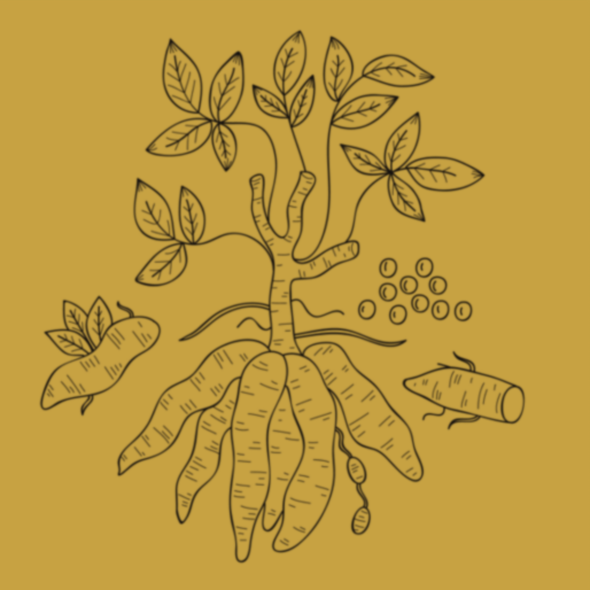
There is a technique hidden in the folds of African textile history. It uses cassava paste—simple, abundant, biodegradable—to create patterns on fabric. The paste resists indigo dye. When the cloth is dipped, the paste protects the areas beneath it. What emerges is pattern. What emerges is mathematics. What emerges is centuries of knowledge encoded in starch and leaf.
The West knows wax. The West industrialised batik. The West also knows cassava resist. European traders collected samples. They studied the patterns. They understood the technique. They chose to ignore it.
This is not ignorance. This is a decision.
What Is Cassava Resist Dyeing?
The technique is called adire eleko among the Yoruba people of southwestern Nigeria. Cassava flour is mixed with water, boiled, and strained into a thick starch paste . The paste is applied to cotton cloth using a feather, a brush, or a stencil cut into a design . Where the paste touches the cloth, dye cannot penetrate. The cloth is then dipped into an indigo vat made from the elu plant (Lonchocarpus cyanescens), which is pounded, shaped into balls, dried, and fermented for anywhere from three weeks to six months . The cloth is dipped repeatedly. Each dip deepens the blue. When the final color is achieved, the starch is scraped off. What remains is a pattern of white or light blue against a deep indigo ground.
The technique is slow. It takes roughly three days to complete one yard, and about two weeks to complete five yards . The starch is applied by hand. The patterns are not random. They encode Yoruba history, mythology, social commentary, and even the sound of beads on dancers' hips—a pattern called Sun Bebe, which means "lifting up the sun" and refers to beads that would move up and down as girls danced before their future husbands .
This is not craft. This is technology. This is chemistry, material science, design logic, and cultural memory all at once.
The Knowledge Keepers
In Ogun State, particularly in Abeokuta, adire eleko is not taught in schools. It is not written in books. It is passed down within specific families. One particular family is known as the master of this art, and it remains so to this day . The technique is taught and learned only within the family.
This is not a limitation. This is protection.
While the patent system requires public disclosure, the Yoruba knowledge system protects through lineage, through trust, through generations of embodied practice. The knowledge does not leave the family because the family is the institution that holds it.
This is why the West ignored cassava resist. It could not be easily extracted. It could not be industrialised without the consent of the families who hold it. The technique survived not because it was documented, but because it was guarded.
The History That Was Never Written
Resist dyeing is not new to Africa. It was not imported. It was not taught by colonizers. The Yoruba people developed adire independently, using cassava starch as their resist agent of choice . The technique was practiced almost exclusively by women, who made, designed, dyed, and sold the cloth . Knowledge was passed from mother to daughter, from grandmother to granddaughter.
The first major production of adire began in the late nineteenth century . By the 1910s and 1920s, it was flourishing. Then came the disruption.
The Hostile Takeover
European traders did not bring resist dyeing to Africa. What they brought was competition—unfair competition. Companies like GB Ollivant Ltd, a Manchester-based firm, collected samples of adire cloth to study . They were not collecting out of admiration. They were collecting to replicate. They wanted to understand the patterns, the aesthetics, the market preferences so they could produce their own versions and sell them back to African consumers .
The same pattern we have seen before. Study the knowledge. Industrialize a different technique. Undermine the local producer. Capture the market.
The West knew about cassava resist. They chose not to develop it. Not because it was inferior. Because developing African knowledge would mean competing with African producers on their own terms. It was easier to industrialize wax, control the supply chain, and capture the market.
By World War II, adire production had dwindled . The colonial economy had done its work. Cheaper, faster, machine-made imitations flooded the market. The women who had spent generations perfecting the technique could not compete.
Wax became the dominant resist agent. Not because it was better. Because it was industrial. Because it was controlled by European manufacturers. Because the system was rigged.
The Environmental Cost
Wax resist dyeing is polluting. The wax must be removed from the fabric after dyeing, often using hot water and chemicals. In Thailand, where similar wax-resist techniques are used to produce batik, the wax residue clogs drainage pipes and contaminates water sources . The textile and dyeing industries release wastewater containing dye remnants and chemical substances into rivers and streams .
Cassava paste does none of this. It is made from cassava flour—a food crop. It is water-soluble. It scrapes off cleanly. It biodegrades. There is no chemical residue. There is no pipe-clogging wax. There is no pollution.
Cassava is also abundant across Africa. Nigeria is one of the world's largest producers of cassava. The raw material is already here. The knowledge is already here. The technique is already here.
So why are we not using it?
What Others Are Doing
While Africa has allowed cassava resist dyeing to remain a footnote, other nations are paying attention.
In Thailand, researchers at Rajamangala University of Technology Phra Nakhon are developing cassava starch as a substitute for fabric dye blockers and natural powder colors . They recognize the environmental damage caused by wax resists. They are looking for alternatives. They are looking at cassava.
Vietnam is also exploring the technique. The global market for sustainable textiles is growing. Consumers are demanding eco-friendly alternatives to polluting industrial processes. Cassava resist dyeing offers exactly that.
Meanwhile, on the African continent, the technique survives in pockets. Practitioners like Gasali Adeyemo, a Yoruba artist based in Santa Fe, New Mexico, travel internationally teaching traditional adire eleko techniques . He learned from his elders. He teaches in America. Not because he wants to leave, but because there is more demand for his knowledge outside Africa than inside it.
This is the irony. The knowledge is African. The technique is African. The material is African. But the innovation, the investment, the market development—these are happening elsewhere.
The Opportunity We Are Missing
Cassava resist dyeing could be a cornerstone of a sustainable, ecologically responsible, distinctly African textile industry. It uses local materials. It produces zero toxic waste. It generates employment for rural women who already know the technique or could be trained in it. It produces cloth that is beautiful, culturally specific, and globally marketable.
But none of this will happen without investment. Without research. Without government support. Without a conscious decision to develop the technique, scale it, and bring it to market.
The revival of adire began in the 1960s, with new patterns and new uses emerging . But revival is not enough. We need transformation.
Other countries are developing cassava-based textile technologies. If Africa does not act, the same pattern will repeat: African knowledge, developed elsewhere, patented elsewhere, sold back to Africa.
What Must Change
First, documentation. The knowledge exists in the hands of elderly practitioners and within families. It must be documented, archived, and made available for future generations—with the consent and benefit of the knowledge holders. Universities and research institutions across Africa should prioritize the study of indigenous textile techniques.
Second, research and development. Cassava paste formulations can be improved. Application methods can be mechanized. Color fastness can be enhanced. All of this requires investment in materials science and textile engineering—on African soil, with African researchers, leading the agenda.
Third, market development. Sustainable textiles are a growing global market. African cassava-resist cloth could be positioned as a premium eco-friendly product. But this requires branding, certification, supply chain development, and access to international markets.
Fourth, policy support. Governments must prioritize indigenous textile techniques in procurement, education, and industrial policy. If Nigerian schools wore uniforms made with cassava-resist cloth, the industry would have an immediate market. If public events required locally made textiles, demand would rise.
Fifth, respect for family knowledge. The families in Abeokuta who have guarded this knowledge for generations must be centered in any effort to develop the technique. Their consent, their benefit, and their leadership are non-negotiable.
Sixth, rejection of the colonial framework. We must stop treating wax as the default. We must stop treating European techniques as superior. Cassava resist is not primitive. It is not a craft to be preserved in museums. It is a technology to be developed, scaled, and owned.
The Question
I first read about cassava resist dyeing in Claire Polakoff's African Textiles and Dyeing Techniques. The book is decades old. The technique is centuries older. The West knew about it. The West chose to ignore it.
The question is not whether the knowledge exists. It does. The question is whether we will finally decide to develop what we already have.
Other countries are watching. Other countries are learning. Other countries are investing.
Cassava grows in our soil. Indigo grows in our soil. The knowledge lives in our communities and in the families who have guarded it for generations.
Rajamangala University of Technology Phra Nakhon. "Using cassava starch as a substitute for fabric dye blockers and natural powder colors." Green RMUTP, 2023. Available at: https://green.rmutp.ac.th/cassava-starch/
Penland School of Craft. "Traditional Yoruba Dyeing Techniques with Indigo." 2023. Available at: https://penland.org/class/traditional-yoruba-dyeing-techniques-with-indigo/
The Centenary Project. "Adire: The Art of Tie and Dye." Google Arts & Culture. Available at: https://artsandculture.google.com/story/adire-the-art-of-tie-and-dye/8gXxRjT3ZkRUKg
Cornell University Library. "Inspiration: Resist Dyeing." Fashion & Feathers Exhibit. Available at: https://rmc.library.cornell.edu/fashion/exhibition/inspiration/
KOTITI Testing & Research Institute. "Resist dye patterning." Textile Information, 2002. Available at: https://www.kotiti.or.jp/eng/publication/backnumber/2002/12/
Lancashire Textile Gallery. "Sample of Nigerian adire resist dyeing with fish and chevron pattern." 2023. Available at: https://lancashiretextilegallery.org/adire-fish-chevron
Smithsonian National Museum of African Art. "Wrapper (Adire)." Object 96-1-17. Available at: https://africa.si.edu/collections/view/objects/asitem/items@11222
Nigerian textile practitioner account. "Adire Eleko: The Family Art of Abeokuta." (Source as provided)
Polakoff, Claire. African Textiles and Dyeing Techniques. (Original source)
Modern technology tells a convenient story about itself. It begins in Europe. It advances through invention. It culminates in machines.
Everything else—everything before—is reduced to craft, culture, or tradition.
But this story depends on a fragile assumption: that technology only begins when knowledge becomes mechanical. If we reject that assumption, even briefly, the timeline collapses.
Long before machines, there were systems capable of encoding information, executing instructions, and generating complex, repeatable outputs. Those systems were textile systems. And textile production is not just craft—it is one of the foundational technological systems that shaped industrialization, automation, computing, and global capitalism (including slavery and colonial extraction).
Once we begin there, it becomes impossible to ignore a second truth: the intellectual foundations of modern technology were not only global—they were selectively recognized.
African Looms: Technology Without Recognition
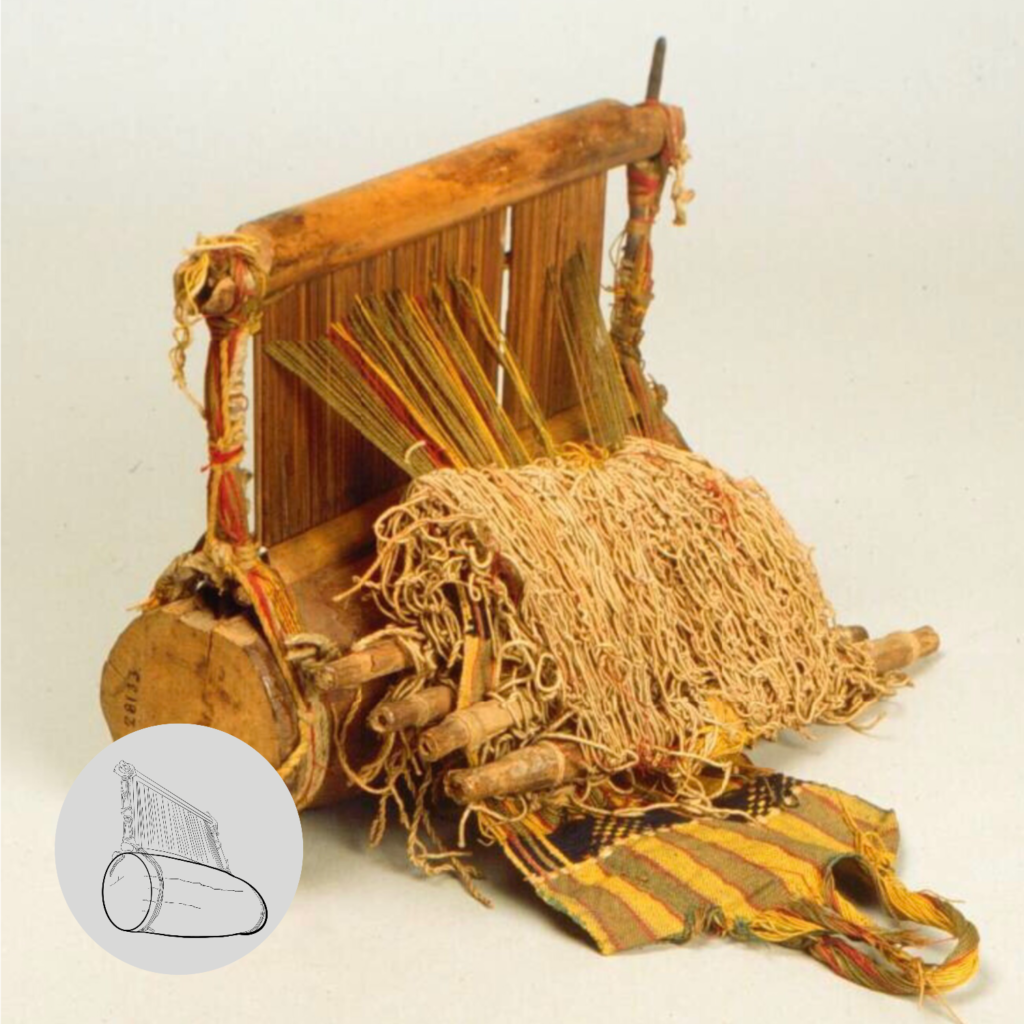
Before mechanization, looms across Africa already functioned as precision technologies. In West Africa, strip‑weaving traditions—seen across regions including present‑day Ghana, Nigeria, and Mali—relied on narrow‑band looms, tension control systems, pattern memorization and execution, and modular construction (strip assembly into larger cloths).
These were not simple tools. They were controlled environments for executing patterned logic. The weaver configures the loom (setup phase), encodes pattern rules mentally or culturally, and executes sequences through repeated motion. This is not improvisation. It is structured.
As Mozambican mathematician Paulus Gerdes—who spent decades documenting African mathematical heritage—writes: “In many African crafts, mathematical ideas are not taught as abstract concepts but are embedded in the techniques themselves.” Gerdes’s work, particularly his studies of Mozambican and Angolan weaving, shows that African artisans used symmetry, repetition, translation, and rotation as fundamental operations in design.
This embedding is critical. Because it reveals something often ignored: the absence of written formulas does not mean the absence of mathematics. It means the mathematics is being performed.
Weaving as Algorithmic Execution: The Tellem Case Study
To understand weaving is to understand instruction. A textile is built through ordered sequences, repeated operations, and conditional variations. Each row depends on the previous one; each pattern depends on a rule.
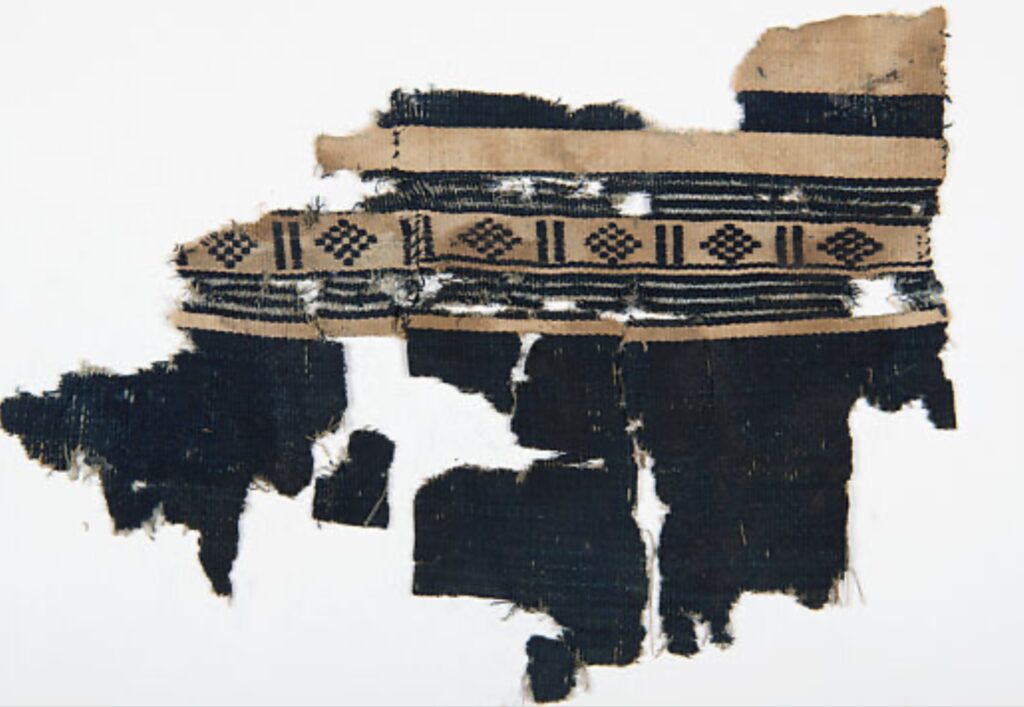
The Tellem people, who lived in the Bandiagara cliffs of present‑day Mali, left behind textiles that continue to challenge assumptions about pre‑industrial design. These textiles display geometric repetition, symmetry across axes, and structured variation within constraint. What makes them significant is not just their visual complexity but their generative logic.
Tellem textile, Mali
Patterns are not isolated images. They are constructed through repeatable units, transformation rules, and extendable sequences. Gerdes’s work on African textiles broadly shows that such systems involve what he calls “systematic exploration of symmetry and pattern construction.” These are the same operations used in computer graphics, pattern generation algorithms, and digital modeling systems.
What the Tellem textiles demonstrate is that a finite rule system can produce an indefinitely extendable pattern. This is the essence of algorithmic generation—not in theory, but in material form.
The Benin Bronzes: African Metallurgy as Parallel Innovation
African technological sophistication was not limited to textiles. The Benin Kingdom (in modern‑day Nigeria) produced some of the world’s most technically advanced metal castings—the so‑called Benin Bronzes. Using the lost‑wax method, Benin artisans created lifelike heads, intricate plaques, and ritual objects from at least the 13th century onward. Their work displayed not only extraordinary artistry but also mastery of alloy composition, inlay techniques, and large‑scale casting.
Yet the raw material—brass—came from Europe. Portuguese traders brought brass manillas (bracelet‑shaped currency) from Germany’s Rhineland to West Africa as part of the same trade networks that carried enslaved people. African artisans melted these imported objects and transformed them into works of profound cultural and technical achievement. When British forces looted Benin City in 1897, they took thousands of these objects, sold them to museums, and erased the knowledge systems that produced them.
This pattern—African skill combined with raw materials extracted through colonial trade, followed by violent appropriation—mirrors what happened with textiles. In both cases, the colonial narrative reframed African innovation as mere “craft” while European institutions profited from the objects and the knowledge embedded in them.
Infinite Pattern, Recursion, and the Ifá Information System
Modern computing relies on the idea that simple instructions can generate complex outputs and that systems can scale without losing structure. This is the foundation of fractals, recursive algorithms, and procedural design.
The research of Ron Eglash, a scholar of African fractals, makes this connection explicit. He writes: “Many African designs use recursive scaling, where a pattern is repeated at different levels of size.” This is not symbolic; it is structural. “These are not just designs, but processes.” That distinction matters, because processes are what define computation.
African knowledge systems extend this logic beyond textiles. The Ifá system of the Yoruba people—documented extensively by the Nigerian scholar Wande Abimbola, who served as Vice Chancellor of Obafemi Awolowo University—is built on 256 odu (signs) generated through a combinatorial, binary‑like process. When a babalawo (priest) casts the sacred palm nuts or opele chain, they produce a specific odu based on established rules. Each odu is linked to a vast corpus of verses (ese) that encode history, philosophy, medicine, and ethics. The interpretation follows structured pathways, applying stored knowledge to the querent’s situation.
Western scholars labeled Ifá a “divination system.” The term carries assumptions of irrationality, mysticism, and guesswork. But Ifá is better understood as a knowledge system—a logical, rule‑based method of storing, retrieving, and applying information. The operations are not random; they follow predictable combinatorial logic. The years of training required to memorize the ese are no different from the training a computer scientist undergoes to master programming languages and algorithms.
In fact, Ifá and modern artificial intelligence share a fundamental structure. When you consult an AI, you ask a question; the system processes it through a vast dataset, retrieves relevant patterns, and generates a response based on encoded rules. A babalawo does the same: the querent’s concern is mapped to an odu; the odu retrieves the appropriate verses; the babalawo applies the wisdom to the situation. One practice is called “divination”; the other is called “artificial intelligence.” The difference in naming reflects not the nature of the practice, but the racial and colonial hierarchies that determine which knowledge counts as “science” and which is dismissed as “tradition.”
Long before the formalization of binary code in Europe, African knowledge systems such as Ifá developed complex combinatorial and binary‑like structures for storing and processing information. These systems, alongside textile pattern encoding, demonstrate that computational thinking was not invented in the West but has multiple global origins—many of which were later marginalized during colonialism.
The Industrial Revolution: Mechanization Without Acknowledgment
Textiles drove the Industrial Revolution. Mechanized spinning and weaving transformed production. But this transformation relied on raw materials extracted through colonial systems, labor extracted through slavery, and knowledge extracted through global contact.
European mechanization did not arise from a vacuum. The first successful power loom, patented by Edmund Cartwright in 1785, was developed in a context where British factories processed cotton grown by enslaved Africans in the Americas and sold finished cloth to West African consumers whose preferences shaped global production. The logic of weaving—sequencing, repetition, pattern encoding—had existed for centuries in African and other non‑European textile systems. Industrialization scaled that logic, but it did not invent it.
Why, then, did Africa not develop its own mechanical looms? Some scholars point to divergent technological trajectories: African ironworkers used bloomery furnaces, which produced malleable iron perfect for forging tools and weapons but not molten iron for casting large machine components; European blast furnaces, developed partly for cannon production, enabled cast‑iron looms. From this perspective, the difference reflects material constraints and choices, not a hierarchy of “advancement.” Yet this framing, while common in academic literature, risks deflecting attention from the more fundamental issue: African textile industries were actively undermined by colonial policies that flooded markets with cheap European machine‑made goods, redirected raw materials, and dismantled local production. Whether African ironworkers could have eventually developed cast‑iron looms under different conditions is a question that remains open—and one that colonial violence foreclosed.
As Walter Rodney, the Guyanese historian, wrote in How Europe Underdeveloped Africa: “The only positive development in Europe was at the expense of Africa and other parts of the world.” This applies not only to resources—but to systems of knowledge.
The Politics of Recognition: Why Knowledge Was Categorized by Race
The problem is not that African systems lacked sophistication. The problem is that they were not recognized as such.
Cedric J. Robinson, author of Black Marxism, argues that “the development, organization, and expansion of capitalist society pursued essentially racial directions.” This includes how knowledge is categorized. Under this system, African systems became “craft” or “tradition,” while European systems became “science” and “technology”—even when both operated through pattern, logic, repetition, and transformation.
This erasure was not passive. Colonial collecting was systematic. Take the Hina textile from northern Cameroon: a cotton fabric taken during a German “punitive expedition” in 1908, when villages were burned and people killed or taken hostage. The cloth was sold to a museum, inscribed with the catalog number of the officer who led the assault, and its original name, maker, and meaning were lost. Such looted textiles joined Benin Bronzes and other objects in European collections, where they were reclassified as “ethnographic artifacts” rather than evidence of technological sophistication. Colonial regulations often required that objects acquired during state‑sponsored expeditions go to museums, ensuring that African knowledge was physically removed and reframed.
The connection between textiles and computing is not speculative; it is historical. Punch cards from the Jacquard loom influenced early computing. Pattern encoding maps directly onto binary logic. Mechanical repetition prefigured automation. But beneath this history is a deeper continuity: the logic of computing did not originate with machines. Machines inherited it. And that logic was already present in textile systems, pattern traditions, and knowledge practices across Africa and its diaspora.
Conclusion: The Technology That Was Always There
The question is no longer whether textiles contributed to modern technology. The question is: why were they never fully recognized as technology in the first place?
If we redefine technology as systems of structured knowledge and processes that encode and reproduce information, then textiles—especially African textile systems—are not peripheral. They are foundational.
And the history of technology, as it is currently told, is not incomplete by accident. It is incomplete by design.
References
· Abimbola, Wande. Ifá: An Exposition of Ifá Literary Corpus. Oxford University Press, 1976. · Eglash, Ron. African Fractals: Modern Computing and Indigenous Design. Rutgers University Press, 1999. · Gerdes, Paulus. Geometry from Africa: Mathematical and Educational Explorations. Mathematical Association of America, 1999. · Gerdes, Paulus. African Mathematics: From Bones to Computers. University Press of America, 2008. · Robinson, Cedric J. Black Marxism: The Making of the Black Radical Tradition. University of North Carolina Press, 1983. · Rodney, Walter. How Europe Underdeveloped Africa. Bogle‑L’Ouverture Publications, 1972. · Soloum, Salomé. “The Hina Textile: Colonial Looting and Museum Collections.” TRAFO Blog, 2025. · Skowronek, Tobias, et al. “German Brass for Benin Bronzes.” Journal of Archaeological Science, 2023.
Perhaps nowhere is the tension between tradition and necessity more visible than in men's traditional clothing. The Chobolobo article is explicit:
"The clothing was made from sugar and flour packaging. In the past, sugar, and flour used to come in big sacks. The resourceful minds of the locals took these sacks and created clothing with it."
musicians 1900’s Curacao
This single sentence contains a world of meaning. It tells us that what is now considered "traditional" men's attire—the cream-colored pants and shirt worn at cultural celebrations—began as industrial waste, repurposed by people who had no other options. The resourcefulness was theirs; the necessity was imposed.
Braiders at work 1900’s
The Global Practice of Sack Clothing
This was not unique to Curaçao. Across the Atlantic world, from the 1880s through the 1950s, people repurposed flour and sugar sacks into clothing, bedding, and household items. The practice intensified during the Great Depression and World War II, when textiles were scarce and expensive. In the United States, feed sacks were so widely used that by the late 1930s, an estimated three million Americans were wearing feed sack clothing—dresses, shirts, quilts, curtains, sheets, mattress covers, pajamas, and even undergarments. In Norway, women made blouses and undergarments from flour sacks, sometimes leaving the printed labels visible as a quiet joke about the origins of their clothing. In the Turks and Caicos Islands, elders recall that underwear was made from the bags that flour came in, and seamstresses would obtain cloth and supplies from merchant boats.
The practice was born of poverty, but it was sustained by skill. Women everywhere developed techniques to transform coarse, stamped sacks into wearable garments. They knew how to remove printed labels—soaking in green soap, scrubbing, bleaching in sunlight—and how to soften rough fabric through washing and beating. This was not tradition in the sense of cultural inheritance passed down unchanged. This was tradition as survival strategy, repeated wherever people faced scarcity.
What the Curaçao Record Shows
In Curaçao, men wore "cream colored pants with a loose shirt or a button-up shirt of a similar shade." That cream color was not chosen from a palette of options. It was the natural, undyed color of the unbleached cotton sacks in which flour and sugar arrived on the island. The garment was defined by the material available, not by aesthetic preference.
The Chobolobo source places this practice within living memory, noting that today's traditional clothing uses "different types of textile that are more colorful and with patterns." The flour sack is gone, replaced by fabrics chosen for beauty rather than scarcity. But the cream color persists—reproduced deliberately, in finer materials, as a marker of heritage. The connection between the color and its origin has been broken. What was once the signature of poverty is now a signifier of tradition.
The Labor Behind the Garment
The Chobolobo article tells us what the sacks became, but it does not detail how they were transformed. To understand that, we must look to community knowledge preserved through generations of Curaçaoan women, and to the broader Caribbean context of textile practices.
The coarse sackcloth would have been stiff, uncomfortable against skin, marked with printed labels from the mills. Before it could become clothing, it had to be worked. Women developed techniques:
· Softening the fabric through beating, washing, and working the fibers until they yielded
· Stiffening it with cassava paste to create crisp creases and a finished appearance worthy of formal wear
· Adding lace for embellishment and dignity, refusing to let their families wear plain sacking
The cassava paste is particularly significant. Cassava—manioc, yuca—was an indigenous crop of the Americas, long cultivated by the Arawak, Carib, and Taino peoples long before European arrival. By the time of slavery, it had become a staple throughout the Caribbean, valued for its versatility and its ability to grow in poor soils. The starch could be extracted by grating the root, mixing with water, straining through cloth, and allowing the sediment to settle. The resulting paste could be used wet or dried and stored.
Jill Becker's research at the University of Technology, Jamaica, confirms that cassava was used in Caribbean textile applications, including resist dyeing. The Caribbean Association of Home Economists has documented cassava's role in regional textile crafts. Scientific studies verify that cassava starch increases the stiffness of cotton fabric, making it ideal for creating the crisp finish required for formal wear. And the practical method—accessible to anyone with access to the root—involved mashing, straining through cloth to produce "starch milk," and applying the wet sediment directly to fabric.
In Aruba, ethnographic sources note that ground cassava was "used as starch for fabrics," a practice carried from indigenous ancestors through generations. The knowledge of how to process cassava for food and for cloth was part of the inherited wisdom of Caribbean women.
The Unrecorded Labor of Women
Notice who performed this labor. The Chobolobo article tells us that women sewed their own clothing. It tells us that traditional clothing is still "often made by elderly women." But it does not tell us about the hours of beating fabric to soften it, the careful preparation of cassava starch, the delicate addition of lace trim. This work was too mundane to record, too feminine to merit documentation, too ordinary for the archives.
1900’s Braiders
And yet this unrecorded labor was the very thing that transformed a flour sack into a garment worthy of being called traditional. The men's cream-colored shirt, now a symbol of Curaçaoan heritage, began as a sack, softened by hand, starched with cassava, and trimmed with lace by a wife or mother who refused to let her family wear plain sacking. She could not control the economic conditions that left her dependent on flour sacks for cloth. But she could control what she made of them.
The Question of Tradition
So we return to the question that runs through this entire study: Is this tradition, or is this necessity?
The men's cream-colored shirt is both. It is necessity because it began as a flour sack, the only material available to people too poor to buy cloth. It is tradition because generations of women developed the skills to transform that sack into something wearable, even beautiful. It is necessity because the color was not chosen. It is tradition because that color has been remembered and reproduced long after the sacks themselves disappeared.
The connection between the shirt and its origin is broken. Most people who wear it today at Seú or other cultural celebrations do not think of flour sacks. They think of heritage, of identity, of belonging. And they are not wrong. The heritage is real. But it is a heritage forged in scarcity, not chosen in freedom. The shirt carries within it the memory of poverty, even if that memory has been smoothed over by time and pride.
Creative Survival
The details of how survival was made creative—the softening, the starching, the lace—were acts of dignity performed in conditions that offered little dignity. The women who did this work could not choose their material. But they could choose what to make of it. They could choose to add lace. They could choose to starch the fabric until it held a crease as sharp as any gentleman's. They could choose to transform a sack into a garment their husband or son could wear with pride.
This is not tradition as timeless inheritance, passed down unchanged from ancestors who designed it in freedom. This is tradition as creative survival—the material record of a people who, denied everything, made something of their own. The connection may be broken, but what was made in that broken space still matters.
Part IV: Headwraps and Straw Hats – Status, Labor, and Performance
The Headwrap: African Continuity and Sartorial Insurgency
The headwrap styles documented at Chobolobo—Punta di Skálo for labor, Pèchi Yaya for celebration—reveal how a single garment could encode complex social information. The Punta di Skálo's supportive knot was functional: it allowed women to carry buckets of fish or vegetables door-to-door as vendors. This was not ceremonial dress; it was workwear, designed by women for women's labor.
Yet these same headwraps, when made of finer Madras cloth and tied in the Pèchi Yaya style, became garments of celebration, worn to baptisms and first communions. The same practice—wrapping the head—could signify either subsistence labor or spiritual occasion. The difference lay in the cloth and the tie, choices made within tight economic constraints.
But to read the headwrap only through the lens of function or occasion is to miss its deeper significance. Recent scholarship has reframed the Afro-Creole headwrap as a site of what Nicole Willson terms "sartorial insurgency"—a form of revolutionary counternarrative authored by women of colour through acts of creativity, ingenuity, and domestic labour. In the colonial circum-Caribbean, headwraps were not merely practical accessories; they were material texts through which Black women asserted agency in societies designed to deny it.
The colonial archive, dominated by the voices of white men, often reduced women of colour to the trope of the "tropical temptress"—a figure of seduction, excess, and degeneracy that served to justify racial hierarchies. Yet encoded within these very accounts, Willson argues, is a subtextual fear of Black female agency. The elaborate headwraps that so fascinated and unsettled colonial observers were not signs of submission but of rebellion. They represented what Danielle Skeehan has called "extra-discursive and material texts"—traces of Black female insurgency that bear unique witness to experiences the formal archive sought to erase.
Before the headwrap even touched the hair, there was the labor of grooming—combing with forks, plaiting, twisting, and threading hair with twine, practices carried directly from Africa that prevented tangles and maintained a sense of cultivated personhood in conditions designed to strip it away.
The Tignon Laws: Imposition and Subversion
This tension between control and creativity is nowhere more visible than in the history of the tignon laws of Louisiana. In 1786, Governor Esteban Rodríguez Miró issued a decree requiring all women of African descent—whether enslaved or free—to cover their hair with a knotted headwrap. The stated purpose was to maintain racial distinctions and curb the "audacious" displays of free women of colour, whose elaborate hairstyles and fashionable dress were seen as threatening to the social order.
The law was intended as humiliation. The headwrap had long been associated with enslavement and labour; forcing all Black women to wear it was meant to mark them as inferior, to strip them of the visual markers of status and beauty they had claimed for themselves.
But the women subverted this intention. Rather than accept the headwrap as a badge of shame, they transformed it into an opportunity for creativity. They sourced the finest fabrics—silks, satins, imported Madras—and wrapped their heads in increasingly elaborate and artistic styles. They added jewels, feathers, and ornaments. What was meant to diminish them became a canvas for their artistry and a marker of their dignity. The tignon law did not suppress Black women's self-fashioning; it inadvertently created a new tradition that spread throughout the Americas.
This history matters for Curaçao. While the Dutch Caribbean had its own specific legal codes, the pattern is consistent across the colonial Americas: headwraps were sites of struggle between the impulse to control Black women's bodies and the determination of those women to define themselves. The Punta di Skálo and Pèchi Yaya are not merely functional or festive styles. They are the descendants of this longer history—styles that carry within them the memory of both oppression and resistance.
Straw Hats: Local Craft, Imperial Education, and Global Markets
The men's straw hat tells a parallel story of stratified necessity, but with its own distinct entanglements of labour, colonialism, and global commerce. The Chobolobo source notes that for work on the kunuku (plantation), men wore locally hand-braided straw hats with "damaged edges and were less finely braided." These were functional objects, made from local fibers, designed for sun protection, and discarded when worn. For formal occasions, however, men sought hats imported from Cuba—finer, better made, status objects. The local product was for labor; the imported product was for presentation.
But the story of straw hat production in Curaçao is more complex than this simple hierarchy suggests. As Charlotte Hammond's research documents, from the late nineteenth through the mid-twentieth century, straw hat making in Curaçao became entangled with colonial education, international exhibitions, and global capitalist markets.
Up until 1946, as a strategy of the Catholic church's "civilising mission," young women in Curaçao were trained to plait the so-called "Panama hat" at technical schools run by the church. The schools focussed on training young Black women in sewing and a range of hat-plaiting techniques. The church legitimised this education as an important tool to combat unemployment and instil respectability and morality in young Curaçaoan women. The ideology underpinning this "civilising mission" touted the education of a work ethic—imposed by God—as a means to counter the threat of idleness associated with sinful activity and the post-emancipation freedom of enslaved workers.
The products of this labour were often exhibited at international expositions and exported for sale in Europe and the United States. A report from the Brussels 1910 world exhibition describes the huge sales of both "simple" and "finely woven" straw hats from Curaçao that led to a second shipment quickly selling out. Conscious of the economic potential, the Dutch reporter lamented the lack of funds allocated to bring several Curaçaoan women hat braiders to the exhibition "to better acquaint them with the requirements of the European market." The bulletin reveals Dutch admiration for this indigenous skill, yet this respect was ambivalent: local craft production was framed as outside modernity, static, and unable to meet the "progressive" standards of a European market without foreign intervention.
Hammond's analysis is trenchant: missionary education that claimed to modernise, industrialise, and revalue local handicraft skills for the benefit of local populations instead perpetuated colonial gendered and racialised divisions of labour. These schools prepared and disciplined students for factory work in global textile industries. The straw hat industry in Curaçao was not simply a matter of local craft serving local needs; it was integrated into a global capitalist system that extracted value from Black women's labour while simultaneously devaluing it.
Counter-Plantation Knowledge and Resistance
Yet even here, within systems designed for exploitation, there were spaces of resistance. Drawing on Jean Casimir's concept of contre-plantation (counter-plantation), Hammond explores how histories of indigenous craft knowledge during specific periods of resistance nurtured what she calls "disidentification with a gendered logic of labour exploitation and racial capitalism."
Casimir's concept is crucial: the contre-plantation refers to the ways enslaved and freed people developed survival strategies and cultural practices on the margins of the formal plantation economy. Craft knowledge, developed covertly on the margins of the plantation or through urban artisanal production, nourished resistance to continued attempts to restore plantation economies after emancipation. When young women in Curaçao learned to plait straw, they were not simply absorbing a colonial work ethic. They were also participating in a longer tradition of indigenous craft knowledge that had sustained their ancestors through slavery and into freedom.
The straw hat, like the headwrap, is thus a contradictory object. It carries the marks of its production within colonial education systems and global capitalist markets. But it also carries the knowledge of hands that learned from mothers and grandmothers, techniques that predated the missionary schools and would outlast them. The "damaged edges" and "less finely braided" work hats that men wore on the kunuku were not merely inferior versions of the fine Cuban imports. They were products of a different economy—one oriented toward survival and use rather than export and profit.
Conclusion: What Covers the Head Tells a Story
Both the headwrap and the straw hat, then, are sites where multiple histories converge. They are functional objects that protect from sun and labour. They are markers of status that distinguish work from celebration, local from imported. They are products of colonial economies that sought to discipline Black bodies and extract value from Black labour. And they are canvases for creativity and resistance, through which women and men asserted their dignity and their personhood.
The Punta di Skálo with its supportive knot, the Pèchi Yaya for special occasions, the rough work hat for the kunuku, the fine Cuban import for formal wear—each carries a story. Together, they remind us that what covers the head is never merely covering. It is communication, identity, memory, and sometimes, insurgency.
Part V: The Seú Parade – From Labor to Spectacle
The Seú harvest parade, held annually on Easter Monday, is described as a celebration of "connectedness to mother nature" and a reenactment of enslaved workers dancing and singing while carrying their harvest to the storage house. Today, over forty-five groups—nearly five thousand people—process through the streets of Otrobanda and the western districts, their colorful costumes and headwraps transforming the route into a river of movement and memory.
But the transformation of this procession demands critical analysis. What was once a forced march—enslaved people transporting the fruits of their unpaid labor to their enslavers' storehouses—is now a voluntary cultural parade. The songs of resistance become heritage performances. The work clothes become costume. The question at the heart of this study—tradition or necessity—finds no clearer expression than in the annual journey of the Seú.
The Ritual in History
The Seú tradition emerged during slavery, specifically around the harvest of sorghum, a grain introduced from West Africa that became a staple crop on Curaçao's plantations. In the eighteenth and nineteenth centuries, the purpose of the Seú celebration was to thank the gods for the harvest. Enslaved workers would cut the sorghum stalks in the fields—men doing the cutting, women gathering the harvest into baskets—and then process, singing and dancing, to the magazina (warehouse) where the crop would be stored. After the harvest was secured, celebrations continued in the square near the plantation house, where the shon (landowner) could observe the festivities.
The ritual unfolded in three distinct phases. The first phase was the harvest itself, accompanied by the rhythmic playing of the kachu (cow horn). The second phase was the procession to the warehouse, with workers singing songs in a fixed rhythm. The third phase, after the work was complete, brought the community together to sing and dance to the music of the tambú drum.
These phases encoded within them both the structure of enslaved labor and the creative response to it. The songs that accompanied the harvest and procession were work songs—but they were also repositories of memory, complaint, and coded resistance. The tambú music that closed the celebration carried particular danger: it was considered pagan by the Catholic Church and threatening by the colonial authorities. After emancipation, the tambú portion of the Seú was banned outright, an explicit attempt to suppress the creativity of the Afro-Curaçaoan population.
Suppression and Revival
The trajectory of the Seú after emancipation mirrors the larger story of Afro-Curaçaoan cultural expression. With the arrival of the Shell oil refinery in 1915 and the accompanying modernization, the Seú gradually lost its original function. The harvest economy that had given it meaning was being supplanted by industrial labor. The tradition risked fading entirely.
It was rescued by women. In the 1940s and 1950s, Ursulita Martis led an effort to breathe new life into the Seú celebration. Thanks to her work, and to the many women who carried the knowledge of songs, dances, and dress, the tradition was revived. What had been a labor ritual tied to the agricultural calendar became an annual cultural parade, a conscious performance of Afro-Curaçaoan identity.
This revival was not simple preservation. It was transformation. The Seú became something new: a celebration of heritage rather than a requirement of labor. The participants were no longer enslaved workers compelled to march; they were free people choosing to remember. The songs were no longer sung under the eye of the shon; they were offered to ancestors and to the community.
The Costume Today
Today's Seú features "colorful clothing designs and headwraps" that "reflect both the modernization and the creativity of the community." The saya ku djèki is now made from "different types of textile that are more colorful and with patterns." The flour sack is gone, replaced by fabrics chosen for aesthetics, not scarcity. The cassava paste that once stiffened a man's collar has been forgotten by all but the oldest families. The lace added by candlelight survives only in the heirlooms passed down through generations.
The men wear straw hats—but these are no longer the rough work hats with "damaged edges" worn on the kunuku. They are finer, more deliberate, chosen to complete an outfit rather than to shield a laborer from the sun. The distinction between local work hat and imported formal hat has blurred into a single "traditional" accessory.
And yet, the connection to the past is not entirely lost. Participants still speak of honoring their grandinan (ancestors). The music still uses instruments born of the plantation—the chapi (garden hoe), the kachu (cow horn), the tambú drum. The procession still moves un pia un pia (slow step by slow step), as it did when workers carried their harvest to the warehouse. The body remembers what the mind may have forgotten.
Is This Loss or Gain?
The question is unavoidable. The parade preserves memory, but it also sanitizes it. The contemporary viewer sees beauty and tradition; they do not see the flour sack, the cassava paste, the lace added in candlelight by women determined to create dignity from deprivation. The design has been abstracted from its conditions of production. The struggle that produced it has been smoothed over by pride and by time.
This is what Jean Casimir, the Haitian sociologist, might call the movement from plantation to counter-plantation. The plantation was the system that planted people to plant crops, that reduced human beings to adjuncts of commodity production. The counter-plantation was everything the enslaved and their descendants built in opposition to that system: the smallholdings, the kinship networks, the cultural practices, the autonomous spaces where dignity could be cultivated even in the absence of freedom.
The Seú, in its origins, was a product of the plantation—a ritual embedded in the rhythms of forced labor. But in its survival and transformation, it became something of the counter-plantation. It became a space where Afro-Curaçaoan identity could be performed, remembered, and passed on. The flour sack became a shirt. The work song became a heritage. The forced march became a voluntary parade.
This is not simple loss, nor is it simple gain. It is the complex process by which oppressed people take the materials of their oppression and make something of their own. The connection between the Seú of the eighteenth century and the Seú of today is broken—but what was made in that broken space still matters.
The Carnival Connection
Scholars of the African diaspora have traced similar transformations across the Americas. Raphael Njoku's work on West African masking traditions and diaspora masquerade carnivals shows how enslaved Africans carried with them not static customs, but dynamic practices of memory and performance. The masquerade, like the Seú procession, served multiple functions: it was a form of spiritual practice, a method of social control, a technique of remembering, and a medium of resistance.
When Africans were forcibly brought to the Americas, these practices did not simply disappear or survive unchanged. They adapted. They incorporated new materials, new contexts, new meanings. The Caribbean carnival traditions—Trinidad's Carnival, Cuba's comparsas, Haiti's rara—all bear the marks of this creative adaptation. They are neither purely African nor purely European. They are something new, born of the violent encounter between worlds.
The Seú belongs to this family. It is Curaçao's version of a pan-Afro-diasporic phenomenon: the transformation of forced ritual into voluntary celebration, of labor into performance, of survival into art.
Conclusion: What Do We Call Tradition?
This analysis has traced the threads of Curaçaoan dress through:
· The holds of Dutch slave ships carrying Madras cloth, traded for human beings on the African coast
· The backs of enslaved women wrapping African-style headwraps from European fabric, transforming commodity into memory
· The sumptuary laws of colonial regimes that sought to control Black women's bodies, and the creative subversion of those laws through fabric and style
· The empty flour sacks of the post-emancipation poor, transformed into cream-colored shirts that would become markers of heritage
· The cassava root, mashed and strained into starch to give those shirts shape and dignity
· The lace, added by hand, turning necessity into beauty
· The missionary schools that trained young women in straw plaiting for global markets, even as they sought to discipline them into colonial norms
· The Seú parade, transforming forced labor into voluntary celebration, work song into heritage performance
At every stage, the clothing now called "traditional" was shaped by forces its wearers did not control: the global textile trade, the economics of slavery, the scarcity of the Depression, the social codes of colonial society, the educational interventions of church and state. Yet at every stage, Curaçaoans made choices within those constraints. They preserved African headwrap styles. They sewed their own garments. They developed techniques—softening, starching, embellishing—that turned industrial waste into wearable art. They wore their best to baptisms and their work-wraps to sell vegetables. They adapted masking traditions from West Africa to new contexts, new materials, new meanings.
The Counter-Plantation Framework
Jean Casimir's concept of the counter-plantation offers a powerful lens for understanding what this process means. The plantation system was designed to reduce human beings to adjuncts of commodity production. It sought to strip them of memory, of culture, of autonomous social life. But the enslaved and their descendants refused to be reduced. They built something else on the margins of the plantation: smallholdings, kinship networks, religious practices, aesthetic traditions. They created, in Casimir's terms, a "counter-plantation" that existed in opposition to the logic of the master.
The traditional clothing of Curaçao is a product of this counter-plantation. It was made from the scraps and discards of the plantation economy—the coarse fabric issued to laborers, the empty sacks that had held imported flour. But it was made according to aesthetic principles that remembered Africa. It was worn with a dignity that the plantation never intended. It was passed down through generations of women who taught their daughters to sew as their mothers had taught them.
This is not to romanticize. The counter-plantation was not a space of freedom; it was a space of survival within unfreedom. The clothing made in that space bears the marks of its origins. It is simple, modest, economical. It is made from what was available, not what was desired. But it is also beautiful, creative, meaningful. It carries within it the stories of the women who made it and the men who wore it.
So: Is This Tradition or Necessity?
The answer is both. It is necessity transformed by generations of creativity into something that feels like tradition. It is the flour sack, remembered not as poverty but as resourcefulness. It is the cassava paste, forgotten by written records but preserved in the hands of families. It is the headwrap, African in origin, Caribbean in practice, Curaçaoan in identity.
To call it merely "traditional" is to erase the struggle that produced it. To call it merely "necessary" is to erase the artistry that elevated it. The truer term might be survival design—the material record of a people who, denied everything, made something of their own.
The Broken Connection
The title of this essay names the problem: the connection is broken. The flour sack is no longer a flour sack; it is a "traditional" cream-colored shirt. The headwrap is no longer a marker of African identity preserved under oppression; it is a festive accessory. The Seú parade is no longer a memory of forced marches; it is a tourist attraction and a source of community pride. The cassava paste, the lace, the softening techniques—these survive only in the memories of the oldest women, if they survive at all.
This is not to say that contemporary Curaçaoan dress is inauthentic. Authenticity is not located in a fixed past, frozen and unreachable. Culture is always changing, always adapting, always making itself new. The women who sew saya ku djèki today for the Seú parade are not less authentic than their grandmothers who sewed from flour sacks. They are simply working with different materials, different contexts, different meanings.
But the broken connection is itself part of the story. It is what happens when oppressed people take the materials of their oppression—whether fabric from Dutch merchants or sacks from imported flour—and transform them into something of their own. The break is not a loss; it is the space where creativity happens. It is the gap between what was imposed and what was made, between the master's provision and the wearer's meaning.
What Remains
What remains, after this analysis, is not a simple story of victimhood or of triumph. It is a complex story of people who, facing conditions not of their choosing, made choices nonetheless. They chose to remember Africa in the wrapping of a headwrap. They chose to add lace to a flour sack. They chose to revive a harvest ritual that had lost its original function. They chose to pass their knowledge to their daughters.
The clothing they made carries the marks of these choices. It is modest because modesty was required of them, but it is also beautiful because beauty was something they required of themselves. It is economical because materials were scarce, but it is creative because creativity was how they survived. It is traditional because they kept making it, generation after generation.
So, what do we call tradition?
Perhaps we call it this: the material record of a people's ongoing conversation with their past, conducted under conditions not of their choosing, but carried out with whatever materials they had at hand. The connection may be broken, but the conversation continues. And what is made in that broken, continuing space—the shirt, the headwrap, the parade, the song—is worthy of the name tradition, if we understand that name to mean not timeless inheritance but creative survival.
References for Post 2 (Parts III, IV, V & Conclusion)
Allen, R. "The Harvest Ceremony Seú as a Case Study of the Dynamics of Power in Post-Emancipation Curaçao (1863-1915)." Caribbean Quarterly 56, no. 3 (2010): 13-29.
Becker, Jill. "Cassava Resist Dyeing: Traditional dyeing techniques in a new environment." Paper presented at the Biennial Conference of The University of the West Indies Schools of Education, St. Augustine, Trinidad and Tobago, April 2013.
Casimir, Jean. The Haitians: A Decolonial History. Chapel Hill: University of North Carolina Press, 2020.
Casimir, Jean. "La plantacion y la contraplantacion en la Historia del Caribe." In La Invención del Caribe. San Juan: Editorial de la Universidad de Puerto Rico, 1997.
"Cassava Resist Dyeing." Caribbean Association of Home Economists. http://caribbeanhomeeconomist.org/cassava-resist-dyeing/
"Episode CXXI -121: Yuca an Amerindian cultural heritage." Aruba Today, September 2021.
Hammond, Charlotte. "Straw craft, imperial education and ethnographic exhibitions as tightly braided sites of gender production in Haiti and Curaçao." Journal of Material Culture 28, no. 4 (2023): 515-538.
Jenson, Deborah. "Plot and counter-plantation: Jean Casimir and captive modernity." Cultural Dynamics 36, no. 3 (August 2024): 360-366.
Kirkland, Teleica. "Clothing as Resistance." Costume Institute of the African Diaspora. https://ciad.org.uk/directory/clothing-as-resistance/
Njoku, Raphael Chijioke. West African Masking Traditions and Diaspora Masquerade Carnivals: History, Memory, and Transnationalism. Rochester: University of Rochester Press, 2020.
Njoku, Raphael Chijioke. "Igbo/West African Masquerade Culture and the Dynamics of African Diaspora Carnivals." Lecture, Frontier Culture Museum.
Rathgeb, Jody. "Wear? Where? Keeping Islanders clothed in 'the old days'." Times of the Islands, Summer 2022.
"730. Curaçao's Thanksgiving Parade." 1000 Awesome Things About Curaçao. https://1000awesomethingsaboutcuracao.com/2013/04/12/730-curacao-awesome-thanksgiving-parade-seu/
Systad, Gunnhild. "The Use of Flour and Sugar Sacks in Clothing, Bedding, and More." Norwegian Textile Letter, February 2020.
The Story Behind the Traditional Clothing of Curaçao. Landhuis Chobolobo.
"Unraveling the History: When Did Flour Sacks Become Fashion?" Fashion Trend Tips, August 2025.
"A Sliver of Deep Blue Cloth." Haptic & Hue podcast, April 2023. https://hapticandhue.com/tales-of-textiles-series-5/
Willson, Nicole. "Sartorial insurgencies: Rebel women, headwraps and the revolutionary Black Atlantic." Atlantic Studies 19, no. 1 (2022): 86-106.
This has become a popular slogan among African people around the world. But what would it really entail and how would we go about creating African solutions in a Global mindset?
For the past 20 years the conversations intensified around Decolonisation and Decoloniality. African and Caribbean nations heighten their need to have the conversations transformed into actions, yet the larger sentiment of fear was holding us back.
Not necessarily the fear of change, but rather the fear of failure. Who was going to chance their life’s into implementing long held sentiments, with millions of the fate of their people in their hands. It is never a small task. The risk not only for livelihood, but a change that could cost you your life.
With so many external stakeholders subverting advancements of the African to force status quo multi level strategies implementation could usher in some impact for a long-term approach.
Fabric remains found on the continent, dates back at least to the 10th century, some even earlier. We know of all the major and minor empires that existed in ancient times. The intricacy of the textiles found were so particular that it needed to be studied to be able to be recreated. And even as it was recreated, its essence, the ideas and philosophies that inspired the designed were never captured.
They were relegated to geometrical understandings and mathematical content excluding the connectivity of these textiles. European taught seeks to extrapolate, take apart and keep apart, then assembly in a foreign context. Whereas the African Heritage textiles produced by the many nations were visualising each peoples paragons, communicated and express principles.
These textiles were produced in a system, a process, a collaboration of many knowledges coming together to manufacture covers suitable for our skin and the environments we were living in with the richly available resources.
An intact heritage would inspire designs to flow from it. Engineers and creative practitioners would be inspired and embolden by the visual availability of artefacts that was produced by predecessors informed by their lands, climates, languages and cultures.
For Africans that were colonised and displaced, having their narratives interpreted and presented as factual by colonists and enslavers, the linear development of its society permanently derailed. The process of restoration could never exclude our forced interactions and subjections, except we actively counter the misrepresentations in all areas, disband them and decolonises first and foremost.
Ground work has to be done to address inaccuracies in the Heritage management stage to better inform the future and continuations of textile design and productions whit-in Africa and the Caribbean.
We would be in a unique position to learn from all tried and tested strategies, examine them to inform our own robust strategies. Strategies and approaches that evolved from a variety of sources including referencing our own sources can be transformed to innovate textile knowledge systems unique to the African continent.
Frameworks and Methodologies designed to solve our particular circumstances should be explored and even encouraged. Such Frameworks and Methodologies would adjust the African continents trajectory in Textile manufacturing and Design, making Africa’s design solutions sufficiently unique to recapture local markets while recuperate its position on Global scale.
“….al human beings need development in order to live well. Intended developments must be people-centered, people-intended and people oriented. (Nkwazi Mhango, 2018, P13, Development Naivety and Emergent Insecurities in a Monopolised World).
The African peoples can not afford a development with post-humanism practices at its heart. Our interconnectivity to our land, languages and humanity practices does not support a space where human beings take a back space, it is not African taught.
Copyright 2025 Timbuktu Research and Design
In Maendeleo philosophy, the ability to bring development to ones home area provided a way of shoring up legitimacy, it must be a responsible one based on the consent and needs of its stakeholders . (Nkwazi Mhango, 2018, P14, Development Naivety and Emergent Insecurities in a Monopolised World).
And these sentiments can be uphold by developing solutions that perhaps other countries do not have. The dynamics from North, East, West and South of Africa differ yet the result of the impact was the same. The factors that were implemented were largely the same and were able to be applied with the same result around the continent, so will be the solutions.
The initiation of change starts with our Heritage management, giving it a new space in our societies. Our heritage and the outcome of the analysis of the artefacts based on the owners interpretations would then inspire new design frameworks and methodologies, leading to unique design outcomes specific to the various African nations.
We need to formulate key questions, Identify continually the problems affecting us and actively solve them. Adjusting our practices and Praxis as required in a flexible manner would allow us more room to make the moves necessary for a new textile industry in Africa.
Intra-Africa exchanges could contribute to the early growth of many clothing manufacturing as governments adjust their policies to the peoples requests and requirements.
The traditional textile processes will prove to be having lower accessibility issues then the automated expensive machines yet it can be more time consuming to bring the end product to market. The larger textile industry developments would not have to rely on a single strategy for its deployment, rather the amalgamation of strategies cantered around African taught would usher in the new era of the Africans.
In order for the textile industry on the African continent to become prosporoues, the handcrafted textiles and the machine produced textiles, we have to bring something unique to the table that is not already here. The main disadvantage we currently have on the continent is the many external nations that have had, and continue to have, a long history in exploiting and looting the continent, a history of re-writting the African stories and appropiating indigenous African designs as their own.
The reclamation of our legacy: The main Phase
This phase has been developing since the declarations of 'indepence' from African nations from 1950's onward. While it had its growing pains, the process of reclamation of our ancestral legacy is desicive, driven by our strong heritage of identity and our strong will to counter historical and future erasure. We demanded the return of the remains of our fathers and mothers that were used as either throphies of battles, 'medical' studies or displayed in zoo's and museums to be gauged at and rediculed. We demanded the return of all our ancestral artifacts that were stolen, alongside recognation of our ancestors legacy. It was an upward battle for black people around the world to counter the mis-education that we inherited from the educational system that we went through which was designed to maintain and sustain a lie designed to oppress the African people around the globe.
We have had many academics that were ignored, discredited and rediculed for their knowledge of African history and African ideologies. Their work was never recognized or actively censored in a system where knowledge had to be filtered through european taught. These academics remained standfast in their arguments and left us with a trail and a body of investigative work that we can use today to further connect the knowledges we once possessed. It is this reconnection, that will pass through our current practices, allowing us to design and produce exceptional products and unique design aestetics for current and future markets.
The Economy of design
' Looking back enables looking foreward.'
The global product trade is driven by designs. Aesthetic design, problem solving designs, ecological design, sustainable design and luxury designs, solving design and product demands that were created through colonization and force.
The values and ideologies of these products does not necessarily represents real solutions for our continent. Some 'solutions' are gateways to bigger problems. Many designs are created to suit the culture, they adress specifically a conteporary solution to a cultural question. Hence you will find for example products in Indonesia and Malaysia that are not suitable for the european market, not because the product is not beautiful and 'modern', but because its specific use addresses a cultural practise that you will not find in Europe, or you will not find sufficiently in Europe to sustain mass imports of that product. It is not economically viable.
Due to enslavement, colonization and brutal force, Europeans saught to tranform certain aspect of our culture in order to secure economic benefits for their businesses.
Contrary to popular knowledge, resist dye was not a new phenomenon to the continent. It was another of the many textile practices that African textile practitioners practiced. It might not of been practiced throughout the continent, but there is clear evidence of resist dying of African traditional textiles, that today is done using wax, but was practised prior using Kasava paste.
Further research has to be conducted in how this traditional practise can be revived on the continent to avoid environmental problems similarly experienced by other countries. It does not have to be part of our growing processes.
Instead of innovations around further development of the kassave paste as a sustainable and ecological product to use in textile dying, an industry plaqued by poluting its surroundings, a harsher material for the environment, wax, was / is used. It was an existing technique that Europeans were able to trade in, they did not bring the technique to the continent, they first destroyed Africa's textile industry and inserted themselves in it. It was an hostile takeover.
Kassava is a product consumed all over Africa, its biggest producers are African nations such as Nigeria. Devising methods from which resist dye can be used, would not only put made in Africa products on the market but would avoid high cost of import and it would be a product easily available in case of any logistic disturbances.
Having design solutions that caters to the local culture allows for innovations whitin the culture. This not only contributes to the preservations of the culture but also allows for culture continuation practices in contemporaty settings.
Where traditionally, African artisans and craftmans were hightly valued and respected, changed during the periods of colonizations. Parents only encourages their childrens to pursuit professions such as doctors, lawyers and politicians where the income is perceived as being more secured. Childrens were sent abroad to Europe and America to study at prestigious schools to only see how the Europeans and Americans value and incorporate their heritage into their daily lifes.
What was described as old on the African continent was placed behind thick secured glass in expensive luxury buildings called museums in Europe. It is alongside this that Africans abroad re-discovered the true value of their culture and perceived how their ancestral artifacts were informing the Europeans and Americans innovations and future develpments. This revelation now provided Africans abroad with the courage neccessary to reclaim their heritage and develop this for their own countries futures. Today you will find South-Africa, Nigeria, Ghana, Senegal and other African Nations being powerhouses where it comes to innovative fashion design inspired by their own traditions. Textiles and cloths are being innovated by Africans for Africans. African designers are learning about their ancestral practices and combine this with their contemporary design knowledge producing beautiful aestetics, unique to the African continent.
African Design Thinking
Design Innovations informed by traditions, translated and transfered by African designers
African designers have long been under-estimated and neglected, by not only the international community but also by our own societies. Their designs always adressed solutions for the societies that they are part of but more often then not they are overseen in projects where they can be of signigicant impact for the local culture. Like with many aspects of life, it was the European taught and aestetics that was taking presidence over our own, hence African designers inital focus to be recognized in their field is to produce European focused designs. Most of our important artifacts were taken abroad making it inaccessible to children growing up to learn about them in the midst of a European centered curriculum. But children that were sent broad for studies observed how 'old, insignifican, non-existing, backward' objects were taken special spaces in the colonizers communities. They came to understand how their histories was informing their oppressors future and dominance.
In 2015, surfaced the first signs out of the African continent that the governments are starting to make and implement the necessary policies in order to safeguard not only the livelihoods of local textile practitioners, but also the preservation of local designs and aesthetics alongside the weaving skills.
While there has been numerous African scholarly attention on own decline of the local textile industry, it has taken over 20 years to arrive at a point where local governments are active in the sector.
Each of the 54 countries in Africa, can boast of a rich ancient tradition of cloth making, dating far back in the BC's. Some textile designs have risen more in popularity than others, and some has been more researched and documented then others.
In 2019, the Rwanda president took a brave and bold step in halting second-hand clothing shipping containers that were arriving from America and Europe. These second-hand clothing (and cheap Chinese knock-off prints) were decimating the remaining textile practitioners chances of making some type of livelihood for them and their families.
These imports do not just affect one of people, but many segments and supporting Textile industry practitioners as illustrated in the graph.
With the Rwandan government interventions they were able to start the arduous task of rebuilding a prosperous industry, manufacturing industry in the Pearl of Africa.
In 2022, the Kenyan government started taking steps to protect the local textile industry from second-hand clothing imports and cheap Chinese faux prints fabrics.
Along side these policies, concerted efforts are being made by locally run NGO's to reintroduce weaving and other textile making skills back into the workforce.
Ghana in 2021 mandated that the school uniforms should have traditional Ghanaian designs. This policy does not only imparts identity back into the populous, but it also help boost the local manufacturing mills that will now be producing and selling throughout the country, regaining portions of the local market segments.
With the new governing system in Burkina Faso, the government, as one of their first policies, also made the school uniforms to be changed into local traditional designs. These policy changes strongly boost the Burkinabe identity and increase jobs locally.
The textile industry in Burkina Faso has long been suffering, but was able to still continue to exist with small export opportunities in Central Africa.
Ethiopia has long maintained its textile industry despite other African countries struggles. The famous white cotton woven fabric with beautiful colourful surface needle work has been exported worldwide as Ethiopians promote their cultures worldwide.
Ethiopians themselves are large consumers of their own cloth in so sharing in the continuity of textile practitioners livelihood and its technical making skills.
In Nigeria, the Yoruba, Ibos, Hausa and other groups, still largely wear their traditional textiles not only for special occasions, but also as part of daily life.
During my visit in 2022 to Port Harcourt in Nigeria, the fridays were used to allow hotel staff to wear traditional attire. The hotel itself had beautiful local textile artworks throughout, evidencing how the Nigerian people actively find ways to incorporate their traditional identity into a contemporary setting.
Unlike the western concepts of museaums in America and Europe, African traditions are lived, are very much alive and touches peoples life on a daily basis. Traditions interact with it's people, allowing it to be part of the peoples consciousness.