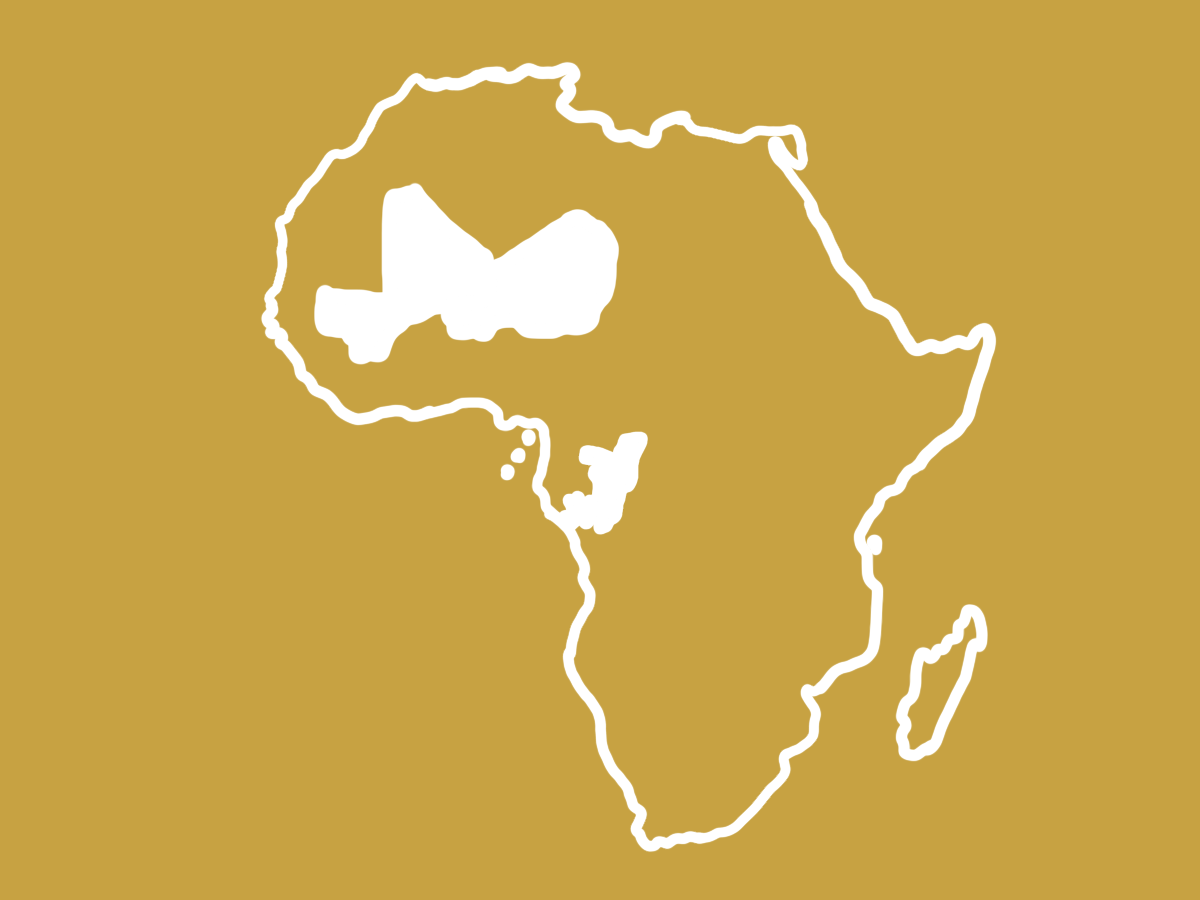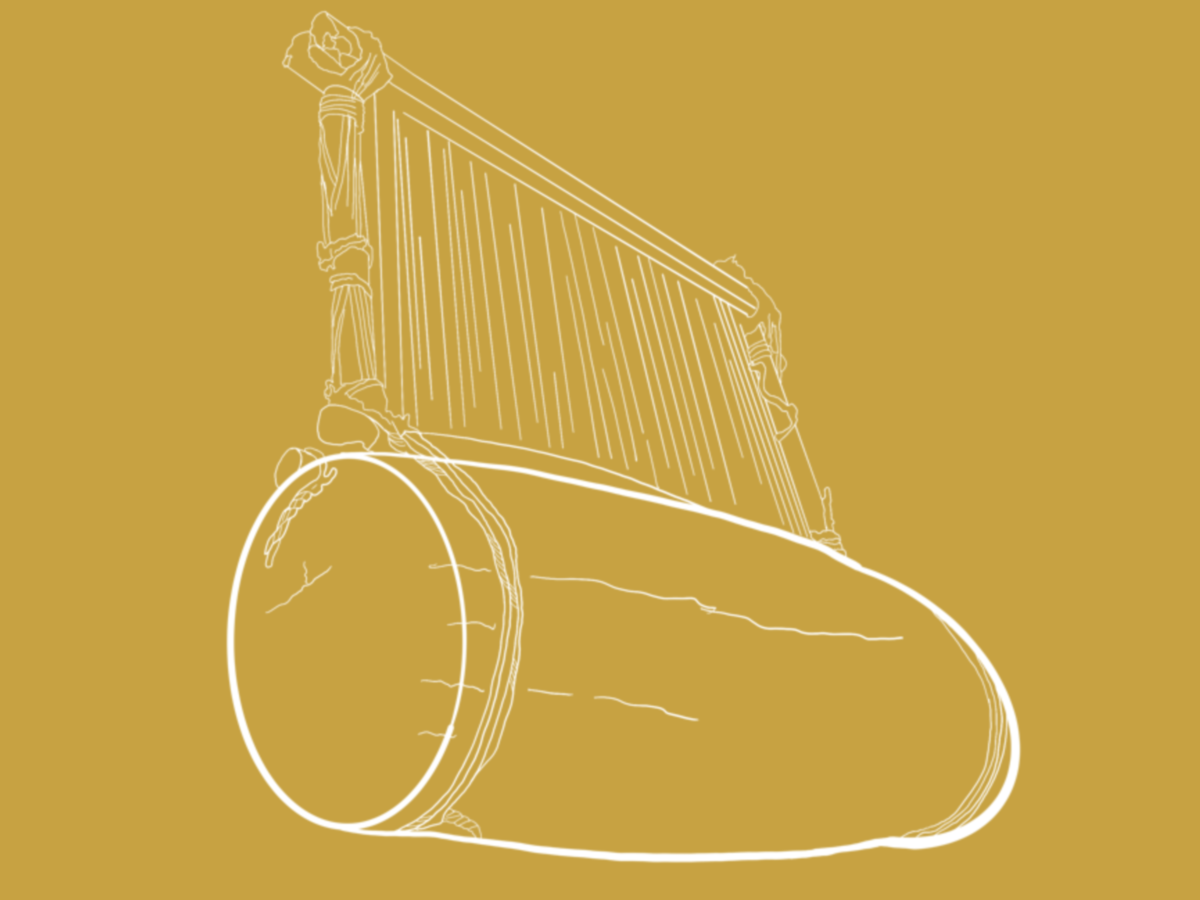
The Tellem legacy textiles are a rare collection of over 500 fragments of fabrics found in the caves of Bandiagara, a place in the Republic of Mali, south of the river of Niger.
These fragmens consisted of clothes, blankets and some accessories such as belts and head wears.
While no looms were found in these burial caves, we can re-construct these looms based on the fabrics found, the known regional weaving looms and the culture continuation practices of the region.
Fabrics analysis for the reconstruction of the loom
The fabrics consised of fragments made from wool and cotton. The samples that were examined were not complete loom width.
A sample was 65 cm with the selvage only on one side. This leads to the conslusion that the loom used to weave this piece was larger than 65 cm. In West-Africa the 15-inch loom was made famous, the larger looms are not associated with ancient African weaving tradition but they should.
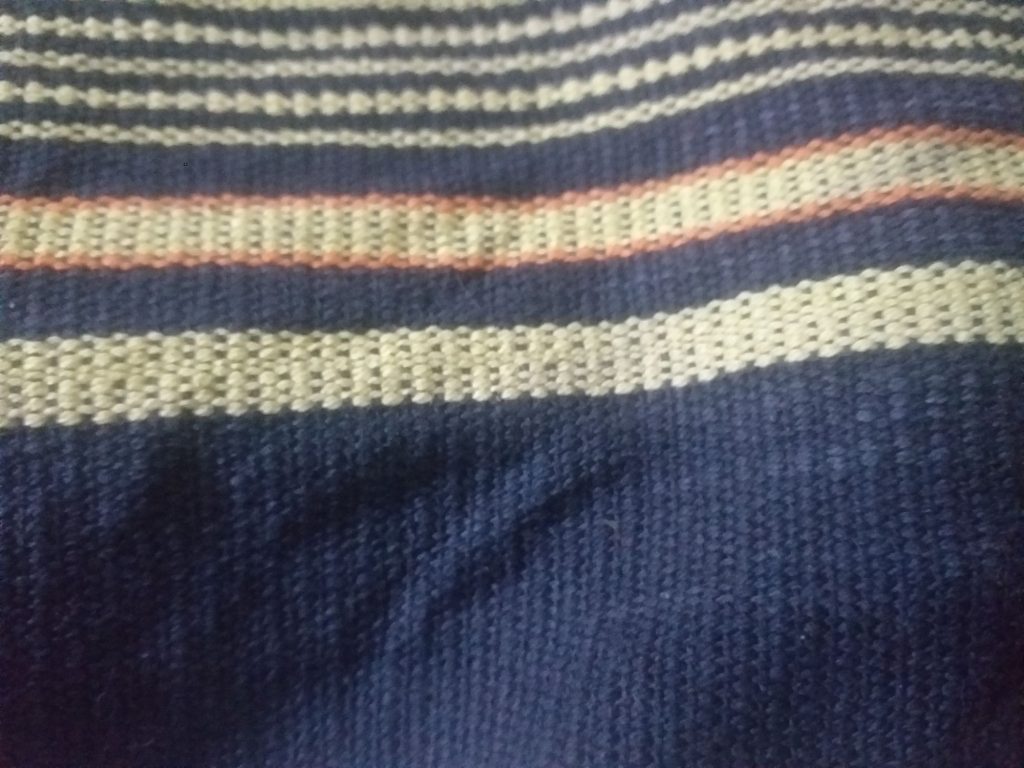
The sampled fragments were made using both coarse yarn as well as finer structured yarn. They were plain weave, wet-faced plain weave and warp-faced plain weave. The lenght of the warp varied anywhere between 6 meters to 17 meters long.
Technical informations published in the book, Tellem Textiles, based the width of the textiles as being the width of the loom. I strongly disagree with this. It is possible to work all types of width on a wider loom. A loom can have a width of 80 cm, yet textiles of 40, 50, 65 cm can be woven on such loom.
Because a fabric fragment is 15 cm wide does not mean the loom is 15 cm, it could mean that a loom of 70 cm was threaded to produce a piece of 15 cm. It is also known that the looms that produced the Tellem fabrics must of gotten a reed. This conclusion is based on the end result of the designs:
- With a reed weaving one under and one over will produce a textile in warp-faced plain weave, warp threads would be more visible.
- with a reed weaving one under and one over, you can easily produce textiles in plain weave, warp and weft threads can be shown equally.
- Or weft-faced plain weave, making weft threads more visible.
Known regional looms
The West-African region, which largely consist of 2 great empires of Africa; The mali Empire and the Songhai Empire, is known for intricate woven fabrics on single shaft weaving looms. Weavers developed different looms to weave different textile products. They also demonstrated preferences in loom design in relation to the yarn/ fibre type they were using (Rafia, cotton and wool).
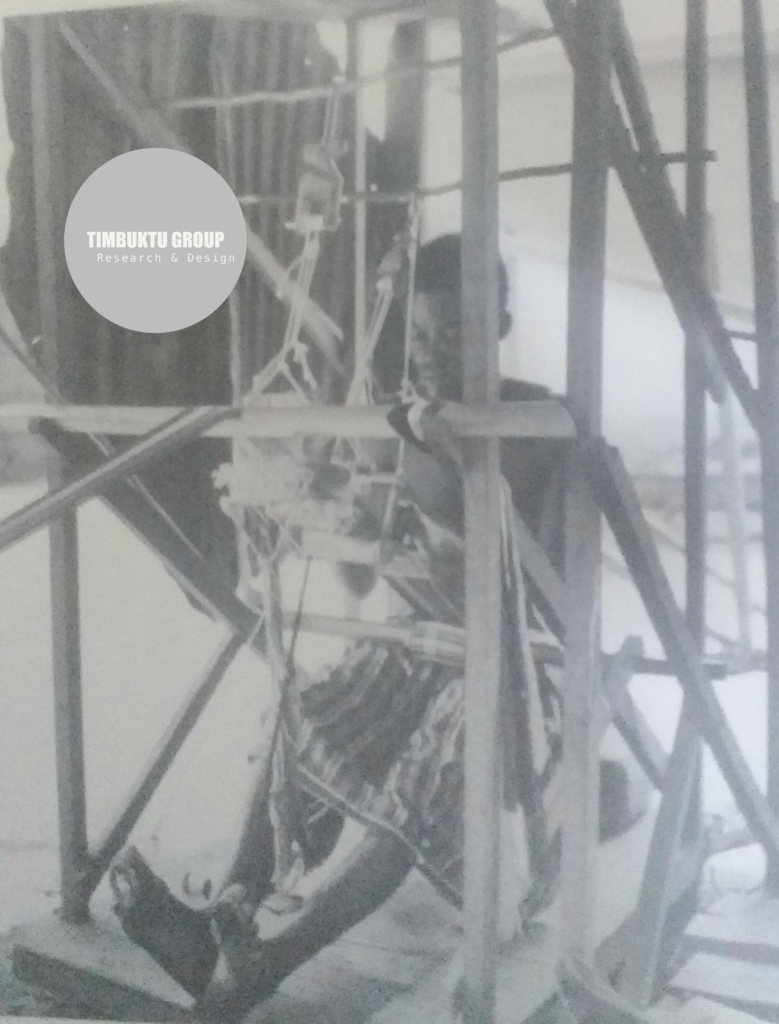
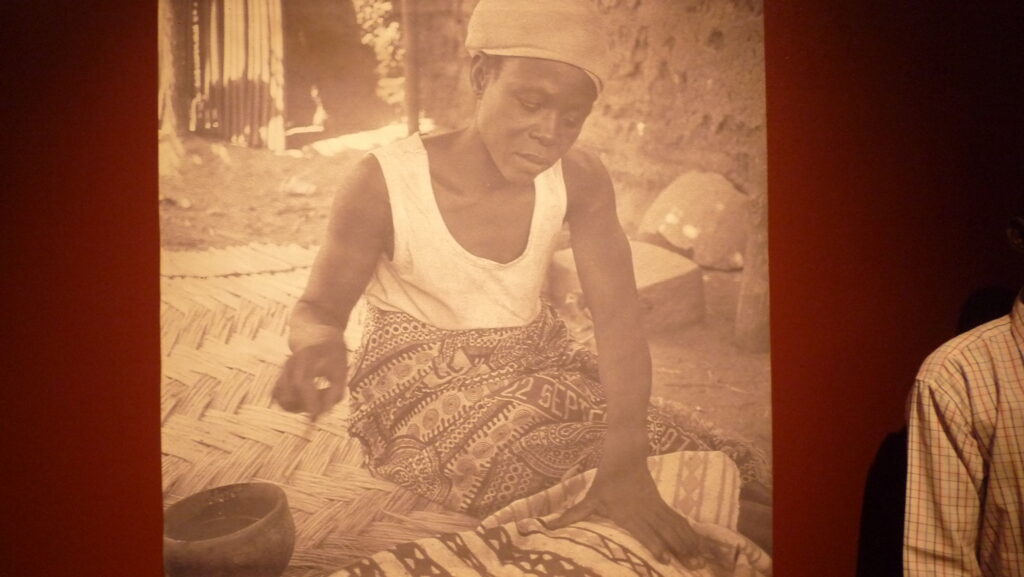
Our master weavers also developed looms that were specifically designed to be used by a specific gender, they developed looms for males to weave on and looms for females to weave on.
- The upright weaving loom
The upright weavin loom is a loom that is setup up-right in a vertical position. This loom was/ is used to weave smaller finished projects using courser materials such as Rafia and course wool. They would produce mats, rugs and blankets on these looms.
- The Horizontal men treadle loom
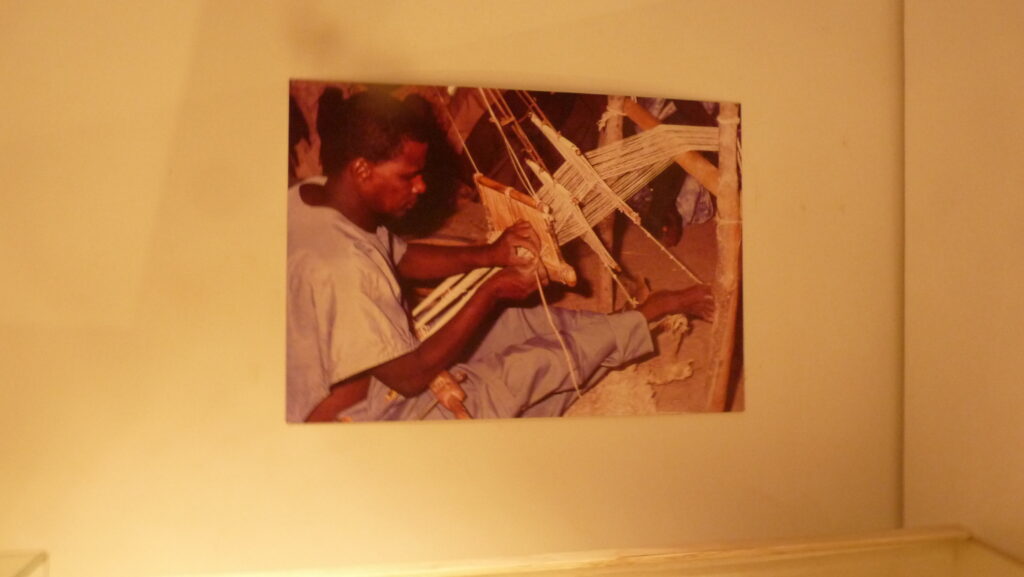
These horizontal looms were in most cases exclusively used by men. Perhaps due to the physical excersion required in using these types of looms. They were used in the creation of wider cloths.
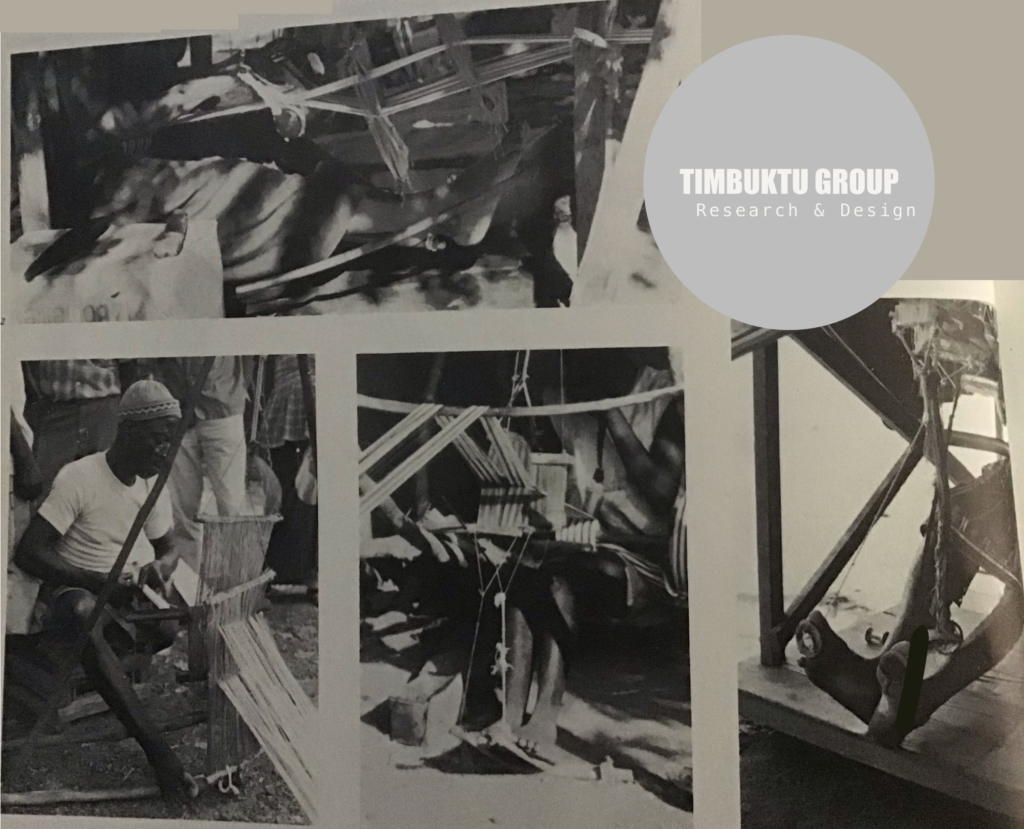
The West-African region had many more designs of weaving looms, it was numerous yet the only one that has been accosiated with the African traditions of weaving were those that were made accesible for the missionaries that were reporting on this, were able to observe. Perhaps because during this time in Europpe, they did not know this type of loom or they were amazed the type of creativity African weavers derived from this simple loom. These looms were used to weave 15-20 inch stripes of fabrics that were then sold on the market. Buyers would then be able to purchase a variety of stripe patterns and when combinning have a multitute of designed cloth with unique paterns. The original pattern makers!
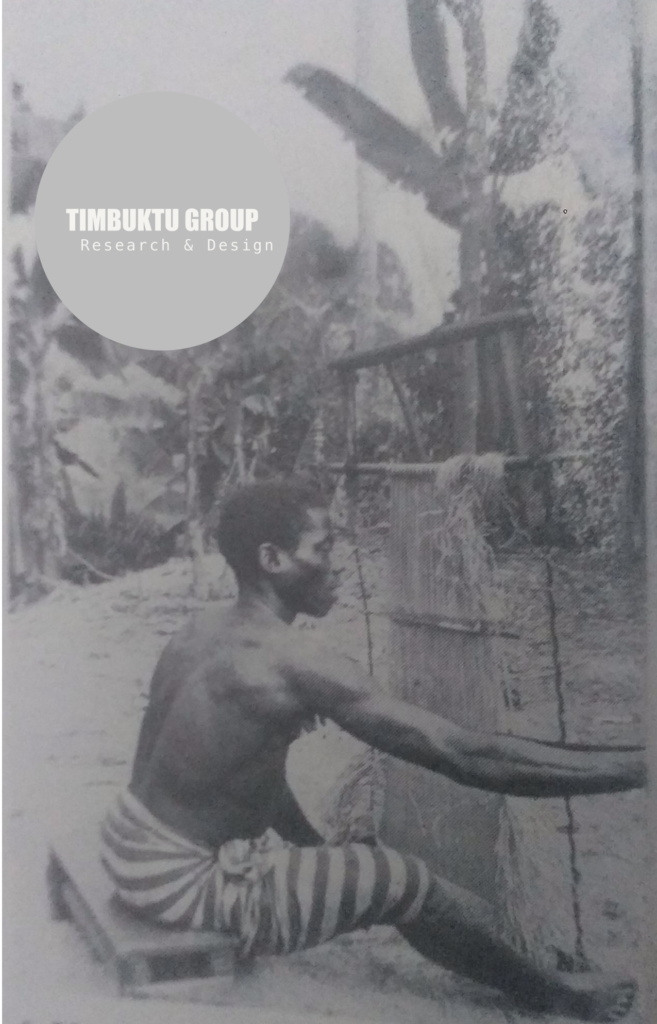
Looms were further developed by its user over the centuries and these looms were very valuable and passed on. Perhaps this is the reason why no remains of looms were found in the Tellem caves. Each type of loom had many variations throughout the regions.
Cultural practices today
While there was industrialisation in the African textile sectors, the industry at large was desimated by colonization and unfair business strategies, yet the region of the ancient Songhai Empire continued their weaving practises on the local looms. Some of the looms today might have been replaced with a stronger structure and is heavier making the place of work less mobile. The reeds, previously made from thin shavings of wood and strong yarn, are now mosty metal and incase of preference nylon thread. Some weavers still opt to weave on these exact ancestoral designs , many of these looms, because of the quality of wood used, enjoys a long existance .
There were no looms found in the burial caves, while the people buried were buried with the posession they had or practiced prior to dead. This could mean that the looms were considered a valuable posession, that was to be passed on and not taken to the grave.
During this time fabrics were highly valuable items and used as currency. So the technology to produce currency was of equal value. As many different looms were developed to produce cloth, the Tellem Textiles were very unique among all the heritage textiles of this region because the patterns they designed was not only highly mathematical in nature (creation of a mathematical formula) but their system of work/ of designing the patterns resulted in the perfect infinity pattern creation that was automated already in the 10th century (perhaps even earlier).
What loom would they have designed to be able to construct such patterns?
The few researchers that looked at the heritage textiles found next to these patterns also other designs/ weaving styles that they wanted to attribute to other regions. While this is possible, I would argue of the ingenuity of the Tellem weavers to be able to produce a variety of weaving styles. You have to incorporate legacy practices of the African people today. Culture, Identity and heritage have always been very strong among the African Nations. These strong traditions were passed on from generations to generations and while innovations took place along the way, you could always pin-point the origin.
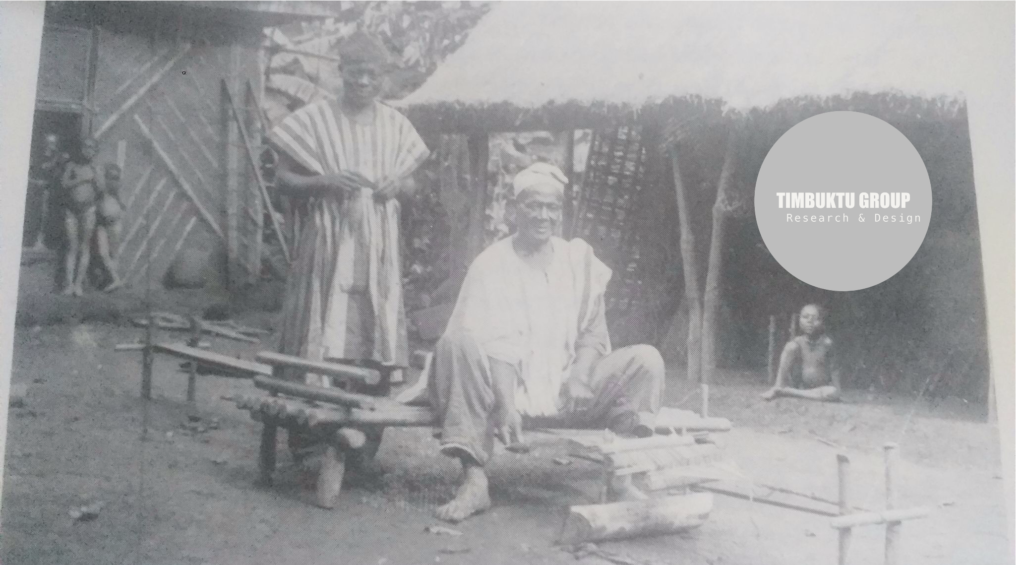
Why would African weavers not be able to produce a variety of design styles? People moved around the place and nations interacted with eachother.
The Tellem weavers worked on a variety of looms. They would develop, next to the 15-20 inch loom, also wider looms, different versions of the Horizontal treddle loom or more specialised looms for their designs.
The Dogon nation, that currently live in the region, use a version of the horizontal treddle loom. It could be that the Dogon came with this loom to this region, or found this loom there.
The origin of the Tellem people themselves is also a mystery. Could it be that the Tellem people have a habit of moving away when not feeling secure? If they have the habit of moving away where were they prior to moving to the caves, and what made them seek refuge in that area?
Throughout the African continent there are a variety of looms developed for local needs. The Tellem looms needs further research in oder to provide a more accurate quess. For now their textiles gives us tangible proof of limited technical information that could be furter build on only if we find the descendants of the Tellem today.
Visit our Afrikan Loom project.