There is a question I have been sitting with. Has any African academic written about how poverty causes the decline of local cultures and traditions?
The answer is yes. They have. And what they have found should stop us from talking about "cultural preservation" as if culture exists separate from economics.
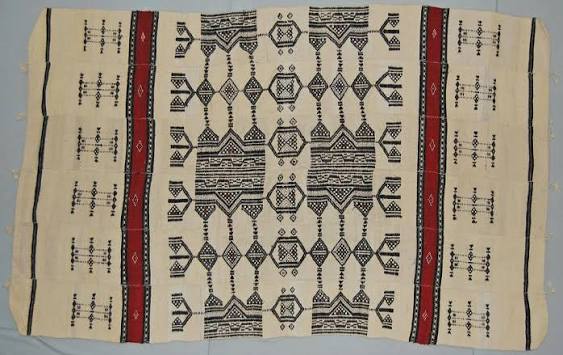
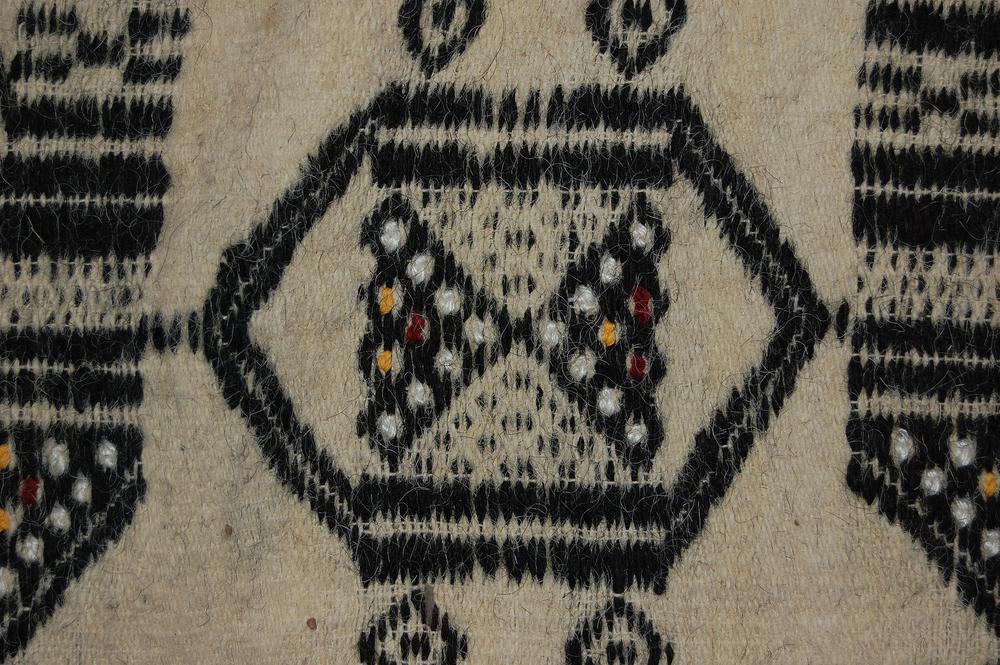
In the Eastern Cape province of South Africa, among the amaMpondo communities, researcher Nontuthuzelo Mtsini of Walter Sisulu University documented something striking. The political upheavals and economic decline after the postcolonial period resulted in job losses, corruption, crime, poverty, and the loss of the philosophy of ubuntu embedded in cultural beliefs. Her findings are direct: poverty and unemployment were the major causes of the decline of ubuntu among communities. The elders she interviewed indicated that extreme poverty was caused by political tension, economic decline, and cultural changes. When people cannot feed their families, when there are no jobs, when the economy contracts, the transmission of cultural knowledge from elders to children breaks down. You cannot teach ubuntu when you are migrating for work. You cannot pass down weaving techniques when you cannot afford materials. This is not cultural decline as abstraction. This is poverty as erasure.
Dr Chika C Mba, a Senior Research Fellow at the Institute of African Studies at the University of Ghana, made a striking argument at the Africa Wiki Challenge 2025 launch. He used marriage ceremonies as a concrete example. Africans now spend double on traditional weddings and Western-style "white weddings." The abuse of our own culture and identity leads directly to poverty and impoverishment. This is the cycle. When a family spends money on two weddings instead of one, the money leaves the community. When they choose foreign customs over their own, they are not only spending more—they are signaling that their own traditions are not enough. The message is internalized. The next generation sees the foreign as aspirational. The local becomes "traditional" in the pejorative sense—backward, poor, not for people who have made it.
Atoyebi and Yunusa, writing in the Nigerian Journal of Sociology and Anthropology (2024), examined cultural practices among the Idoma and Ogugu peoples of North-Central Nigeria. Their paper highlights how certain traditional beliefs, inheritance of women by their deceased husband's relation, widow's succession rights, refund of bride price after divorce—exemplify what they call the "feminization of poverty." This is not an argument against tradition. It is an argument that poverty and culture cannot be separated. When a practice contributes to poverty, the practice itself becomes vulnerable. And when the practice is abandoned, the entire knowledge system that surrounded it, including the textile traditions, the ceremonial cloths, the symbolic patterns, can disappear with it.
A 2025 study of Ethiopian weavers documents that poverty directly threatens the survival of traditional handwoven garments like the "habesha kemis." With roughly 39 to 43 percent of Ethiopia's 130 million people living below the poverty line (less than $3 per day), demand for traditional handwoven clothes has sharply declined as families cannot afford the higher cost of handmade garments. One weaver with three decades of experience earns only $68 to $102 per month before deducting raw material costs. After 30 years of weaving, this barely covers survival—there is no surplus to pass the craft to a new generation. The youngest weaver in the workshop, 23, is already planning a career change because "the economy isn't what it used to be." This is not just lost income. It is lost transmission.
Getachew, Alemu, and Wudu's 2025 study at Bahir-Dar City documents how poverty exacerbates the challenges facing women weavers. Women face economic difficulties including material shortages and outdated technology. The study notes that household consumption is prioritized over purchasing traditional hand-woven garments—when a family must choose between food and a ceremonial cloth, food wins. The handloom sector's decline is directly linked to deteriorating economic conditions that make handcrafted goods unaffordable for local consumers.
Araya and Beyene's 2024 study on cultural appropriation in Ethiopia's garment weaving industry found that poverty erodes cultural value in two ways. First, when cheaper, mass-produced imitations of traditional designs flood the market due to lack of IP protection, the price of authentic handmade garments is undercut. Second, poverty affects the mindset of educated Africans, who come to see traditional textiles as "cloth for the poor, illiterate, rural dwellers." This is the psychological dimension of poverty. When a traditional cloth becomes associated with economic hardship rather than cultural pride, younger generations reject it in favor of foreign styles perceived as more "modern" or "aspirational."
Amanor-Wilks' 2024 study on the Kente economy in Bonwire, Ghana, documents how the productive role women once played as cotton growers and spinners has been eroded by economic pressures. The research found that while more women are weaving than ever before, they continue to face enormous pressure to stop because the income is insufficient to sustain households even as the traditional gender taboo on women weaving has been suspended.
Areo's 2013 study on Adire (Yoruba indigo-dyed cloth) documents that the art suffered a "lull" in the 1950s due to the flooding of Nigerian markets with cheaper, untaxed imported textiles while locally produced ones were taxed. Hand in hand with this was the mindset of educated Nigerians who then saw Adire "merely as rural cloth for poor, illiterate, rural dwellers." This is the direct link: poverty, enforced by colonial and post-colonial economic policies, led to cultural devaluation, which led to near extinction of the craft.
These studies are not about "preserving culture" in a museum sense. They document material reality: when people cannot afford to buy handmade textiles, weavers cannot afford to weave. When weavers cannot afford to weave, they do not teach their children. When they do not teach their children, the knowledge dies. This is not cultural decline as abstraction. It is poverty as extinction.
The academic literature on poverty and textile decline concentrates heavily on West Africa and Ethiopia. But there are sources from other regions, they just require more searching and often come from non-academic channels such as NGO reports, news articles, and economic studies.
In Namibia, a 2025 Coastal Trade Fair report documents that local fashion designers and tailors struggle because consumers demand lower prices than what handmade garments cost. Maria Franciskus, a fashion designer, stated: "The struggle is that sometimes we buy material and people are demanding low prices… we make a small profit, and it's not enough." The National Museum of Namibia's documentation of traditional leather processing notes that "relative poverty was also reflected in the fact that poorer people were not able to obtain cow fat to keep their skins in good condition." When poverty prevents people from maintaining traditional garments, the knowledge of how to process and care for them erodes. No academic study from Namibia specifically on poverty and traditional textile decline exists.
In Zambia, World Vision reports that due to prolonged drought and climate change, traditional agriculture is no longer reliable, forcing rural families to seek non-agricultural livelihoods. The Tailoring Enterprise Development program was created to equip vulnerable households with sewing skills. This is economic adaptation, but it also represents a shift away from traditional textile knowledge toward production for external markets. This is an NGO report, not academic research. No Zambian academic has published specifically on poverty and traditional textile decline.
In Somaliland, a 2025 report on the artisan industry documents that "traditional crafts such as pottery, blacksmithing, beadwork, and basket weaving are at risk of disappearing due to modernization, cultural stigma, and limited intergenerational transfer." Youth involvement in artisan trades is deterred by "low prestige, inconsistent earnings, and lack of structured growth paths." The Radio Ergo report on Galkayo shoemakers documents that traditional shoemakers have gone out of work because "people have changed their ways… now just throw away broken shoes to buy new ones instead of seeking repairs." One shoemaker, Salad Mahamud Hassan, used to earn $10 daily. Now he lives in a displacement camp and cannot feed his children. This is poverty caused by the decline of traditional crafts, and poverty accelerating the decline. The Somaliland report is from an NGO; the shoemaker story is journalism. No Somali academic has published peer-reviewed research on this topic.
In Tanzania, Pendo Bigambo and colleagues (2024) published a study on Tanzania's batik industry in the African Journal of Science, Technology, Innovation & Development. The study found the industry is informal, predominantly women-owned, and faces challenges including poor access to funds, scarcity of tools and materials, and repetitive designs due to lack of creativity training. This is a peer-reviewed academic study by Tanzanian researchers.
In Zimbabwe, a news report on cotton farming documents that the collapse of the cotton industry has "spelled doom for communities where the crop is grown." Farmers have abandoned cotton due to low prices, switching to maize. When raw cotton production collapses, the material base for traditional textile production disappears. This is journalism, not academic research. No Zimbabwean academic study specifically links poverty to traditional textile decline.
In Malawi, a 2007 IPS news report documents that following trade liberalization, Malawi saw an influx of second-hand clothing. Consumers prefer cheap imported clothes because "up to 65 percent of Malawians are living in poverty, which means having less than 1 US dollar per day." Local textile manufacturers cannot compete. Farmers are abandoning cotton because prices are too low. The textile industry has collapsed. This is journalism, not academic research. No Malawian academic study specifically links poverty to traditional textile decline.
An English-speaking researcher will not search in Portuguese. They will not search in French. They will not dig through Angolan journals, Mozambican university repositories, or Cabo Verdean conference proceedings. The information exists, but it is not accessible. When African researchers publish in Portuguese or French, their work does not circulate in English-dominated academic databases. When English-speaking African nations do not translate that research, they are not learning from their neighbors. The weaver in Angola and the weaver in Ghana cannot read each other's struggles because the language barrier is a wall. The system does not need to destroy the knowledge. It only needs to ensure the knowledge never circulates.
In Angola, peer-reviewed research exists. Celestino José Taca, publishing in the Angolan journal Revista Samayonga (Volume 4, Issue 2, 2026, pp. 267-277), conducted fieldwork in Luena between February and June 2025. He writes:
"A pobreza multidimensional constitui uma barreira que afecta, de maneira preocupante, a transmissão de saberes culturais. A valorização cultural de manifestações como o semba e a escrita Sona continua, mas a pobreza e a exclusão educacional ameaçam estas práticas."
Translation: "Multidimensional poverty constitutes a barrier that worryingly affects the transmission of cultural knowledge. The cultural valorization of expressions like semba and Sona writing continues, but poverty and educational exclusion threaten these practices."
This is an African academic publishing in an Angolan journal, directly linking poverty to the potential decline of cultural manifestations. While it does not focus exclusively on textiles, it establishes the framework: poverty erodes the material and social basis for cultural transmission in Angola.
The official Angolan news agency Angop published a report on 17 March 2022, documenting the decline of traditional professions in Bengo province:
"Os alfaiates, sapateiros e costureiras tradicionais estão a tornar-se escassos na província do Bengo. Os jovens não demonstram interesse em aprender estas profissões devido às baixas receitas e ao custo elevado dos materiais. Grandes quantidades de roupa importada pronta-a-vestir e a industrialização são citadas como causas directas."
Translation: "Traditional tailors, shoemakers, and seamstresses are becoming scarce in Bengo province. Young people show no interest in learning these professions due to low income and the high cost of materials. Large quantities of imported ready-to-wear clothing and industrialization are cited as direct causes."
Antonio Gaspar, a 60-year-old shoemaker, states that the province lacks these services, forcing people to travel to Luanda for repairs. David Chambo, a shoemaker for over 20 years, personally trains over 50 young people but says it "has not been easy." This is official documentation from Angola's state news agency, citing multiple artisans by name, with direct quotes about poverty, imported goods, and generational disinterest as drivers of decline.
Angolan researcher Leonardo Tuyenikumwe published a scientific book in 2024, "Os khoinsan (khun e khwe) de Angola e seus desafios actuais" (The Khoisan of Angola and Their Current Challenges). He writes:
"Os khoinsan (khun e khwe) de Angola enfrentam desafios actuais graves. A situação da pobreza extrema e da fome está a forçar estas comunidades a mudar o seu estilo de vida e a abandonar práticas ancestrais."
Translation: "The Khoisan (Khun and Khwe) of Angola face serious current challenges. The situation of extreme poverty and hunger is forcing these communities to change their lifestyle and abandon ancestral practices."
The book explicitly links poverty to the erosion of cultural traditions among indigenous peoples in Angola.
In Mozambique, Cardoso Esboi of the Catholic University of Mozambique published a study in 2007:
"A produção de algodão é a cultura não alimentar com maior rendimento e cria auto-emprego para a maioria das famílias rurais. No entanto, os baixos níveis de educação, a dependência de factores naturais (clima, pragas) e a falta de infra-estruturas sociais limitam os agricultores de aproveitar plenamente as condições favoráveis do mercado."
Translation: "Cotton production is the highest earning non-food crop and creates auto-employment for most rural households. However, low education levels, dependence on natural factors (weather, pests), and lack of social infrastructure constrain farmers from taking full advantage of favorable market conditions."
This is a Mozambican researcher directly linking cotton to poverty. When cotton farming fails to lift farmers out of poverty, the material base for textile production erodes. No Mozambican academic has published specifically on the decline of traditional capulana due to poverty—a central textile tradition in Mozambique. The gap confirms the point: research on traditional textile decline is limited.
In Cabo Verde, the pano d'obra (meaning "laborous cloth") was "highly prized for trading along the West African coast, from the second half of the 16th century to the end of the 18th century." From the 19th century, "a marked decline in the manufacture of these historic textiles is witnessed due to the demise of the local cotton and dyes production, alongside with a lack of demand for them, particularly the ones with high-value price." Today, local weavers use mostly imported yarn, including synthetic. The decline is documented, but the researcher presenting this at the Textile Society of America 2024 Symposium is from the University of Porto, Portugal—not a Cabo Verdean scholar. No academic source by a Cabo Verdean scholar exists on this topic.
For Guinea-Bissau, São Tomé and Príncipe, and Equatorial Guinea, no academic sources by local scholars were found. This is a complete research gap. It does not mean the phenomenon does not exist. It means African researchers have not yet documented it—or the documentation exists but is not indexed in accessible databases.
The focus on cotton in African textile production is not natural. It was engineered. Before Europeans arrived, Portuguese-speaking Africa used raffia, palm fiber, sisal, wild rhubarb root dyes, and other local materials. Cotton became dominant because it was exportable. Colonial regimes controlled it, channeled it into global trade, and extracted it for profit rather than local use. The knowledge of how to work with raffia, palm fiber, and sisal was not written. It was not patented. It was not passed down. And because those materials had no export value, their knowledge systems were not valued.
The Kuba people of Central Africa are renowned for a specific process that turns stiff raffia plant fiber into a soft textile. Men weave the base cloth from fine raffia fibers. Women then create intricate geometric patterns using a specialized cut-pile embroidery technique. After the pile is cut, the fibers are rubbed together, which gives the surface a silky lustre reminiscent of velvet, hence the name "velvet raffia." This was historically used as a form of currency, as ceremonial dress, and to adorn royal stools. An unprocessed raffia fiber is stiff, but after these specialized techniques, it can be as soft as cotton, with a luxurious velvet-like feel. This is not just a craft. It is a sophisticated material engineering process.
The argument that raffia is rough and cotton is soft is historically inaccurate. It ignores the existence of specialized, high-skill techniques that produce a textile of exceptional quality, softness, and prestige. As poverty increased, communities could not afford the time or resources for the labor-intensive velvet technique. They defaulted to the quicker, stiffer versions of raffia, or they abandoned raffia altogether for cheaper, imported cotton. Over time, this created a false narrative that "raffia is stiff" and "cotton is soft." The knowledge to make velvet raffia is at risk of being lost, not just a craft disappearing, but the disappearance of a specific, sophisticated material engineering process.
The objects remain. But they remain under European control. The British Museum holds nearly 8 million objects. Only 1 percent are on public display at any time. The other 99 percent are in storage. The raffia cloth from Equatorial Guinea (1820) sits in Reading, England. The Angolan raffia costume (1929-1936) sits in Montreal, Canada. The objects are not destroyed. They are contained. Sealed. Removed from the communities that made them. The knowledge that the object represents, the technique, the material understanding, the transmission from one generation to the next, can die even as the object itself is perfectly preserved. The weaver dies. The language shifts. The materials become unavailable. The ceremony stops. The child moves to the city. The museum catalogues the cloth. The cloth is safe. The knowledge is not.
Hoarding is not destruction. It is preservation in a cage. The object remains. The people change. The knowledge thins. The museum wins.
Oliver Mtapuri's edited volume "African Perspectives on Poverty, Indigenous Knowledge Systems, and Innovation" (Springer, 2022) dedicates chapters to the "Onomastic and Conceptual Pathologisation of African Culture as a Creation and Perpetuation of African Poverty in Zimbabwe." The title alone says enough. When African culture is pathologized—treated as the cause of poverty rather than the solution, the logic is inverted. The cure becomes abandoning culture. The abandonment leads to more poverty. The cycle continues.
The research exists. African scholars have documented it. South Africa. Nigeria. Ghana. Ethiopia. Zimbabwe. Angola. Mozambique. The evidence is clear: poverty destroys the material basis for cultural transmission. But the research is fragmented. The language barriers prevent circulation. The museums hold the objects but not the knowledge. The economic policies continue to favor imported goods over local production.
African textile knowledge is declining, in some spaces perhaps already extinct. When will we document what remains before it is gone, when will we build systems that keep it alive, not just preserved in a crate in a foreign country.
References
· Mtsini, Nontuthuzelo. "Reinstating cultural beliefs and Ubuntu in the AmaMpondo communities in the Eastern Cape province, South Africa." E-Journal of Humanities Arts and Social Sciences, Vol. 6 No. 9 (2025). Walter Sisulu University, South Africa.
· Mba, Chika C. Speech at Africa Wiki Challenge 2025 launch. GhanaWeb, 25 May 2025. Institute of African Studies, University of Ghana.
· Atoyebi, Timothy Abayomi and Yunusa, Edime. "Cultural Practices and Women's Rights among Idoma and Ogugu Peoples of North-Central, Nigeria: Implications for Poverty Reduction and Sustainable Development." The Nigerian Journal of Sociology and Anthropology, Volume 22, No. 2, November 2024, pp. 102-114. Prince Abubakar Audu University, Nigeria.
· Getachew, Alemu, and Wudu. 2025 study at Bahir-Dar City, Ethiopia.
· Araya and Beyene. 2024 study on cultural appropriation in Ethiopia's garment weaving industry.
· Amanor-Wilks. 2024 study on the Kente economy in Bonwire, Ghana.
· Areo. 2013 study on Adire (Yoruba indigo-dyed cloth).
· Wayessa, Bula S. "My Meals Are in the Pots: Making Pots and Meals in Wollega, Southwest Ethiopia." African Archaeological Review, Volume 40, 2023, pp. 519–529.
· Laitin, David D. and Ramachandran, Rajesh. "Language Policy as the Culprit of Africa's Growth Tragedy." Journal of Politics, 2025. Stanford University / Monash University Malaysia.
· Mtapuri, Oliver (ed.). African Perspectives on Poverty, Indigenous Knowledge Systems, and Innovation. Springer, 2022.
· Taca, Celestino José. "Diversidade Cultural, Social e Económica em África com Ênfase em Angola Desafios e Perspectivas Contemporâneas." Revista Samayonga, Volume 4, Issue 2, 2026, pp. 267-277.
· Angop (Angola News Agency). "Profissões tradicionais em risco de extinção no Bengo." 17 March 2022.
· Tuyenikumwe, Leonardo. Os khoinsan (khun e khwe) de Angola e seus desafios actuais. Vamos Editora, 2024.
· Esboi, Cardoso. "Impact of Cotton Production Among Cotton Farmers in Maringue District of Sofala Province – Mozambique." Universidade Católica de Moçambique (UCM), 2007. Available at: http://www.repositorio.ucm.ac.mz/handle/123456789/99
· Textile Society of America 2024 Symposium. "A Contribution to the Preservation and Revival of the Cabo Verdean pano d'obra Textiles."
· Hansen, Karen Tranberg. "Riches from Rags or Persistent Poverty? The Working Lives of Secondhand Clothing Vendors in Maputo, Mozambique." Textile: The Journal of Cloth & Culture, Volume 10, Issue 2, 2012, pp. 222-237.
· Bigambo, Pendo et al. 2024 study on Tanzania's batik industry. African Journal of Science, Technology, Innovation & Development.
· Namibia Coastal Trade Fair 2025 report.
· World Vision Zambia. Tailoring Enterprise Development program reports.
· Solidaarisuus. 2025 report on artisan industry in Somaliland.
· Radio Ergo. Report on Galkayo shoemakers.
· IPS news agency. 2007 report on Malawi second-hand clothing.
· Reading Museum. Raffia cloth from Equatorial Guinea (1820). Collection record.
· Redpath Museum, McGill University. Angolan raffia costume (1929-1936). Collection record.
· British Museum. Papel cloth from Guinea-Bissau (c. 1989). Collection record.