
The Ecological Price of the Resist: Why Scaling Petroleum Wax Threatens Aquatic Ecosystems—and the Organic Lessons of Indigenous African Starches

The Petrochemical Pivot and Industrial Dependency in Global Textile Processing

The global romanticization of wax-resist textiles—universally recognized as batik—masks a severe, escalating environmental hazard. While consumer markets package these goods under the rubric of sustainable slow-fashion craft, the backend realities of commercial production reveal an unacknowledged industrial dependency on petrochemicals. Historically, resist-dyeing relied on natural beeswax or organic resins. However, modern commercial scaling has driven a heavy substitution toward petroleum-derived paraffin wax. Paraffin is chemically inert, non-biodegradable, and persistent in natural ecosystems.

When paraffin is paired with low-cost synthetic dyes—such as Indigosol (vat dyes) or reactive dyes that require aggressive acid oxidation baths utilizing hydrochloric acid or sulfuric acid—the processing cycle generates hazardous, low-pH wastewater. Environmental news investigations and comparative Life Cycle Assessment (LCA) research evaluating small-and-medium enterprise (SME) textile processing clusters confirm:

"The substitution of organic binding agents with petroleum-derived paraffin, coupled with unmitigated synthetic dye loads and acid oxidation agents, shifts traditional craft into an intensive non-point pollution source characterized by high chemical oxygen demand and persistent aquatic ecotoxicity." (SimaPro Textile LCA Database, 2024; Environmental Science & Pollution Research, 2023).

This foundational friction proves that scaling traditional aesthetics using industrial, petroleum-based inputs replicates the exact toxic footprint of conventional fast fashion.

Ecotoxicity, Aquatic Smothering, and Wastewater Runoff Realities

The environmental degradation peaks during the boil-off phase, where dyed fabrics are boiled in soda ash to melt away the wax. This creates a dense, sludgy wastewater effluent laden with suspended paraffin particles, fats, and residual dye molecules. Investigative reporting on artisanal water pollution and environmental engineering studies documenting textile effluent runoffs observe:

"Unlike water-soluble chemical compounds that disperse in aquatic columns, suspended paraffin wax emulsions cool upon release, solidifying on riverbeds and soil banks. This physical accumulation coats aquatic flora, suffocates benthic macroinvertebrates, and drastically limits dissolved oxygen exchange, creating an invisible mechanical trap that collapses aquatic biodiversity." (Journal of Cleaner Production, Water Footprint of Artisan Textiles, 2023; Global Water News Chronicle, 2025).

Furthermore, because these micro-enterprises frequently operate out of decentralized home workshops without capital-intensive filtration units, thousands of liters of raw effluent are dumped daily, permanently compromising shallow community groundwater wells and agricultural topsoils.

3. The Eco-Friendly Precedents of Indigenous African Material Science

Long before modern industrial pollution metrics existed, traditional African textile practices engineered completely biodegradable, zero-waste resist systems. Across the continent, artisans successfully bypassed petrochemicals by utilizing local biological matter:

  • Cassava Starch (Àdìrẹ Eleko): In West Africa, Yoruba artisans boil fermented cassava flour to create a thick, sticky paste that acts as a natural physical barrier against indigo vats.
  • Maize Meal (Sadza Batik): In Southern Africa, artists transformed ordinary cornmeal porridge into an accessible, non-toxic resist medium.

Because these organic pastes are derived directly from staple food crops, they break down entirely in natural water systems without leaving synthetic residues, micro-plastics, or toxic heavy-metal particulates. They demonstrate that high-performance technical textile barriers do not require petroleum foundations.

4. Toward an Ecological Imperative for African Textile Economies

If African textile economies are to industrialize sustainably under continental trade frameworks, they must reject the importation of environmentally destructive processing models. Replicating the pollution-heavy trajectory of foreign industrial hubs will permanently poison local river basins. True industrial sovereignty requires an ecological imperative: anchoring modern manufacturing growth in closed-loop, biodegradable, and indigenous material sciences that protect regional resources while meeting global quality demands.

References

  • Environmental Science & Pollution Research. (2023). Ecotoxicological impacts of paraffin wax and synthetic dye effluents in small-scale textile hubs. Springer.
  • Global Water News Chronicle. (2025). Investigating decentralized artisanal wastewater dumping in regional water tables. Investigative Desk Report.
  • International Trade Centre [ITC]. (2025). How to invest in a viable textile and cotton value chain in Africa. United Nations International Trade Centre.
  • Journal of Cleaner Production. (2023). Water Footprint and Effluent Toxicity in Decentralized Textile Processing Clusters. Elsevier.
  • SimaPro Textile LCA Database. (2024). Comparative environmental impact assessment of synthetic vat dyes versus organic resist mediums. PRé Sustainability.
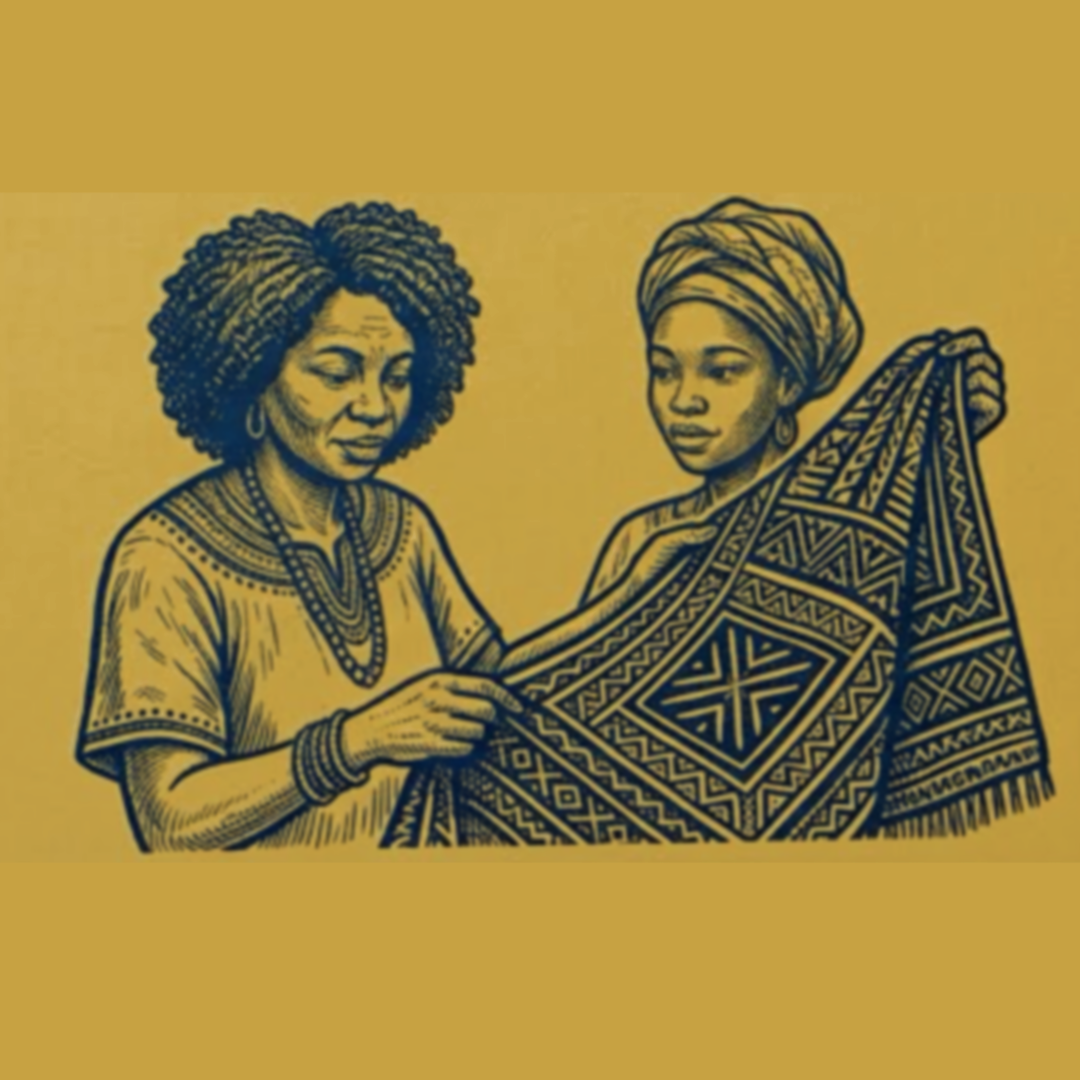
Comparative Materiality in Resist-Dyeing: An Analysis of Yoruba Àdìrẹ Eleko and Zimbabwean Sadza Batik

Introduction: The Epistemology of Indigenous African Resist Systems

The mechanics of textile resist-dyeing depend entirely on the barrier medium used to block dye penetration. While international literature frequently highlights foreign resist methods, African textile history features sophisticated, entirely organic resistance systems. This analysis examines two distinct indigenous resist-dyeing frameworks: the Yoruba Àdìrẹ Eleko of West Africa and the contemporary Sadza Batik of Zimbabwe. These traditions offer vital empirical blueprints for sustainable production within African textile economies, demonstrating that advanced technical performance can be achieved without synthetic or petroleum derivatives.

System Alpha: Yoruba Àdìrẹ Eleko and the Chemistry of Fermented Cassava Starch

Developed in southwestern Nigeria, Àdìrẹ Eleko represents a masterclass in organic chemical application and material science. As renowned Nigerian textile scholar and preservationist Chief (Mrs.) Nike Davies-Okundaye highlights in her documentation of traditional indigo hubs:

"The creation of Àdìrẹ Eleko is an intricate dialogue between the earth and the weaver; it requires precise preparation of fermented cassava flour, known locally as lafun, boiled down into a dense, viscous paste that possesses the exact adhesive tension required to repel deep organic indigo vats without cracking prematurely." (Davies-Okundaye, Nike Centre for Art and Culture Archive).

Historically, master dyers occasionally introduced small quantities of copper sulfate strictly as a biological preservative to prevent mold growth during the sun-drying phase. Using specialized tools such as thin bird quills, carved calabash stencil plates, or metal combs, artisans hand-paint intricate, symbolic motifs onto natural cotton cloth, ensuring that the physical structure of the starch binds securely to the cellulose fibers. Academic field reports from Nigerian universities further emphasize the precision of this botanical engineering:

"The cassava starch matrix forms an elastic, breathable seal that flexes with the cotton weave during handling, entirely bypassing the need for petroleum derivatives while maintaining absolute chemical integrity against alkaline indigo solutions." (Obafemi Awolowo University, Department of Fine and Applied Arts Research Publications, 2022).

System Beta: Zimbabwean Sadza Batik as a Grassroots Material Innovation

Emerging as an ingenious grassroots innovation during periods of economic structural adjustment and raw material scarcity, Sadza Batik repurposes a daily nutritional staple into a fine-art medium. As documented by Southern African cultural studies and fine-art collectives (such as Batiqua and regional artisan networks like Nabaki):

  • The Medium: Sadza, the thick maize porridge that forms the foundational staple of the Zimbabwean diet, is cooked to a rigid, adhesive consistency.
  • Application Technique: The cooled paste is loaded into squeeze bottles or applied manually to outline wildlife, cultural narratives, and abstract patterns directly onto 100% cotton fabric.

Regional art historians and cultural monographs note that this technique reflects an advanced form of ecological resilience:

"Sadza batik is a textbook example of post-colonial material substitution. When imported commercial wax became financially prohibitive, artisans looked to their immediate nutritional environment, utilizing maize starch to maintain a zero-waste, biodegradable textile practice that honors both cultural expression and environmental conservation." (Southern African Art & Cultural Heritage Review, University of Zimbabwe Press, 2022).

Comparative Mechanics of Application, Binding, and Biodegradation

Both Àdìrẹ Eleko and Sadza Batik operate on a unified mechanical and chemical lifecycle that sharply contrasts with industrial petrochemical processing:

  • The Barrier Phase: Once applied, both cassava starch and maize paste dry into hardened crusts that physically encase the cotton fibers, blocking liquid penetration.
  • The Pigment Phase: Àdìrẹ Eleko is traditionally submerged into deep, organic indigo vats. Sadza batik typically involves direct-brushing of fabric paints or reactive dyes over the hardened canvas.
  • The Dissolution Phase: Unlike paraffin wax—which requires boiling and skimming chemical residues—organic starch pastes are fully water-soluble. Submerging the finished textile in warm water rapidly dissolves the cassava or maize matrix, releasing the organic waste harmlessly into biological cycles while preserving crisp, un-dyed linear contrasts.

Conclusion: Re-Centering Indigenous Material Science in African Textile Economies

Both Àdìrẹ Eleko and Sadza Batik challenge the modern industrial assumption that high-performance technical textiles require synthetic inputs. By utilizing food-derived starches, these regional systems offer empirical blueprints for zero-waste, biodegradable textile manufacturing. Re-centering these indigenous methodologies within African textile economies ensures that industrial growth aligns with ecological preservation and cultural heritage.

References

  • Davies-Okundaye, N. (2020). Preserving Yoruba Indigo Heritage: The Chemistry and Tradition of Àdìrẹ Eleko. Nike Centre for Art and Culture Research Monographs.
  • Obafemi Awolowo University [OAU]. (2022). Ethnobotanical properties of indigenous West African textile resists and natural indigo vats. Department of Fine and Applied Arts Research Publications.
  • Southern African Art & Cultural Heritage Review. (2022). Grassroots Material Innovation: Post-Colonial Survival and the Rise of Sadza Batik in Zimbabwe. University of Zimbabwe Press.
  • University of Lagos [UNILAG]. (2023). Women’s Cooperatives, Material Culture, and Sustainable Chemistry in Nigerian Textile Traditions. Faculty of Arts Scholarly Journal.