There is a contradiction at the heart of how Africa builds. We trust African minds. We hire African professionals. We consult African engineers. We celebrate African experts who lead global institutions, shape financial systems, and advise governments. But when it comes to the machines they could design, the patents they could file, the technology they could build—we look elsewhere. This is not a failure of capacity. It is a failure of confidence. And it is costing us more than we admit.
The experts we trust
In recent years, African governments have increasingly turned to African expertise for high-level technical support. Rwanda recruited West African financial professionals to strengthen its banking and investment frameworks. The country also brought in Zimbabwean educators to rebuild its teaching workforce. These were not acts of charity. They were recognition that African professionals possess the skills to serve African institutions. Burkina Faso, building a data center for digital infrastructure, hired Ethiopian expertise rather than defaulting to European or American consultants. A West African nation choosing East African technical knowledge—this is not common. It is significant. These are examples of intra-African knowledge circulation at work. They signal a shift: African governments are beginning to trust African expertise. But expertise is not technology. And the gap between the two is where the contradiction lives.
The refinery they tried to stop
Consider the Dangote Refinery in Nigeria. A twenty billion dollar investment. One of the largest single-train refineries in the world. Built by an African company, on African soil, with African capital, designed to process African crude into products Africans consume. When the refinery was under construction, it should have been celebrated as a triumph of African industrial ambition. Instead, it faced fierce opposition from its own government. Between 2025 and 2026, the refinery struggled to secure crude feedstock from domestic sources. Under Nigeria's Crude-for-Naira programme, the refinery was supposed to receive thirteen to fifteen cargoes of crude monthly. It received five. The shortfall was staggering: between October 2025 and mid-March 2026, the refinery received approximately 79.53 million barrels less crude than it needed to operate at full capacity. Instead of supporting the refinery, regulators continued issuing import licences for refined products, effectively subsidizing foreign refineries while starving a domestic one. The Dangote Group's spokesperson publicly noted that the refinery had survived twenty-two acts of sabotage allegedly linked to oil industry insiders. Olisa Agbakoba Legal, a Nigerian law firm, described the situation as more than a commercial dispute. They called it a fundamental failure of economic sovereignty. In their analysis, Nigeria was operating under a "Contract Oil" model—treating petroleum merely as a commodity for extraction and export, with value addition systematically externalized to foreign entities. They contrasted this with Saudi Arabia's "Development Oil" model, where petroleum resources are used for comprehensive national transformation, delivering world-class refineries, maritime fleets, and absolute control over the value chain. The question they posed was direct: why does Nigeria, Africa's largest oil producer, still import refined products when it has a domestic refinery capable of meeting national demand?
The war that changed everything
Then the Middle East war began. The conflict disrupted oil deliveries through the Strait of Hormuz. Global crude prices rose. Shipping costs climbed. The cheap refined products that had long dominated West African markets became scarce and expensive. Suddenly, the refinery that had been systematically undermined became essential. In March 2026, Dangote Refinery announced it was running at full capacity—650,000 barrels per day. It began exporting fuel to other African countries. Twelve cargoes totalling 456,000 tonnes were sold to Côte d'Ivoire, Cameroon, Tanzania, Ghana, and Togo. Nigeria's fuel imports, which had averaged 209,000 barrels per day, fell to 90,000. Imports from offshore Togo, previously a major source of fuel, dropped to zero. The refinery also announced plans to double capacity to 1.4 million barrels per day under its "Vision 2030" strategy, aiming to deepen Africa's self-sufficiency in energy. The contradiction could not be starker. When African governments trusted foreign supply chains, they actively undermined an African solution. When those foreign chains collapsed, the African solution proved its worth.
The machines we reject
The Dangote story is not unique. It mirrors what happens across African technology sectors. While Burkina Faso trusted Ethiopian expertise for its data center, where did it source the hardware? Where did the servers, the software, the infrastructure come from? Almost certainly not from another African country. Because Africa does not yet produce those things at scale. Not because we cannot. Because we do not invest in the systems that would allow us to. The same pattern repeats across industries. Ethiopia invested heavily in textile industrial parks. Factories were built. Jobs were created. Machinery was imported—from China, from Europe, from India. Not from Nigeria, where the Raw Materials Research and Development Council had already patented an automated weaving machine that could have served that market. The RMRDC machine exists. It works. It was patented. But when Ethiopia built its textile industry, no one thought to source machinery from another African country. Not because the Nigerian machine was inferior. Because there is no system for African countries to buy African technology. We trust African minds. We do not trust African machines. We hire African experts. We do not buy African patents. We celebrate African innovation. We do not invest in African manufacturing.
The cost of this contradiction
The cost is not just economic. It is strategic. When we import machinery, we import dependency. We pay for the machine, and we pay again for maintenance, for spare parts, for upgrades, for the expertise to keep it running. The value flows outward. When we do not buy African technology, we ensure that African technology never scales. The RMRDC loom remains a prototype because there is no domestic market for it. Zarouk Imoro's mycelium innovation remains vulnerable because there is no system to fund its industrialization. Dangote's refinery faced sabotage because the system was designed to preserve import dependency. The cycle is self-perpetuating: we do not invest, so the technology does not mature, so we do not trust it, so we do not invest. And while we hesitate, others do not. China, India, Turkey, and Vietnam have built industrial capacity not by waiting for technology to arrive, but by building it, protecting it, and buying it from each other. Intra-Asian technology transfer is a deliberate industrial strategy. Intra-African technology transfer is almost nonexistent.
The exception that proves the rule
There are signals of what could be. Rwanda's use of West African financial expertise and Southern African educators shows that African governments can look to African talent for high-level systems work. The Burkina Faso–Ethiopia data center collaboration shows that technical expertise can move across the continent. Dangote's refinery—finally running at full capacity and supplying fuel across Africa—shows that African industrial infrastructure can serve continental needs. But these remain individual decisions, not systemic policies. They are not backed by investment pipelines, by procurement mandates, by regional technology agreements. The African Continental Free Trade Area (AfCFTA) was designed to increase intra-African trade. But its focus has been on goods, not technology. There is no equivalent framework for intra-African technology transfer, patent sharing, or industrial collaboration. We have the framework for selling each other raw materials. We do not have the framework for selling each other machines.
What would change if we decided differently?
Imagine if every African government procurement process included a mandate to source African technology where it exists. The RMRDC loom would have a market. Ethiopian textile factories would be equipped with Nigerian machines. Ghanaian mycelium processing would be funded by Ghanaian development banks and sold to Ghanaian textile manufacturers. Imagine if foreign-funded infrastructure projects required local technology transfer—not just training, but co-ownership of patents, joint manufacturing agreements, and the right to replicate. Imagine if the AfCFTA included a protocol on technology transfer, creating a continental market for African-made machines, software, and industrial systems. Imagine if, instead of undermining the Dangote Refinery, the Nigerian government had treated it as a strategic national asset from the beginning—guaranteeing crude supply, restricting import licences, and building a petrochemical industry around it. The refinery would have been supplying the continent years earlier, and the billions of dollars spent on imported fuel would have remained within Africa. These are not fantasies. They are policy choices that other regions have made. We have not made them because we have not yet decided that African technology is worth betting on.
The question we must answer
Part 1 asked why our innovations leave. Part 2 asked why the knowledge we already had was never protected. Part 3 asks a harder question: why do we not buy what we build? We trust African minds. We celebrate African innovation. We hire African experts. But when it comes to the machines, the patents, the systems—we still look elsewhere. The Dangote Refinery shows us what is possible when African capital builds African infrastructure. It also shows us what happens when that infrastructure is undermined by the very governments that should be protecting it. And it shows us that when external systems fail, African solutions become essential. This is not about capacity. It is about confidence. And confidence is built by choice. We can continue to import dependency, or we can decide that African technology deserves an African market. The choice is ours. But the cost of not choosing is already visible. The RMRDC machine sits in Nigeria, unused. Ethiopia's textile factories run on imported machinery. Ghana's mycelium innovation is celebrated globally but unprotected at home. Dangote's refinery fought for years to be taken seriously by its own government. These are not failures of invention. They are failures of will. And will is something no one can import.
The next question
Part 4 will ask a deeper question: how did African textile knowledge build industries we do not own? From indigo to Kuba to wax prints, the extraction of African textile knowledge is not a new story. It is the foundation of the industrial world we now navigate. And understanding it is essential to understanding why ownership deprivation is not an accident—it is a system.
References
· Federal Ministry of Science and Technology, Nigeria. Raw Materials Research and Development Council (RMRDC) Automated Rapier Weaving Machine Project Report. Abuja: RMRDC, 2021. · EASTRIP. Kisumu National Polytechnic Textile Technology Factory Project Report. World Bank / East Africa Skills for Transformation and Regional Integration Project, 2026. · Federal Ministry of Industry, Ethiopia. Textile Industrial Parks Development Strategy. Addis Ababa, 2020. · African Union. African Continental Free Trade Area: Intellectual Property Protocol Negotiations Status Report. Addis Ababa, 2025. · Science Granting Councils Initiative. Policy Brief: Strengthening Science Granting Councils in Sub-Saharan Africa. 2025. · Olisa Agbakoba Legal. "The Dangote Refinery-NMDPRA Dispute: Beyond Commercial Disagreement To Questions Of Economic Sovereignty." Mondaq, December 2025. · "Dangote to double refinery capacity to 1.4m bpd." The Sun Nigeria, March 2026. · "Dangote's refinery fuel exports in Africa begin." New Era Namibia, March 2026. · "Dangote reduces petrol gantry price to N1,200/litre." The Punch, March 2026. · "Agbakoba, Firm Warn Dangote Refinery–NMDPRA Dispute Threatens Nigeria's National Development Goals." The Will News, December 2025. · "Dangote announces 1.4mbpd as new target to leverage economies of scale." BusinessDay, March 2026. · "Dangote Refinery pays $18 premium for Nigerian crude as supply shortfalls bite." BusinessDay, March 2026. · "Group urges Tinubu to halt fuel import licences." The Guardian Nigeria, November 2025. · "Dangote refinery tenders 84,000 tons of jet fuel and diesel for March loading." Business Insider Africa, March 2026. · "Middle East tensions propel Dangote Refinery's fuel exports." SABC News, March 2026.
There is a question we are not asking. Not in policy meetings. Not in university boardrooms. Not in government ministries where budgets for research are debated and often cut. The question is simple: who owns what Africa creates? It sounds straightforward. But when you follow the knowledge—from the communities who developed it, to the laboratories studying it, to the corporations patenting it—the answer becomes unsettling.
The knowledge we already have
Africa possesses a body of inherited ancestral knowledge accumulated over millennia of experience and interaction with the natural environment. This is not folklore. It is not nostalgia. It is technical knowledge: land management systems that sustain biodiversity, pharmacopeia derived from thousands of plant species, manufacturing techniques that transform raw materials into complex textiles and jewelry. The continent holds more than fifty thousand identified plant species. Traditional ecological knowledge guides the restoration of fragile ecosystems. Indigenous technical knowledge manifests through mastery of materials—casting, hammering, setting, braiding—passed down through generations. This knowledge is not abstract. It is practiced daily. In Zimbabwe, communities have long used Launaea taraxacifolia to soothe pain and inflammation. In West Africa, indigo dyeing techniques developed over centuries encode sophisticated chemical understanding. In the Democratic Republic of Congo, Kuba cloth patterns embed design logic that scholars now recognize as algorithmic. But here is the problem: this knowledge was never protected. Not because it lacked value. Because the system designed to protect knowledge was not built for us.
The system that excludes
The patent system was designed for individual inventors, written documentation, and mechanical innovations. It was not designed for collective knowledge, oral transmission, or techniques developed over generations. This is not an accident. It is architecture. As the African Regional Intellectual Property Organization (ARIPO) has documented, traditional knowledge faces specific threats: misappropriation of cultural expressions, biopiracy, and persistent lack of recognition of local communities' rights over their own knowledge. What this means is simple: a foreign company can study an African textile technique, document it, patent a variation, and sell it back. They can isolate the active compound in a traditional medicinal plant, patent it, and own the rights to a remedy communities have used for centuries. They can reproduce Kuba cloth patterns on global runways without paying a single royalty. This is not theft in the sense of breaking and entering. It is extraction within a legal system that was built to permit it.
The tools we are building
But the story does not end there. Because across Africa, a new legal architecture is emerging. In 2024, the World Intellectual Property Organization (WIPO) adopted a landmark treaty on intellectual property, genetic resources, and associated traditional knowledge. For the first time, patent applicants relying on traditional knowledge must disclose the Indigenous Peoples or local communities who provided that knowledge. This is not perfect. Administering the treaty presents challenges—Africa's rich cultural diversity means traditional knowledge varies widely between communities, and multiple holders may exist for similar knowledge. But it represents a fundamental shift: the recognition that knowledge developed outside Western laboratories deserves protection. Regional bodies are also moving. ARIPO has developed the Swakopmund Protocol, the first regional instrument globally establishing a detailed legal framework for the protection of traditional knowledge in its member states. The Organisation Africaine de la Propriété Intellectuelle (OAPI) operates a uniform system across its members. The African Continental Free Trade Area (AfCFTA) is currently negotiating an intellectual property protocol. Scholars argue that this presents a timely, albeit arduous, opportunity for Africa to reconstruct its broken IP architecture by aligning fragmented sub-regional regimes with development-oriented aspirations. The negotiators are being urged to prioritize geographical indications, plant variety protection, and—crucially—traditional knowledge and traditional cultural expressions, which embody Africa's innovative and creative strengths.
The bridge between past and future
This is where the two threads merge. The knowledge we lost—the textile techniques never patented, the medicinal compounds never claimed, the designs extracted without payment—is not gone. It is still practiced. It is still held. And now, for the first time, there are legal tools to protect it. But tools are not enough. They must be used. Countries like Kenya, South Africa, and Uganda have already enacted legislation to protect traditional knowledge. But implementation is weak. Documentation is incomplete. Enforcement is nearly nonexistent. The Swakopmund Protocol exists. The WIPO treaty exists. The AfCFTA negotiations are underway. But these frameworks only matter if governments prioritize them, if researchers document the knowledge, if communities are empowered to claim what is theirs.
The opportunity we cannot afford to miss
There is a growing global market for what is called "traditional knowledge-derived products." Natural dyes. Indigenous fibers. Medicinal compounds. Sustainable materials. These are not niche markets. They are multibillion-dollar industries. Africa has the raw knowledge. What we do not have is the legal infrastructure to claim it. The good news is that we are building it. The bad news is that we are building it slowly, inconsistently, and often without the urgency this moment demands. Because while we debate, the extraction continues.
The question that remains
Part 1 asked why our innovations leave. This Part asks why the knowledge we already had was never protected—and what we are doing, finally, to claim it. But there is an even harder question. And it is the subject of Part 3: If we have African expertise, why do we not buy African technology? Because the evidence suggests we might hire African professionals, we might consult African engineers—but when it comes to machines, to patents, to systems, we still look elsewhere. That gap—between trusting African minds and rejecting African machines—is where the next part of this series begins.
References
· Vargas-Chaves, Iván. "Protecting Africa’s traditional knowledge: an approach to intellectual property governance and ARIPO’s role." Frontiers in Human Dynamics, 2026. · Chuma-Okoro, Helen. "Promoting Traditional Textiles from West African Rural Communities through Communal Intellectual Property Models." AIE Conference, University of Oxford, 2013. · Sithole, Juliet. "Faculty and Young Researchers at Africa University Transform Indigenous Knowledge into Global Health Solutions." Africa University News, 2025. · Adebola, T. "Mapping Africa’s Complex Regimes: Towards an African Centred AfCFTA Intellectual Property Protocol." African Journal of International Economic Law, 2020. · Adams & Adams. "Africa's Hidden Treasures: The WIPO Treaty Revolution." 2025. · Kongolo, Tshimanga. African Contributions in Shaping the Worldwide Intellectual Property System. Ashgate, 2012.
There is a story Africa is told about itself. It goes like this: we do not invent. We do not create. We consume what others build, adopt what others design, import what others manufacture. Our role is to provide raw materials and wait for technology to arrive from elsewhere.
This story is convenient—for those who benefit from it.
Because the truth is the opposite. Africa does not lack innovation. What we lack is the will to keep it.
The machine Nigeria built and forgot
In 2021, Nigeria’s Raw Materials Research and Development Council (RMRDC) did something remarkable. They developed and patented an automated rapier weaving machine for commercial Aso‑oke production. This was not a small achievement. The machine worked. It produced large quantities of fabric with more consistent results than handwoven Aso‑oke. The technical breakthrough was significant: they modified the conventional rapier head from single weft insertion to multiple weft insertions in a single shed. The RMRDC stated the project would “catalyse the establishment of automated weaving loom manufacturing industries in Nigeria with attendant huge investment and employment opportunities.”
That was 2021.
Today, there is no evidence the machine was commercialized. No evidence it was licensed to manufacturers. No evidence it was scaled. The patent exists. The prototype exists. But where are the Nigerian-made automated looms? Where are the jobs? Where is the industry that was supposed to follow?
This is not a failure of invention. It is a failure of will.
The mycelium Ghana showed the world
In Ghana, Zarouk Imoro developed something that should have made headlines across the continent. An environmental technologist, he created “Myco-Substitutes”—a system that uses fungi to treat faecal waste and produce mycelial thread as an alternative to cotton or synthetic thread, and fungal mycelia leather as an alternative to animal hide. The process is elegant: bacteriophages remove bacteria from faecal sludge; fungi feed on the remaining waste; toilet paper in the sludge acts as a carbon source for mycelial growth. Ten litres of sludge produces 500 grams of mycelia.
Imoro won the “One to Watch” award at the Royal Academy of Engineering’s Africa Prize. International attention followed.
But here is the question that no award can answer: has the innovation been patented? Not in Ghana, as far as the public record shows. Not internationally. The technology is visible, recognized, celebrated—and legally exposed. Anyone, anywhere, can replicate it, refine it, and patent it elsewhere. The knowledge may leave Ghana not because it was stolen, but because it was never protected.
This is not a failure of creativity. It is a failure of protection.
The pattern we refuse to name
These two cases—Nigeria’s abandoned loom, Ghana’s exposed mycelium—are not isolated. They are symptoms of a continent-wide pattern.
We fund research without funding scale-up. We celebrate innovation without securing ownership. We send students abroad on scholarships with no IP agreements, watch them develop patents in foreign institutions, and tell ourselves this is simply how the world works.
But it is not how the world works. It is how the world works for us.
Because other nations do not behave this way. Brazil, where Dr. Abdulrazak Ibrahim helped develop and patent a whitefly control technology, retained that patent because Brazilian public funding and infrastructure made it possible. The technology was developed on Brazilian soil, with Brazilian money, under Brazilian law. That is how research becomes national security.
Where is the African EMBRAPA? Where are the African research institutions with the capacity to host PhD students so they do not have to leave to access other facilities? Where are the patent offices funded to help innovators file claims? Where are the industrial policies that take a proven prototype and turn it into a factory?
We have the talent. We have the ideas. We have the prototypes. What we do not have is the system that turns invention into wealth.
The real deficit
The deficit is not in African minds. It is in African institutions.
Research without ownership is extraction. Innovation without industrialization is loss. Knowledge without protection is vulnerability. We are not losing because we cannot create. We are losing because we do not demand retention.
This is not a technical problem. It is a political one.
Governments fund roads, armies, and ports as infrastructure of sovereignty. Research is the same. A nation that does not fund its own research cannot set its own agenda. It cannot protect its own resources. It cannot develop its own industries. It cannot retain its own talent.
When we celebrate innovation that leaves, when we fund research without scale-up, when we send students abroad with no IP agreements, we are not supporting development. We are subsidizing extraction.
Where this leads
This series is not about why Africa lacks innovation. It is about why we allow our innovations to leave. It is about the systems—or absence of systems—that turn our knowledge into someone else’s asset.
In the next parts, we will ask harder questions: Who really owns what Africa creates? Why do we buy African expertise but not African technology? How did African textile knowledge build industries we do not own? And finally, what must governments do to build, protect, and retain what is ours.
But the first step is to stop telling ourselves the story that we do not invent. We do. We always have. The question is whether we will finally decide to keep what we make.
References
· Federal Ministry of Science and Technology, Nigeria. Raw Materials Research and Development Council (RMRDC) Automated Rapier Weaving Machine Project Report. Abuja: RMRDC, 2021. · Imoro, Zarouk. “Myco-Substitutes: Fungal-Based Textile Alternatives.” Royal Academy of Engineering Africa Prize for Engineering Innovation, 2024. · Ibrahim, Abdulrazak. “RNA Interference Technology for Whitefly Control.” EMBRAPA, Brazil. Patent filed 2018. · Science Granting Councils Initiative. Policy Brief: Strengthening Science Granting Councils in Sub-Saharan Africa. 2025. · African Union. Science, Technology and Innovation Strategy for Africa (STISA-2024). Addis Ababa: African Union, 2014
Modern technology tells a convenient story about itself. It begins in Europe. It advances through invention. It culminates in machines.
Everything else—everything before—is reduced to craft, culture, or tradition.
But this story depends on a fragile assumption: that technology only begins when knowledge becomes mechanical. If we reject that assumption, even briefly, the timeline collapses.
Long before machines, there were systems capable of encoding information, executing instructions, and generating complex, repeatable outputs. Those systems were textile systems. And textile production is not just craft—it is one of the foundational technological systems that shaped industrialization, automation, computing, and global capitalism (including slavery and colonial extraction).
Once we begin there, it becomes impossible to ignore a second truth: the intellectual foundations of modern technology were not only global—they were selectively recognized.
African Looms: Technology Without Recognition
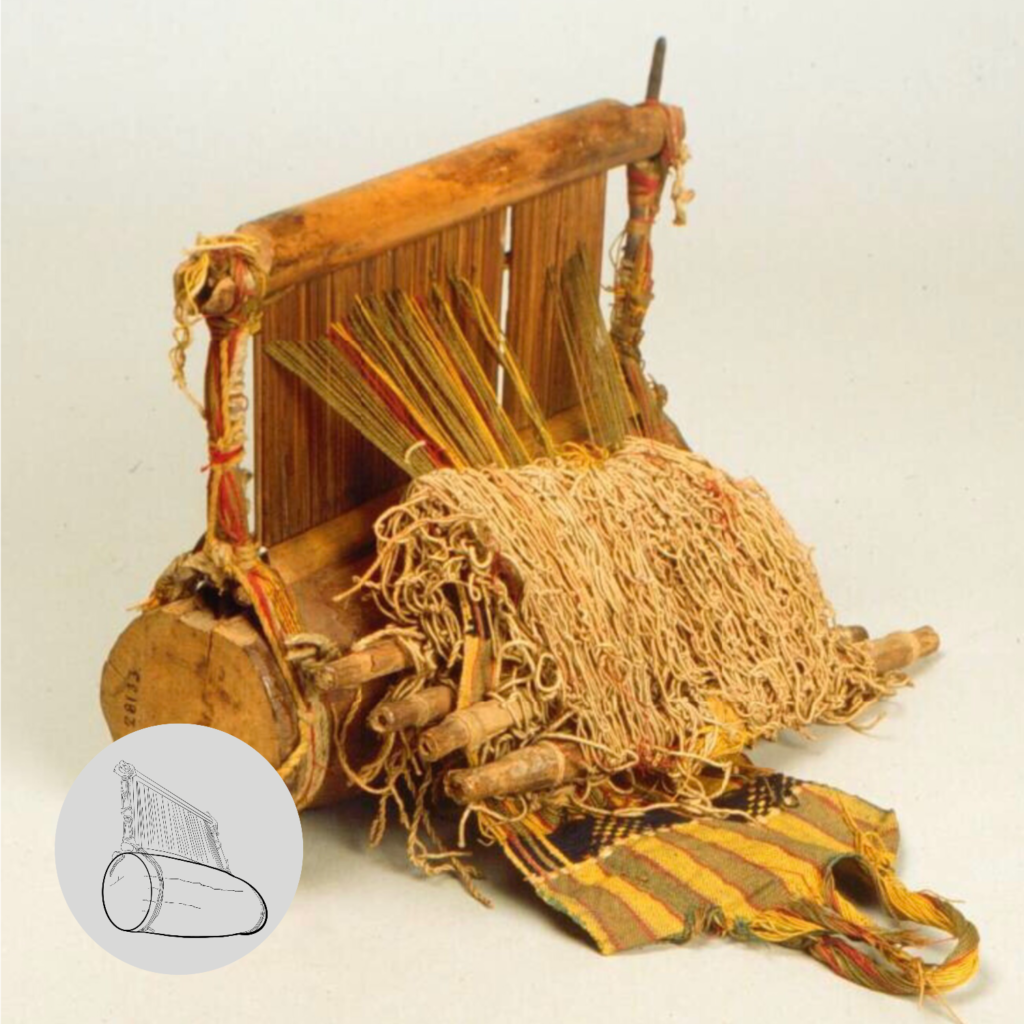
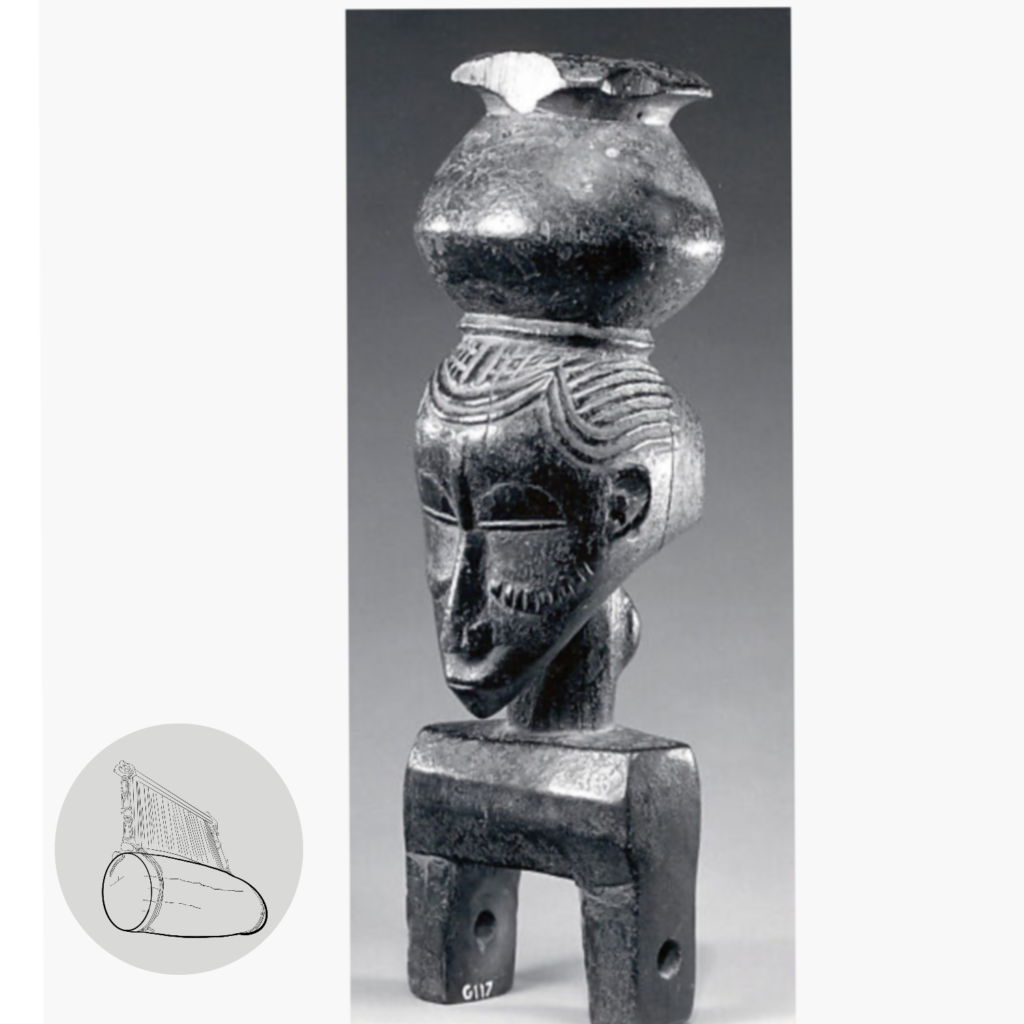
Before mechanization, looms across Africa already functioned as precision technologies. In West Africa, strip‑weaving traditions—seen across regions including present‑day Ghana, Nigeria, and Mali—relied on narrow‑band looms, tension control systems, pattern memorization and execution, and modular construction (strip assembly into larger cloths).
These were not simple tools. They were controlled environments for executing patterned logic. The weaver configures the loom (setup phase), encodes pattern rules mentally or culturally, and executes sequences through repeated motion. This is not improvisation. It is structured.
As Mozambican mathematician Paulus Gerdes—who spent decades documenting African mathematical heritage—writes: “In many African crafts, mathematical ideas are not taught as abstract concepts but are embedded in the techniques themselves.” Gerdes’s work, particularly his studies of Mozambican and Angolan weaving, shows that African artisans used symmetry, repetition, translation, and rotation as fundamental operations in design.
This embedding is critical. Because it reveals something often ignored: the absence of written formulas does not mean the absence of mathematics. It means the mathematics is being performed.
Weaving as Algorithmic Execution: The Tellem Case Study
To understand weaving is to understand instruction. A textile is built through ordered sequences, repeated operations, and conditional variations. Each row depends on the previous one; each pattern depends on a rule.
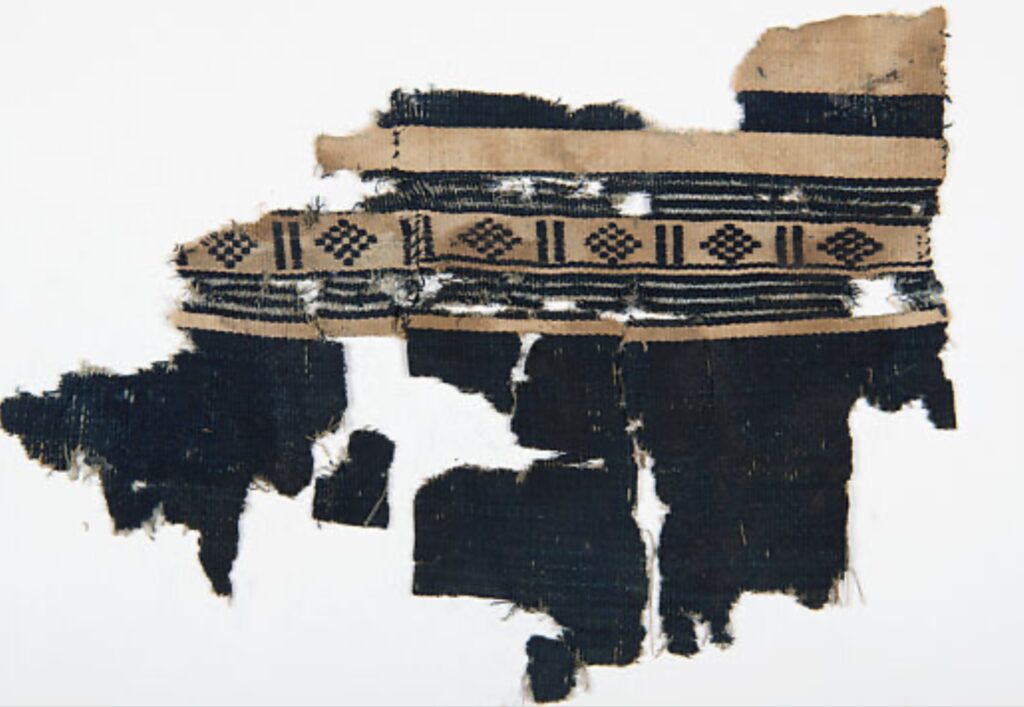
The Tellem people, who lived in the Bandiagara cliffs of present‑day Mali, left behind textiles that continue to challenge assumptions about pre‑industrial design. These textiles display geometric repetition, symmetry across axes, and structured variation within constraint. What makes them significant is not just their visual complexity but their generative logic.
Tellem textile, Mali
Patterns are not isolated images. They are constructed through repeatable units, transformation rules, and extendable sequences. Gerdes’s work on African textiles broadly shows that such systems involve what he calls “systematic exploration of symmetry and pattern construction.” These are the same operations used in computer graphics, pattern generation algorithms, and digital modeling systems.
What the Tellem textiles demonstrate is that a finite rule system can produce an indefinitely extendable pattern. This is the essence of algorithmic generation—not in theory, but in material form.
The Benin Bronzes: African Metallurgy as Parallel Innovation
African technological sophistication was not limited to textiles. The Benin Kingdom (in modern‑day Nigeria) produced some of the world’s most technically advanced metal castings—the so‑called Benin Bronzes. Using the lost‑wax method, Benin artisans created lifelike heads, intricate plaques, and ritual objects from at least the 13th century onward. Their work displayed not only extraordinary artistry but also mastery of alloy composition, inlay techniques, and large‑scale casting.
Yet the raw material—brass—came from Europe. Portuguese traders brought brass manillas (bracelet‑shaped currency) from Germany’s Rhineland to West Africa as part of the same trade networks that carried enslaved people. African artisans melted these imported objects and transformed them into works of profound cultural and technical achievement. When British forces looted Benin City in 1897, they took thousands of these objects, sold them to museums, and erased the knowledge systems that produced them.
This pattern—African skill combined with raw materials extracted through colonial trade, followed by violent appropriation—mirrors what happened with textiles. In both cases, the colonial narrative reframed African innovation as mere “craft” while European institutions profited from the objects and the knowledge embedded in them.
Infinite Pattern, Recursion, and the Ifá Information System
Modern computing relies on the idea that simple instructions can generate complex outputs and that systems can scale without losing structure. This is the foundation of fractals, recursive algorithms, and procedural design.
The research of Ron Eglash, a scholar of African fractals, makes this connection explicit. He writes: “Many African designs use recursive scaling, where a pattern is repeated at different levels of size.” This is not symbolic; it is structural. “These are not just designs, but processes.” That distinction matters, because processes are what define computation.
African knowledge systems extend this logic beyond textiles. The Ifá system of the Yoruba people—documented extensively by the Nigerian scholar Wande Abimbola, who served as Vice Chancellor of Obafemi Awolowo University—is built on 256 odu (signs) generated through a combinatorial, binary‑like process. When a babalawo (priest) casts the sacred palm nuts or opele chain, they produce a specific odu based on established rules. Each odu is linked to a vast corpus of verses (ese) that encode history, philosophy, medicine, and ethics. The interpretation follows structured pathways, applying stored knowledge to the querent’s situation.
Western scholars labeled Ifá a “divination system.” The term carries assumptions of irrationality, mysticism, and guesswork. But Ifá is better understood as a knowledge system—a logical, rule‑based method of storing, retrieving, and applying information. The operations are not random; they follow predictable combinatorial logic. The years of training required to memorize the ese are no different from the training a computer scientist undergoes to master programming languages and algorithms.
In fact, Ifá and modern artificial intelligence share a fundamental structure. When you consult an AI, you ask a question; the system processes it through a vast dataset, retrieves relevant patterns, and generates a response based on encoded rules. A babalawo does the same: the querent’s concern is mapped to an odu; the odu retrieves the appropriate verses; the babalawo applies the wisdom to the situation. One practice is called “divination”; the other is called “artificial intelligence.” The difference in naming reflects not the nature of the practice, but the racial and colonial hierarchies that determine which knowledge counts as “science” and which is dismissed as “tradition.”
Long before the formalization of binary code in Europe, African knowledge systems such as Ifá developed complex combinatorial and binary‑like structures for storing and processing information. These systems, alongside textile pattern encoding, demonstrate that computational thinking was not invented in the West but has multiple global origins—many of which were later marginalized during colonialism.
The Industrial Revolution: Mechanization Without Acknowledgment
Textiles drove the Industrial Revolution. Mechanized spinning and weaving transformed production. But this transformation relied on raw materials extracted through colonial systems, labor extracted through slavery, and knowledge extracted through global contact.
European mechanization did not arise from a vacuum. The first successful power loom, patented by Edmund Cartwright in 1785, was developed in a context where British factories processed cotton grown by enslaved Africans in the Americas and sold finished cloth to West African consumers whose preferences shaped global production. The logic of weaving—sequencing, repetition, pattern encoding—had existed for centuries in African and other non‑European textile systems. Industrialization scaled that logic, but it did not invent it.
Why, then, did Africa not develop its own mechanical looms? Some scholars point to divergent technological trajectories: African ironworkers used bloomery furnaces, which produced malleable iron perfect for forging tools and weapons but not molten iron for casting large machine components; European blast furnaces, developed partly for cannon production, enabled cast‑iron looms. From this perspective, the difference reflects material constraints and choices, not a hierarchy of “advancement.” Yet this framing, while common in academic literature, risks deflecting attention from the more fundamental issue: African textile industries were actively undermined by colonial policies that flooded markets with cheap European machine‑made goods, redirected raw materials, and dismantled local production. Whether African ironworkers could have eventually developed cast‑iron looms under different conditions is a question that remains open—and one that colonial violence foreclosed.
As Walter Rodney, the Guyanese historian, wrote in How Europe Underdeveloped Africa: “The only positive development in Europe was at the expense of Africa and other parts of the world.” This applies not only to resources—but to systems of knowledge.
The Politics of Recognition: Why Knowledge Was Categorized by Race
The problem is not that African systems lacked sophistication. The problem is that they were not recognized as such.
Cedric J. Robinson, author of Black Marxism, argues that “the development, organization, and expansion of capitalist society pursued essentially racial directions.” This includes how knowledge is categorized. Under this system, African systems became “craft” or “tradition,” while European systems became “science” and “technology”—even when both operated through pattern, logic, repetition, and transformation.
This erasure was not passive. Colonial collecting was systematic. Take the Hina textile from northern Cameroon: a cotton fabric taken during a German “punitive expedition” in 1908, when villages were burned and people killed or taken hostage. The cloth was sold to a museum, inscribed with the catalog number of the officer who led the assault, and its original name, maker, and meaning were lost. Such looted textiles joined Benin Bronzes and other objects in European collections, where they were reclassified as “ethnographic artifacts” rather than evidence of technological sophistication. Colonial regulations often required that objects acquired during state‑sponsored expeditions go to museums, ensuring that African knowledge was physically removed and reframed.
The connection between textiles and computing is not speculative; it is historical. Punch cards from the Jacquard loom influenced early computing. Pattern encoding maps directly onto binary logic. Mechanical repetition prefigured automation. But beneath this history is a deeper continuity: the logic of computing did not originate with machines. Machines inherited it. And that logic was already present in textile systems, pattern traditions, and knowledge practices across Africa and its diaspora.
Conclusion: The Technology That Was Always There
The question is no longer whether textiles contributed to modern technology. The question is: why were they never fully recognized as technology in the first place?
If we redefine technology as systems of structured knowledge and processes that encode and reproduce information, then textiles—especially African textile systems—are not peripheral. They are foundational.
And the history of technology, as it is currently told, is not incomplete by accident. It is incomplete by design.
References
· Abimbola, Wande. Ifá: An Exposition of Ifá Literary Corpus. Oxford University Press, 1976. · Eglash, Ron. African Fractals: Modern Computing and Indigenous Design. Rutgers University Press, 1999. · Gerdes, Paulus. Geometry from Africa: Mathematical and Educational Explorations. Mathematical Association of America, 1999. · Gerdes, Paulus. African Mathematics: From Bones to Computers. University Press of America, 2008. · Robinson, Cedric J. Black Marxism: The Making of the Black Radical Tradition. University of North Carolina Press, 1983. · Rodney, Walter. How Europe Underdeveloped Africa. Bogle‑L’Ouverture Publications, 1972. · Soloum, Salomé. “The Hina Textile: Colonial Looting and Museum Collections.” TRAFO Blog, 2025. · Skowronek, Tobias, et al. “German Brass for Benin Bronzes.” Journal of Archaeological Science, 2023.
Perhaps nowhere is the tension between tradition and necessity more visible than in men's traditional clothing. The Chobolobo article is explicit:
"The clothing was made from sugar and flour packaging. In the past, sugar, and flour used to come in big sacks. The resourceful minds of the locals took these sacks and created clothing with it."
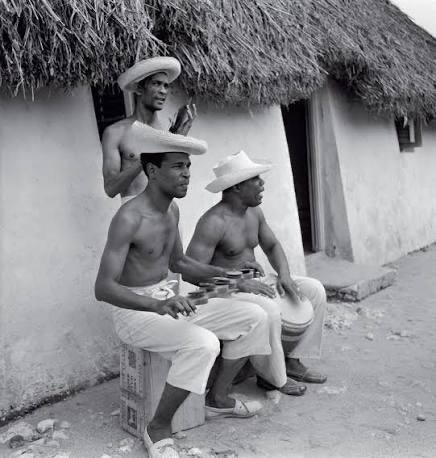
musicians 1900’s Curacao
This single sentence contains a world of meaning. It tells us that what is now considered "traditional" men's attire—the cream-colored pants and shirt worn at cultural celebrations—began as industrial waste, repurposed by people who had no other options. The resourcefulness was theirs; the necessity was imposed.
Braiders at work 1900’s
The Global Practice of Sack Clothing
This was not unique to Curaçao. Across the Atlantic world, from the 1880s through the 1950s, people repurposed flour and sugar sacks into clothing, bedding, and household items. The practice intensified during the Great Depression and World War II, when textiles were scarce and expensive. In the United States, feed sacks were so widely used that by the late 1930s, an estimated three million Americans were wearing feed sack clothing—dresses, shirts, quilts, curtains, sheets, mattress covers, pajamas, and even undergarments. In Norway, women made blouses and undergarments from flour sacks, sometimes leaving the printed labels visible as a quiet joke about the origins of their clothing. In the Turks and Caicos Islands, elders recall that underwear was made from the bags that flour came in, and seamstresses would obtain cloth and supplies from merchant boats.
The practice was born of poverty, but it was sustained by skill. Women everywhere developed techniques to transform coarse, stamped sacks into wearable garments. They knew how to remove printed labels—soaking in green soap, scrubbing, bleaching in sunlight—and how to soften rough fabric through washing and beating. This was not tradition in the sense of cultural inheritance passed down unchanged. This was tradition as survival strategy, repeated wherever people faced scarcity.
What the Curaçao Record Shows
In Curaçao, men wore "cream colored pants with a loose shirt or a button-up shirt of a similar shade." That cream color was not chosen from a palette of options. It was the natural, undyed color of the unbleached cotton sacks in which flour and sugar arrived on the island. The garment was defined by the material available, not by aesthetic preference.
The Chobolobo source places this practice within living memory, noting that today's traditional clothing uses "different types of textile that are more colorful and with patterns." The flour sack is gone, replaced by fabrics chosen for beauty rather than scarcity. But the cream color persists—reproduced deliberately, in finer materials, as a marker of heritage. The connection between the color and its origin has been broken. What was once the signature of poverty is now a signifier of tradition.
The Labor Behind the Garment
The Chobolobo article tells us what the sacks became, but it does not detail how they were transformed. To understand that, we must look to community knowledge preserved through generations of Curaçaoan women, and to the broader Caribbean context of textile practices.
The coarse sackcloth would have been stiff, uncomfortable against skin, marked with printed labels from the mills. Before it could become clothing, it had to be worked. Women developed techniques:
· Softening the fabric through beating, washing, and working the fibers until they yielded
· Stiffening it with cassava paste to create crisp creases and a finished appearance worthy of formal wear
· Adding lace for embellishment and dignity, refusing to let their families wear plain sacking
The cassava paste is particularly significant. Cassava—manioc, yuca—was an indigenous crop of the Americas, long cultivated by the Arawak, Carib, and Taino peoples long before European arrival. By the time of slavery, it had become a staple throughout the Caribbean, valued for its versatility and its ability to grow in poor soils. The starch could be extracted by grating the root, mixing with water, straining through cloth, and allowing the sediment to settle. The resulting paste could be used wet or dried and stored.
Jill Becker's research at the University of Technology, Jamaica, confirms that cassava was used in Caribbean textile applications, including resist dyeing. The Caribbean Association of Home Economists has documented cassava's role in regional textile crafts. Scientific studies verify that cassava starch increases the stiffness of cotton fabric, making it ideal for creating the crisp finish required for formal wear. And the practical method—accessible to anyone with access to the root—involved mashing, straining through cloth to produce "starch milk," and applying the wet sediment directly to fabric.
In Aruba, ethnographic sources note that ground cassava was "used as starch for fabrics," a practice carried from indigenous ancestors through generations. The knowledge of how to process cassava for food and for cloth was part of the inherited wisdom of Caribbean women.
The Unrecorded Labor of Women
Notice who performed this labor. The Chobolobo article tells us that women sewed their own clothing. It tells us that traditional clothing is still "often made by elderly women." But it does not tell us about the hours of beating fabric to soften it, the careful preparation of cassava starch, the delicate addition of lace trim. This work was too mundane to record, too feminine to merit documentation, too ordinary for the archives.
1900’s Braiders
And yet this unrecorded labor was the very thing that transformed a flour sack into a garment worthy of being called traditional. The men's cream-colored shirt, now a symbol of Curaçaoan heritage, began as a sack, softened by hand, starched with cassava, and trimmed with lace by a wife or mother who refused to let her family wear plain sacking. She could not control the economic conditions that left her dependent on flour sacks for cloth. But she could control what she made of them.
The Question of Tradition
So we return to the question that runs through this entire study: Is this tradition, or is this necessity?
The men's cream-colored shirt is both. It is necessity because it began as a flour sack, the only material available to people too poor to buy cloth. It is tradition because generations of women developed the skills to transform that sack into something wearable, even beautiful. It is necessity because the color was not chosen. It is tradition because that color has been remembered and reproduced long after the sacks themselves disappeared.
The connection between the shirt and its origin is broken. Most people who wear it today at Seú or other cultural celebrations do not think of flour sacks. They think of heritage, of identity, of belonging. And they are not wrong. The heritage is real. But it is a heritage forged in scarcity, not chosen in freedom. The shirt carries within it the memory of poverty, even if that memory has been smoothed over by time and pride.
Creative Survival
The details of how survival was made creative—the softening, the starching, the lace—were acts of dignity performed in conditions that offered little dignity. The women who did this work could not choose their material. But they could choose what to make of it. They could choose to add lace. They could choose to starch the fabric until it held a crease as sharp as any gentleman's. They could choose to transform a sack into a garment their husband or son could wear with pride.
This is not tradition as timeless inheritance, passed down unchanged from ancestors who designed it in freedom. This is tradition as creative survival—the material record of a people who, denied everything, made something of their own. The connection may be broken, but what was made in that broken space still matters.
Part IV: Headwraps and Straw Hats – Status, Labor, and Performance
The Headwrap: African Continuity and Sartorial Insurgency
The headwrap styles documented at Chobolobo—Punta di Skálo for labor, Pèchi Yaya for celebration—reveal how a single garment could encode complex social information. The Punta di Skálo's supportive knot was functional: it allowed women to carry buckets of fish or vegetables door-to-door as vendors. This was not ceremonial dress; it was workwear, designed by women for women's labor.
Yet these same headwraps, when made of finer Madras cloth and tied in the Pèchi Yaya style, became garments of celebration, worn to baptisms and first communions. The same practice—wrapping the head—could signify either subsistence labor or spiritual occasion. The difference lay in the cloth and the tie, choices made within tight economic constraints.
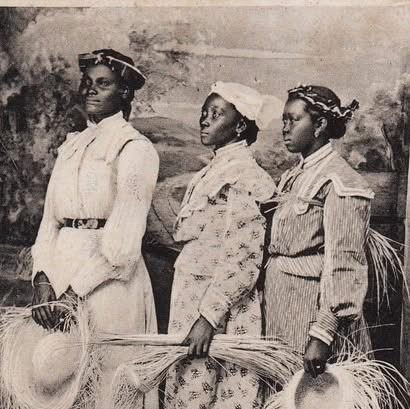
But to read the headwrap only through the lens of function or occasion is to miss its deeper significance. Recent scholarship has reframed the Afro-Creole headwrap as a site of what Nicole Willson terms "sartorial insurgency"—a form of revolutionary counternarrative authored by women of colour through acts of creativity, ingenuity, and domestic labour. In the colonial circum-Caribbean, headwraps were not merely practical accessories; they were material texts through which Black women asserted agency in societies designed to deny it.
The colonial archive, dominated by the voices of white men, often reduced women of colour to the trope of the "tropical temptress"—a figure of seduction, excess, and degeneracy that served to justify racial hierarchies. Yet encoded within these very accounts, Willson argues, is a subtextual fear of Black female agency. The elaborate headwraps that so fascinated and unsettled colonial observers were not signs of submission but of rebellion. They represented what Danielle Skeehan has called "extra-discursive and material texts"—traces of Black female insurgency that bear unique witness to experiences the formal archive sought to erase.
Before the headwrap even touched the hair, there was the labor of grooming—combing with forks, plaiting, twisting, and threading hair with twine, practices carried directly from Africa that prevented tangles and maintained a sense of cultivated personhood in conditions designed to strip it away.
The Tignon Laws: Imposition and Subversion
This tension between control and creativity is nowhere more visible than in the history of the tignon laws of Louisiana. In 1786, Governor Esteban Rodríguez Miró issued a decree requiring all women of African descent—whether enslaved or free—to cover their hair with a knotted headwrap. The stated purpose was to maintain racial distinctions and curb the "audacious" displays of free women of colour, whose elaborate hairstyles and fashionable dress were seen as threatening to the social order.
The law was intended as humiliation. The headwrap had long been associated with enslavement and labour; forcing all Black women to wear it was meant to mark them as inferior, to strip them of the visual markers of status and beauty they had claimed for themselves.
But the women subverted this intention. Rather than accept the headwrap as a badge of shame, they transformed it into an opportunity for creativity. They sourced the finest fabrics—silks, satins, imported Madras—and wrapped their heads in increasingly elaborate and artistic styles. They added jewels, feathers, and ornaments. What was meant to diminish them became a canvas for their artistry and a marker of their dignity. The tignon law did not suppress Black women's self-fashioning; it inadvertently created a new tradition that spread throughout the Americas.
This history matters for Curaçao. While the Dutch Caribbean had its own specific legal codes, the pattern is consistent across the colonial Americas: headwraps were sites of struggle between the impulse to control Black women's bodies and the determination of those women to define themselves. The Punta di Skálo and Pèchi Yaya are not merely functional or festive styles. They are the descendants of this longer history—styles that carry within them the memory of both oppression and resistance.
Straw Hats: Local Craft, Imperial Education, and Global Markets
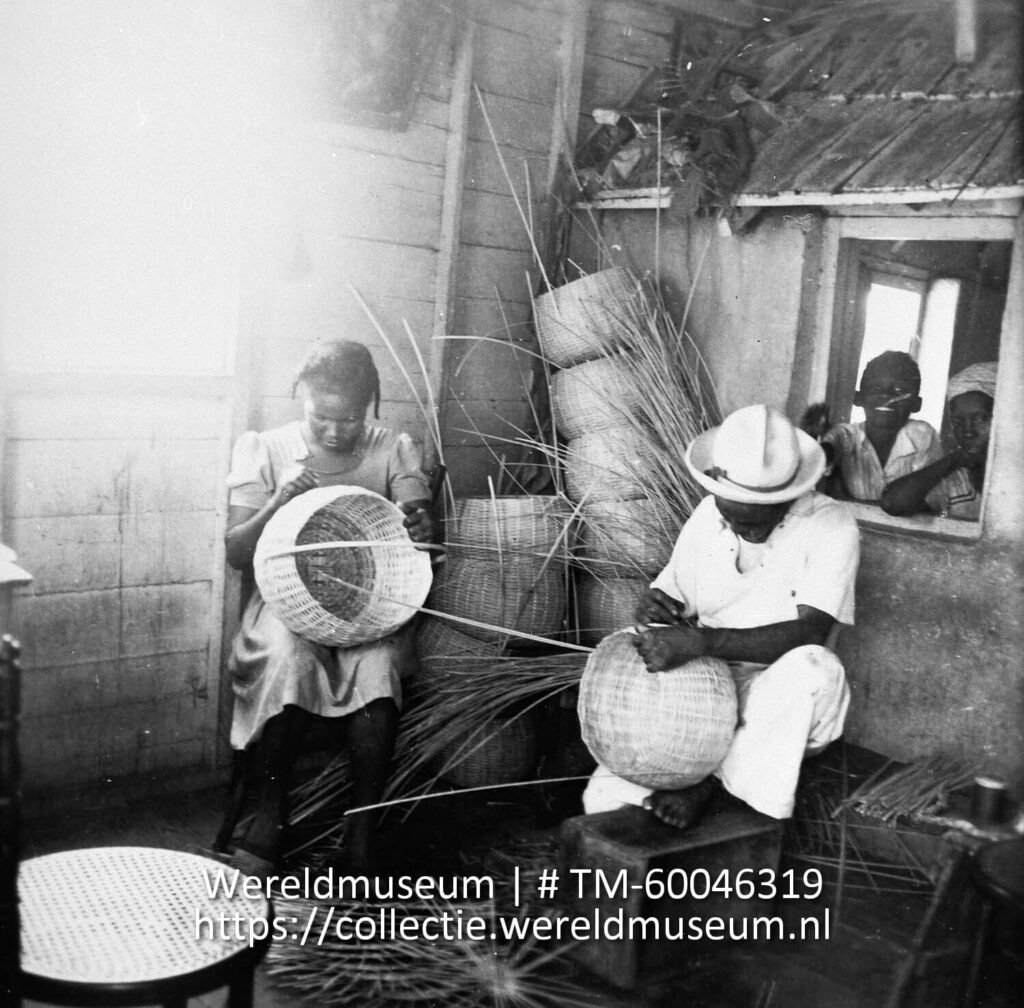
The men's straw hat tells a parallel story of stratified necessity, but with its own distinct entanglements of labour, colonialism, and global commerce. The Chobolobo source notes that for work on the kunuku (plantation), men wore locally hand-braided straw hats with "damaged edges and were less finely braided." These were functional objects, made from local fibers, designed for sun protection, and discarded when worn. For formal occasions, however, men sought hats imported from Cuba—finer, better made, status objects. The local product was for labor; the imported product was for presentation.
But the story of straw hat production in Curaçao is more complex than this simple hierarchy suggests. As Charlotte Hammond's research documents, from the late nineteenth through the mid-twentieth century, straw hat making in Curaçao became entangled with colonial education, international exhibitions, and global capitalist markets.
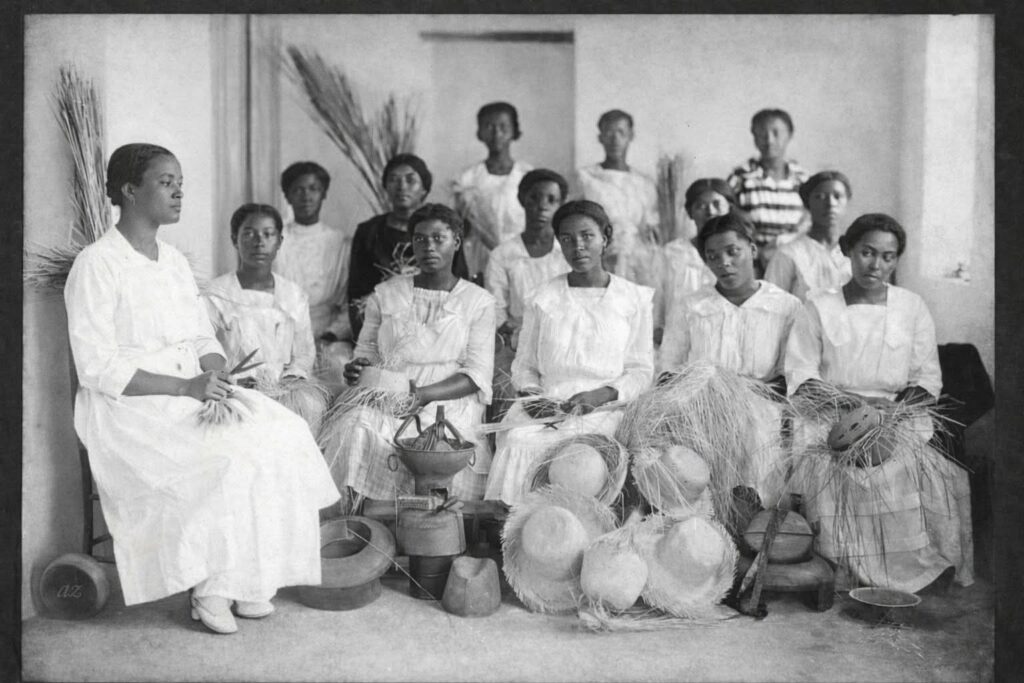
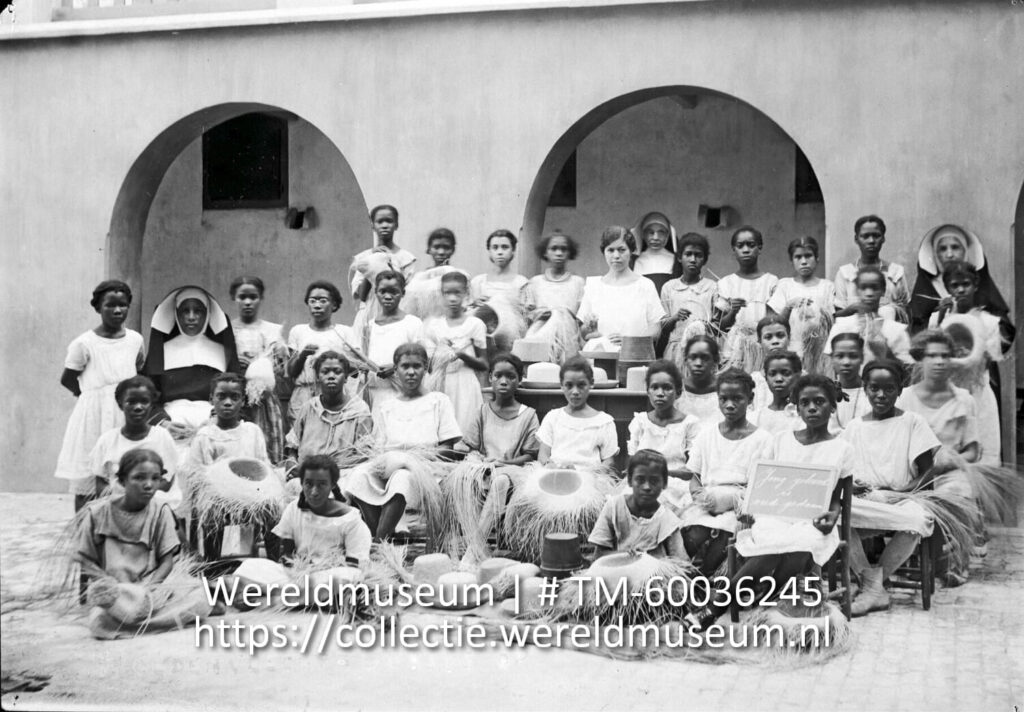
Up until 1946, as a strategy of the Catholic church's "civilising mission," young women in Curaçao were trained to plait the so-called "Panama hat" at technical schools run by the church. The schools focussed on training young Black women in sewing and a range of hat-plaiting techniques. The church legitimised this education as an important tool to combat unemployment and instil respectability and morality in young Curaçaoan women. The ideology underpinning this "civilising mission" touted the education of a work ethic—imposed by God—as a means to counter the threat of idleness associated with sinful activity and the post-emancipation freedom of enslaved workers.
The products of this labour were often exhibited at international expositions and exported for sale in Europe and the United States. A report from the Brussels 1910 world exhibition describes the huge sales of both "simple" and "finely woven" straw hats from Curaçao that led to a second shipment quickly selling out. Conscious of the economic potential, the Dutch reporter lamented the lack of funds allocated to bring several Curaçaoan women hat braiders to the exhibition "to better acquaint them with the requirements of the European market." The bulletin reveals Dutch admiration for this indigenous skill, yet this respect was ambivalent: local craft production was framed as outside modernity, static, and unable to meet the "progressive" standards of a European market without foreign intervention.
Hammond's analysis is trenchant: missionary education that claimed to modernise, industrialise, and revalue local handicraft skills for the benefit of local populations instead perpetuated colonial gendered and racialised divisions of labour. These schools prepared and disciplined students for factory work in global textile industries. The straw hat industry in Curaçao was not simply a matter of local craft serving local needs; it was integrated into a global capitalist system that extracted value from Black women's labour while simultaneously devaluing it.
Counter-Plantation Knowledge and Resistance
Yet even here, within systems designed for exploitation, there were spaces of resistance. Drawing on Jean Casimir's concept of contre-plantation (counter-plantation), Hammond explores how histories of indigenous craft knowledge during specific periods of resistance nurtured what she calls "disidentification with a gendered logic of labour exploitation and racial capitalism."
Casimir's concept is crucial: the contre-plantation refers to the ways enslaved and freed people developed survival strategies and cultural practices on the margins of the formal plantation economy. Craft knowledge, developed covertly on the margins of the plantation or through urban artisanal production, nourished resistance to continued attempts to restore plantation economies after emancipation. When young women in Curaçao learned to plait straw, they were not simply absorbing a colonial work ethic. They were also participating in a longer tradition of indigenous craft knowledge that had sustained their ancestors through slavery and into freedom.
The straw hat, like the headwrap, is thus a contradictory object. It carries the marks of its production within colonial education systems and global capitalist markets. But it also carries the knowledge of hands that learned from mothers and grandmothers, techniques that predated the missionary schools and would outlast them. The "damaged edges" and "less finely braided" work hats that men wore on the kunuku were not merely inferior versions of the fine Cuban imports. They were products of a different economy—one oriented toward survival and use rather than export and profit.
Conclusion: What Covers the Head Tells a Story
Both the headwrap and the straw hat, then, are sites where multiple histories converge. They are functional objects that protect from sun and labour. They are markers of status that distinguish work from celebration, local from imported. They are products of colonial economies that sought to discipline Black bodies and extract value from Black labour. And they are canvases for creativity and resistance, through which women and men asserted their dignity and their personhood.
The Punta di Skálo with its supportive knot, the Pèchi Yaya for special occasions, the rough work hat for the kunuku, the fine Cuban import for formal wear—each carries a story. Together, they remind us that what covers the head is never merely covering. It is communication, identity, memory, and sometimes, insurgency.
Part V: The Seú Parade – From Labor to Spectacle
The Seú harvest parade, held annually on Easter Monday, is described as a celebration of "connectedness to mother nature" and a reenactment of enslaved workers dancing and singing while carrying their harvest to the storage house. Today, over forty-five groups—nearly five thousand people—process through the streets of Otrobanda and the western districts, their colorful costumes and headwraps transforming the route into a river of movement and memory.
But the transformation of this procession demands critical analysis. What was once a forced march—enslaved people transporting the fruits of their unpaid labor to their enslavers' storehouses—is now a voluntary cultural parade. The songs of resistance become heritage performances. The work clothes become costume. The question at the heart of this study—tradition or necessity—finds no clearer expression than in the annual journey of the Seú.
The Ritual in History
The Seú tradition emerged during slavery, specifically around the harvest of sorghum, a grain introduced from West Africa that became a staple crop on Curaçao's plantations. In the eighteenth and nineteenth centuries, the purpose of the Seú celebration was to thank the gods for the harvest. Enslaved workers would cut the sorghum stalks in the fields—men doing the cutting, women gathering the harvest into baskets—and then process, singing and dancing, to the magazina (warehouse) where the crop would be stored. After the harvest was secured, celebrations continued in the square near the plantation house, where the shon (landowner) could observe the festivities.
The ritual unfolded in three distinct phases. The first phase was the harvest itself, accompanied by the rhythmic playing of the kachu (cow horn). The second phase was the procession to the warehouse, with workers singing songs in a fixed rhythm. The third phase, after the work was complete, brought the community together to sing and dance to the music of the tambú drum.
These phases encoded within them both the structure of enslaved labor and the creative response to it. The songs that accompanied the harvest and procession were work songs—but they were also repositories of memory, complaint, and coded resistance. The tambú music that closed the celebration carried particular danger: it was considered pagan by the Catholic Church and threatening by the colonial authorities. After emancipation, the tambú portion of the Seú was banned outright, an explicit attempt to suppress the creativity of the Afro-Curaçaoan population.
Suppression and Revival
The trajectory of the Seú after emancipation mirrors the larger story of Afro-Curaçaoan cultural expression. With the arrival of the Shell oil refinery in 1915 and the accompanying modernization, the Seú gradually lost its original function. The harvest economy that had given it meaning was being supplanted by industrial labor. The tradition risked fading entirely.
It was rescued by women. In the 1940s and 1950s, Ursulita Martis led an effort to breathe new life into the Seú celebration. Thanks to her work, and to the many women who carried the knowledge of songs, dances, and dress, the tradition was revived. What had been a labor ritual tied to the agricultural calendar became an annual cultural parade, a conscious performance of Afro-Curaçaoan identity.
This revival was not simple preservation. It was transformation. The Seú became something new: a celebration of heritage rather than a requirement of labor. The participants were no longer enslaved workers compelled to march; they were free people choosing to remember. The songs were no longer sung under the eye of the shon; they were offered to ancestors and to the community.
The Costume Today
Today's Seú features "colorful clothing designs and headwraps" that "reflect both the modernization and the creativity of the community." The saya ku djèki is now made from "different types of textile that are more colorful and with patterns." The flour sack is gone, replaced by fabrics chosen for aesthetics, not scarcity. The cassava paste that once stiffened a man's collar has been forgotten by all but the oldest families. The lace added by candlelight survives only in the heirlooms passed down through generations.
The men wear straw hats—but these are no longer the rough work hats with "damaged edges" worn on the kunuku. They are finer, more deliberate, chosen to complete an outfit rather than to shield a laborer from the sun. The distinction between local work hat and imported formal hat has blurred into a single "traditional" accessory.
And yet, the connection to the past is not entirely lost. Participants still speak of honoring their grandinan (ancestors). The music still uses instruments born of the plantation—the chapi (garden hoe), the kachu (cow horn), the tambú drum. The procession still moves un pia un pia (slow step by slow step), as it did when workers carried their harvest to the warehouse. The body remembers what the mind may have forgotten.
Is This Loss or Gain?
The question is unavoidable. The parade preserves memory, but it also sanitizes it. The contemporary viewer sees beauty and tradition; they do not see the flour sack, the cassava paste, the lace added in candlelight by women determined to create dignity from deprivation. The design has been abstracted from its conditions of production. The struggle that produced it has been smoothed over by pride and by time.
This is what Jean Casimir, the Haitian sociologist, might call the movement from plantation to counter-plantation. The plantation was the system that planted people to plant crops, that reduced human beings to adjuncts of commodity production. The counter-plantation was everything the enslaved and their descendants built in opposition to that system: the smallholdings, the kinship networks, the cultural practices, the autonomous spaces where dignity could be cultivated even in the absence of freedom.
The Seú, in its origins, was a product of the plantation—a ritual embedded in the rhythms of forced labor. But in its survival and transformation, it became something of the counter-plantation. It became a space where Afro-Curaçaoan identity could be performed, remembered, and passed on. The flour sack became a shirt. The work song became a heritage. The forced march became a voluntary parade.
This is not simple loss, nor is it simple gain. It is the complex process by which oppressed people take the materials of their oppression and make something of their own. The connection between the Seú of the eighteenth century and the Seú of today is broken—but what was made in that broken space still matters.
The Carnival Connection
Scholars of the African diaspora have traced similar transformations across the Americas. Raphael Njoku's work on West African masking traditions and diaspora masquerade carnivals shows how enslaved Africans carried with them not static customs, but dynamic practices of memory and performance. The masquerade, like the Seú procession, served multiple functions: it was a form of spiritual practice, a method of social control, a technique of remembering, and a medium of resistance.
When Africans were forcibly brought to the Americas, these practices did not simply disappear or survive unchanged. They adapted. They incorporated new materials, new contexts, new meanings. The Caribbean carnival traditions—Trinidad's Carnival, Cuba's comparsas, Haiti's rara—all bear the marks of this creative adaptation. They are neither purely African nor purely European. They are something new, born of the violent encounter between worlds.
The Seú belongs to this family. It is Curaçao's version of a pan-Afro-diasporic phenomenon: the transformation of forced ritual into voluntary celebration, of labor into performance, of survival into art.
Conclusion: What Do We Call Tradition?
This analysis has traced the threads of Curaçaoan dress through:
· The holds of Dutch slave ships carrying Madras cloth, traded for human beings on the African coast
· The backs of enslaved women wrapping African-style headwraps from European fabric, transforming commodity into memory
· The sumptuary laws of colonial regimes that sought to control Black women's bodies, and the creative subversion of those laws through fabric and style
· The empty flour sacks of the post-emancipation poor, transformed into cream-colored shirts that would become markers of heritage
· The cassava root, mashed and strained into starch to give those shirts shape and dignity
· The lace, added by hand, turning necessity into beauty
· The missionary schools that trained young women in straw plaiting for global markets, even as they sought to discipline them into colonial norms
· The Seú parade, transforming forced labor into voluntary celebration, work song into heritage performance
At every stage, the clothing now called "traditional" was shaped by forces its wearers did not control: the global textile trade, the economics of slavery, the scarcity of the Depression, the social codes of colonial society, the educational interventions of church and state. Yet at every stage, Curaçaoans made choices within those constraints. They preserved African headwrap styles. They sewed their own garments. They developed techniques—softening, starching, embellishing—that turned industrial waste into wearable art. They wore their best to baptisms and their work-wraps to sell vegetables. They adapted masking traditions from West Africa to new contexts, new materials, new meanings.
The Counter-Plantation Framework
Jean Casimir's concept of the counter-plantation offers a powerful lens for understanding what this process means. The plantation system was designed to reduce human beings to adjuncts of commodity production. It sought to strip them of memory, of culture, of autonomous social life. But the enslaved and their descendants refused to be reduced. They built something else on the margins of the plantation: smallholdings, kinship networks, religious practices, aesthetic traditions. They created, in Casimir's terms, a "counter-plantation" that existed in opposition to the logic of the master.
The traditional clothing of Curaçao is a product of this counter-plantation. It was made from the scraps and discards of the plantation economy—the coarse fabric issued to laborers, the empty sacks that had held imported flour. But it was made according to aesthetic principles that remembered Africa. It was worn with a dignity that the plantation never intended. It was passed down through generations of women who taught their daughters to sew as their mothers had taught them.
This is not to romanticize. The counter-plantation was not a space of freedom; it was a space of survival within unfreedom. The clothing made in that space bears the marks of its origins. It is simple, modest, economical. It is made from what was available, not what was desired. But it is also beautiful, creative, meaningful. It carries within it the stories of the women who made it and the men who wore it.
So: Is This Tradition or Necessity?
The answer is both. It is necessity transformed by generations of creativity into something that feels like tradition. It is the flour sack, remembered not as poverty but as resourcefulness. It is the cassava paste, forgotten by written records but preserved in the hands of families. It is the headwrap, African in origin, Caribbean in practice, Curaçaoan in identity.
To call it merely "traditional" is to erase the struggle that produced it. To call it merely "necessary" is to erase the artistry that elevated it. The truer term might be survival design—the material record of a people who, denied everything, made something of their own.
The Broken Connection
The title of this essay names the problem: the connection is broken. The flour sack is no longer a flour sack; it is a "traditional" cream-colored shirt. The headwrap is no longer a marker of African identity preserved under oppression; it is a festive accessory. The Seú parade is no longer a memory of forced marches; it is a tourist attraction and a source of community pride. The cassava paste, the lace, the softening techniques—these survive only in the memories of the oldest women, if they survive at all.
This is not to say that contemporary Curaçaoan dress is inauthentic. Authenticity is not located in a fixed past, frozen and unreachable. Culture is always changing, always adapting, always making itself new. The women who sew saya ku djèki today for the Seú parade are not less authentic than their grandmothers who sewed from flour sacks. They are simply working with different materials, different contexts, different meanings.
But the broken connection is itself part of the story. It is what happens when oppressed people take the materials of their oppression—whether fabric from Dutch merchants or sacks from imported flour—and transform them into something of their own. The break is not a loss; it is the space where creativity happens. It is the gap between what was imposed and what was made, between the master's provision and the wearer's meaning.
What Remains
What remains, after this analysis, is not a simple story of victimhood or of triumph. It is a complex story of people who, facing conditions not of their choosing, made choices nonetheless. They chose to remember Africa in the wrapping of a headwrap. They chose to add lace to a flour sack. They chose to revive a harvest ritual that had lost its original function. They chose to pass their knowledge to their daughters.
The clothing they made carries the marks of these choices. It is modest because modesty was required of them, but it is also beautiful because beauty was something they required of themselves. It is economical because materials were scarce, but it is creative because creativity was how they survived. It is traditional because they kept making it, generation after generation.
So, what do we call tradition?
Perhaps we call it this: the material record of a people's ongoing conversation with their past, conducted under conditions not of their choosing, but carried out with whatever materials they had at hand. The connection may be broken, but the conversation continues. And what is made in that broken, continuing space—the shirt, the headwrap, the parade, the song—is worthy of the name tradition, if we understand that name to mean not timeless inheritance but creative survival.
References for Post 2 (Parts III, IV, V & Conclusion)
Allen, R. "The Harvest Ceremony Seú as a Case Study of the Dynamics of Power in Post-Emancipation Curaçao (1863-1915)." Caribbean Quarterly 56, no. 3 (2010): 13-29.
Becker, Jill. "Cassava Resist Dyeing: Traditional dyeing techniques in a new environment." Paper presented at the Biennial Conference of The University of the West Indies Schools of Education, St. Augustine, Trinidad and Tobago, April 2013.
Casimir, Jean. The Haitians: A Decolonial History. Chapel Hill: University of North Carolina Press, 2020.
Casimir, Jean. "La plantacion y la contraplantacion en la Historia del Caribe." In La Invención del Caribe. San Juan: Editorial de la Universidad de Puerto Rico, 1997.
"Cassava Resist Dyeing." Caribbean Association of Home Economists. http://caribbeanhomeeconomist.org/cassava-resist-dyeing/
"Episode CXXI -121: Yuca an Amerindian cultural heritage." Aruba Today, September 2021.
Hammond, Charlotte. "Straw craft, imperial education and ethnographic exhibitions as tightly braided sites of gender production in Haiti and Curaçao." Journal of Material Culture 28, no. 4 (2023): 515-538.
Jenson, Deborah. "Plot and counter-plantation: Jean Casimir and captive modernity." Cultural Dynamics 36, no. 3 (August 2024): 360-366.
Kirkland, Teleica. "Clothing as Resistance." Costume Institute of the African Diaspora. https://ciad.org.uk/directory/clothing-as-resistance/
Njoku, Raphael Chijioke. West African Masking Traditions and Diaspora Masquerade Carnivals: History, Memory, and Transnationalism. Rochester: University of Rochester Press, 2020.
Njoku, Raphael Chijioke. "Igbo/West African Masquerade Culture and the Dynamics of African Diaspora Carnivals." Lecture, Frontier Culture Museum.
Rathgeb, Jody. "Wear? Where? Keeping Islanders clothed in 'the old days'." Times of the Islands, Summer 2022.
"730. Curaçao's Thanksgiving Parade." 1000 Awesome Things About Curaçao. https://1000awesomethingsaboutcuracao.com/2013/04/12/730-curacao-awesome-thanksgiving-parade-seu/
Systad, Gunnhild. "The Use of Flour and Sugar Sacks in Clothing, Bedding, and More." Norwegian Textile Letter, February 2020.
The Story Behind the Traditional Clothing of Curaçao. Landhuis Chobolobo.
"Unraveling the History: When Did Flour Sacks Become Fashion?" Fashion Trend Tips, August 2025.
"A Sliver of Deep Blue Cloth." Haptic & Hue podcast, April 2023. https://hapticandhue.com/tales-of-textiles-series-5/
Willson, Nicole. "Sartorial insurgencies: Rebel women, headwraps and the revolutionary Black Atlantic." Atlantic Studies 19, no. 1 (2022): 86-106.
When visitors to Curaçao admire the vibrant saya ku djèki during the Seú parade, or when cultural festivals showcase women in elaborate headwraps and men in cream-colored shirts, these garments are presented as timeless expressions of Curaçaoan identity. They are called "traditional dress."
But this label obscures a more uncomfortable truth. What we celebrate as cultural heritage was born from the bodies of taken African people—men and women torn from their homelands, forced into the holds of Dutch slave ships, and deposited on an island where they would be required to rebuild identity from fragments. This essay interrogates, through a critical design lens, how the experience of enslaved Africans—their trauma, their memory, their creativity—shaped what became Curaçao's traditional clothing. It asks a fundamental question: Is this tradition, or is this necessity—preserved, polished, and rebranded over generations?
The garments now called "traditional" were not designed in freedom. They were assembled from the materials of oppression: the cargo lists of Dutch merchants, the coarse fabric issued to laborers, the empty flour sacks of impoverished families, and the starch of a cassava root grown on land they did not own.
Yet there is something more at work here—something that resists simple explanations of material scarcity. The saya ku djèki—that distinctive combination of wide skirt and fitted top—is not unique to Curaçao. Travel across the Black diaspora, and you will find its echoes everywhere. In Brazil, the baiana dress of Salvador's Carnival carries the same volumetric skirt and elaborate headwrap. In Colombia's Palenque, in the pollera of Panama, in the bata of Cuba's Santería practitioners, in the nagua of Venezuela's Afro-descendant communities, the same silhouette appears and reappears. It emerges in the quadrille dress of Haiti and the douillette of Martinique. The forms are not identical—each carries the imprint of its specific colonial power, its local materials, its particular history—but the family resemblance is undeniable.
What are we to make of this? The connections are not always scientifically traceable. There is no single shipping manifest documenting the movement of a skirt pattern, no colonial decree that mandated this particular silhouette across Dutch, Spanish, Portuguese, and French colonies. And yet the form persists—a deep structure carried in memory, in muscle, in the hands of women who taught their daughters to sew as their mothers had taught them. It suggests that taken African people, dispersed across the Americas, developed similar aesthetic solutions to similar problems: how to dress modestly under the gaze of oppressors, how to preserve dignity through fabric, how to signal identity through silhouette.
This opening observation—that the saya ku djèki belongs to a pan-Afro-diasporic family of dress—points toward research still to be done. If the same form appears in Curaçao and Brazil, in Cuba and Colombia, what does that tell us about the deep connections that survived the Middle Passage? What knowledge traveled not in books but in bodies, not in patterns but in memory? This essay focuses on Curaçao as a case study, but the questions it raises ripple outward, inviting future scholars to trace the threads that bind the Black Americas together.
Part I: The Raw Materials of Oppression – Textiles in the Slave Era
Before there could be a saya ku djèki, there had to be fabric. And in 17th and 18th century Curaçao, fabric arrived not for the comfort of the enslaved, but for the profit of the enslaver. The very fibers that would eventually become "traditional dress" first touched the island as cargo—listed in ledgers, exchanged for human beings, and distributed according to the logic of empire.
The Dutch Textile Machine
The Dutch were master textile traders. Through the Dutch East India Company (VOC), they flooded the Atlantic world with Indian cottons—calicoes, chintzes, and the distinctive plaid Madras cloth. By the 1600s, these fabrics were reaching Curaçao, but their journey tells us everything about the broken connection this essay traces. These textiles arrived not as goods for the enslaved to wear with pride, but as:
· Currency in the slave trade, exchanged for human beings on the African coast
· Cargo to be re-exported to Spanish colonies
· Payment for plantation infrastructure
· Clothing issued to enslaved laborers at the lowest possible cost
Madras cloth, now celebrated as a symbol of Afro-Caribbean identity, arrived as a commodity of empire. Its transformation into a marker of resistance and belonging happened despite its origins, not because of them. The same fabric that wrapped African bodies in the hold of a slave ship would later wrap the heads of their descendants in ceremonies of freedom. The connection between origin and meaning is not just broken—it is violently severed and painstakingly repaired by generations of women who refused to let the cloth carry only the story of their oppression.
The Paradox of Trade Cloth
This paradox deserves attention. The Dutch did not import Madras cloth for enslaved people. They imported it as trade goods—to be sold, bartered, and exchanged along the West African coast for more human cargo. That some of these textiles eventually reached the hands of enslaved people in Curaçao was incidental to their purpose. They were not gifts; they were the loose change of a brutal economy.
And yet, once in those hands, the cloth was transformed. A length of Madras—called injiri or 'George' by the Kalabari people of Nigeria, who had worn it for centuries before the slave trade—might be woven in South India, shipped by Dutch merchants to the West African coast, and exchanged for enslaved human beings. That same cloth, carried across the Middle Passage in memory as much as in baggage, might end its journey as a headwrap in Curaçao—wrapped in a style that remembered Africa, worn with a dignity the Dutch never intended. The cloth carried the violence of its journey, but it also carried possibility. This is the broken connection made visible: the same object can contain both trauma and resilience, both theft and creation.
Clothing the Enslaved: The Bare Minimum
When enslaved people were given clothing—and the word "given" itself is a deception, for nothing was given that their labor did not purchase many times over—it was not an act of kindness but of economic calculation. Coarse, cheap fabrics were imported specifically to outfit laborers at the lowest possible cost. These included:
· Osnaburg: a rough linen named for the German city where it was produced, stiff and uncomfortable against skin
· Low-grade cotton: often unbleached, undyed, and quickly worn thin
· Heavy wool: entirely unsuited to the tropical climate, likely issued because it was cheap, not because it was appropriate
These were the textiles of subsistence. They were designed for durability, not dignity; for covering, not expression. The Dutch were not interested in whether enslaved people felt human in their clothing. They were interested in whether the clothing would last another season before requiring replacement.
And yet—and this is the central tension of this entire study—even these scant materials became sites of meaning. As scholarship on Curaçaoan women documents, enslaved women took the rough fabric they were issued and made something more of it. They did not simply wear what they were given; they transformed it.
The Headwrap: Memory in Cloth
Nowhere is this transformation more evident than in the headwrap. The styles documented at Landhuis Chobolobo—Punta di Skálo with its supportive knot for carrying buckets, Pèchi Yaya for special occasions—are not European inventions. They are direct lines back to the African continent, preserved through the Middle Passage, adapted to new materials and new circumstances.
The headwrap tells us something crucial about how taken African people approached cloth. When they received coarse osnaburg or cheap cotton, they did not see only what the Dutch intended. They saw possibility. They saw memory. They saw a way to continue, in a new land, practices their mothers had taught them. The cloth may have been European, but the meaning was African.
This is an early act of what we might call design resistance: the refusal to let material be merely material, the insistence on imprinting identity onto even the most meager resources. The headwrap is not just a piece of fabric wrapped around hair. It is a repository of memory, a marker of occasion, a tool for labor, and a statement of selfhood—all at once.
The Connection That Was Never Supposed to Survive
The Dutch textile machine was designed to move goods and people as efficiently as possible. It was not designed to preserve African aesthetics or enable cultural continuity. And yet, despite every effort to strip enslaved people of their identities, the knowledge of how to wrap a head, how to style fabric, how to make cloth carry meaning—this knowledge survived.
It survived in the hands of women. It survived in the whispered instructions from mother to daughter. It survived in the muscle memory of fingers folding and tucking fabric. It survived because taken African people refused to let it die.
The connection was broken, yes—violently, deliberately, systematically broken. But it was also repaired, stitch by stitch, wrap by wrap, generation by generation. The saya ku djèki and the headwraps of Curaçao are not simply "traditional dress." They are the material evidence of that repair.
Looking Ahead
This chapter has traced the raw materials of oppression—the fabrics that arrived in Curaçao as cargo and currency. But materials alone do not make clothing. The next chapter examines how taken African people, particularly women, transformed these materials into the garments we now call traditional. It asks: When you are given nothing but coarse cloth and memory, what do you make? The answer is the saya ku djèki.
Part II: The Saya ku Djèki – Whose Design, Whose Modesty?
The saya ku djèki—a long skirt paired with a flared, button-up shirt—is today's iconic Curaçaoan women's outfit. It is described as modest, practical, and beautiful. But a persistent narrative lingers in some histories: that this modesty was imposed upon enslaved and freed women by the wives of slave masters, who, threatened by the presence of Black women in their households, sought to cover them according to European Victorian standards.
This explanation is too simple. More importantly, it is an explanation that erases agency. It assumes that Black women were passive recipients of dress codes rather than active participants in their own self-fashioning. The scholarship on dress in the Caribbean tells a different story—one in which African women retained, nurtured, and adapted their own aesthetic traditions, making conscious choices about when to resist and when to accommodate.
The Narrative We Must Challenge
The claim that slave masters' wives imposed modesty on enslaved women rests on a plausible premise: that white women in colonial households felt threatened by the presence of Black women and sought to control their appearance. This may well have happened. But to conclude from this that the saya ku djèki is simply a hand-me-down of Victorian modesty is to ignore everything we know about how enslaved women actually used dress.
If modesty were purely an imposition, we would expect to find records of enslaved women passively accepting whatever clothing was given to them. Instead, the historical record shows the opposite. Enslaved women exercised significant control over their clothing, using it as a symbol of resistance against European attempts at cultural annihilation. They maintained and nurtured African cultural characteristics in their dress, preserving aesthetic values that had nothing to do with Victorian morality.
What the Scholarship Actually Shows
Steeve Buckridge's foundational work on Jamaican women's dress documents that African cultural features—folklore, music, language, religion, and dress—were retained and nurtured in the Caribbean because they guaranteed the survival of Africans and their descendants. Dress was not a passive accommodation to white expectations; it was an active strategy of survival. Women had some control over their clothing whether as resistors or accommodators. The key word here is control.
When European elements did appear in enslaved women's dress, Buckridge argues, this was not simply imposition. Changes from more African modes to more European-influenced styles accompanied greater possibilities for social mobility. Women made calculated choices: adopting certain European elements could open doors, but this was a strategy, not submission. As Buckridge puts it, resistance and accommodation were not polar opposites, but melded into each other.
The Evidence of Colonial Fear
If slave masters' wives were so successful at imposing modesty, why did colonial authorities feel the need to pass laws controlling what enslaved women wore? Charlotte Hammond's research on the francophone Caribbean documents that dress was so powerful a form of expression that it stirred the colonists to restrain this seemingly dangerous form of slave ascension through legislative prohibition. These ordinances policed the way certain bodies could be attired precisely because enslaved women were dressing in ways the colonizers found threatening, not compliant.
The existence of these laws tells us everything: enslaved women were not passively accepting the dress codes of their oppressors. They were actively using clothing to assert themselves, and the colonial state had to intervene to stop them.
The Evidence of Creativity
Perhaps most powerfully, Danielle Skeehan's work reveals that enslaved women used clothing as a medium of authorship. She documents the case of Coobah, an enslaved seamstress in Jamaica, who embroidered names and messages onto another woman's smock—creating what Skeehan calls a "material epistle" that circulated publicly on the wearer's body. This was not passive acceptance of imposed modesty. This was a woman using needle and thread to "write" her own stories of love and kinship, to assert her own voice in a world that denied her literacy.
As Skeehan argues, these material texts complicate our understanding of who counts as an "author" in the Atlantic world. Enslaved women converted the very tools of her labor as an enslaved seamstress into a medium through which she can tell stories of love and kinship, as well as sexual exploitation and loss.
The Question of African Aesthetics
If the saya ku djèki is not simply an imposed Victorian garment, what are its sources? The scholarship points to African aesthetic values that survived the Middle Passage. Buckridge discusses the aesthetic value of West African women's dress and the African customs that were brought to Jamaica and nurtured across generations. The headwrap traditions documented in Curaçao—Punta di Skálo and Pèchi Yaya—are explicitly linked to African origins. Why would headwraps retain their African connections while the saya ku djèki did not?
The answer is that both retain African aesthetic sensibilities, adapted to new materials and circumstances. The wide skirt and fitted top silhouette that appears across the Black diaspora—from Brazil's baiana to Cuba's bata to Curaçao's saya ku djèki—suggests deep structural continuities that cannot be explained by European influence alone.
Revisiting the Chobolobo Timeline
The Chobolobo source states that traditional clothing started after the slavery times with our ancestors. This timing is significant, but not for the reasons usually given. After 1863, formerly enslaved women were free—but they were also poor. Their clothing had to serve multiple purposes: affordable, durable, appropriate for labor.
Curacao Woman of the braiding industry 1900’s
But this does not mean they simply adopted whatever styles were available. As Buckridge's work shows, even in freedom, women continued to make choices about their dress that reflected both African heritage and strategic accommodation to new social realities. The saya ku djèki was often made from the same fabric or a combination of two or three patterns. This pattern-mixing was not merely economical; it was a continuation of African aesthetic practices that valued pattern and texture.
Conclusion: Whose Modesty?
So, whose modesty does the saya ku djèki represent?
The evidence suggests that the question itself may be wrong. The garment does not represent someone else's modesty imposed upon Black women. It represents the choices of Black women themselves—choices made within constraints, yes, but choices nonetheless. They chose when to retain African modes and when to adopt European elements. They chose how to wrap their heads and how to mix their patterns. They chose, like Coobah, to use needle and thread to tell their own stories.
The modesty of the saya ku djèki may have less to do with Victorian morality and more to do with African values of dignity, self-presentation, and community. It may reflect what it meant for a woman to present herself with respect in a world that denied her respect at every turn.
The question lingers, but the scholarship shifts its terms. It is no longer: "Did white women impose this on Black women?" It becomes: "What did Black women make of the materials they had, and what stories did they tell through the clothes they made?"
📚 References for Post 1 (Introduction, Parts I & II)
Becker, Jill. (2013). Cassava Resist Dyeing: Traditional dyeing techniques in a new environment. Paper presented at the Biennial Conference of The University of the West Indies Schools of Education, St. Augustine, Trinidad and Tobago.
Buckridge, Steeve O. The Language of Dress: Resistance and Accommodation in Jamaica, 1750-1890. Kingston: University of the West Indies Press, 2004.
Buckridge, Steeve O. "Dem caa dress yah!" : dress as resistance and accommodation among Jamaican women from slavery to freedom, 1760-1890. Doctoral dissertation, Ohio State University, 1998.
Buckridge, Steeve O. African Lace-Bark in the Caribbean: The Construction of Race, Class, and Gender. London: Bloomsbury Academic, 2016.
Contiguous Cloth: Textiles and the Slave Trade in New Netherland. The Gotham Center for New York City History.
Curaçaoan Women in the Late 18th and Early 19th Centuries. Brill Publishing.
Design History In Curaçao. Design Encyclopedia.
Hammond, Charlotte. "Costuming Colonial Resistance in the New World." In Entangled Otherness: Cross-gender Fabrications in the Francophone Caribbean, 48-81. Liverpool: Liverpool University Press, 2018.
Indian Cotton Textiles in the 18th-Century Atlantic Economy. LSE Research.
Madras and the Poetics of Sartorial Resistance. Age of Revolutions.
Skeehan, Danielle C. "Materializing the Black Atlantic: African Captives, Caribbean Slaves, and Creole Fashioning." In The Fabric of Empire: Material and Literary Cultures of the Global Atlantic, 1650-1850. Baltimore: Johns Hopkins University Press, 2020.
Systad, Gunnhild. (2020). The Use of Flour and Sugar Sacks in Clothing, Bedding, and More. Norwegian Textile Letter.
Textile Circulation in the Dutch Global Market. Journal of Historians of Netherlandish Art (JHNA).
The Story Behind the Traditional Clothing of Curaçao. Landhuis Chobolobo.
Utilization and Characterization of Cassava Starch as a Natural Thickening Agent for Reactive Dye Printing on Cotton Fabric. ResearchGate.
White Gold: Cassava as an Industrial Base. Scientific Research Publishing.
How to Make Laundry Starch from Cassava. Starch Project Solution / Doing Group.
The African continent has a rich and wide textile practice spanning since the beginning of times. Hook based textile practices was also part of this rich heritage. It is therefore no mystery, that the craft of Crochet has become very popular in contemporary African nations. This popularity, however, exists within a paradox: many contemporary African practitioners understand crochet as a European import, severed from knowledge that their own continent possesses millennia-deep traditions of hook-based fiber manipulation.
Early ancient hooks were found, possible a crochet hook in ancient excavated site of Karanis in Egypt.
"Karanis; Crochet Hook (?); Bone (Unidentified)." In the digital collection Kelsey Museum of Archaeology Art & Artifact Collection. https://quod.lib.umich.edu/k/kelsey/x-0000.02.1769/7_2527p02. University of Michigan Library Digital Collections. Accessed February 19, 2026.
This bone implement, housed at the University of Michigan, is one of several such tools recovered from Egyptian excavations. Implements from Karanis confirm that the technological principle of manipulating fiber with a hook was understood and practiced in ancient Africa. The tools are fashioned from materials that would have been readily available—bone, wood, ivory—suggesting that the technology was neither rare nor imported, but indigenous and established. While Eurocentric scholarship often defaults to cautious language ("possible crochet hook"), the evidence speaks for itself.
The Ancient Chebka Lace, needle-knotted stitch is a close relative to the filet crochet. Initially practiced in Tunisia, it was used to create geometric bands, while the filet crochet techniques allows you to create complete projects including vests or table wear.
Chebka was first practiced by individual women in Tunisia to adorn their traditional garments. The technique later spread to Algeria and Morocco, where it remained in use. Its geometric patterns reflect design languages common across North Africa, developed entirely independently of European influence. The structure is identical in principle to filet crochet's netted grounds, but Chebka predates the European systematization of filet crochet by centuries. It represents an African solution to creating decorative net-like grids.
Under the disguise of atrocities committed in the name of benevolent missionary works, Nuns used textile practices to gain access to vulnerable communities, where they taught practices that were stolen from African nations and re-packaged and re-introduced as another way to further penetrate our communities.
The white nuns teaching "Western European embroidery and lace techniques to local girls. A practice continued under NGO's
The photograph shows White Sisters in what is now Burkina Faso, circa 1930, instructing local girls in techniques presented as "Western European embroidery and lace." Yet Chebka lace, which these same nuns would have taught in North African missions, was not European at all. It was North African. The pattern is consistent: African techniques were extracted, stripped of their origin, and then taught back to Africans as European knowledge. This was not cultural exchange. It was cultural erasure. Nuns gained access to vulnerable communities by offering textile instruction, while simultaneously dismantling the very traditions that had produced those techniques. The goal was not education but domination—spiritual, cultural, and economic.
The knotless Netting is a material example of another African nations, Cameroon, Indigenous hook based textile technique. This netting sack called Nkekelewe, comes from the Mafa people in Cameroon. It is made using a knotless netting technique.
The Mafa sack was collected in 1965 by Paul Hinderling and donated to the Phoebe A. Hearst Museum at Berkeley. It is made from bean fiber cordage, materials that would have been locally available. The object is catalogued with the technique explicitly identified: knotless netting. This is not a guess. It is documentation.
The knotless netting technique is being made using bean fiber cordage. It is not a colonial-era introduction, it is an indigenous Cameroonian object that was collected in 1965, representing a longstanding local practice that survived despite colonial violence.
The Mafa knotless Netting technique predates knitting and crochet, with the oldest known fragments dating to c. 6500 BCE from the Judean Desert. Knotless netting, technically termed nålbinding, is an ancient technique whereby a single needle creates fabric through a series of loops and passes. The same technique appears in Egypt in the form of Coptic socks from the 4th to 7th centuries CE. The Royal Ontario Museum holds multiple examples (910.130.143, G1281). The National Museums Scotland holds a divided-toe sock from Akhmim (A.1911.315). The Petrie Museum houses a pair excavated from Hawara (UC16766). All are made using nålbinding—knotless netting—the same technique the Mafa people used to make their sack. European crochet, as codified in the nineteenth century, is a latecomer to a technological family Africa had already mastered.
This is not coincidence. It is continuity. The technology existed in Africa for thousands of years before European crochet was systematized. When Europeans claim crochet as their invention, they erase this history.
The future of African Hook textile practices
You don't have to go too far on TikTok to find a large community of Africans practicing the craft of Crochet. They hail from all the African nations. They create amazing looking designs, largely inspired by European aesthetics. It could be that these young and older practitioners were introduced to this technique from a European perspective, not knowing that their continent has a long established legacy with hook based textile practices.
That is why, it is important that Timbuktu research and design emphasise the rich textile heritage and practices in pre-colonial Africa.
The colonial project did not just steal land and resources. It stole knowledge and then sold it back. It taught us to look to Europe for validation, to value European techniques over our own. The result is a generation of African creators who can produce stunning crochet work but have never seen a Mafa netting sack or a Coptic sock or a piece of Chebka lace. They do not know that their ancestors were doing this work. Practitioners are introduced to crochet through patterns and tutorials presenting it as a Western craft. They are not shown the evidence. They inherit a severed history.
While the contemporary practice of Crochet and Hand knitting might differ from ancient practices, we uphold the fact that practices, like cultures, evolved. The African hook textile practices with practice changes and includes new techniques making it not far fetched to claim also crochet as emerging from African practices.
We do not need to prove that ancient Africans did exactly what European crocheters do today. That is not how culture works. We need to show that the technology—manipulating fiber with a hook to create fabric—was present in Africa for millennia. We need to show that African women were creating openwork textiles with needles and hooks before European contact. We need to show that when colonial nuns arrived to "teach" lacemaking, they were often teaching techniques that originated in Africa. The claim that crochet emerges legitimately from African technological traditions is not sentimental—it is factual.
An academic study by Vivian Korankye at the Takoradi Technical University, demonstrate that we seek to investigate how our heritage practices can inform our future contemporary practices. Vivian investigates techniques for innovating indigenous vegetable-tanned leather into yarn.
Manipulating Indigenous Vegetable-Tanned Leather for Use in Crocheting Art
The study explores techniques and methods used in converting indigenous vegetable-tanned leather into yarns that can serve as an alternative material and convert the locally made yarns into crocheted ladies containers and footwear using different stitches.
The study employed a qualitative methodology combining descriptive and studio-based approaches, sampling crochet artisans, leatherwork teachers, and leather technologists. The study concludes that indigenous vegetable-tanned leather is suitable for use in making crocheting yarns due to its strength, flexibility, and suitability for hook construction. Spiral cutting techniques emerged as the most appropriate method for cutting leather into yarns, with recommended processing steps including cutting, softening through wet pounding, and dyeing using vat or mixed dye methods.
This research matters because it starts from African material and African technique. It does not ask permission from European tradition. It does not seek validation from European institutions. It simply works with what is here—leather tanned using indigenous methods, yarns produced by African hands, crochet hooks held by African fingers. It takes an African material and applies African research to develop contemporary applications. It is a continuation of the same technological tradition that produced the Mafa sack and the Coptic socks and Chebka lace.
Conclusion
The evidence is not ambiguous. Bone tools from Karanis. Chebka lace from Tunisia. Knotless netting from Cameroon. Coptic socks from Egypt. Hook-based textile practices constitute an authentic and enduring dimension of Africa's material culture, dating back millennia. Colonialism disrupted this heritage, stole credit for it, and repackaged it as European charity. But the techniques survived, and the knowledge persists.
The work now is to remember. To recover. To refuse the colonial narrative that taught us to forget.