
Introduction
Modern technology tells a convenient story about itself.
It begins in Europe.
It advances through invention.
It culminates in machines.
Everything else—everything before—is reduced to craft, culture, or tradition.
But this story depends on a fragile assumption: that technology only begins when knowledge becomes mechanical. If we reject that assumption, even briefly, the timeline collapses.
Long before machines, there were systems capable of encoding information, executing instructions, and generating complex, repeatable outputs. Those systems were textile systems. And textile production is not just craft—it is one of the foundational technological systems that shaped industrialization, automation, computing, and global capitalism (including slavery and colonial extraction).
Once we begin there, it becomes impossible to ignore a second truth: the intellectual foundations of modern technology were not only global—they were selectively recognized.
African Looms: Technology Without Recognition
Before mechanization, looms across Africa already functioned as precision technologies. In West Africa, strip‑weaving traditions—seen across regions including present‑day Ghana, Nigeria, and Mali—relied on narrow‑band looms, tension control systems, pattern memorization and execution, and modular construction (strip assembly into larger cloths).

These were not simple tools. They were controlled environments for executing patterned logic. The weaver configures the loom (setup phase), encodes pattern rules mentally or culturally, and executes sequences through repeated motion. This is not improvisation. It is structured.
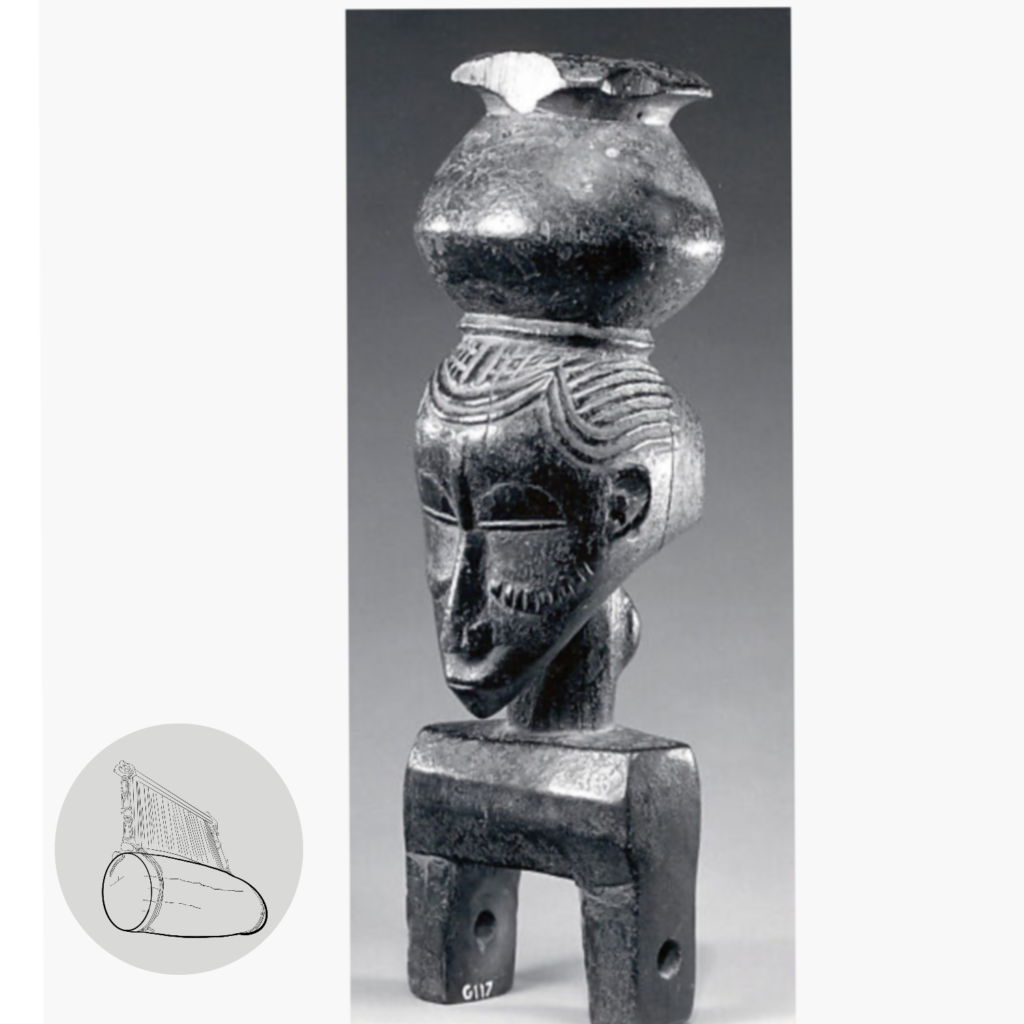
As Mozambican mathematician Paulus Gerdes—who spent decades documenting African mathematical heritage—writes: “In many African crafts, mathematical ideas are not taught as abstract concepts but are embedded in the techniques themselves.” Gerdes’s work, particularly his studies of Mozambican and Angolan weaving, shows that African artisans used symmetry, repetition, translation, and rotation as fundamental operations in design.
This embedding is critical. Because it reveals something often ignored: the absence of written formulas does not mean the absence of mathematics. It means the mathematics is being performed.
Weaving as Algorithmic Execution: The Tellem Case Study
To understand weaving is to understand instruction. A textile is built through ordered sequences, repeated operations, and conditional variations. Each row depends on the previous one; each pattern depends on a rule.
The Tellem people, who lived in the Bandiagara cliffs of present‑day Mali, left behind textiles that continue to challenge assumptions about pre‑industrial design. These textiles display geometric repetition, symmetry across axes, and structured variation within constraint. What makes them significant is not just their visual complexity but their generative logic.
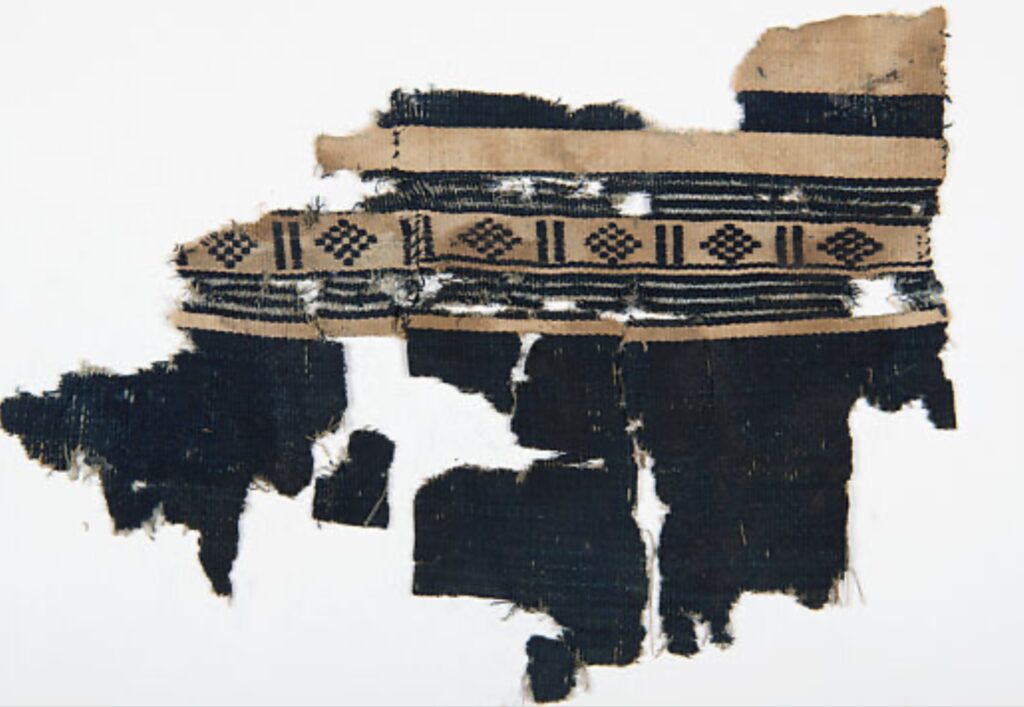
Patterns are not isolated images. They are constructed through repeatable units, transformation rules, and extendable sequences. Gerdes’s work on African textiles broadly shows that such systems involve what he calls “systematic exploration of symmetry and pattern construction.” These are the same operations used in computer graphics, pattern generation algorithms, and digital modeling systems.
What the Tellem textiles demonstrate is that a finite rule system can produce an indefinitely extendable pattern. This is the essence of algorithmic generation—not in theory, but in material form.
The Benin Bronzes: African Metallurgy as Parallel Innovation
African technological sophistication was not limited to textiles. The Benin Kingdom (in modern‑day Nigeria) produced some of the world’s most technically advanced metal castings—the so‑called Benin Bronzes. Using the lost‑wax method, Benin artisans created lifelike heads, intricate plaques, and ritual objects from at least the 13th century onward. Their work displayed not only extraordinary artistry but also mastery of alloy composition, inlay techniques, and large‑scale casting.
Yet the raw material—brass—came from Europe. Portuguese traders brought brass manillas (bracelet‑shaped currency) from Germany’s Rhineland to West Africa as part of the same trade networks that carried enslaved people. African artisans melted these imported objects and transformed them into works of profound cultural and technical achievement. When British forces looted Benin City in 1897, they took thousands of these objects, sold them to museums, and erased the knowledge systems that produced them.
This pattern—African skill combined with raw materials extracted through colonial trade, followed by violent appropriation—mirrors what happened with textiles. In both cases, the colonial narrative reframed African innovation as mere “craft” while European institutions profited from the objects and the knowledge embedded in them.
Infinite Pattern, Recursion, and the Ifá Information System
Modern computing relies on the idea that simple instructions can generate complex outputs and that systems can scale without losing structure. This is the foundation of fractals, recursive algorithms, and procedural design.
The research of Ron Eglash, a scholar of African fractals, makes this connection explicit. He writes: “Many African designs use recursive scaling, where a pattern is repeated at different levels of size.” This is not symbolic; it is structural. “These are not just designs, but processes.” That distinction matters, because processes are what define computation.
African knowledge systems extend this logic beyond textiles. The Ifá system of the Yoruba people—documented extensively by the Nigerian scholar Wande Abimbola, who served as Vice Chancellor of Obafemi Awolowo University—is built on 256 odu (signs) generated through a combinatorial, binary‑like process. When a babalawo (priest) casts the sacred palm nuts or opele chain, they produce a specific odu based on established rules. Each odu is linked to a vast corpus of verses (ese) that encode history, philosophy, medicine, and ethics. The interpretation follows structured pathways, applying stored knowledge to the querent’s situation.
Western scholars labeled Ifá a “divination system.” The term carries assumptions of irrationality, mysticism, and guesswork. But Ifá is better understood as a knowledge system—a logical, rule‑based method of storing, retrieving, and applying information. The operations are not random; they follow predictable combinatorial logic. The years of training required to memorize the ese are no different from the training a computer scientist undergoes to master programming languages and algorithms.
In fact, Ifá and modern artificial intelligence share a fundamental structure. When you consult an AI, you ask a question; the system processes it through a vast dataset, retrieves relevant patterns, and generates a response based on encoded rules. A babalawo does the same: the querent’s concern is mapped to an odu; the odu retrieves the appropriate verses; the babalawo applies the wisdom to the situation. One practice is called “divination”; the other is called “artificial intelligence.” The difference in naming reflects not the nature of the practice, but the racial and colonial hierarchies that determine which knowledge counts as “science” and which is dismissed as “tradition.”
Long before the formalization of binary code in Europe, African knowledge systems such as Ifá developed complex combinatorial and binary‑like structures for storing and processing information. These systems, alongside textile pattern encoding, demonstrate that computational thinking was not invented in the West but has multiple global origins—many of which were later marginalized during colonialism.
The Industrial Revolution: Mechanization Without Acknowledgment
Textiles drove the Industrial Revolution. Mechanized spinning and weaving transformed production. But this transformation relied on raw materials extracted through colonial systems, labor extracted through slavery, and knowledge extracted through global contact.
European mechanization did not arise from a vacuum. The first successful power loom, patented by Edmund Cartwright in 1785, was developed in a context where British factories processed cotton grown by enslaved Africans in the Americas and sold finished cloth to West African consumers whose preferences shaped global production. The logic of weaving—sequencing, repetition, pattern encoding—had existed for centuries in African and other non‑European textile systems. Industrialization scaled that logic, but it did not invent it.
Why, then, did Africa not develop its own mechanical looms? Some scholars point to divergent technological trajectories: African ironworkers used bloomery furnaces, which produced malleable iron perfect for forging tools and weapons but not molten iron for casting large machine components; European blast furnaces, developed partly for cannon production, enabled cast‑iron looms. From this perspective, the difference reflects material constraints and choices, not a hierarchy of “advancement.” Yet this framing, while common in academic literature, risks deflecting attention from the more fundamental issue: African textile industries were actively undermined by colonial policies that flooded markets with cheap European machine‑made goods, redirected raw materials, and dismantled local production. Whether African ironworkers could have eventually developed cast‑iron looms under different conditions is a question that remains open—and one that colonial violence foreclosed.
As Walter Rodney, the Guyanese historian, wrote in How Europe Underdeveloped Africa: “The only positive development in Europe was at the expense of Africa and other parts of the world.” This applies not only to resources—but to systems of knowledge.
The Politics of Recognition: Why Knowledge Was Categorized by Race
The problem is not that African systems lacked sophistication. The problem is that they were not recognized as such.
Cedric J. Robinson, author of Black Marxism, argues that “the development, organization, and expansion of capitalist society pursued essentially racial directions.” This includes how knowledge is categorized. Under this system, African systems became “craft” or “tradition,” while European systems became “science” and “technology”—even when both operated through pattern, logic, repetition, and transformation.
This erasure was not passive. Colonial collecting was systematic. Take the Hina textile from northern Cameroon: a cotton fabric taken during a German “punitive expedition” in 1908, when villages were burned and people killed or taken hostage. The cloth was sold to a museum, inscribed with the catalog number of the officer who led the assault, and its original name, maker, and meaning were lost. Such looted textiles joined Benin Bronzes and other objects in European collections, where they were reclassified as “ethnographic artifacts” rather than evidence of technological sophistication. Colonial regulations often required that objects acquired during state‑sponsored expeditions go to museums, ensuring that African knowledge was physically removed and reframed.
The connection between textiles and computing is not speculative; it is historical. Punch cards from the Jacquard loom influenced early computing. Pattern encoding maps directly onto binary logic. Mechanical repetition prefigured automation. But beneath this history is a deeper continuity: the logic of computing did not originate with machines. Machines inherited it. And that logic was already present in textile systems, pattern traditions, and knowledge practices across Africa and its diaspora.
Conclusion: The Technology That Was Always There
The question is no longer whether textiles contributed to modern technology. The question is: why were they never fully recognized as technology in the first place?
If we redefine technology as systems of structured knowledge and processes that encode and reproduce information, then textiles—especially African textile systems—are not peripheral. They are foundational.
And the history of technology, as it is currently told, is not incomplete by accident. It is incomplete by design.
References
· Abimbola, Wande. Ifá: An Exposition of Ifá Literary Corpus. Oxford University Press, 1976.
· Eglash, Ron. African Fractals: Modern Computing and Indigenous Design. Rutgers University Press, 1999.
· Gerdes, Paulus. Geometry from Africa: Mathematical and Educational Explorations. Mathematical Association of America, 1999.
· Gerdes, Paulus. African Mathematics: From Bones to Computers. University Press of America, 2008.
· Robinson, Cedric J. Black Marxism: The Making of the Black Radical Tradition. University of North Carolina Press, 1983.
· Rodney, Walter. How Europe Underdeveloped Africa. Bogle‑L’Ouverture Publications, 1972.
· Soloum, Salomé. “The Hina Textile: Colonial Looting and Museum Collections.” TRAFO Blog, 2025.
· Skowronek, Tobias, et al. “German Brass for Benin Bronzes.” Journal of Archaeological Science, 2023.